lore / Folklore
The Banshee Explained: Ireland's Death Messenger Behind the Scream
What is a banshee? Explore the Irish bean sí, death omens, keening, family traditions, Lady Fanshawe, the comb motif and modern horror myths.
Topics: Banshee, Bean Sí, Irish Folklore, Keening, Death Omens
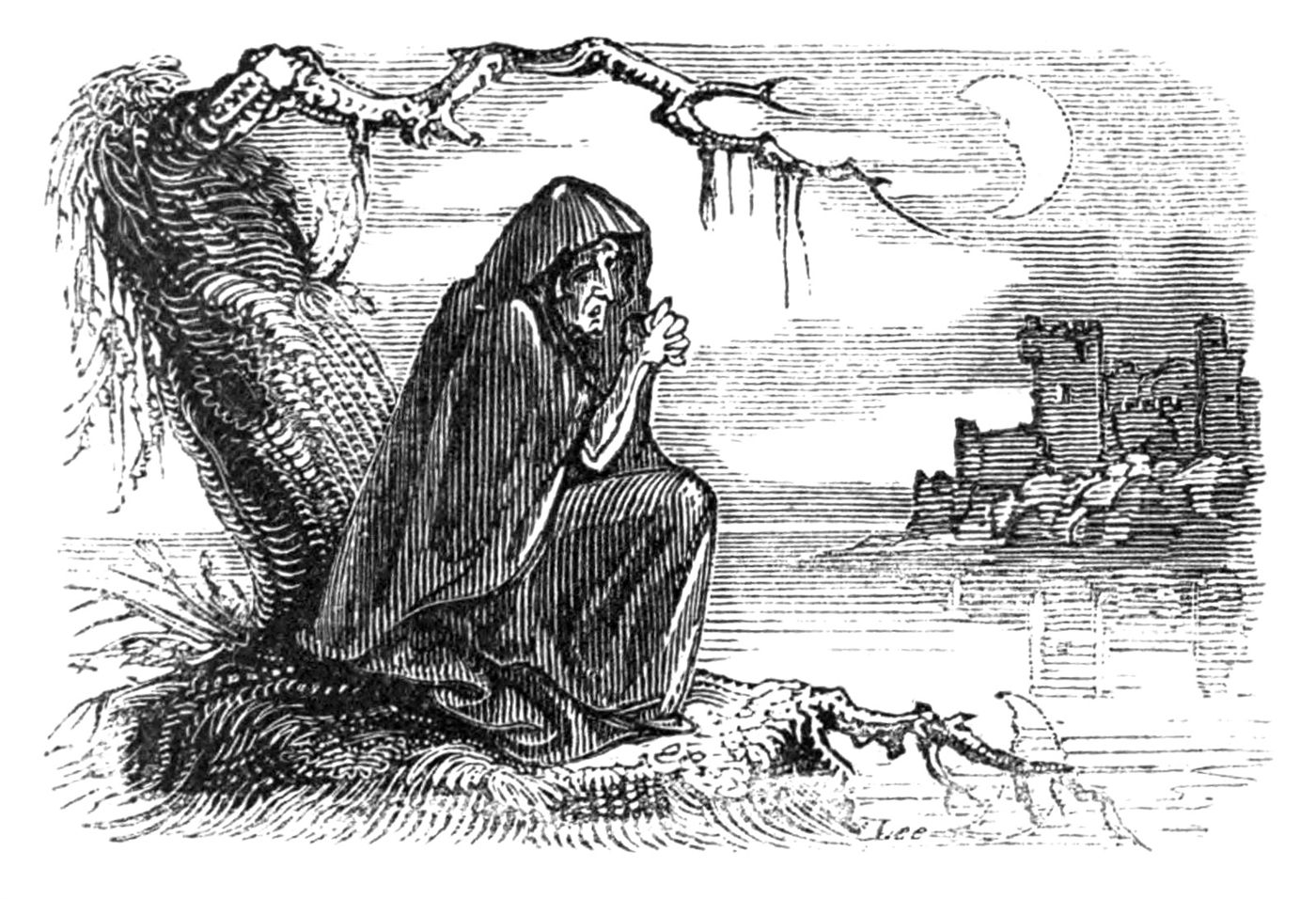
The banshee has one of the most recognizable screams in horror.
Movies, games and fantasy stories often treat her as a supernatural attacker: a ghostly woman whose voice can kill, rupture eardrums or shatter glass. The older Irish tradition is different.
The bean sí is primarily a death messenger. Her cry announces or foretells a death connected with a family. She is frightening because of what her appearance means, not because she is normally the thing doing the killing.
That distinction changes the entire story.
To understand the banshee, you have to look at Irish ideas about the Otherworld, family lineage and the older practice of keening — ritual lamentation performed around death. You also have to accept that Irish folklore never produced one perfectly standardized banshee. Her appearance, name and supposed origin vary from place to place.
The banshee is not a monster with a fixed rulebook.
She is a tradition.
What Does “Banshee” Mean?
“Banshee” is the English form of the Irish bean sí or bean sídhe.
Bean means woman. Sí refers to the supernatural world associated with the sí, the ancient mounds and earthworks that became deeply connected with fairy belief in Ireland.
A straightforward translation is therefore something like “woman of the sí” or “woman of the fairy mound.”
That does not mean the banshee should be imagined as a tiny Victorian fairy with wings.
Irish traditions surrounding the sí and the Otherworld are much older and more complicated than that later image of “fairies.” The beings associated with these places may be beautiful, threatening, protective, dangerous or impossible to place neatly into modern categories such as ghost, demon or fairy.
The same ambiguity follows the banshee.
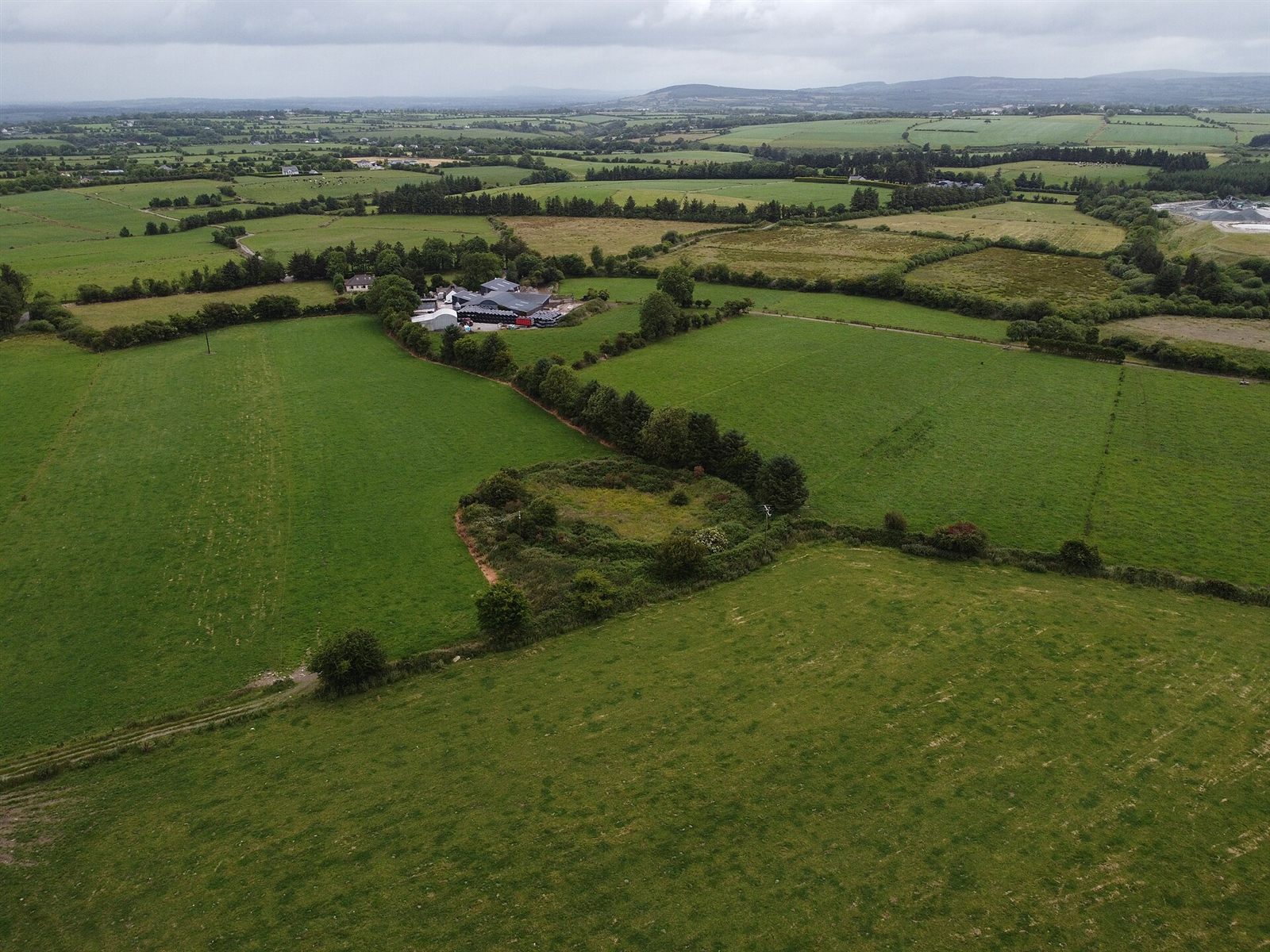
Ringforts and other old earthworks became deeply entangled with Irish fairy tradition. This County Cork site is shown as cultural landscape context, not as a claim that one particular mound is a banshee dwelling. Tim Sheerman-Chase / Wikimedia Commons, CC BY 2.0. Source.
What Does a Banshee Actually Do?
The central role is remarkably persistent across the folklore: she announces death.
Patricia Lysaght’s landmark study The Banshee: The Irish Supernatural Death-Messenger draws on literary sources, folklore archives and fieldwork to examine the bean sí as a female supernatural figure attached to death in particular families.
In many stories, someone hears a strange lament at night. A death then occurs in the family, or news arrives that a relative has died elsewhere.
The important point is causation.
Traditional belief usually does not make the banshee an assassin. Her lament is an omen, warning or supernatural accompaniment to a death. The fear comes from recognition: once the cry is understood, somebody is going to die or has died.
That is very different from the modern fantasy idea that hearing the scream itself kills you.
Irish folklore is varied enough that absolute statements are risky, but the banshee’s dominant traditional identity is the messenger, not the murderer.
The Cry Comes from Ireland’s Keening Tradition
The banshee’s most famous feature makes more sense when placed beside caoineadh, the Irish tradition of keening.
Keening was a structured vocal lament associated with wakes and funerals. Women played an especially important role, and skilled keeners — often called mná caointe or a bean chaointe in the singular — could lead the expression of grief.
The keen was not simply somebody screaming.
Historical descriptions present it as a mixture of lament, recitation, crying and vocal performance shaped around the dead person and the community’s grief.
Scholars including Lysaght and Gearóid Ó Crualaoich have drawn close parallels between the human keening woman and the supernatural death messenger. The bean sí does before or around a death what the human keener does after death: she gives grief a voice.
That does not prove the banshee was literally “invented” from professional keeners.
Folklore rarely develops through one neat cause.
It does show why the banshee’s sound is better understood as lamentation than as a supernatural sonic weapon.
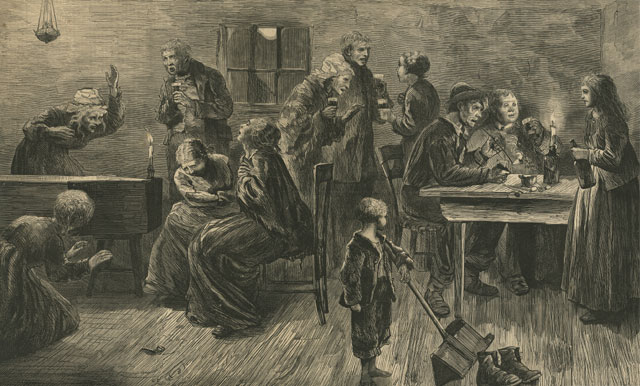
An Irish wake depicted in Harper’s Weekly in 1873. Keening and wake traditions formed an important part of the cultural world in which banshee belief persisted. Unknown artist / Harper’s Weekly (1873) / Public Domain via Wikimedia Commons. Source.
The Church Really Did Oppose Keening
The connection between keening and religious authority also needs careful handling.
The original draft claimed that a few specific bans on keeners directly caused the banshee tradition to survive. That is too tidy.
What can be documented is sustained clerical opposition to aspects of Irish wakes and keening.
Research on Irish mourning practices notes Catholic synodal criticism of wakes from the 17th century onward. A 2019 study of keening describes church censure beginning in this period and becoming increasingly forceful, while later 19th-century Catholic reform placed additional pressure on vernacular religious customs.
Keening nevertheless survived for centuries.
So it is reasonable to discuss banshee belief beside the struggle over women’s mourning practices. It is much harder to prove a direct sequence in which “the Church silenced the women, therefore the people invented the banshee.”
The relationship is cultural, not a simple one-event origin story.
What Does a Banshee Look Like?
There is no canonical appearance.
Recorded Irish descriptions include:
- an old woman with long grey or white hair
- a younger woman
- a pale woman dressed in white
- a woman wearing dark mourning clothes
- a small solitary figure
- a supernatural woman whose presence is heard but never seen
Loose hair appears frequently. So does association with grief.
Some accounts describe eyes reddened by crying, but even that should not be treated as a universal identifying feature.
The variety is important because modern horror tends to reverse it.
Instead of many local descriptions attached to one function, popular culture usually gives the banshee one visual identity: skeletal woman, torn dress, open mouth, weaponized scream.
That image is much more standardized than the folklore ever was.
The Comb Motif
One of the strangest banshee traditions involves a comb.
Folklore accounts sometimes describe the supernatural woman combing her long hair. Other stories warn against taking a comb found on the road because it might belong to the banshee.
The National Folklore Collection’s Schools’ Collection preserves versions in which humans interfere with a banshee or her comb and suffer consequences.
Some later retellings add elaborate rules: return the comb with iron tongs, never touch it directly, and expect the supernatural owner to snatch it back with enough force to damage the metal.
Those details belong to particular legend variants rather than a universal banshee survival guide.
The broader pattern is familiar from fairy lore: do not steal or interfere with an object belonging to the Otherworld.
There is no evidence that carrying a silver comb is a scientifically meaningful way to identify a supernatural being.
It is folklore, not field biology.
Does Every Irish Family Have a Banshee?
No.
But the opposite internet claim — that banshees belonged to exactly five ancient Irish families — is also too simple.
One recurring tradition connects the banshee with older Gaelic family lines, especially surnames beginning with Ó or Mac. This association was strong enough to become a proverb-like rule in popular retellings.
The archival record is messier.
A Schools’ Collection entry from County Kilkenny says the banshee follows certain families and names not only people with O’ or Mac surnames but also Walshes, Whelans, Shannons and Murphys. Another account from County Longford associates the bean sí with the Farrells and Reillys.
So the family connection is genuine.
A fixed list of only five eligible bloodlines is not.
The belief could also travel with emigrants. Modern Irish folklore scholarship includes accounts in which the death messenger remains attached to a family even when members move overseas.
The supernatural geography follows the kinship.
Fairy, Ghost or Ancestor?
Irish tradition does not give one answer to what the banshee is.
Some accounts place her in the fairy/Otherworld category suggested by the name bean sí.
Others interpret her as a dead woman associated with a family.
The Schools’ Collection even preserves Christianized explanations. A County Longford informant described the bean sí as an angel from Heaven.
That kind of variation is normal.
Folklore absorbs the religious language around it. A figure may be understood through fairy belief in one place, ghost belief in another and Christian cosmology somewhere else.
Trying to force all of those explanations into one genealogy misses how oral tradition works.
The safest description is functional:
The banshee is a female supernatural death messenger in Irish tradition.
Her exact supernatural classification varies.
The Banshee and the Scottish Bean Nighe
The Irish banshee is often confused with the Scottish Gaelic bean-nighe, the washer at the ford.
They are related within wider Gaelic death-messenger traditions, but they should not simply be treated as two spellings of an identical character.
Classic Scottish folklore describes the bean-nighe washing clothing or death shrouds in lonely water before somebody dies. John Gregorson Campbell recorded different local descriptions in the Highlands and Islands, including traditions in which a person who approaches her correctly can learn information about the future.
The Scottish figure is therefore more explicitly associated with washing.
The Irish bean sí is more strongly associated with keening and family death announcements.
Both are supernatural female death messengers.
Their local traditions are not interchangeable.
Lady Fanshawe’s Famous Seventeenth-Century Account
One of the best-known early modern written stories comes from Ann, Lady Fanshawe.
During her travels in Ireland around 1649, Fanshawe and her husband spent three nights with Lady Honor O’Brien, youngest daughter of the Earl of Thomond.
Fanshawe wrote that she woke around one in the morning and saw a pale woman with red hair leaning through the window in white clothing.
Here is where later retellings often become unreliable.
The 1907 edition of Fanshawe’s memoirs available through Project Gutenberg transcribes the apparition’s three cries as “A horse” — not the frequently repeated Irish-sounding “Ahone.” Afterward, Fanshawe was told that an O’Brien relative in the house had died at about two o’clock and that a female apparition was traditionally associated with deaths in that family.
Fanshawe herself does not use the word banshee in the passage.
Nor does she name the castle.
Later writers have proposed Leamaneh Castle in County Clare as the setting, but that identification is a reconstruction rather than something stated in her memoir.
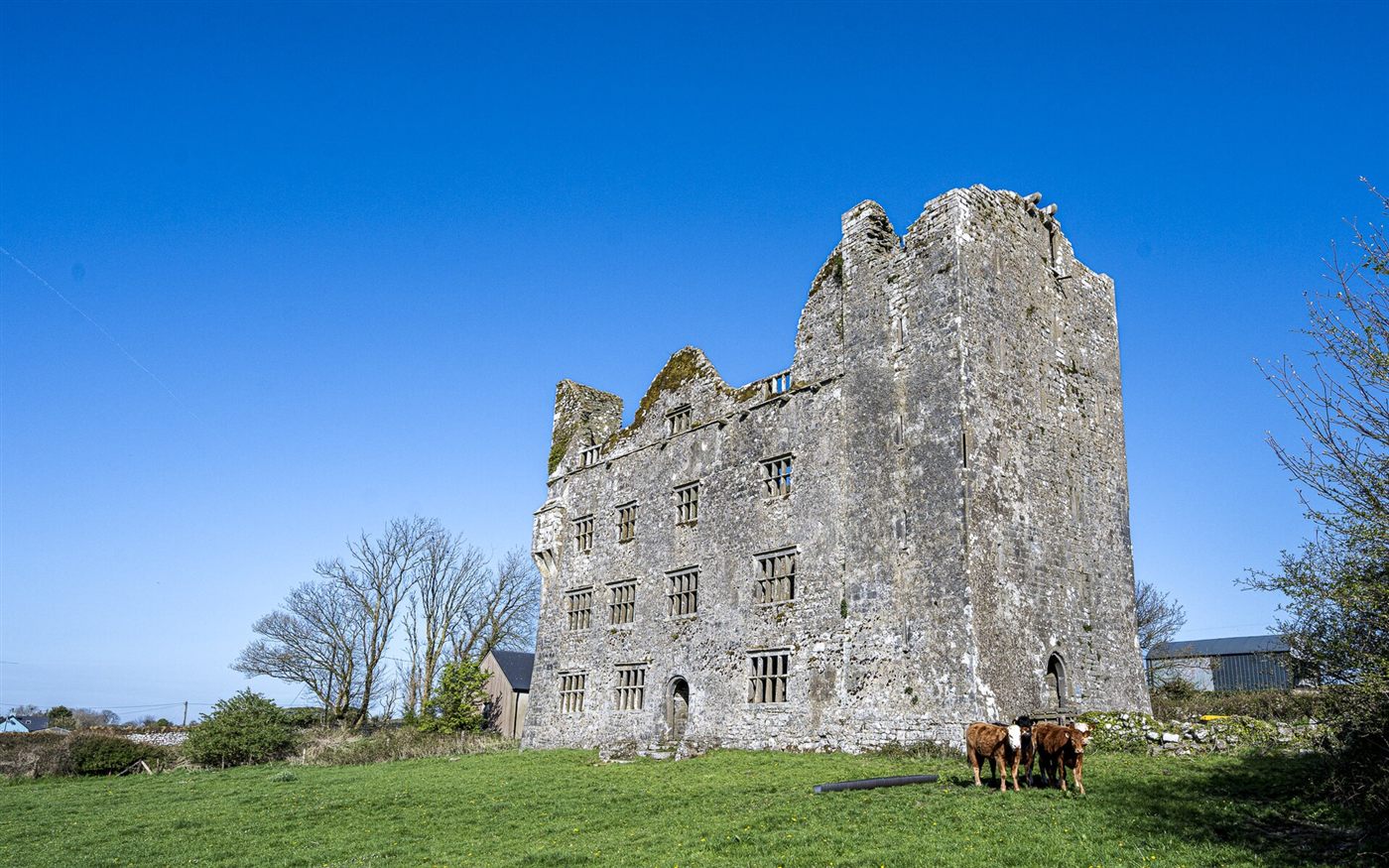
Later writers have proposed Leamaneh Castle as the setting of Lady Fanshawe’s story, but Fanshawe herself did not name the castle in the memoir. Monster4711 / Wikimedia Commons / CC0 1.0. Source.
What Ireland’s Folklore Archive Actually Records
The National Folklore Collection at University College Dublin gives us something more valuable than one famous aristocratic story: hundreds of local traditions.
The Schools’ Collection, assembled in 1937–38, asked schoolchildren across Ireland to collect folklore from parents, grandparents and neighbors.
The surviving material includes numerous banshee accounts.
Some say the cry comes before a death. Some attach the banshee to specific families. Some place her near rivers or roads. Some describe a small white woman. Some identify her through explicitly Christian language. Others preserve stories about combs and interference.
The archive is useful precisely because the stories do not all agree.
There was a recognizable national tradition with strong recurring patterns, but there was also considerable local variation.
That is a much more realistic picture than the modern internet list of “ten rules for surviving a banshee.”
Did the Banshee Always Have a Deadly Scream?
No.
Modern entertainment took the most dramatic part of the tradition — the cry — and changed what it does.
A lament that announces death became a sound that causes death.
That transformation is easy to understand from a storytelling perspective. A monster that only predicts something is harder to turn into a combat encounter than one whose voice is literally a weapon.
Film, television, tabletop games and video games have repeatedly used the second version.
One of the better-known older screen appearances, Disney’s Darby O’Gill and the Little People (1959), already helped make the banshee visually memorable for international audiences. Later horror and fantasy pushed the scream much further toward an offensive supernatural power.
The result is now so familiar that the modern version can feel older than the Irish tradition it replaced.
It isn’t.
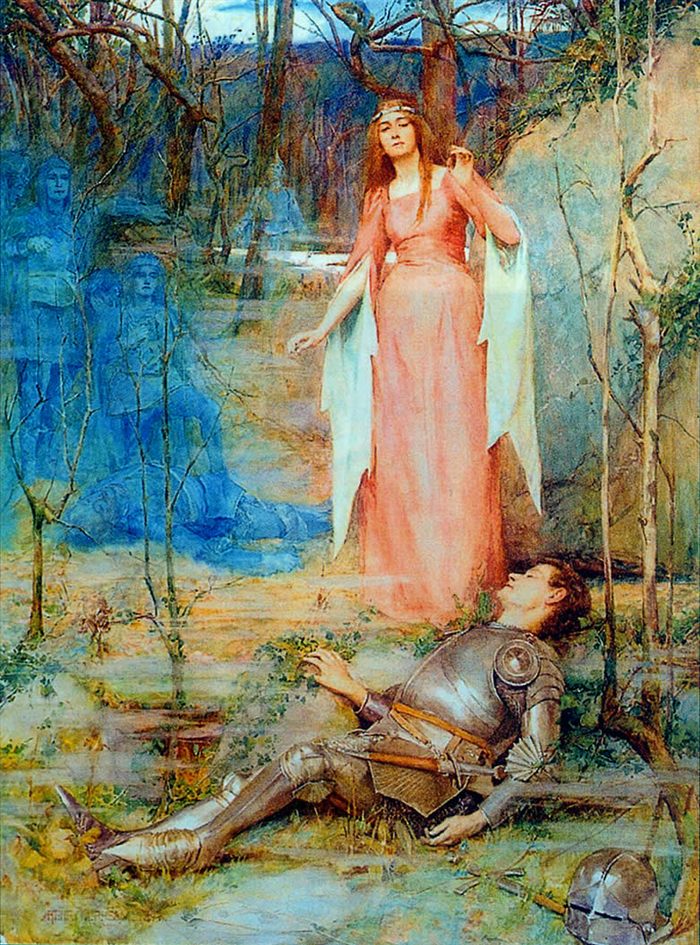
Henry Meynell Rheam’s late nineteenth-century painting shows how artists were already creating their own visual interpretations of the banshee long before modern horror standardized the screaming specter. Henry Meynell Rheam, The Banshee (c. 1897–1901) / Public Domain via Wikimedia Commons. Source.
Are Banshees Real?
There is no scientific evidence establishing the banshee as a literal supernatural being.
There is overwhelming evidence that belief in the banshee is a real and historically important Irish folklore tradition.
Those are different claims.
Individual reports of cries in the night may have ordinary explanations: animals, wind, distant human voices or sounds whose source was never identified. No one natural explanation is likely to account for every story because the archive contains dreams, apparitions, heard voices, family legends and retrospective interpretations as well as unexplained sounds.
Folklore does not become meaningless because a supernatural claim cannot be verified scientifically.
The banshee tells us how communities imagined death, kinship and mourning.
That history is real even if the ghost remains unproven.
The Banshee Is Sadder Than the Monster
Strip away the video-game mechanics and the banshee becomes a very different figure.
She is not primarily the thing coming to kill you.
She is the sound that tells a family death has entered the house.
That makes her frightening, but it also makes her mournful. Her closest human parallel is not an assassin or a witch throwing a curse.
It is a woman keening for the dead.
Modern horror turned that lament into a weapon.
Irish folklore made it a warning.
Sources & further reading
- Patricia Lysaght, The Banshee: The Irish Supernatural Death-Messenger
- RTÉ Brainstorm: Do you believe in the banshee?
- Keening the Dead: Ancient History or a Ritual for Today?
- Vernacular Catholicism in Ireland: The Keening Woman
- Dúchas: Death Customs and Superstitions, County Kilkenny
- Dúchas: Bean Sí, County Longford
- Dúchas: The Leipreacán and the Bean Sí, County Carlow
- Memoirs of Lady Fanshawe
- Scottish Bean Nighe, National Library of Scotland