lore / Demons & Occult
Beelzebub Explained: The Lord of the Flies in Religion, Demonology and Horror
How Baal-Zebub of Ekron became Beelzebul, the New Testament's prince of demons, a major figure in later demonology, and an enduring symbol in literature and horror.
Topics: demonology, biblical history, mythology, literature
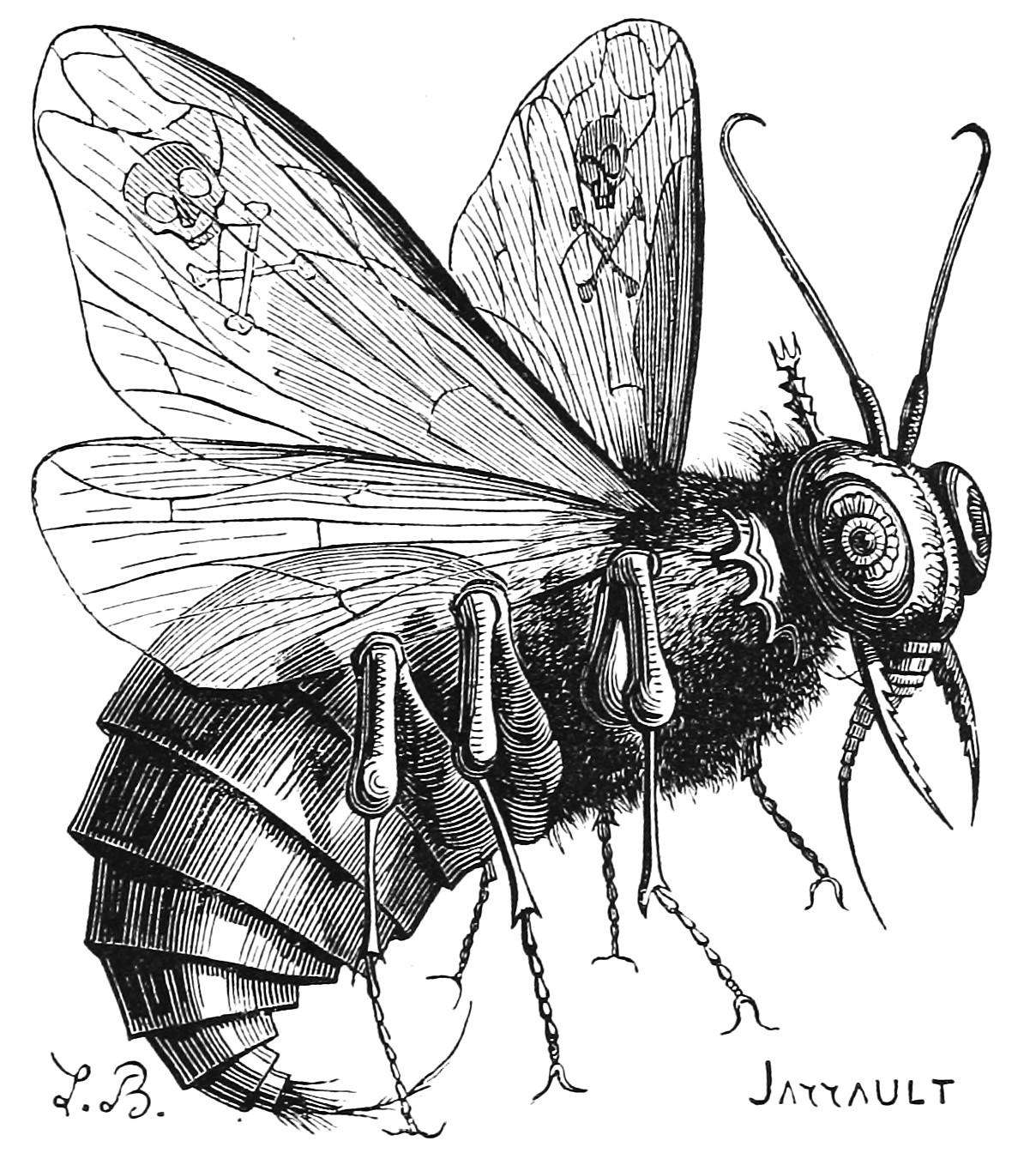
Louis Le Breton, Belzebuth from Dictionnaire Infernal (1863) / Public Domain via Wikimedia Commons
Introduction
Beelzebub has accumulated several identities over nearly three thousand years. In the Hebrew Bible, Baal-Zebub is named as the god of the Philistine city of Ekron. In the Synoptic Gospels, Beelzebul is called the “prince of demons” and is closely associated with Satan. Later demonologists turned him into a distinct infernal ruler, while writers such as John Milton and William Golding reshaped the name again for literature.
Those layers should not be collapsed into one fixed biography. The ancient deity named in 2 Kings, the New Testament Beelzebul, the demonological prince of later grimoires, and the giant fly of nineteenth-century illustration belong to different periods and traditions.
Baal-Zebub and the Ancient City of Ekron
The earliest biblical reference appears in 2 Kings 1. After King Ahaziah of Israel is injured in a fall, he sends messengers to inquire of “Baal-Zebub, the god of Ekron” about whether he will recover. The prophet Elijah condemns the act because Ahaziah has sought an answer from a foreign god rather than the God of Israel.
Ekron was not a fictional setting. The ancient city is widely identified with Tel Miqne in modern Israel, one of the major cities of the Philistine Pentapolis. Excavations led by Trude Dothan and Seymour Gitin uncovered large-scale olive-oil production, a major temple complex, and a seventh-century BCE royal dedicatory inscription that explicitly names Ekron and several of its rulers.
That inscription is important for the city’s history, but it does not mention Baal-Zebub. No surviving Philistine inscription has yet independently confirmed a cult under that exact name. The safest conclusion is therefore narrower than some popular retellings suggest: 2 Kings portrays Baal-Zebub as the god consulted at Ekron, while archaeology confirms Ekron as a major Philistine religious and political center.
The story also suggests that Ahaziah sought an oracle concerning his recovery. It does not, by itself, prove that Baal-Zebub was specifically a god of medicine or that an established healing cult existed at Ekron.
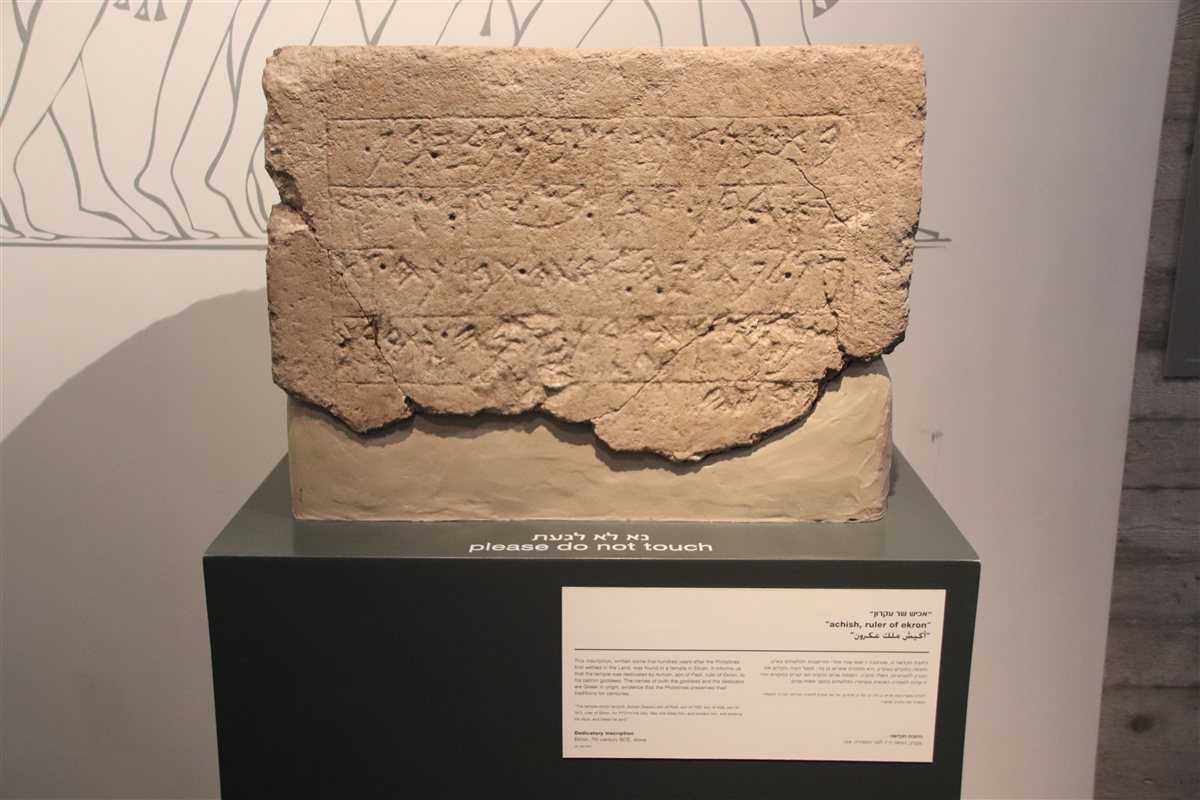
The Ekron inscription confirms the city’s political and religious importance but does not mention Baal-Zebub. Photograph by Gary Todd / Wikimedia Commons / CC0 1.0. Source.
Does Beelzebub Really Mean “Lord of the Flies”?
The Hebrew form Baal-zebub is traditionally translated as “Lord of the Flies.” Baal can mean “lord” or “master,” while zebub is the Hebrew word for “fly.”
The difficult question is whether that was actually the deity’s original title.
A widely accepted scholarly proposal is that Baal-zebub may be a mocking alteration of Baal-zebul, a title related to forms known from Northwest Semitic tradition and often translated along the lines of “Exalted Lord” or “Prince Baal.” On this reading, biblical writers deliberately changed the name into an insulting “Lord of the Flies.”
There are reasons to take that theory seriously, but it should not be presented as proven fact. Other scholars have considered the possibility that the fly element was meaningful in its own right, perhaps in an apotropaic or healing context. Because direct evidence from the cult at Ekron is limited, the original form and meaning remain debated.
This uncertainty matters because a common online version of the story states that hostile Israelite scribes definitely changed Baal-Zebul into Baal-Zebub. A more accurate formulation is that this is an influential scholarly explanation, not a historical event we can independently document.
Beelzebul in the New Testament
By the first century CE, the name appears in a very different setting.
In Matthew 12, Mark 3, and Luke 11, Jesus’ opponents accuse him of casting out demons through Beelzebul, described as the “prince of demons.” Jesus answers that a kingdom divided against itself cannot stand: if Satan casts out Satan, then Satan’s kingdom is divided.
The passages create a very close connection between Beelzebul and Satan. Jesus’ rebuttal reframes the accusation in terms of Satanic power, which is why Beelzebul has often been interpreted as another name or title for Satan.
Still, saying that the Gospels formally define Beelzebul and Satan as exactly the same being goes beyond what the text explicitly states. The safest reading is that Beelzebul represents the ruling demonic power in the accusation and that Jesus answers by speaking of Satan and Satan’s kingdom.
Another detail often lost in English is the spelling. Beelzebul has strong manuscript support in the New Testament, while Beelzebub became especially familiar in later Christian usage and English translation.
From Demonic Title to Individual Ruler
Later texts increasingly treat Beelzebul as a distinct supernatural character.
The Testament of Solomon, a composite pseudepigraphal work whose dating is debated, presents Beelzeboul as a prince who commands demons. In the surviving Greek tradition he tells Solomon that he had been the “first angel in the first heaven” and now controls spirits bound in Tartarus.
That is a much more developed biography than anything found in 2 Kings or the Gospels. It should therefore be treated as a later literary and magical tradition, not as evidence for what people at ancient Ekron believed.
The work is difficult to date precisely. Elements may be early, while the text continued to develop through later centuries. Giving it a single confident date can make a complicated textual history look much simpler than it is.
Beelzebub and the Seven Deadly Sins
Early-modern demonologists loved hierarchies, but they did not agree with one another.
Peter Binsfeld’s 1589 demonological scheme paired major demons with the seven deadly sins. In that system, Beelzebub is associated with gluttony. Modern “Seven Princes of Hell” lists often build on schemes such as Binsfeld’s, but the phrase can create the false impression that Christianity has one official list of seven infernal princes. It does not.
Sébastien Michaëlis produced another influential hierarchy after the Aix-en-Provence possession affair of 1610–1611. His Admirable History, published in the early seventeenth century, assigns demons to elaborate fallen angelic ranks. In that system Beelzebub is placed among the fallen Seraphim and associated with pride.
Later occult writers changed the arrangements again. The result is not one consistent map of Hell but a series of competing systems created by different authors for different purposes.
So what “sin” is Beelzebub the demon of? Gluttony in Binsfeld’s classification is the most famous answer, but it is tradition-specific rather than universal.
Is Beelzebub One of the 72 Demons of the Ars Goetia?
No. Beelzebub is not one of the 72 spirits listed in the Ars Goetia.
The confusion usually comes from Bael, the first spirit in the Ars Goetia and in the earlier Pseudomonarchia Daemonum. In those catalogues, Bael is a king associated with invisibility and is sometimes described as appearing in multiple forms.
Bael and Beelzebub share the West Semitic root baal, meaning “lord,” but they are not the same entry in these demon catalogues. Later occult writing and modern websites sometimes blur the names, which is one reason the claim persists.
Beelzebub does appear in other grimoire traditions. Versions of the Grand Grimoire and Grimorium Verum give him a high position alongside figures such as Lucifer and Astaroth. Exact titles and hierarchies vary between texts and editions, so it is better to attribute a rank to a specific source than to call it Beelzebub’s universal position in Hell.
Possession Trials, Aix and Loudun
Beelzebub’s name also appears in notorious early-modern possession and witchcraft cases.
During the Aix-en-Provence possessions of 1610–1611, Madeleine de Demandolx was described as possessed by Beelzebub during investigations overseen by the Dominican Sébastien Michaëlis and others. The proceedings helped lead to the prosecution, torture and execution of the priest Louis Gaufridi.
More than two decades later, the Loudun possessions culminated in the trial and execution of Urbain Grandier in 1634. A purported diabolical pact produced during the case bears the names of Beelzebub and several other demons.
These documents are evidence for what accusers, investigators and courts claimed, not evidence that supernatural possession occurred. Modern historical work examines the cases through religious conflict, institutional politics, gender, coercive legal procedure, social pressures and the culture of early-modern demonology. Retrospectively assigning one medical or psychological diagnosis to everyone involved would be just as speculative as accepting the possession claims at face value.
Milton’s Beelzebub: Satan’s Chief Lieutenant
John Milton gave Beelzebub one of his most influential literary identities in Paradise Lost (1667).
Milton presents him as the highest-ranking rebel after Satan. In the infernal council, Beelzebub rises with “grave aspect” and is compared to a “pillar of state.” He is not a buzzing monster but an aristocratic political strategist whose ruined majesty still carries traces of heavenly authority.
His speech advances the plan to attack God’s new creation rather than attempt another direct war against Heaven. That portrayal helped establish the image of Beelzebub as Satan’s calculating lieutenant, an identity quite different from both the god of Ekron and later fly imagery.
Why Is Beelzebub Shown as a Giant Fly?
One of the best-known visual depictions comes from the 1863 edition of Jacques Collin de Plancy’s Dictionnaire Infernal. Illustrator Louis Le Breton depicts Beelzebub as an enormous grotesque fly.
The image is striking enough that it is frequently treated online as though it were a medieval or ancient depiction. It is not. It is a nineteenth-century illustration produced for a popular demonological reference work.
That distinction is useful because the picture shows how strongly the literal “Lord of the Flies” interpretation shaped modern iconography. The fly form appears repeatedly in later fantasy, games, occult art and horror, even though ancient sources do not give us an equivalent visual portrait.
William Golding’s Lord of the Flies
William Golding reused the old translation in the title of his 1954 novel Lord of the Flies.
The novel does not introduce Beelzebub as a literal demon. Instead, a pig’s severed head becomes the “Lord of the Flies” as insects gather around it. During Simon’s terrifying encounter with it, the Beast is presented as something bound up with the boys themselves rather than an outside monster that can simply be hunted down.
The title therefore works as a demonic allusion without turning the story into supernatural demonology. Golding takes a name long associated with the ruler of demons and redirects it toward human violence, fear and moral collapse.
Beelzebub in Modern Horror and Popular Culture
Modern portrayals usually draw from one of two later traditions.
Some emphasize the fly, decay and disease, following the “Lord of the Flies” interpretation and images such as Le Breton’s illustration. Others use Beelzebub as a high-ranking infernal noble, borrowing from early-modern demonological hierarchies rather than ancient religion.
The character also turns up across games, animation, manga, fantasy and horror, where creators freely combine traits from unrelated sources. That makes modern pop culture useful for studying Beelzebub’s reputation, but not for reconstructing his historical origins.
One frequent horror mix-up is worth correcting: Beelzebub is not the demon identified in The Exorcist. The entity associated with Regan’s possession in William Peter Blatty’s story and its film adaptation is Pazuzu.
Beelzebub: Common Questions
Is Beelzebub Satan?
Sometimes, depending on the source. The Synoptic Gospel passages closely associate Beelzebul with Satan, while many later demonological systems treat Beelzebub as a separate high-ranking demon.
Is Beelzebub mentioned in the Bible?
Yes. Baal-Zebub appears in 2 Kings 1 as the god of Ekron, and Beelzebul appears in the Synoptic Gospels as the “prince of demons.”
Does Beelzebub literally mean Lord of the Flies?
The Hebrew form Baal-zebub can be translated that way. Whether it preserves the deity’s original title is disputed. A major scholarly theory sees it as a mocking alteration of Baal-zebul.
Is Beelzebub one of the 72 Goetic demons?
No. Beelzebub is not an entry in the Ars Goetia. Bael is.
What sin is Beelzebub associated with?
Peter Binsfeld associated Beelzebub with gluttony in his 1589 classification. Other demonological systems assign different ranks and characteristics.
Conclusion
There is no single, unchanged Beelzebub stretching from Iron Age Ekron to modern horror.
The Hebrew Bible preserves Baal-Zebub, the god consulted at Ekron. Many scholars think that name may parody an older title such as Baal-Zebul, but the etymology is not completely settled. The New Testament transforms Beelzebul into the prince of demons closely associated with Satan. Later magical and demonological texts make him a distinct infernal ruler. Milton turns him into a statesman of Hell, while nineteenth-century art gives him the giant-fly body that still dominates his visual identity.
That shifting history is what makes Beelzebub useful to study. The name survived not because every tradition agreed on who he was, but because each period found a different way to make him represent dangerous power, corruption and evil.
Sources and Further Reading
- 2 Kings 1 and the Synoptic Gospel passages concerning Beelzebul.
- John Day, Yahweh and the Gods and Goddesses of Canaan (Sheffield Academic Press/Bloomsbury).
- Seymour Gitin, Trude Dothan and Joseph Naveh, “A Royal Dedicatory Inscription from Ekron,” Israel Exploration Journal 47 (1997), pp. 1–16.
- F. C. Conybeare, trans., The Testament of Solomon, Jewish Quarterly Review (1898).
- Sébastien Michaëlis, Admirable History of the Possession and Conversion of a Penitent Woman.
- John Milton, Paradise Lost (1667).
- Jacques Collin de Plancy, Dictionnaire Infernal, 6th ed. (1863), illustrations by Louis Le Breton.
Sources & further reading
- 2 Kings 1 and the Synoptic Gospel passages concerning Beelzebul
- John Day, Yahweh and the Gods and Goddesses of Canaan
- Seymour Gitin, Trude Dothan and Joseph Naveh, A Royal Dedicatory Inscription from Ekron
- F. C. Conybeare, The Testament of Solomon
- Sébastien Michaëlis, Admirable History of the Possession and Conversion of a Penitent Woman
- John Milton, Paradise Lost
- Jacques Collin de Plancy, Dictionnaire Infernal

.jpg)