lore / Folklore
La Llorona Explained: The History Behind the Weeping Woman
Who is La Llorona? Trace the Weeping Woman from Nahua death omens and nineteenth-century Mexican literature to regional folklore, Xochimilco and modern horror.
Topics: La Llorona, Mexican Folklore, Latin American Folklore, Cihuacoatl, Ghost Stories
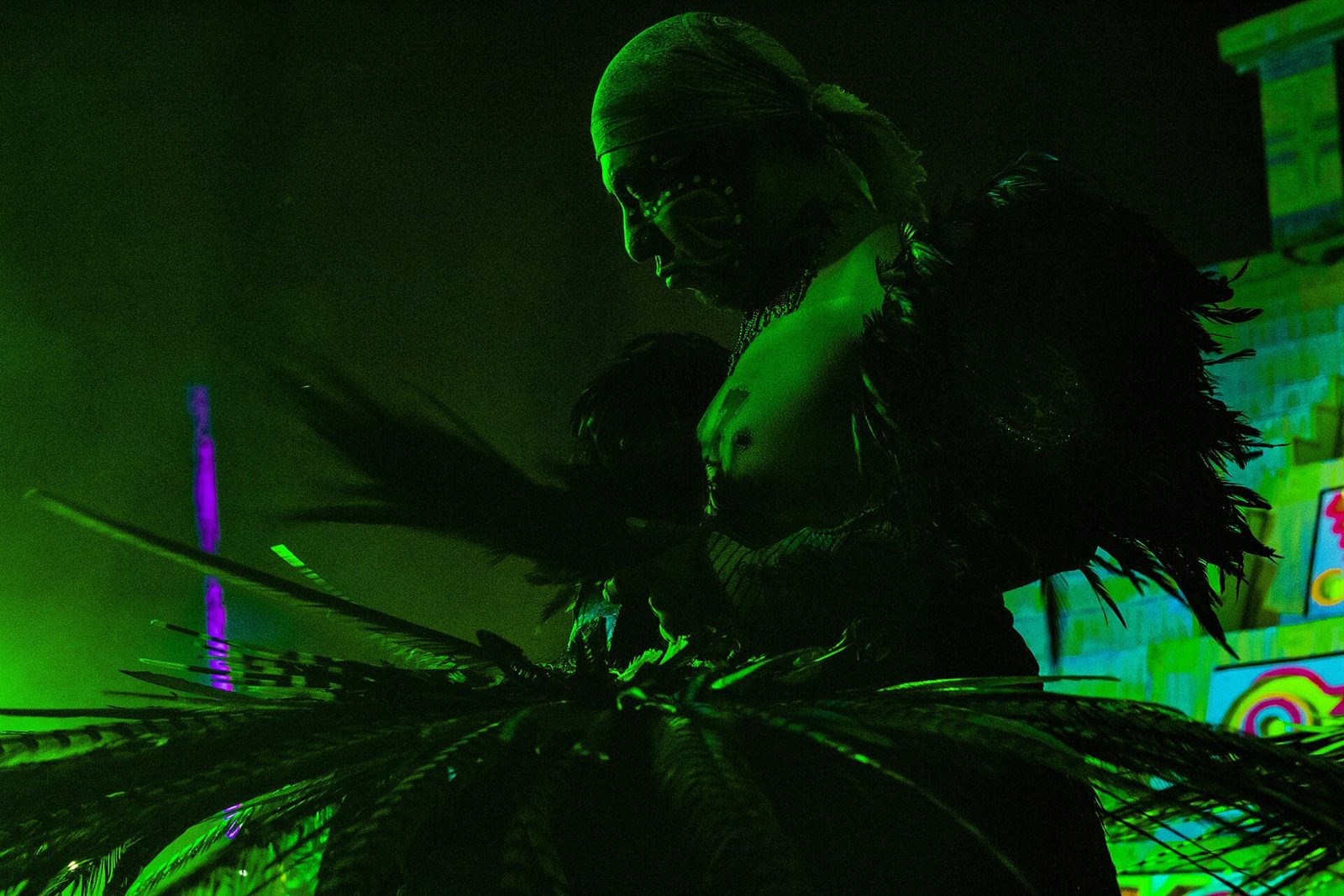
Raúl Arturo Fernández Vega / Wikimedia Commons, CC BY-SA 4.0
You usually hear La Llorona before you see her.
Somewhere beyond the houses, often near a river or canal, a woman is crying. In many versions the words are some variation of “¡Ay, mis hijos!” — “Oh, my children.” Ask for the rest of the story and you will probably hear about María, a beautiful woman abandoned by a wealthier husband who drowns their children in a moment of rage and spends eternity searching for them.
That is the version most people know. It is also only one version.
La Llorona has never had a clean origin story. The legend grew through oral storytelling, colonial history, Indigenous religious traditions, nineteenth-century literature and, eventually, film. Some of its oldest recognizable ingredients have nothing to do with a jealous wife named María. One printed La Llorona from 1849 is actually murdered by her husband. Sixteenth-century Nahua sources describe a supernatural woman crying for her children before the fall of Tenochtitlan. Later writers connected the figure to Malintzin, Medea, Catholic ideas about restless souls and other female ghost traditions.
Trying to force all of that into one biography misses what makes the legend interesting. La Llorona survived because people kept changing her.
So who is La Llorona?
The name means, roughly, the Weeping Woman. It comes from the Spanish llorar, to cry or weep. By the time the legend took on the form familiar today, the title had become less a description than a name.
The common story is brutal. María falls in love with a man of higher status, has children with him and is later abandoned. In grief, jealousy or fury, she drowns the children. The horror arrives immediately afterward: she understands what she has done.
From there the versions split. Sometimes she kills herself. Sometimes she dies accidentally. Sometimes she reaches the gates of Heaven and is told she cannot enter until she finds the children. In other tellings there is no heavenly judgment at all; she simply wanders waterways and lonely roads, still searching.
The details are unstable because there was never a single official text. The number of children changes. Their gender changes. The husband changes. Even María’s name is not universal.
What stays remarkably consistent is the image of a woman, water and grief that cannot end.
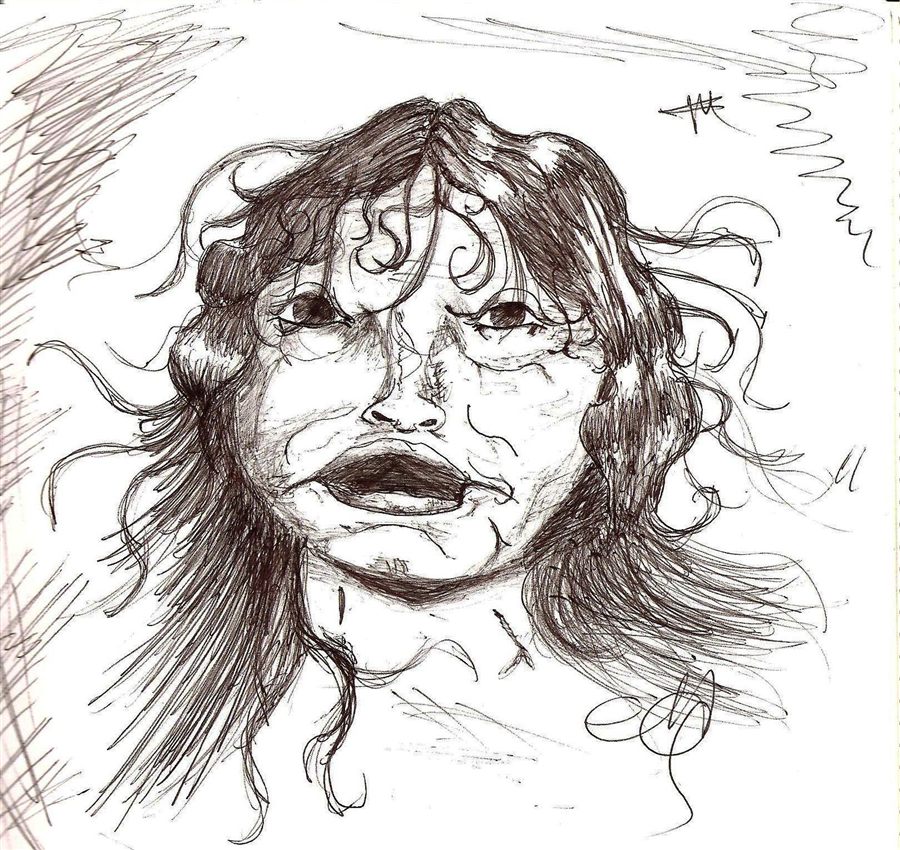
Modern artists often give La Llorona a fixed ghostly appearance. Older oral tradition is much less standardized. Source. Melvin Callejas / Public Domain.
Long before María, there was a woman crying in the night
The strongest Indigenous connection appears in colonial-era Nahua records associated with the Franciscan friar Bernardino de Sahagún and the Indigenous scholars who worked with him.
Book 12 of the Florentine Codex preserves a list of omens said to have appeared before the Spanish conquest of Tenochtitlan. One describes a woman moving through the night, crying for her children and asking where she could take them. Elsewhere in Sahagún’s work, a similar nocturnal mourner is associated with Cihuacoatl, an important Mexica goddess.
It is easy to see why later readers connected this figure with La Llorona. The woman, the night, the crying, the children and the sense of approaching disaster are all there.
What is not there is the modern plot. Nobody named María murders her children because a husband leaves her. The Nahua material belongs to a different religious and historical world.
That difference matters. The Florentine Codex was compiled decades after the conquest, in a colonial setting where Nahua knowledge was being recorded through a Franciscan project. It is an extraordinary source, but not a time capsule that lets us lift one pre-Hispanic figure intact and call her La Llorona.
The connection is better understood as ancestry rather than identity.
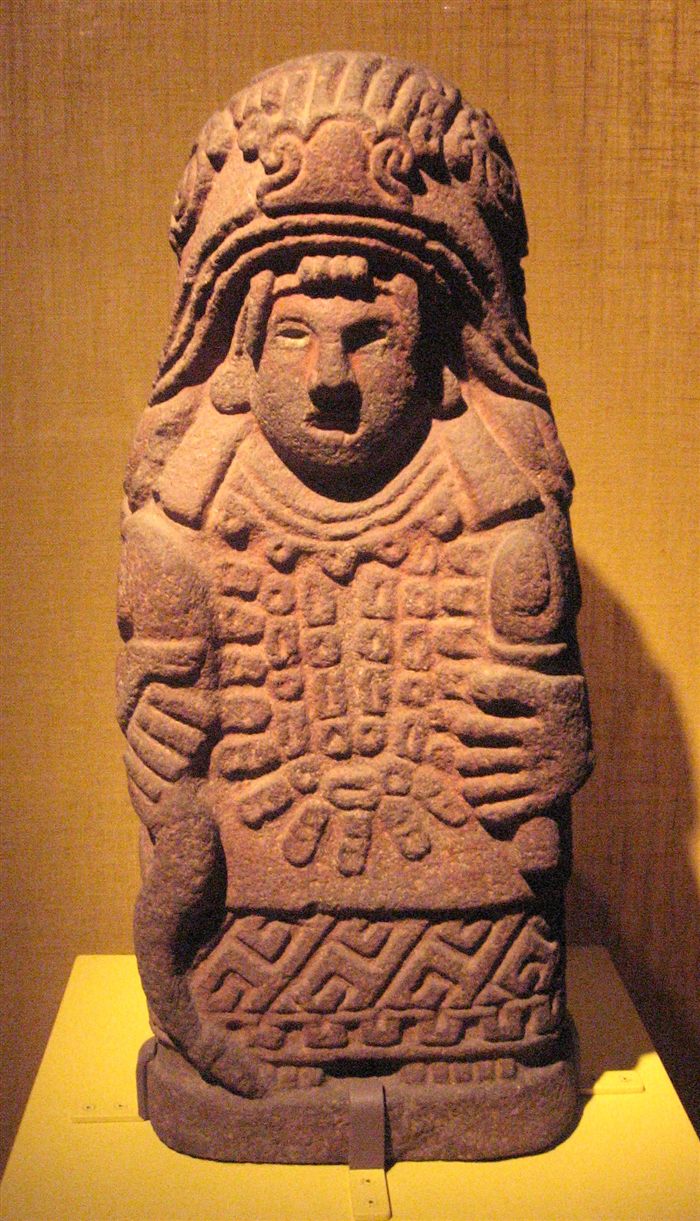
A stone figure identified as Cihuacoatl, one of the Nahua figures scholars have connected with the later La Llorona tradition. The connection is historical and thematic; Cihuacoatl is not simply the modern child-drowning ghost under an older name. Source. Madman2001 / CC BY 3.0.
Cihuacoatl was more than a prototype ghost
Online versions of the legend often tidy the history into a satisfying sentence: Cihuacoatl was the original La Llorona.
The evidence is not that simple.
Cihuacoatl had a much larger role in Mexica religion than the crying omen alone. Scholars can reasonably trace themes and images between Indigenous traditions and later Mexican folklore, especially once Spanish religious ideas entered the picture, but that is different from claiming one character simply changed her name.
Mexican folklore after the conquest developed in a society where Indigenous and European stories were constantly rubbing against one another. That process is visible all over La Llorona. The legend feels old because parts of it are old; it feels Catholic because parts of it are Catholic; and it resembles European tragedy because those stories became part of colonial culture too.
La Llorona is what happens when those layers stop being separable.
In 1849, La Llorona wasn’t the child-killer
Mexican poet Manuel Carpio gives us one of the clearest examples of how much the story changed.
In 1849 he published a poem titled La Llorona. Library of Congress folklorist Stephen Winick has described it as the earliest literary work with that title he could locate.
Carpio’s ghost is named Rosalía.
She does not murder her children. Her husband murders her.
Rosalía then returns as the weeping dead, moving near the river and frightening the people who hear her cries. It is recognizably a La Llorona story, yet the moral structure has been flipped: the woman is the victim rather than the killer.
That does not prove child-killing versions did not already exist in oral tradition. Print is never a perfect record of what people were telling each other at home. But it does show that, as late as the middle of the nineteenth century, the story had not settled into the version that now dominates movies, YouTube explainers and tourist retellings.
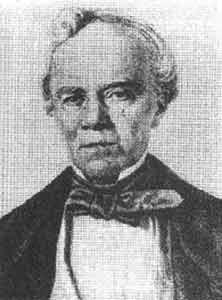
Manuel Carpio’s 1849 poem is one of the earliest known literary works titled “La Llorona.” His ghost Rosalía is murdered by her husband rather than killing her children. Source. Anonymous nineteenth-century portrait / Public Domain.
Where Medea and Malintzin fit — and where they don’t
The modern La Llorona story has an obvious cousin in Greek tragedy. In Euripides’ Medea, a woman abandoned by Jason murders their children. Scholars have compared the stories for good reason, and European classical literature was certainly part of the intellectual world of colonial New Spain.
What we do not have is a document showing the legend being copied from Medea. The similarity is suggestive, not a receipt.
The same caution applies to Malintzin, also known as Doña Marina or La Malinche. She worked as interpreter and intermediary for Hernán Cortés during the conquest and had a son, Martín, with him. Later Mexican nationalism turned her into an enormously loaded symbol of betrayal, conquest, sexuality and the birth of mestizo Mexico.
That made her an irresistible figure to connect with La Llorona, especially once writers began reading the weeping mother as a woman mourning conquest itself.
But Malintzin did not drown Martín. She later married Juan Jaramillo and had a daughter, María. Even basic details of her later life, including the date of her death, remain debated.
The La Malinche connection belongs to the legend’s afterlife, not to a solved historical mystery.
That distinction has become especially important in Chicana and Mexican feminist writing, where the old image of Malintzin as a national traitor has been challenged as both simplistic and deeply unfair to an Indigenous woman whose choices were made under conquest and enslavement.
The other women crying on Latin America’s roads
La Llorona is not the only female apparition in Latin American folklore, and this is another place where modern retellings tend to flatten everything.
La Siguanaba, La Cegua, La Sayona and La Tulevieja all share certain ingredients with La Llorona: lonely roads, water, sexual betrayal, motherhood, frightening transformations and men or children placed in danger.
They are not just regional aliases for the same ghost.
Comparative folklorists study them together because traditions borrow, overlap and migrate. A storyteller can absorb a motif from a neighboring legend without turning two figures into one. Treating every dangerous woman in Latin American folklore as “another La Llorona” loses exactly the regional character that makes the stories worth preserving.
Why the water never disappears
If there is one setting La Llorona cannot seem to escape, it is water.
In the standard story, the reason is obvious: the children drown. But the landscape itself gives the motif more weight. Tenochtitlan rose within the Lake Texcoco system. Xochimilco still carries people along canals between chinampas. Across rural communities, rivers and irrigation channels were practical hazards long before anybody needed a scholarly explanation for why parents might frighten children away from them after dark.
Folklore often does several jobs at once. A story can carry religious memory, entertain, frighten and function as a warning without having been deliberately invented for any one of those purposes.
La Llorona works perfectly that way. Tell a child that a river is dangerous and you may be ignored. Tell them a grieving woman is waiting in it and they may be home before sunset.
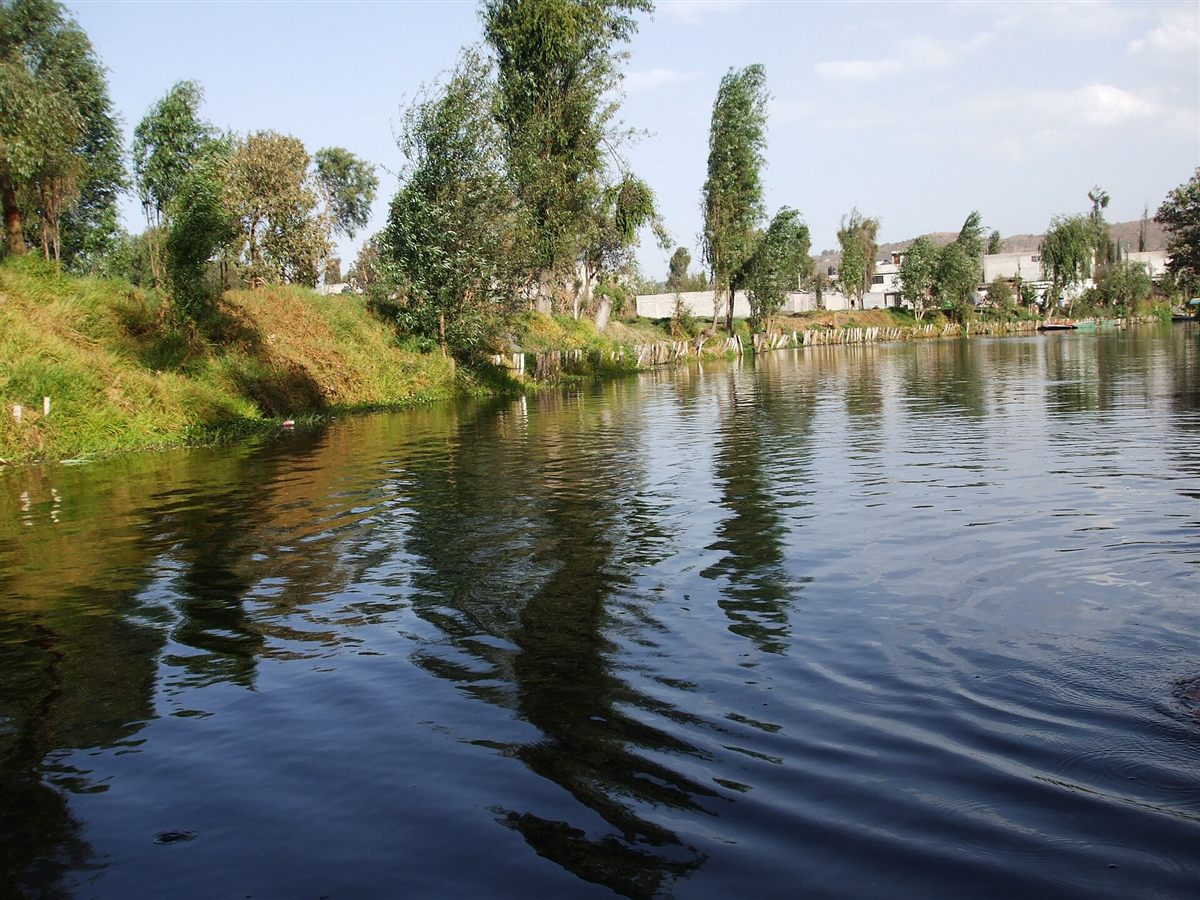
Xochimilco’s canals provide a living landscape for modern La Llorona performance and storytelling. Source. Fer Seelbach / CC BY 2.0.
Xochimilco keeps rewriting her in public
The legend is still changing in Mexico, and one of the clearest examples happens every autumn in Xochimilco.
A large theatrical production has been staged there since the early 1990s. Audiences travel by trajinera through the canals before watching a performance that uses music, dance and the landscape itself as part of the story.
The interesting part is what the production does with La Llorona. Official descriptions have connected her mourning not only with lost children but with conquest, political violence, earthquakes and disappearances.
That is not a corruption of a perfectly preserved ancient tale. It is folklore behaving exactly as folklore always has: taking a familiar figure and giving her the grief of the present.
The Xochimilco Llorona is both old and new, which may be the most traditionally Mexican thing about her.
The famous song is its own La Llorona
Then there is the song.
The traditional “La Llorona” associated with the Isthmus of Tehuantepec in Oaxaca is often assumed to be the ghost story put to music. It is not that straightforward.
Library of Congress research traces printed versions to at least the mid-1930s and treats the song as traditional rather than the work of one securely identified composer. Smithsonian Folkways has preserved versions in Spanish and Isthmus Zapotec.
Its verses change from singer to singer. They deal with love, death, longing and pain, addressing “Llorona” as a figure inside the song. They do not normally give us the full plot of María, the murdered children and eternal wandering.
That flexibility is part of the reason the song has lasted. Chavela Vargas can sing it one way, another performer can add different verses, and the emotional center survives.
The word Llorona has become bigger than one ghost story.
Cinema helped freeze one version of the ghost
When Ramón Peón’s La Llorona appeared in 1933, the legend entered Mexican horror cinema at its foundation. Filmoteca UNAM describes it as the country’s first horror film and has worked to preserve a surviving copy.
Film does something oral folklore does not: it fixes an image.
Once audiences see the white dress, the face, the water and the scream on screen, those choices can begin to look like ancient rules. Later filmmakers inherit them, exaggerate them and add new ones. The mournful apparition slowly becomes a more aggressive horror villain because villains need to do more on screen than warn that somebody else is about to die.
Hollywood pushed that version even further in The Curse of La Llorona (2019). The movie contains Annabelle references and brings back Father Perez, so it is easy to understand why audiences placed it inside The Conjuring Universe. Director Michael Chaves and producer Peter Safran later said it is not officially part of that franchise. The connection is more Easter egg than canon.
The more interesting 2019 film came from Guatemala.
Jayro Bustamante’s La Llorona takes the legend away from haunted-house mechanics and points it toward historical violence. Its ghost story unfolds around a military commander facing the consequences of atrocities committed against Indigenous people during Guatemala’s armed conflict. The film won the Giornate degli Autori Director’s Award at Venice and later reached the Academy’s International Feature shortlist.
The legend had once again found a different reason to weep.
Is there a “real” La Llorona?
Not in the way ghost-hunting websites usually mean it.
There is no verified María whose life can be demonstrated as the source of every version, and there is no scientific evidence proving the existence of a supernatural woman wandering waterways.
The folklore itself is another matter. That is thoroughly real.
La Llorona appears in oral tradition, colonial-era source material, nineteenth-century poetry, music, theater and more than ninety years of horror cinema. She has been used to talk about motherhood, betrayal, conquest, migration, gender, family, danger and political violence. Different communities have made her mean different things without completely losing the woman crying beside the water.
That is probably why the search for one “true story” keeps failing.
There was never only one.
La Llorona has spent centuries changing with the people who tell her story. What survives from one version to the next is not a biography but an emotion: somebody has been lost, and the woman by the water is still mourning them.
Sources & further reading
- Library of Congress: La Llorona roots and branches
- Library of Congress: Songs of La Llorona
- Smithsonian Folkways: La Llorona
- La Llorona research, University of Guadalajara
- Revista Chilena de Literatura: La Llorona and related traditions
- La Llorona scholarship, SciELO México
- American Historical Association: Who Was Malinche?
- Smithsonian: La Malinche
- Secretaría de Cultura: La Llorona in Xochimilco
- Filmoteca UNAM


.JPG)

