News / TV & Streaming
The Birds at HBO: Sarah Snook's Alaska Series and What It Changes From the Original
HBO is developing The Birds with Sarah Snook. Compare the Alaska murder-mystery premise with Daphne du Maurier's 1952 story and Hitchcock's 1963 film.
Topics: The Birds, Sarah Snook, HBO, Daphne du Maurier, Alfred Hitchcock, Tom Spezialy, Alaska, Horror Adaptation

HBO has taken Sarah Snook’s planned The Birds limited series into development, but that is not the same as ordering the series to production. The news reported on October 27, 2026 gives the project a network home after it was pitched to buyers earlier in the year. It does not establish an episode count, a filming date or a premiere window.
The more interesting question for horror readers is what kind of Birds this would be. The original was a 1952 story about an ordinary family trying to survive an inexplicable attack in Cornwall. Alfred Hitchcock made a different kind of nightmare in 1963, moving the action to the California coast and inventing a new group of characters. The proposed HBO version moves the action again, to Alaska, and adds a crime investigation.
The project is in development as of October 27, 2026. This article compares announced premises and documented earlier adaptations. It is not a review of an unaired show.
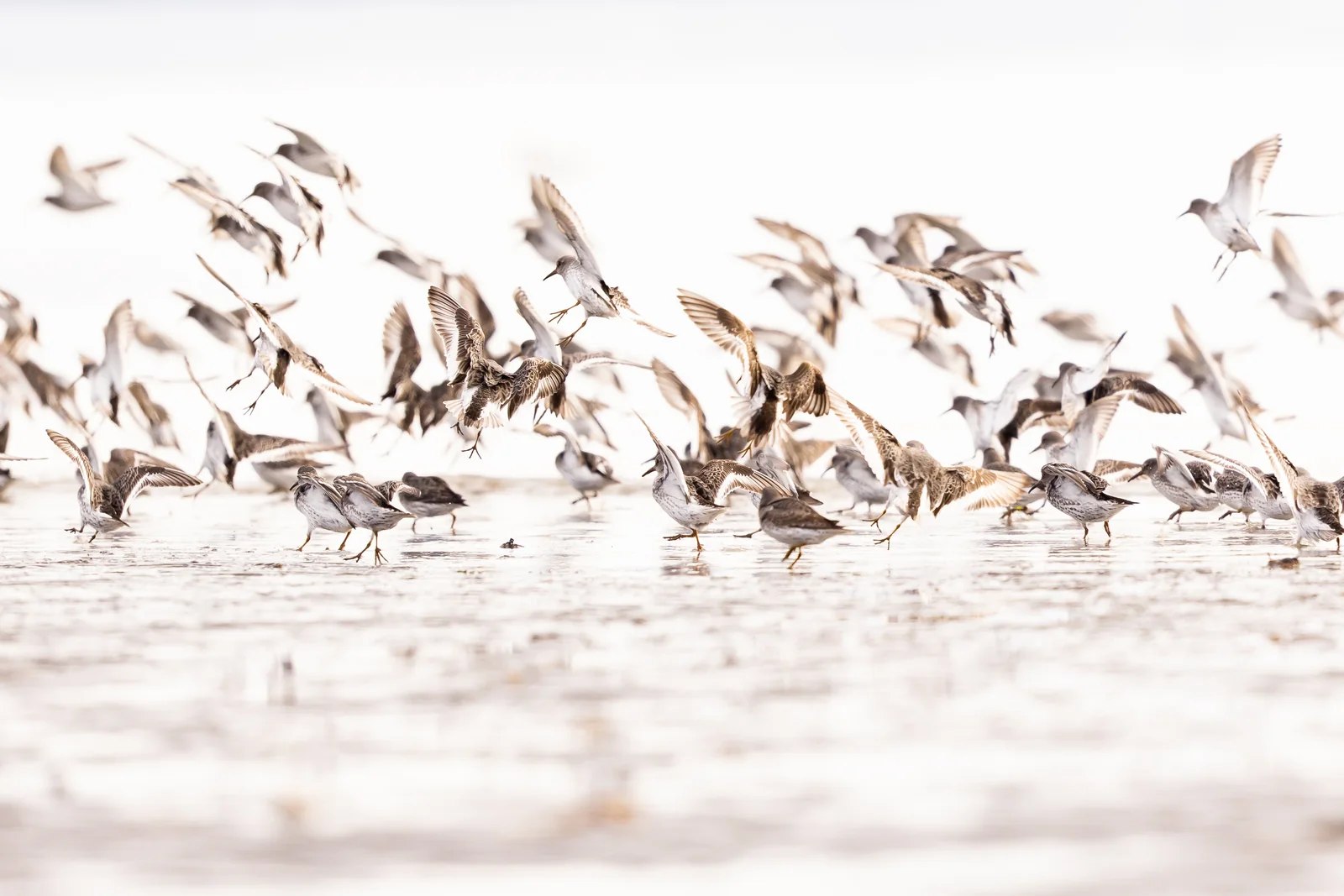
Hero photograph: a real flock of rock sandpipers at Kachemak Bay, Alaska, photographed on March 12, 2022, by Lisa Hupp / U.S. Fish and Wildlife Service. U.S. federal government public domain; resized and converted to WebP. An editorial location-and-wildlife illustration, not a still from HBO’s series. The pictured birds are not presented as the species featured in the fictional attacks.
What did HBO actually announce on October 27?
Deadline’s October 27 report, also covered that day by Bloody Disgusting, says HBO has taken the limited-series package into development. Snook is attached to star and executive produce. Tom Spezialy, whose credits include The Leftovers and HBO’s Watchmen, is attached to write the pilot. Universal Global Television and HBO are named as co-studios, with Heyday Television, associated with producer David Heyman, also behind the project.
This is a genuine change from the position in May 2026, when coverage described a package being offered to potential buyers. TVLine’s May 29 report explicitly said no network or streaming destination had yet been secured. HBO’s involvement answers that distribution-development question, but only that question.
A network developing a script can decide against producing it, change the creative team or revise the premise. None of the consulted October 27 coverage confirms that cameras have started rolling or that viewers will see a completed show. “HBO is developing The Birds” is accurate; “HBO has premiered The Birds” or “HBO has ordered a full season” would not be.
The HBO association also brings Snook back to the network associated with Succession. That is a casting connection, not evidence that The Birds will resemble Succession in tone or structure.
What is Sarah Snook’s The Birds supposed to be about?
The consistently reported foundation is present-day Alaska, a new protagonist called Myra Massey, an investigation connected to a childhood friend and lethal bird attacks. Spezialy’s setting replaces the Cornish coast of du Maurier’s story and the northern California town in Hitchcock’s film.
There is an important caveat about the more detailed plot descriptions. The original May 29 synopsis, published by Deadline and reproduced by TVLine and in Bloody Disgusting’s October 27 report, identifies Myra as a traveling magistrate. In that version she returns to an isolated Alaskan hometown for a presumptive-death hearing, finds her childhood friend’s body and becomes involved in a murder investigation while bird attacks escalate.
Deadline’s October 27 report instead describes Myra returning with a young daughter amid a custody dispute and investigating the disappearance of a childhood friend. Variety’s account carries the same newer logline, also repeated by Kicks & Grips. The May and October trade reports are not identical. Neither explains why the detailed pitch differs. Without a reconciled statement from HBO or the producers, it would be irresponsible to merge all those details into one supposedly confirmed storyline.
Myra’s identity as Snook’s proposed lead, the Alaskan setting and the broad crime-and-bird-attack concept are consistent across the reporting. The custody-and-disappearance premise is the newer published description, but it does not explain whether the earlier magistrate role has been retained. No reliable source establishes who controls the birds, why the birds attack or whether the fictional investigation reaches a supernatural explanation.
Where did The Birds originate? Daphne du Maurier’s 1952 story
The first Birds was not a Hitchcock screenplay. Daphne du Maurier published the story in 1952, in the collection The Apple Tree. It takes place on the Cornish coast, focusing on farm worker Nat Hocken and his family as familiar birds become a collective threat. The perspective is deliberately close to a household trying to defend itself rather than a detective building a murder case. The literary overview at Encyclopedia.com identifies Nat, the family and the 1952 collection, and discusses the story’s atmosphere of fear.
The power of du Maurier’s premise lies partly in its refusal to make the attacks ordinary human crime. The birds are not accomplices in a documented murder, and the work is not a report of actual animal behavior. It is a fictional disaster that reaches into a domestic space. The threat feels larger than any individual bird because the household cannot reliably distinguish safe times, safe places or safe routines.
Its setting and historical atmosphere also matter. Cornwall is not merely a coastline where gulls happen to live: it is a lived-in agricultural and coastal world where daily work is interrupted by a menace that has no negotiable human face. The sense of collective vulnerability is more central to the original than the question of which character might solve a mystery.
That is the standard against which to judge claims that the proposed television version is “going back” to du Maurier. Returning to a core idea—nature becoming inexplicably hostile—does not necessarily mean retaining the original characters, geographical setting or ending.
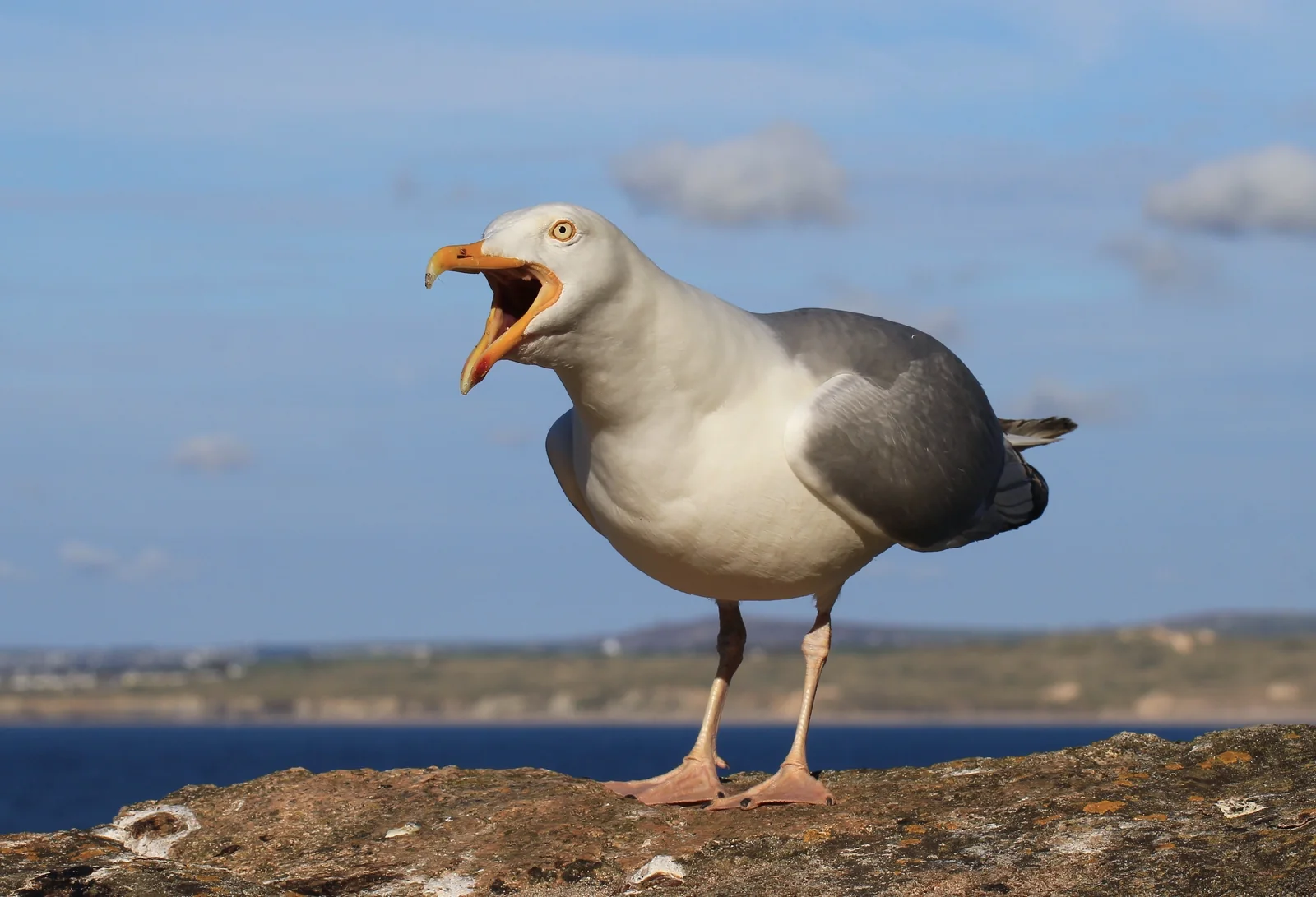
An actual herring gull photographed near St Ives, Cornwall, on May 19, 2013, by Stu’s Images / Wikimedia Commons, CC BY-SA 3.0. Resized and converted to WebP under the same image license. This is a modern wildlife photograph, not evidence for the fictional events in du Maurier’s story.

What did Alfred Hitchcock change in the 1963 film?
Hitchcock kept the basic horror engine—birds suddenly attacking people—but replaced much of the story around it. The film follows Melanie Daniels, played by Tippi Hedren, from San Francisco into Bodega Bay, where she encounters Mitch Brenner, played by Rod Taylor. The birds’ attacks disrupt an initially social and romantic plot. The shift from Cornwall to northern California is well documented by the British Film Institute’s retrospective.
The film also creates dread using cinema’s particular tools. In the famous schoolhouse sequence, Hitchcock returns to a climbing frame where more crows are gradually gathering behind a character who does not notice them. The audience knows more than the person in danger. The BFI’s published look at Harold Michelson’s storyboards explains how carefully that delayed realization was constructed.
The cinematic emphasis is not the same as Nat Hocken’s household siege in the story. Melanie is a visitor caught in a community’s crisis, and the film’s relationships have their own dramatic importance. Calling the 1963 film a faithful scene-by-scene translation would overlook those changes.
The cinematic bird attacks are also fictional. A real image of a flock, or an account of ordinary aggressive bird behavior, does not authenticate the film’s unexplained mass violence. That distinction is especially important when modern coverage begins speculating about ecological explanations for a series that nobody has yet seen.
Cornwall, Bodega Bay and Alaska: three versions compared
| Version | Place and period | Central perspective | What creates the horror |
|---|---|---|---|
| Du Maurier’s 1952 story | Cornwall, in a post-war British setting | Nat Hocken and his family | A household faces growing, unexplained attacks by birds |
| Hitchcock’s 1963 film | Bodega Bay, northern California | Melanie Daniels and a community she visits | Escalating attacks interrupt everyday relationships and social life |
| HBO development project, 2026 | Present-day Alaska | Sarah Snook’s proposed Myra Massey | A crime investigation collides with deadly bird attacks; detailed pitch accounts vary |
The common denominator is the disruption of human control by birds. The distinct changes are the people we follow and the questions those people are trying to answer. An adaptation can preserve the same nightmare while building an entirely different story around it.
The proposed Alaskan location may change the practical stakes, too: distance, landscape and local access to help could shape a survival story. But those are possibilities suggested by a setting, not established facts about an unproduced script. No verified production materials disclose which Alaskan town, season or species will be used on screen.
Is the HBO series really adapting the story, or remaking Hitchcock?
The development project’s representatives have said they want to draw from du Maurier rather than simply replay Hitchcock’s film. As Shelf Awareness reported in June, Heyday executive Sue Gibbs described using the literary material as inspiration and linked the theme of nature turning against people to current anxieties about climate change.
That statement explains a creative interest, not a confirmed scientific mechanism in the show’s plot. It does not prove that a climate disaster causes the attacks, that the birds are under supernatural control or that the script will explain their behavior at all. Such claims would be premature.
There is also a productive tension between the word remake and the details so far. A viewer who expects a new Melanie Daniels story set in Bodega Bay may be surprised by May’s pitch about an Alaskan magistrate investigating a death. A reader who expects Nat Hocken’s Cornish house under siege may likewise find a police-procedural element unfamiliar. The pitch appears to borrow a recognizable concept while rearranging its narrative framework.
This is not inherently less faithful to the source’s effect. Both original story and film have already shown how the idea of ordinary birds becoming frightening can survive major changes in character and place. The question is whether the eventual series can make the attacks unsettling rather than simply using them as obstacles in a murder mystery. That judgment must wait for completed episodes; it cannot be made from a synopsis.
Morbid Index has made a similar source-versus-screen distinction in its comparison of Adam Nevill’s Last Days and the announced Ascension television adaptation. The principle is the same: a production’s public premise is evidence of what the producers have described, not proof of what an unaired series will ultimately contain.
Has HBO given The Birds a release date or trailer?
No verified premiere date, official trailer, finished episode count or start-of-filming announcement accompanies the October 27 development news. Reports name Snook and Spezialy and describe a project at HBO, not a completed limited series available to stream. There is no confirmed Swedish release date or platform announcement to infer from the development arrangement.
Images from the 1963 film or photographs of Snook at other events are not footage from the new production. Any purported “official trailer” should be checked against a verified original studio or network upload before being treated as authentic.
What makes this development news worth watching?
The specific October 27 change is HBO’s involvement, not Snook’s casting or the Alaskan premise, both of which had already been reported in May. It is a meaningful step for a project that previously lacked a buyer, but it is not a guarantee that production will proceed.
The more enduring question is one of adaptation. Du Maurier used a Cornish family’s vulnerability to make ordinary birds terrifying. Hitchcock used a California community and the grammar of suspense cinema. The proposed television series would use Alaska and a violent mystery. If it eventually reaches the screen, viewers can ask whether the birds remain an unsettling, unexplained force—or become something the new story wants to explain. For now, that answer is unknown.
Sources & further reading
- Deadline, The Birds lands at HBO for development (October 27, 2026)
- Bloody Disgusting, HBO developing The Birds (October 27, 2026)
- TVLine, May 29 initial series package and premise
- British Film Institute, Hitchcock's The Birds at 50 (2013)
- Encyclopedia.com, The Birds by Daphne du Maurier (1952)
- Shelf Awareness, series and adaptation-source discussion (June 1, 2026)
- Kicks & Grips, October 27 alternate reported synopsis
- Deadline, original magistrate premise and creative approach (May 29, 2026)
- Variety, HBO development and current custody/disappearance logline (October 27, 2026; Australian edition dated October 28)
- USFWS via Wikimedia Commons, Alaska rock sandpipers (public domain)
- Wikimedia Commons, Cornwall herring gull by Stu's Images (CC BY-SA 3.0)