lore / Folklore
The Wendigo Explained: What the Algonquian Tradition Actually Says
What is the Wendigo? A careful look at Algonquian wiindigoo traditions, cannibalism, greed, the disputed idea of Wendigo psychosis and the antlered monster created by modern horror.
Topics: Wendigo, Algonquian Folklore, Indigenous Folklore, Monsters & Creatures, Horror
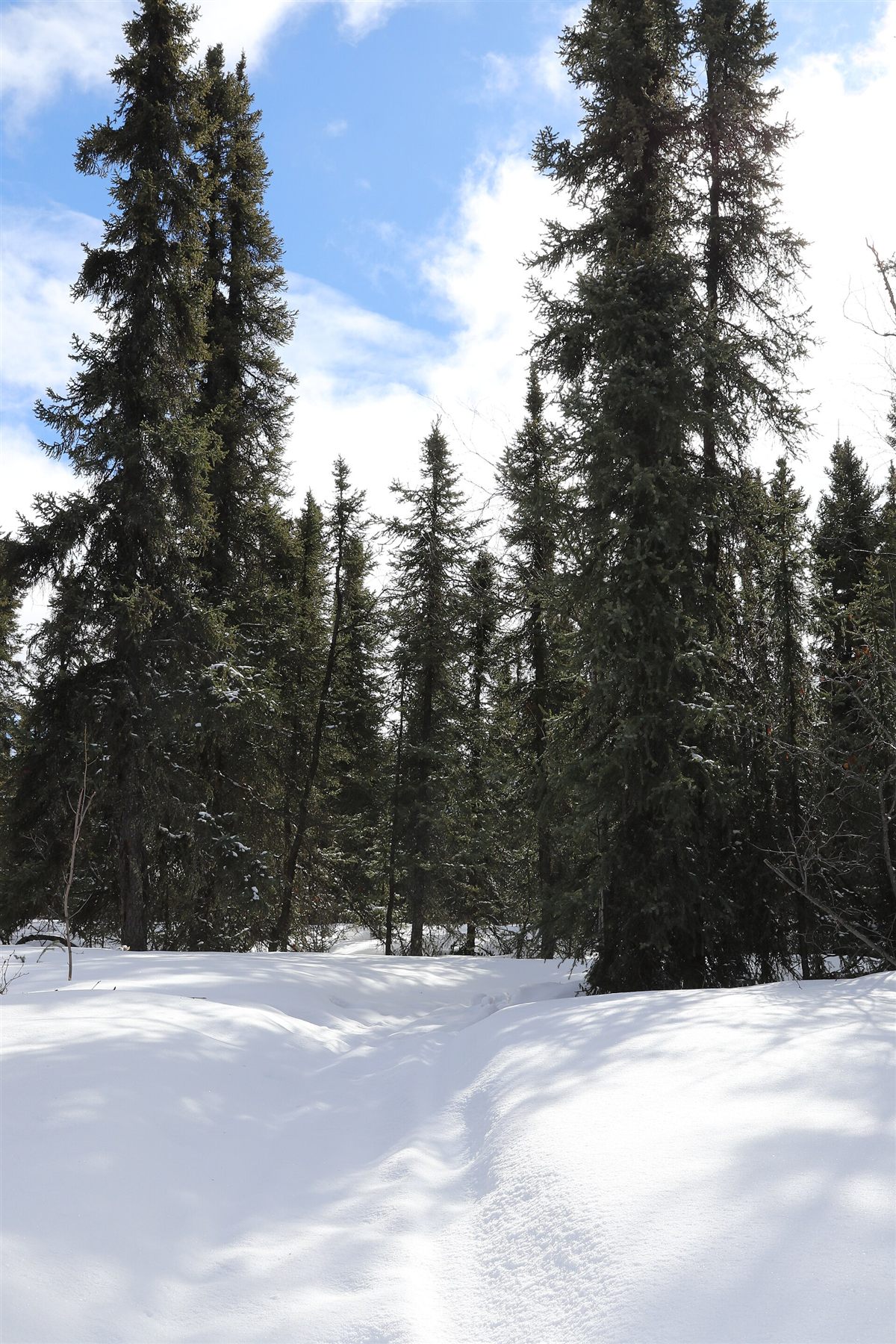
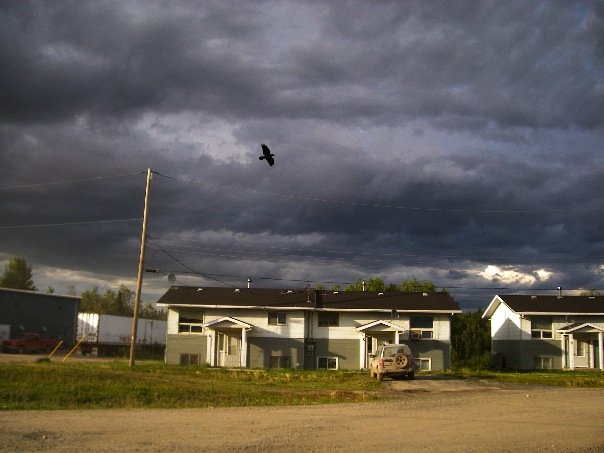
Charlie Ebbers / BLM Alaska via Wikimedia Commons, CC BY 2.0
Search for the Wendigo today and one image appears again and again: antlers, a deer skull and a towering body moving through a frozen forest.
That image is modern.
The much older traditions behind the Wendigo — wiindigoo in Ojibwe and related forms such as Cree wīhtikōw — belong to several Algonquian-speaking peoples of northern North America. The details are not identical from one nation or community to another, but recurring themes include cannibalism, winter hunger, dangerous excess and the destruction of the social obligations that help a community survive.
The Wendigo is therefore more complicated than a cryptid.
It can be a spirit, a transformed human being, a moral category or a warning about what happens when appetite becomes more important than reciprocity. Indigenous writers have also continued to use the figure as a living metaphor for greed, colonial exploitation and endless consumption.
The deer skull came later.
The Wendigo Belongs to Living Algonquian Traditions
“Wendigo” is an English spelling applied to related terms found in several Algonquian languages.
Ojibwe commonly uses forms such as wiindigoo, while Cree languages have related forms including wīhtikōw. Historical English and French writers produced numerous spellings — windigo, witiko, wetiko and others — because they were recording related words from different languages and dialects through their own spelling systems.
That variety is a useful warning.
There is no single pan-Indigenous “Wendigo mythology.” The figure appears in traditions of peoples including Ojibwe/Anishinaabe, Cree and Saulteaux communities, among others, but stories, terminology and emphasis vary.
Scholar Brady DeSanti has stressed this point in his work on popular culture and Ojibwe traditions: the Windigo remains part of living Indigenous religious and cultural contexts rather than being a folklore character severed from the communities that tell its stories.
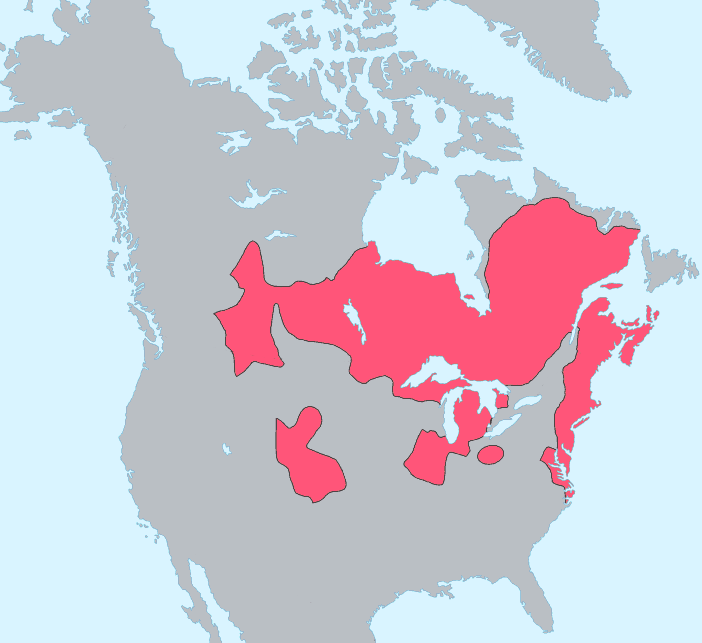
Algonquian languages cover a vast area and many distinct peoples. A shared language family does not mean every community tells the same Windigo story. ish ishwar / Wikimedia Commons, CC BY 2.0. Source.
Hunger, Cannibalism and the Breakdown of Reciprocity
The northern forest environment is central to many Wendigo interpretations.
Winter starvation was not an abstract horror. Hunting groups could become isolated for long periods, game could disappear, and failed food supplies could become fatal.
In that setting, sharing was practical as well as moral.
A person who hoarded food while others starved threatened more than social harmony. They threatened the survival of the group.
This is one reason Wendigo traditions are repeatedly connected to cannibalism and excessive appetite. A person might become associated with the Wendigo after committing cannibalism, believing they were becoming one, or behaving in ways a community understood as dangerously antisocial.
Robert Brightman’s influential study The Windigo in the Material World examines the figure in relation to Cree material life and social relations rather than treating it as a simple monster story.
Other Indigenous interpretations emphasize the same broader danger: a hunger that no amount of consumption can satisfy.
The Wendigo is frightening because eating does not solve its hunger.
Eating makes the hunger larger.
What Did a Traditional Wendigo Look Like?
There is no single universally authoritative physical description.
That is another place where internet summaries become too confident.
Ojibwe traditions discussed by scholars including DeSanti often describe the Windigo as a large, emaciated human-like being, sometimes associated with an icy heart. Other recorded traditions focus more on possession or human transformation than on a fixed monster anatomy.
The recurring image is not a healthy predator.
It is hunger made visible.
Gauntness, unnatural size and the idea of something human becoming less human are far more securely rooted in the traditional material than the now-familiar deer skull.
Some stories describe ice as central to the being or to the process of defeating it. Others do not. Details involving glowing eyes, exact skin color, a particular smell or one universal method of killing a Wendigo should therefore not be presented as rules shared by every Algonquian tradition.
The folklore is older and more varied than a monster manual.
The Antlers Are a Modern Addition
The antlered Wendigo is now so common that it can look ancient.
Scholarly work on popular representations says otherwise.
DeSanti notes that popular media frequently reshapes the Windigo into stock-monster forms unlike Ojibwe traditions. More recent scholarship on Wendigo imagery likewise points out that antlers and deer heads have no clear basis in traditional narratives.
One early documented step in that visual transformation appeared in 1944, when illustrator Matt Fox created a horned figure for a reprint of Algernon Blackwood’s The Wendigo. Later films and television made cervine imagery increasingly familiar.
Larry Fessenden’s 2001 film Wendigo was particularly influential in 21st-century horror imagery. Shows such as Hannibal then helped make the antlered silhouette instantly recognizable to audiences who had never encountered the Indigenous traditions behind the word.
It would be too simple to say one movie “invented” the deer-skull Wendigo. The visual language developed across decades.
But it is modern non-Indigenous horror iconography, not a standard ancient description.
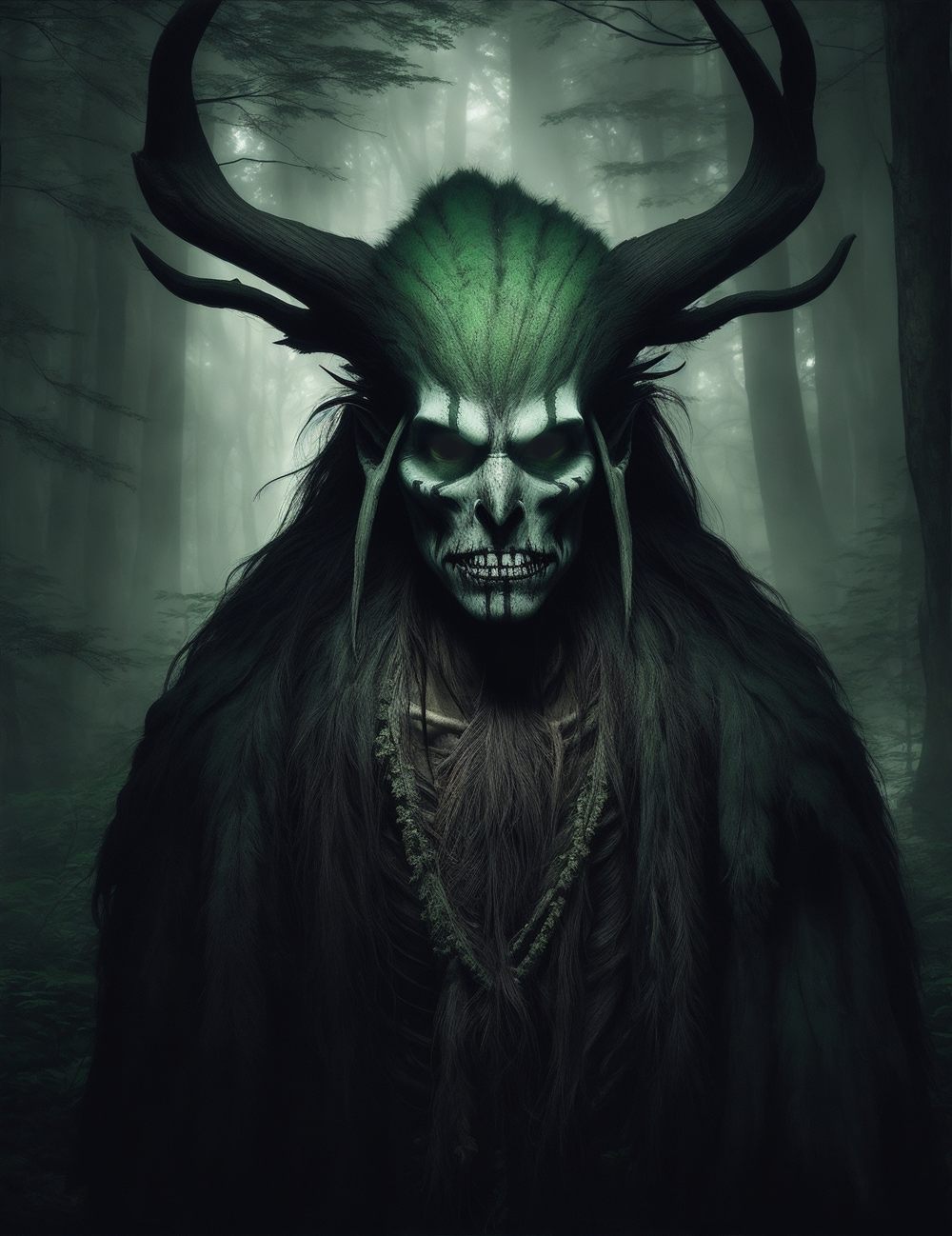
Contemporary artists have produced many different Wendigo designs. This modern illustration is included as an example of later visual reinterpretation, not as evidence for traditional Indigenous iconography. Jspark light / Wikimedia Commons, CC BY-SA 4.0. Source.
Algernon Blackwood Helped Move the Wendigo into Horror Fiction
Long before modern games and television, English writer Algernon Blackwood brought the name into Anglophone supernatural fiction.
His novella The Wendigo first appeared in the collection The Lost Valley and Other Stories in 1910.
Blackwood’s story takes place in the Canadian wilderness and uses the Wendigo as an overwhelming supernatural presence connected to wildness, distance and terror.
It was enormously influential.
But Blackwood was adapting a name and idea from Indigenous traditions for his own weird fiction. His story should not be used as an ethnographic account of Ojibwe or Cree belief.
That distinction became increasingly blurred as later horror writers adapted Blackwood’s version rather than returning to Indigenous sources.
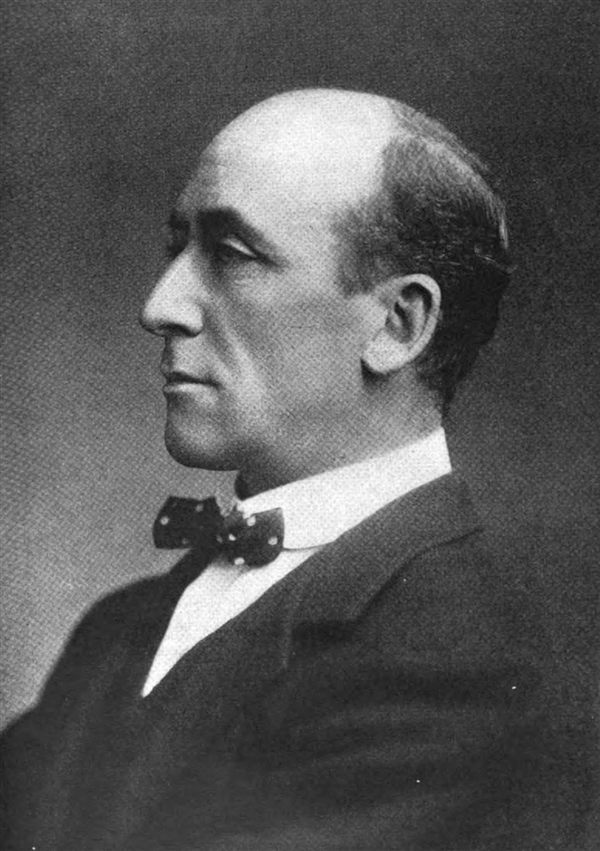
Algernon Blackwood’s 1910 novella helped introduce a transformed Wendigo to a large non-Indigenous horror audience. Unknown photographer, Algernon Blackwood, no later than 1916 / Public Domain via Wikimedia Commons. Source.
Can a Human Become a Wendigo?
Many traditions connect the Wendigo to human transformation, but not through one universal mechanism.
Cannibalism is the best-known route.
In stories shaped by famine, consuming another person can mark a catastrophic crossing of moral boundaries. But other accounts involve possession, dreams, dangerous spiritual states or behavior that a community understands through the Wendigo concept.
This is why describing the figure as a werewolf-style “curse” is misleading.
The important transformation is not always physical.
The human being becomes identified with limitless appetite and with a rejection of reciprocal obligations.
In some teachings the most frightening part of the Wendigo is therefore not that a monster might arrive from outside the community.
It is that a human being can become Wendigo-like.
Was “Wendigo Psychosis” a Real Mental Illness?
For decades, psychiatry and anthropology textbooks used “Wendigo psychosis” as a classic example of a culture-bound syndrome.
The proposed condition was usually described as involving fear of becoming a cannibal, belief in Wendigo transformation or an urge to consume human flesh.
Morton Teicher’s 1960 work helped establish that interpretation in academic literature.
Then anthropologists challenged the category itself.
In 1982, Lou Marano published Windigo Psychosis: The Anatomy of an Emic-Etic Confusion in Current Anthropology. After archival research and field experience, Marano argued that the available historical evidence did not demonstrate a distinct behavioral psychosis in the way earlier writers had claimed.
His argument was not simply that every story was fake.
It was that outsiders had sometimes confused a culture’s concepts and accusations with a medically observable psychiatric syndrome.
Later cultural-psychiatry scholarship has treated Marano’s critique as an important example of the dangers of turning culturally specific ideas into supposedly universal medical categories without enough attention to history, power and social context.
The debate has not vanished entirely. Recent psychiatric literature still discusses Wendigo psychosis historically.
But it is misleading to present it today as a straightforward, clinically established disorder unique to Indigenous people.
Jack and Joseph Fiddler: When Two Legal Systems Collided
The history of Zhauwuno-geezhigo-gaubow, known as Jack Fiddler, shows why this subject cannot be reduced to monster trivia.
Fiddler was an Oji-Cree/Anishinaabe leader of the Sucker people in northwestern Ontario and was known in oral history for confronting Windigos.
According to the Dictionary of Canadian Biography, Fiddler told Cree Methodist minister Edward Paupanakiss that he had defeated 14 Windigos during his lifetime.
In 1906, Joseph Fiddler’s daughter-in-law Wahsakapeequay became severely ill and delirious. Jack and his brother Pesequan, known in English as Joseph Fiddler, strangled her after she was understood within their community as becoming a Windigo.
The Royal North-West Mounted Police learned of the death and arrested the brothers on June 15, 1907.
The prosecution exposed a profound conflict between Canadian criminal law and the legal and spiritual framework under which the Fiddlers understood their actions.
Jack Fiddler died by suicide in custody before trial.
Joseph was convicted of murder. The jury recommended mercy, but Commissioner Aylesworth Bowen Perry sentenced him to hang. Appeals continued while Joseph was imprisoned at Stony Mountain Penitentiary.
An order for his release was finally issued on September 4, 1909.
It arrived too late.
Joseph had died of tuberculosis three days earlier.
Sandy Lake in northwestern Ontario. The Fiddler case unfolded in this broader region and later became a major example in scholarship on Indigenous law and colonial authority. Morganbentham / Wikimedia Commons, CC BY-SA 3.0. Source.
The Fiddler Case Is Not Proof of “Wendigo Psychosis”
Older writing sometimes treats the Fiddler case as though it demonstrates a psychiatric disorder.
That conclusion goes beyond the evidence.
Wahsakapeequay was described as seriously ill and delirious. The killing was interpreted through local Windigo beliefs and customary practices, while Canadian authorities interpreted the same act through criminal law.
Modern legal scholarship has used cases like this to examine conflicting systems of authority, colonial jurisdiction and the way Canadian law displaced Indigenous legal orders.
That is much more historically useful than diagnosing people from a century ago with a disputed syndrome.
Wendigo and Skinwalker Are Not the Same Thing
Online monster lists frequently put Wendigo and Skinwalker in the same category.
They come from different peoples and different cultural traditions.
Wendigo traditions are associated with Algonquian-speaking peoples of northern North America.
Skinwalker traditions belong specifically to Diné/Navajo culture in the Southwest.
Treating them as interchangeable “Native American cryptids” erases the cultural specificity of both.
The same caution applies to Chenoos, Wechuge and other northern supernatural beings. Similarities between stories do not mean they are alternate names for one universal monster.
The Wendigo as a Modern Metaphor for Greed
The Wendigo did not stop being culturally meaningful when horror movies discovered it.
Indigenous writers have continued to use the figure to discuss extraction, colonialism, consumption and economic systems built around taking without reciprocity.
In Columbus and Other Cannibals, first published in 1978, Native American scholar Jack D. Forbes used wétiko as a framework for examining exploitation, imperialism and the consuming of other peoples and lands.
Anishinaabe writer Basil Johnston similarly used the Windigo as a way to think about modern greed and corporate extraction.
Potawatomi botanist and writer Robin Wall Kimmerer develops the metaphor in Braiding Sweetgrass. Her chapters “Windigo Footprints” and “Defeating Windigo” connect traditional teachings about insatiable appetite to modern systems of overconsumption. She describes an economy organized around endless growth and fabricated demand as a form of Windigo economics.
These are not claims that an invisible creature literally runs corporations.
They are contemporary Indigenous uses of an old moral language.
The hunger has become economic.
Is the Wendigo a Cryptid?
Not in the ordinary sense of the word.
Cryptozoology usually treats a cryptid as an undiscovered biological animal: Bigfoot, an unknown lake creature, or something else supposedly awaiting physical confirmation.
The Wendigo comes from spiritual, moral and cultural traditions.
Turning it into a woodland animal with a species profile strips away most of what the concept historically meant.
There is no scientific evidence for a biological Wendigo species.
There is extensive historical and ethnographic evidence that Windigo beliefs and stories have mattered deeply within Algonquian communities.
Those are two completely different kinds of “real.”
What the Wendigo Actually Represents
The antlers are memorable.
The older idea is more unsettling.
The Wendigo is hunger that becomes identity. It is consumption that creates more need instead of satisfying it. It is the person who takes when survival depends on sharing.
The details vary because the traditions vary.
That is precisely why reducing all of them to one deer-headed horror monster gets the story wrong.
Modern horror kept the snow, the cannibalism and the fear.
The deeper warning was about what happens when a human appetite stops recognizing any limit.
Sources & further reading
- Brady DeSanti, The Cannibal Talking Head
- Robert A. Brightman, The Windigo in the Material World
- Lou Marano, Windigo Psychosis: The Anatomy of an Emic-Etic Confusion
- Heart of Ice: Indigenous Defendants and Colonial Law in the Canadian Northwest
- Dictionary of Canadian Biography: Jack Fiddler
- Wendigo in popular culture scholarship
- Wendigo folklore and popular culture research
- Algernon Blackwood, The Wendigo
- Robin Wall Kimmerer, Braiding Sweetgrass
- Jack D. Forbes, Columbus and Other Cannibals
.jpg)


