News / TV & Streaming
Bass X Machina Was Moved From October 6 to November 3 — What the Supernatural Western Changes About Bass Reeves
Netflix’s Bass X Machina now premieres November 3, replacing October 6. Separate its steampunk fantasy from the documented history of Bass Reeves.
Topics: Bass X Machina, Bass Reeves, Netflix, Brian Tyree Henry, LeSean Thomas, Studio Mir, supernatural western, steampunk, Deputy U.S. Marshal, Indian Territory
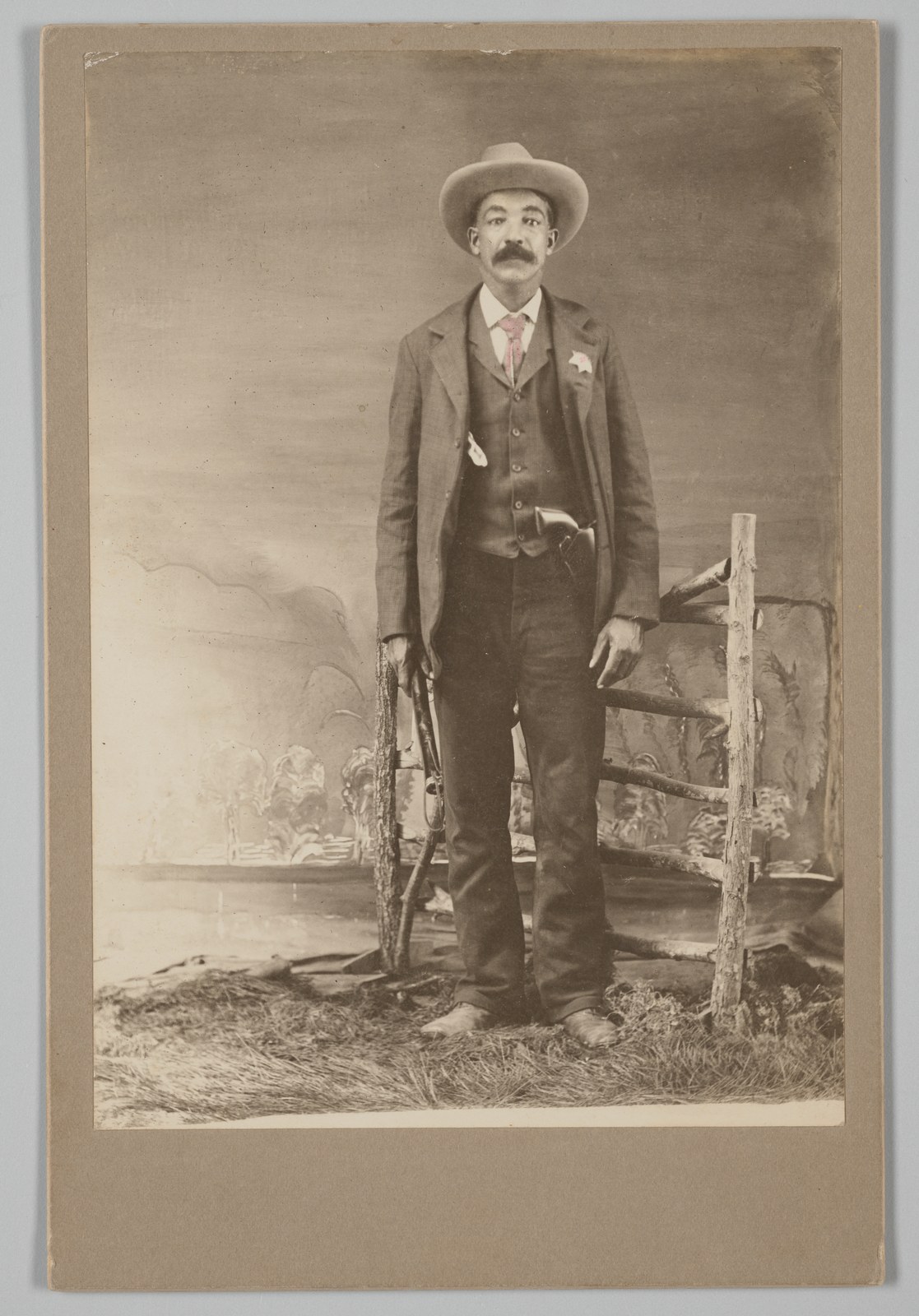
E. L. Goff / Smithsonian National Museum of African American History and Culture — Public Domain
If you were expecting Bass X Machina on Netflix on October 6, the date you saw was real — but it is no longer current.
Netflix originally announced the animated steampunk Western for October 6, 2026. The company later moved the series, and its current Annecy slate lists the premiere for November 3, 2026.
That correction is especially useful because older announcement stories still circulate with the original October date.
The series itself is stranger than a simple release-date change.
Brian Tyree Henry voices Bass Reeves in a supernatural frontier filled with outlaws, machines and monsters. The setting takes the name and reputation of a real nineteenth-century Deputy U.S. Marshal and pushes him into a fictional steampunk world.
That creates a clean Morbid Index question:
Which parts belong to the documented Bass Reeves, and which parts belong to Bass X Machina?
The answer is not difficult once the two stories are separated.
Bass Reeves was real.
The mechanical frontier is not.
When does Bass X Machina actually release?
Netflix’s current Annecy slate lists Bass X Machina for November 3, 2026.
The official Netflix teaser also gives November 3 as the release date.
That replaces the earlier October 6 date that appeared when the project was first announced.
So the current timeline is:
- original announced date: October 6, 2026;
- current Netflix date: November 3, 2026.
This is a delay, not a surprise same-day release.
Netflix has not removed the show from its catalog. Its official title page remains live, with Brian Tyree Henry, Tati Gabrielle and Cree Summer among the listed cast.
What is Bass X Machina?
Netflix describes the series as an adult animated fantasy and science-fiction Western created by LeSean Thomas and animated by Studio Mir.
The official logline places its central character in a lawless steampunk West filled with:
- violent outlaws;
- machines;
- supernatural terrors;
- and a family he is trying to protect.
Henry voices Bass and also serves as an executive producer.
Current cast listings include:
- Brian Tyree Henry as Bass;
- Janelle Monáe as Glory;
- Tati Gabrielle as Dana;
- Cree Summer as Ahni;
- Chaske Spencer as Lighthorse;
- Currie Graham as Rivenbark;
- Starletta DuPois as Etta.
Netflix’s publicity record identifies Henry’s character as Bass Reeves.
That name belongs to a real American lawman.
The world around him belongs to fiction.
Hosted by Netflix. Loading the player connects your browser to YouTube. If playback is unavailable here, use the direct link.
Video uploaded · Watch on YouTube ↗
The real Bass Reeves was born enslaved
The National Park Service dates Reeves’s birth to around 1838 in Arkansas.
Records of enslaved people were often incomplete, so his exact early biography is not equally certain in every detail.
The NPS says Reeves was born into slavery and later lived in Texas with the Reeves family that enslaved him.
During the Civil War, he separated from that household and spent time in Indian Territory.
After emancipation, Reeves built a life as a free man, farmer, scout and tracker.
That history is already dramatic.
It does not require robots.
Reeves became a Deputy U.S. Marshal in 1875
In 1875, the federal court at Fort Smith was trying to enforce federal law across a vast jurisdiction that included Indian Territory.
Reeves entered federal service as a Deputy U.S. Marshal.
The U.S. Marshals Service describes him as one of the first African Americans to serve in that capacity.
He worked in dangerous territory where federal deputies pursued people accused of crimes across enormous distances.
The job could involve weeks away from home, warrants for violent fugitives and travel through areas where local tribal governments and federal courts had overlapping but different authority.
That is the historical foundation beneath the legendary Reeves image.
The “3,000 arrests” figure comes from Reeves’s own lifetime
Bass Reeves is frequently credited with arresting more than 3,000 people.
That number should be sourced rather than repeated as folklore.
The National Park Service says Reeves was interviewed by a territorial newspaper in 1901 and stated that he had arrested more than 3,000 men and women who violated federal law in Indian Territory.
The NPS also says Reeves stated that he had killed 14 men in self-defense over his career.
Those claims come from Reeves’s lifetime, but they are still historical claims transmitted through surviving reporting and later research.
They are stronger than a modern internet legend.
They are not the same thing as a complete surviving arrest ledger proving every individual case.
The NPS site bulletin also warns that the incomplete record and conflicting career totals require historical caution.
He worked as a marshal for roughly three decades
Reeves served for about 32 years as a deputy marshal.
His career extended to Oklahoma statehood in 1907.
After leaving federal service, he worked as a police officer in Muskogee.
He died in 1910.
That long career explains why one episode can never summarize the whole historical figure.
A fictional adaptation has dozens of real stories it could draw from before inventing anything.
Bass X Machina goes in the opposite direction.
It uses the Reeves identity as a foundation and then openly enters fantasy.
The supernatural and mechanical elements are not hidden historical claims
Netflix is not presenting Bass X Machina as a documentary.
Its own official description calls the setting a steampunk West populated by machines and supernatural threats.
The promotional material includes mechanical technology that does not belong to Reeves’s real nineteenth-century career.
That makes the historical boundary unusually easy to state:
Documented Bass Reeves: formerly enslaved man, farmer, scout, Deputy U.S. Marshal, long federal law-enforcement career in Indian Territory.
Bass X Machina: a fictionalized Bass Reeves moving through a stylized world of advanced machinery and supernatural danger.
The second is inspired by the first.
It is not evidence about the first.
Reeves did use disguises — that part is historical
Some details that sound cinematic are supported by historical accounts.
The National Park Service says Reeves was known for working in disguise to gather information and arrest fugitives.
That is an important reminder that separating fact from fiction does not require making the real life boring.
Reeves’s actual job rewarded patience, tracking, deception and the ability to move through communities without announcing his purpose.
A fictional series can exaggerate those qualities.
The reputation predates the series, although particular disguise stories also survive through later recollections.
He arrested his own son
One of the most repeated Reeves stories concerns his son Bennie Reeves.
The National Park Service says Bennie was wanted for the murder of his wife.
Bass Reeves took the warrant and brought his son in.
Bennie was convicted and sent to prison.
That story helps explain why Reeves is remembered as a lawman who treated a warrant as a duty even when the person named on it was family.
It is also the kind of fact that adaptations often reshape into myth.
Coverage should preserve the source before adding dramatic interpretation.
The historical frontier was not the simple “Wild West” of later movies
One of the risks in fictionalizing Reeves is flattening the world around him.
Indian Territory was not an empty stage waiting for federal lawmen.
The region contained sovereign Native nations with their own governments, courts and police systems.
The Fort Smith federal court had specific jurisdiction over certain crimes and people.
The National Park Service notes that tribal authorities could not simply exercise the same authority over every non-citizen who entered their territory, which was one reason federal deputy marshals operated there.
Those jurisdictional boundaries changed during Reeves’s career.

That context matters.
A fantasy Western can simplify geography.
A history article should not.
“One of the first” is safer than “the first”
Bass Reeves is often described online as the first Black Deputy U.S. Marshal west of the Mississippi.
The U.S. Marshals Service uses more careful wording, calling him one of the first African Americans to serve as a deputy marshal.
That wording preserves the limits of the surviving record.
Historical “firsts” are easy to repeat and difficult to prove because records can be incomplete and job titles can be used inconsistently across courts, territories and appointments.
Reeves’s importance does not depend on winning a fragile ranking contest.
The legend grew because the record was already extraordinary
Reeves has accumulated folklore around him.
Some stories are well documented.
Some are plausible but retold without strong citation.
Some have been polished by decades of Western mythmaking.
The correct response is not to throw out everything dramatic.
It is to separate layers.
The National Park Service describes Reeves as an expert with pistol and rifle, a successful tracker and a deputy who survived numerous dangerous confrontations.
Those are institutional historical claims.
A mechanical arm, monster fights and steampunk machines belong to Netflix.
Both can exist in the same cultural story without becoming the same kind of evidence.
The Reeves statue shows how the historical figure became a legend
Fort Smith now has a large bronze monument to Reeves in Ross Pendergraft Park beside Fort Smith National Historic Site.
The statue is useful precisely because it is not a photograph of Reeves at work.
It shows how later generations remember him.
That difference — between historical artifact and later memorial — is the same difference viewers should keep in mind when they meet him in animation.
Is Bass X Machina a true story?
Not in a literal sense.
It uses a real historical figure as the basis for a highly fictional alternate frontier.
The Reeves name, lawman identity and some broad Western associations come from history.
The steampunk technology and supernatural world do not.
Calling the entire series “based on a true story” would therefore be too blunt.
A better description is:
a supernatural steampunk reimagining inspired by Bass Reeves.
Why the delayed release still matters on October 6
The original date has not disappeared from the internet.
Older announcement stories still identify October 6 as the premiere.
Anyone finding those pages today can reasonably expect the show to be available.
Netflix’s current first-party pages resolve the conflict.
It is not.
The current date is November 3.
That is exactly the kind of simple factual correction that becomes useful when entertainment calendars change faster than old articles are updated.
Frequently Asked Questions
Did Bass X Machina release on October 6?
No. October 6 was an earlier announced date. Netflix’s current Annecy slate lists November 3, 2026.
When does Bass X Machina premiere?
Netflix currently lists November 3, 2026.
Is Bass X Machina based on a real person?
The central character is a fictionalized version of Bass Reeves, the real nineteenth-century Deputy U.S. Marshal.
Was Bass Reeves really a U.S. Marshal?
He served as a Deputy U.S. Marshal, beginning in 1875. The U.S. Marshals Service describes him as one of the first African Americans to serve in that role.
Was Bass Reeves born enslaved?
Yes. National Park Service history describes Reeves as having been born into slavery around 1838 and becoming free after the Civil War.
Did Bass Reeves really arrest 3,000 people?
The National Park Service says Reeves stated in a 1901 newspaper interview that he had arrested more than 3,000 people for federal offenses in Indian Territory.
Did Bass Reeves have a mechanical arm?
There is no historical basis for treating the show’s steampunk technology as part of Reeves’s real biography. The mechanical and supernatural elements belong to the fictional series.
Did Bass Reeves arrest his own son?
Yes. National Park Service accounts say Reeves took the warrant for his son Bennie after Bennie was accused of murdering his wife and brought him in for prosecution.
Was Bass Reeves the first Black Deputy U.S. Marshal?
He is often described that way in popular retellings, but the U.S. Marshals Service uses the more careful phrase one of the first African Americans to serve as a Deputy U.S. Marshal.
Who voices Bass in Bass X Machina?
Brian Tyree Henry voices Bass and also serves as an executive producer.
Who created Bass X Machina?
Netflix lists LeSean Thomas as the creator. Studio Mir handles the animation.
Is this a review?
No. This article corrects the current release date and separates documented Bass Reeves history from the fictional supernatural setting. No Morbid Index review score or viewing claim is being made.
Sources & further reading
- Netflix Media Center: Bass X Machina
- Netflix: Annecy anime slate — Bass X Machina November 3
- Netflix: Bass X Machina
- Bloody Disgusting: Bass X Machina teaser and Bass Reeves
- National Park Service: Bass Reeves
- National Park Service: Bass Reeves site bulletin
- U.S. Marshals Service: 235th anniversary — Bass Reeves
- Smithsonian NMAAHC: Cabinet photograph of U.S. Deputy Marshal Bass Reeves
- National Park Service: Bass Reeves statue
- National Park Service: Federal Court Overview
- National Park Service: Fort Smith places to go and historic courthouse
- BroadwayWorld: Original Bass X Machina announcement, February 18, 2026
- Netflix: Bass X Machina official teaser