lore / Demons & Occult
Lilith Explained: From Ancient Mesopotamia to Jewish Folklore
Who is Lilith, and was she really Adam's first wife? Trace the figure from Mesopotamian lilitu traditions and Isaiah to Ben Sira, Kabbalah and modern myth.
Topics: Lilith, Jewish Folklore, Mesopotamian Mythology, Demons, Kabbalah
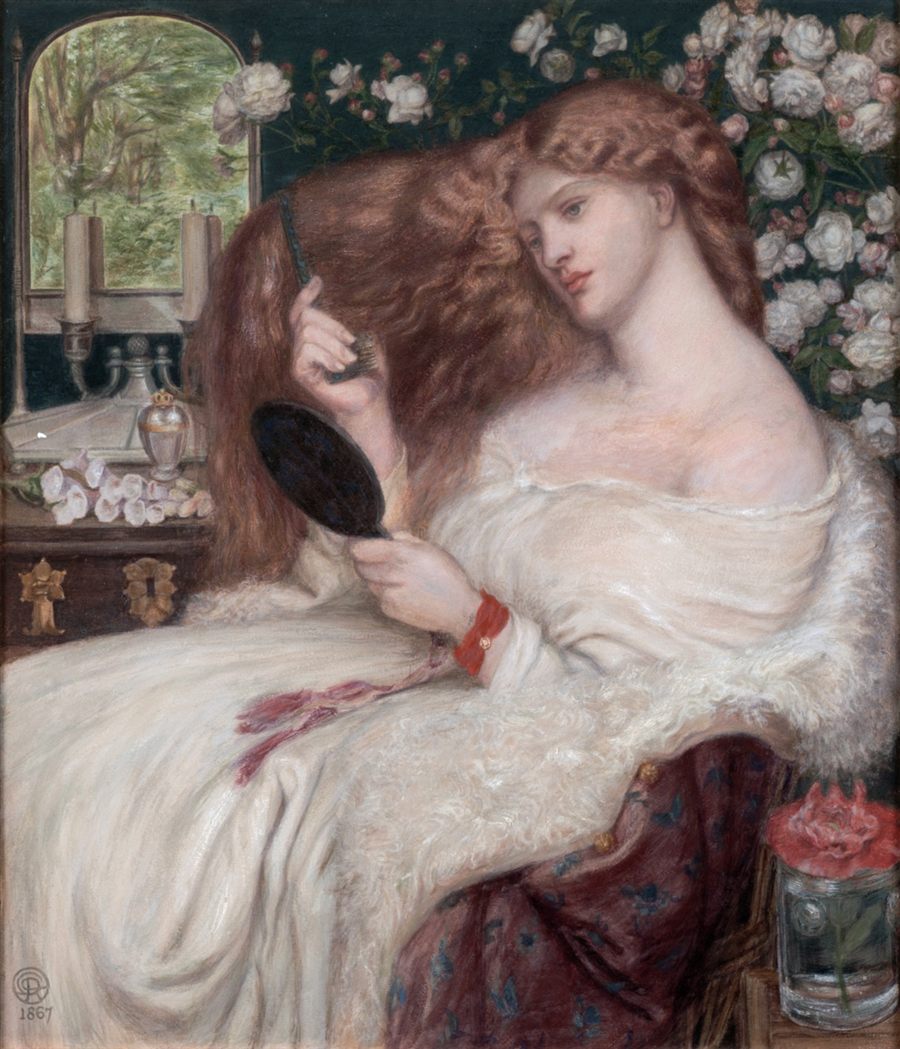
Dante Gabriel Rossetti, Lady Lilith (1867) / Public Domain via Wikimedia Commons
Ask someone who Lilith is and you may get an immediate answer: Adam’s first wife, created as his equal, who left Eden rather than submit to him.
That story is real folklore. It is also medieval.
The Lilith tradition is much older than the Alphabet of Ben Sira, but it did not begin as a single woman with a biography. The earliest background lies in Mesopotamian categories of dangerous spirits. The Hebrew Bible contains only one ambiguous reference to lilit. The Dead Sea Scrolls and the Babylonian Talmud give the figure increasingly demonic contours. Only centuries later does Lilith become Adam’s rebellious first wife.
Then the story changes again.
Medieval Kabbalah pairs her with Samael. Nineteenth-century artists turn her into a dangerous beauty. Twentieth-century feminist writers reclaim the same medieval rebel as a symbol of equality and independence.
There is no single unchanging “original Lilith.” There is a history of related traditions that were repeatedly rewritten.
Before Lilith Was a Person
The closest ancient Mesopotamian background involves a group of Akkadian supernatural beings called lilû, lilītu and ardat-lilî.
JoAnn Scurlock’s entry on Lilitu in The Encyclopedia of Ancient History describes them as a class of ghost-demons associated with young people who had died before completing expected stages of life such as marriage. They could be imagined as threatening living people of the opposite sex.
That is already enough to explain some later Lilith themes: sexuality, danger at night, frustrated family life and attacks on the living.
It is not enough to turn every lilītu into one named woman.
The Mesopotamian terms function as categories of spirits. The Jewish Lilith develops out of this broader linguistic and cultural background, but the later stories about Adam, Eden, Samael and rebellion do not appear in these ancient Mesopotamian texts.
This distinction also matters for the Epic of Gilgamesh. Older popular books sometimes identify the ki-sikil-líl-lá figure associated with the huluppu tree as “Lilith.” Modern scholarship is far more cautious about treating that expression as the proper name of the later Jewish demoness.
So Lilith has Mesopotamian roots, but not a three-thousand-year continuous biography.
Lilith Appears Once in the Hebrew Bible
The Hebrew word līlīt appears once in the Hebrew Bible: Isaiah 34:14.
The chapter describes the devastation of Edom through images of ruined land inhabited by wild and uncanny creatures. In that setting, līlīt finds a place to rest.
And that is all the biblical text says about her.
There is:
- no Adam
- no first marriage
- no argument in Eden
- no flight from the Garden
- no Samael
- no story about refusing to lie beneath Adam
Translations have struggled with the word for centuries.
Some English Bibles retain Lilith. Others use phrases such as night creature, night monster, night bird or older zoological equivalents. The Revised JPS translation notes that the creatures in this section cannot all be identified with certainty and gives both demonic and animal possibilities.
That uncertainty is historically important. Isaiah gives us a word, not the elaborate character familiar from later folklore.
The Dead Sea Scrolls Make the Demon Clearer
By the late Second Temple period, the picture is less ambiguous.
The Songs of the Sage, preserved in the Dead Sea Scroll manuscripts 4Q510 and 4Q511 and generally dated around the turn of the era, are protective compositions directed against hostile supernatural forces.
Lilith appears among threatening beings against which the speaker seeks protection.
That does not give her a personal biography either. But it does show that by this period lilit could clearly function as the name or designation of a dangerous supernatural being in Jewish religious culture.
The biblical ambiguity had not produced the Adam story yet.
It had produced a demon.
What the Talmud Actually Says About Lilith
The Babylonian Talmud contains several scattered references that became enormously influential.
In Eruvin 100b, Lilith is associated with long hair.
In Niddah 24b, a legal discussion about childbirth refers to a fetus with the likeness of Lilith and says that such a form has wings.
In Shabbat 151b, Rabbi Hanina warns against sleeping alone in a house because someone who does so may be seized by Lilith.
Those passages give us recognizable pieces of the later image: a female demon, long hair, wings and nocturnal danger.
But they still do not tell the famous Adam story.
Modern summaries often expand Shabbat 151b into a detailed account of Lilith seducing sleeping men and collecting semen. Sexual and succubus-like traditions certainly became associated with Lilith and related demons, but the short Talmudic warning itself does not spell out that entire scenario.
The difference between what a primary text says and what later tradition builds around it is exactly what makes Lilith difficult to summarize accurately.
Adam’s First Wife Comes Much Later
The story most people now identify as “the Lilith myth” appears in the medieval Alphabet of Ben Sira, an anonymous work usually dated somewhere between the eighth and tenth centuries CE.
It is not part of Genesis.
It is not part of the Hebrew Bible.
It is not in the Dead Sea Scrolls.
And it is not the story told by the Babylonian Talmud.
In the Alphabet, God creates a woman from the earth as he created Adam and calls her Lilith. Adam and Lilith argue over sexual position and authority. Lilith insists that they are equal because both came from the same earth.
When the dispute cannot be resolved, she pronounces the divine name and leaves.
God sends three angels — usually rendered Senoy, Sansenoy and Semangelof in English — to bring her back. She refuses. The story then connects her to danger faced by newborn children and explains why amulets bearing the angels’ names could protect against her.
The Alphabet of Ben Sira has often been described by scholars as satirical, folkloric or deliberately irreverent. Joseph Dan, writing about the development of Lilith and Samael in early Kabbalah, explicitly refers to the “satirical Pseudo-Ben Sira.”
That does not make the story unimportant.
Quite the opposite: it became one of the most influential Lilith stories ever written.
It simply means that calling it “the missing biblical story of Lilith” is historically wrong.
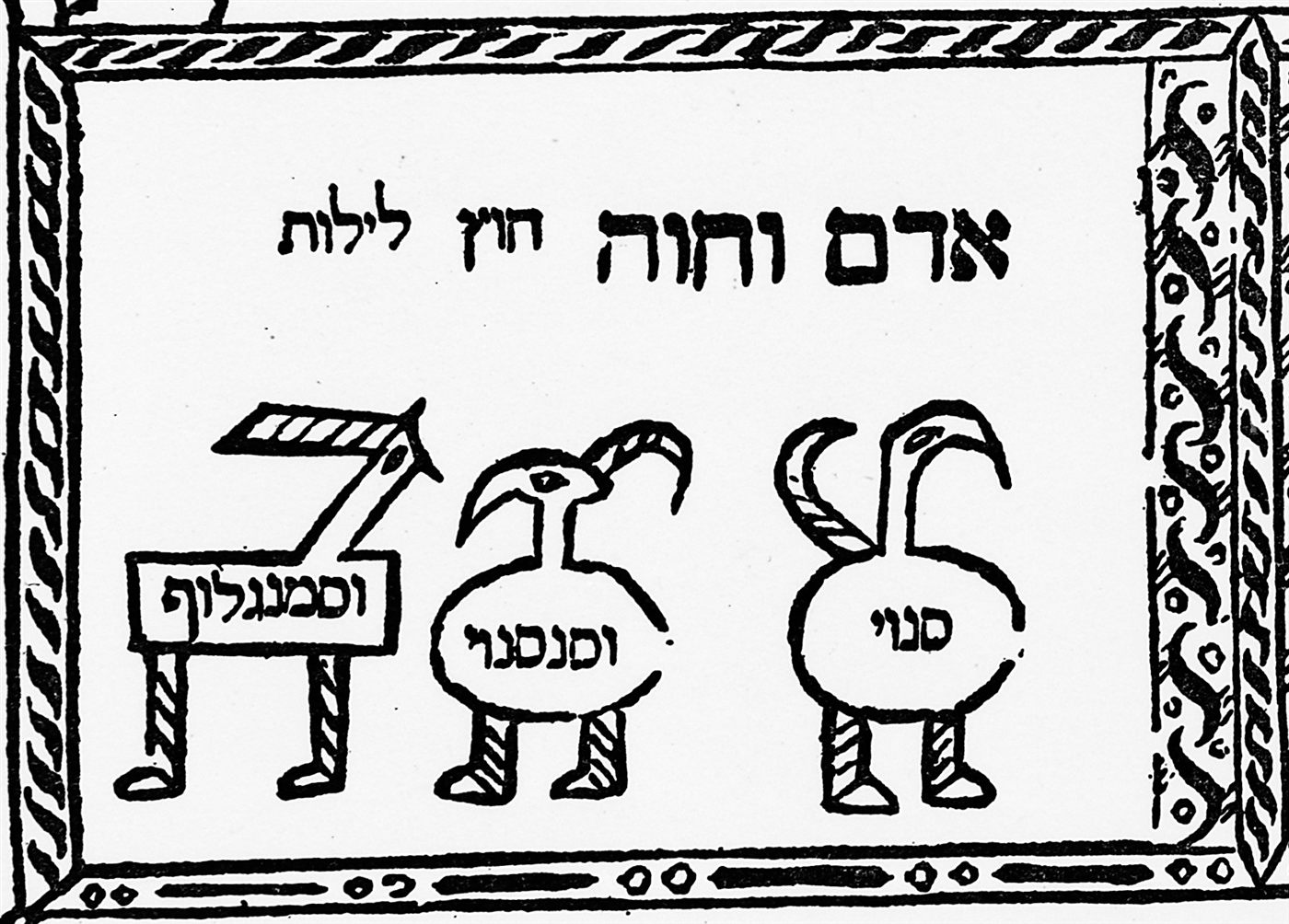
Senoy, Sansenoy and Semangelof became central to protective amulet traditions associated with the medieval Lilith story. Wellcome Collection reproduction via Wikimedia Commons, CC BY 4.0. Source.
Why Lilith Was Feared Around Childbirth
The Alphabet of Ben Sira did not invent Near Eastern fears of female demons threatening mothers and infants.
Late antique Mesopotamia has left physical evidence of protective magic in the form of incantation bowls. These ceramic bowls were inscribed with Aramaic, Mandaic and other texts intended to repel demons, illness and hostile supernatural forces.
Some name liliths directly.
The British Museum holds a sixth- to eighth-century Mandaic bowl whose first incantation describes the subjugation or expulsion of a lilith. Other bowls use legal imagery, including formulas resembling bills of divorce, to order demons away from a household.
These objects are especially valuable because they move the discussion away from later literary retellings. People were materially protecting homes against beings called liliths centuries before modern occultism or feminist reinterpretation existed.
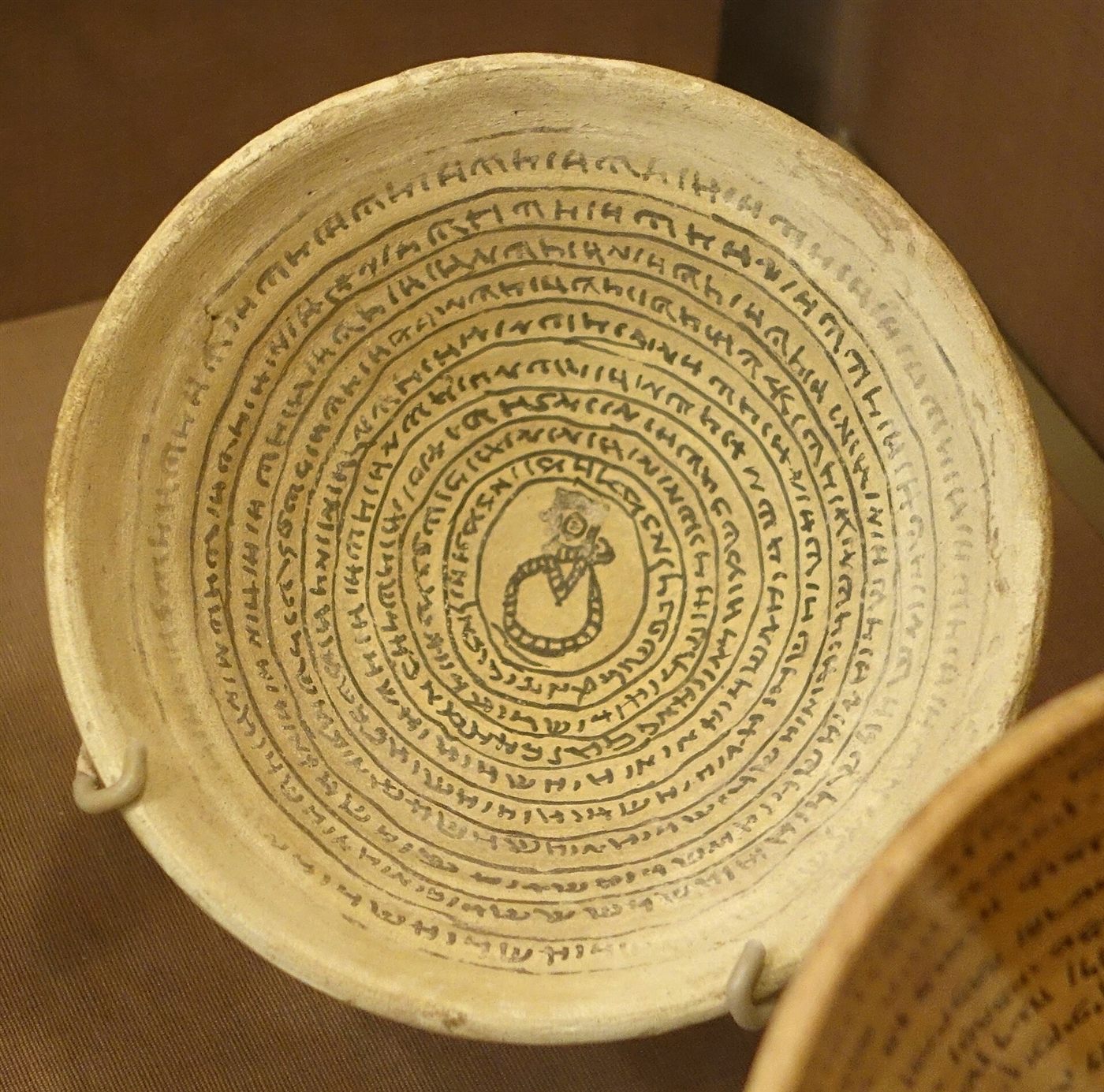
Incantation bowls from late antique Mesopotamia were inscribed to protect households from hostile supernatural forces. Some surviving examples explicitly name liliths. This Nippur example is used as material-culture context rather than as a claim that it depicts or names the singular Lilith. Daderot / Wikimedia Commons / CC0 1.0. Source.
Lilith Is Not Simply Lamashtu
Lilith is constantly identified online with the older Mesopotamian demoness Lamashtu.
The connection is understandable.
Lamashtu was feared as a threat to pregnant women and infants. Later Lilith traditions also make childbirth and newborn children central. Protective magic was used against both.
But similarity is not identity.
Lamashtu has her own name, mythology, iconography and ritual tradition. She is not merely an early spelling of Lilith.
At the same time, scholars have good reason to discuss influence and overlap. Judit Blair’s study of Isaiah and later Lilith traditions notes that the liliths of late antique incantation bowls can combine features associated with Mesopotamian lilû/lilītu/ardat-lilî demons and Lamashtu.
So the useful conclusion is not “Lilith is Lamashtu” or “they have nothing to do with each other.”
They are historically distinct traditions that came to share and absorb related motifs.
And What About Pazuzu?
Pazuzu’s well-documented protective role is directed against Lamashtu.
Ancient Lamashtu amulets use Pazuzu as a frightening counterforce capable of driving her away.
That relationship should not automatically be transferred to Lilith.
There is no established ancient tradition in which Pazuzu is Lilith’s husband, lover or designated enemy. Those claims usually arise after modern retellings collapse Lamashtu and Lilith into the same being.
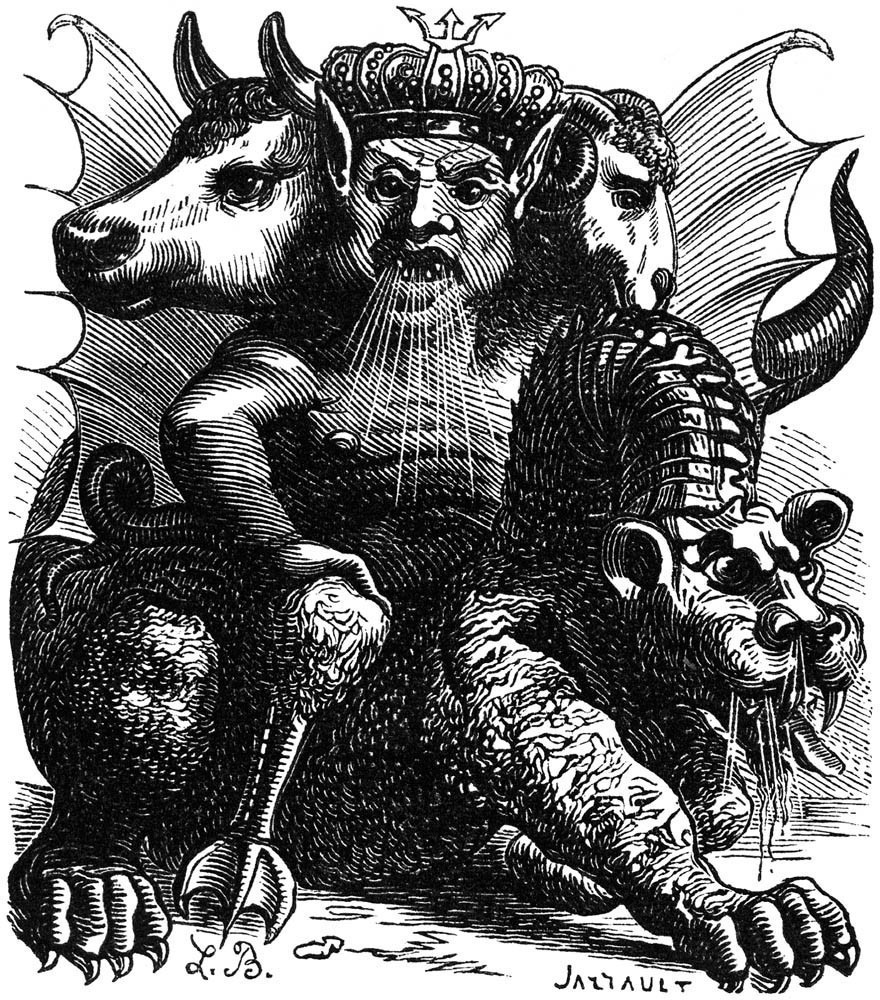
Pazuzu is a useful comparison: his documented protective role is directed against Lamashtu, not Lilith. King Paimon likewise belongs to a separate historical demonological tradition.
Lilith and Samael in Kabbalah
The next major transformation occurs in medieval Jewish mysticism.
A 13th-century work generally called the Treatise on the Left Emanation, associated with Isaac ben Jacob ha-Kohen, develops an elaborate mythology of evil in which Samael and Lilith form a pair.
Joseph Dan identifies this treatise as a major source for the mythology of evil that would later appear in the Zohar.
The Zohar, composed in medieval Spain and traditionally attributed within Jewish tradition to the ancient sage Shimon bar Yochai, develops Lilith further as part of a complex mystical cosmology. Modern scholarship has long associated the work’s composition with the circle of Moses de León in the late 13th century.
At this stage Lilith is no longer simply one dangerous night spirit or the runaway woman of a satirical folktale.
She becomes a cosmic figure within the “Other Side” of Kabbalistic thought.
This is also where another internet shortcut fails: “Lilith is Satan’s wife.”
Some medieval sources pair Lilith with Samael. Later writers may equate or associate Samael with satanic or demonic roles, but collapsing every version of Samael directly into the Christian Devil erases the specific Jewish mystical context in which the pairing developed.
The Burney Relief Is Not a Secure Portrait of Lilith
One ancient image appears in Lilith articles more than almost any other: the Burney Relief, now called the Queen of the Night relief at the British Museum.
The Old Babylonian terracotta shows a nude winged female figure with bird-like feet, a horned crown, lions and owls.
It is visually perfect for the modern idea of Lilith.
That does not make it Lilith.
The British Museum has presented the figure as likely connected to a major Mesopotamian goddess, often Ishtar, while scholarly debate has also considered Ereshkigal. The horned crown and rod-and-ring symbols indicate high divine status, which is difficult to reconcile with treating the figure as a straightforward portrait of the comparatively minor lilītu demon category.
Lilith was proposed as an identification in older scholarship, and that history is why the label still circulates.
The responsible caption is therefore not “ancient statue of Lilith.”
It is “an Old Babylonian relief once associated with Lilith, whose identity remains disputed.”
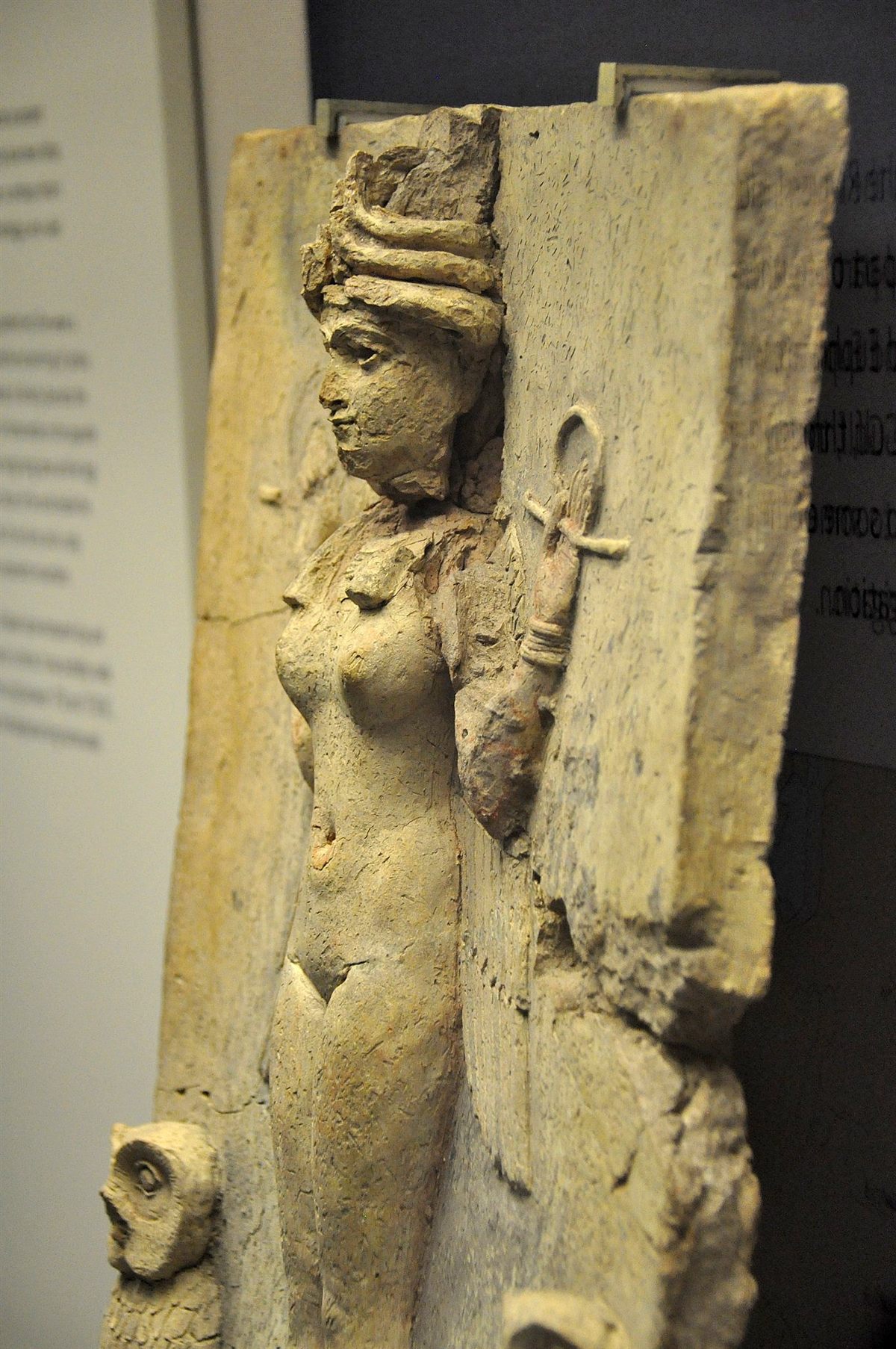
The Queen of the Night relief has often been labeled “Lilith” online, but that identification is not secure. Ishtar and Ereshkigal have also been proposed. Neuroforever / Wikimedia Commons, CC BY-SA 4.0. Source.
Was Lilith an Ancient Goddess?
There is no secure evidence for the popular claim that Lilith began as a major goddess whose worship was later suppressed.
The Mesopotamian lilītu material belongs to demon and ghost traditions rather than the established temple cults of major deities such as Ishtar, Inanna or Shamash.
No well-attested ancient Lilith temple system, priesthood or state cult has emerged from the evidence.
That does not mean nobody in history ever addressed, petitioned or ritually interacted with a being called Lilith. Protective magic itself is a form of religious practice.
It means something narrower: the archaeological and textual evidence does not support the modern claim that a once-prominent goddess Lilith was removed from an official pantheon and turned into a demon.
Modern people may worship or venerate Lilith today.
That is a modern religious development, not proof of an ancient cult.
The Nineteenth Century Reinvents Her Again
By the 19th century, Lilith moved increasingly into European poetry and visual art.
Dante Gabriel Rossetti’s Lady Lilith presents her as a beautiful, self-absorbed and dangerous woman rather than an infant-killing demon from late antique protective magic.
Richard Westall’s 1831 Faust and Lilith places her inside Goethe’s literary world of witches and temptation.
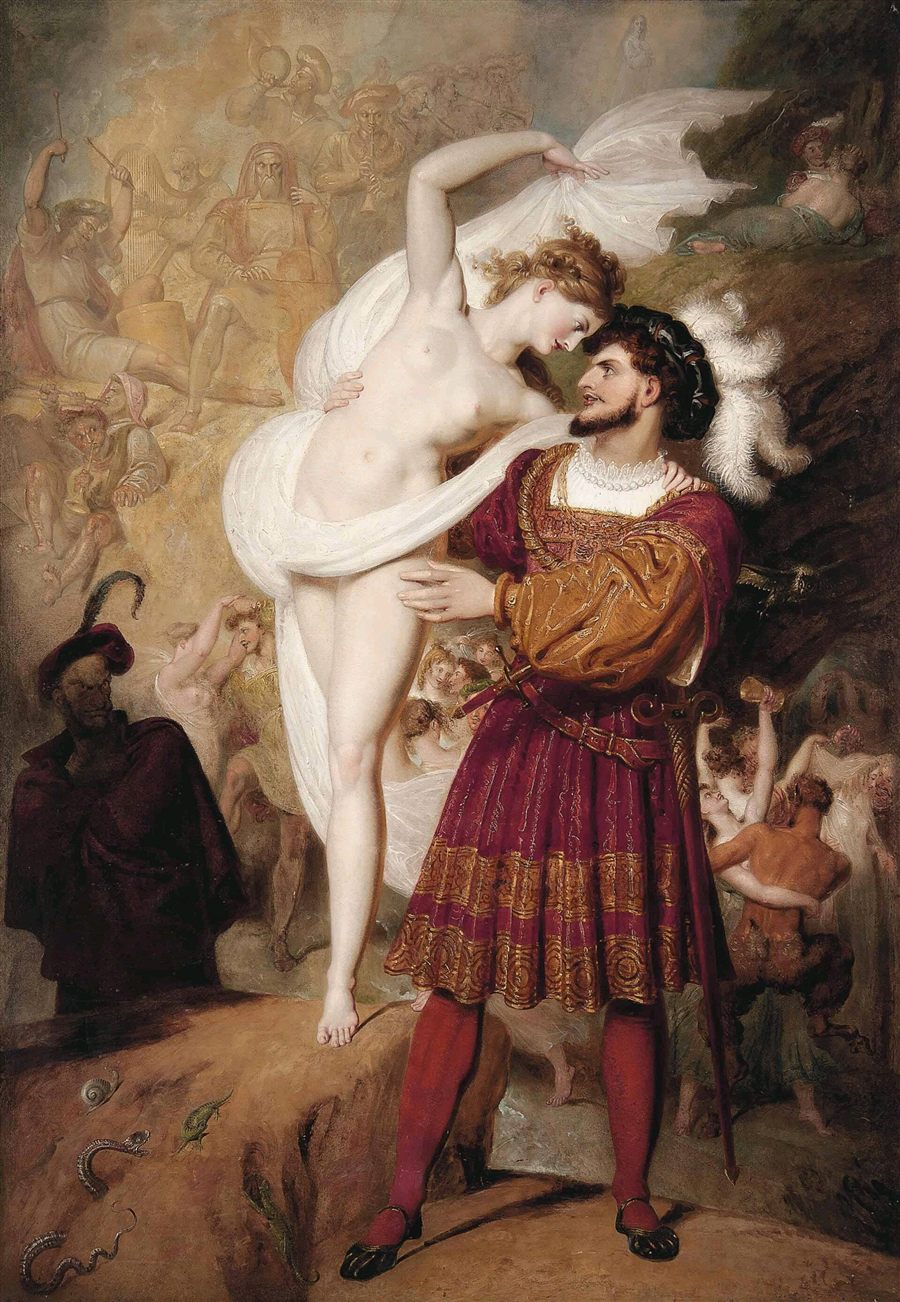
Richard Westall’s Faust and Lilith (1831) shows how European literature and art had already begun transforming Lilith into a figure of seduction and witchcraft. Richard Westall, Faust and Lilith (1831) / Public Domain via Wikimedia Commons. Source.
These works are not windows into ancient Mesopotamian religion.
They are part of Lilith’s next life.
From Demon to Feminist Symbol
One of the most influential modern reinterpretations came from Jewish feminist theologian Judith Plaskow.
Her 1972 piece “The Coming of Lilith” deliberately retells the medieval first-wife story from a feminist perspective. Instead of treating Lilith’s refusal as the beginning of her fall into evil, the retelling uses her departure as a way to think about equality, patriarchal authority and solidarity between women.
The point was not to prove that ancient Jews secretly worshipped Lilith as a feminist goddess.
It was to reinterpret inherited folklore for a modern theological and political conversation.
That distinction makes the modern reclamation more interesting, not less.
Lilith magazine, founded in 1976, likewise took the name as part of an explicitly Jewish feminist identity. The magazine continues to describe itself as “independent, Jewish & frankly feminist.”
A character once feared around cradles had become a symbol of refusing subordination.
Modern Occult Lilith Is Another Layer
Contemporary occultism, demonolatry, witchcraft and Left-Hand Path traditions have developed still more versions of Lilith.
Some treat her as a demon. Others as a goddess, archetype, initiator, symbol of sexual autonomy or spiritual power.
Those beliefs are real contemporary religious practices.
They should not be projected backward.
A modern “Lilith sigil,” invocation or devotional system does not become ancient merely because it uses an ancient name. Medieval Kabbalistic Lilith is not automatically identical to the Mesopotamian lilītu, and neither is automatically identical to a 21st-century devotional figure.
Morbid Index does not provide summoning instructions or ritual recipes because they are not necessary to understand the history.
The important question here is provenance: when does a particular idea about Lilith first appear?
The Biggest Lilith Myths
“Lilith was Adam’s first wife in the Bible.” No. That story is medieval and appears in the Alphabet of Ben Sira.
“Lilith was removed from Genesis.” There is no evidence for that. Isaiah 34:14 contains the Bible’s lone līlīt reference, while the Adam story comes from much later folklore.
“Lilith was originally a major Mesopotamian goddess.” The evidence instead points toward Mesopotamian demon/ghost categories related to lilītu. A suppressed temple cult is not documented.
“The Queen of the Night relief definitely depicts Lilith.” No. The identification is disputed and is not the British Museum’s secure identification of the figure.
“Lilith and Lamashtu are the same demon.” No. They are distinct traditions with overlapping functions and later interaction.
“Pazuzu fought Lilith.” Pazuzu’s firmly documented apotropaic opponent is Lamashtu. A direct ancient Pazuzu-Lilith pairing is not established.
“Lilith is Satan’s wife.” Medieval Kabbalah pairs Lilith with Samael. Turning that into a universal “Satan and Lilith” marriage flattens several distinct traditions.
Lilith Is a History of Reinvention
Lilith does not have one origin story.
She has layers.
There are Mesopotamian lilītu and related spirits. There is one difficult word in Isaiah. There is a threatening Lilith in late Second Temple protective texts. There are scattered Talmudic descriptions. There are late antique incantation bowls. There is the medieval first wife of Adam. There is the Kabbalistic partner of Samael. There is Rossetti’s dangerous beauty. There is Plaskow’s feminist retelling. And there are today’s occult and pop-cultural versions.
Trying to compress all of that into “Lilith was the first feminist demon goddess” makes a good meme.
It makes bad history.
The real Lilith tradition is stranger because it was never one thing for very long.
Sources & further reading
- JoAnn Scurlock, Lilitu, The Encyclopedia of Ancient History
- Isaiah 34:14, Sefaria
- Songs of the Sage (4Q510–511), Zenodo
- Alphabet of Ben Sira, Sefaria
- Joseph Dan, Samael, Lilith, and the Concept of Evil in Early Kabbalah
- Judit Blair, De-Demonising the Old Testament
- British Museum, Queen of the Night relief
- Judith Plaskow, The Coming of Lilith
- Lilith magazine, About


,_1800-1750_BC,_from_Iraq,_now_in_the_British_Museum.jpg)
