The Index
1755 Lisbon Earthquake: Tsunami, Fires and the Death Toll
Lisbon suffered an earthquake, tsunami and fires on November 1, 1755. Understand the three hazards and why magnitude and death toll figures need qualification.
Topics: Lisbon, 1755, Earthquakes, Tsunamis, Dark History
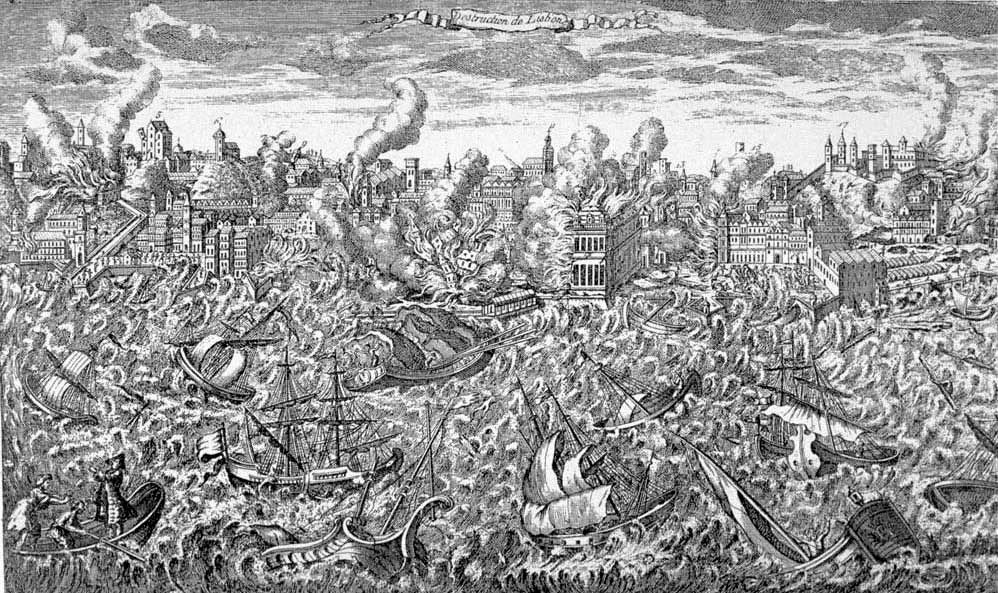

Lisbon was devastated on November 1, 1755, by three connected hazards: an earthquake, a tsunami and fires. Buildings collapsed, the waterfront became dangerous, and fire added to the destruction. Reducing the disaster to shaking alone leaves out much of what happened.
November 1, 2026, marks the event’s anniversary. The account below concerns the 1755 disaster; the magnitude and casualty figures remain historical estimates.
Why All Saints’ Day mattered
The earthquake struck on All Saints’ Day, when many Lisbon residents were attending church. The USGS historical account describes stone buildings collapsing, people seeking safety by the river and a tsunami killing people there. It also records the city’s fires.
Those details explain the cruel change in circumstances: leaving a damaged building did not necessarily mean reaching safety. They do not establish that every victim was in church or that all fires had one ignition source.
How did an earthquake produce a tsunami?
Spain’s Instituto Geográfico Nacional places the earthquake offshore, southwest of Cape St Vincent in the Atlantic. Its name reflects Lisbon’s losses, rather than an epicenter beneath the city.
NOAA explains that a sudden upward or downward movement of the ocean floor can displace the water above it and generate a tsunami. Not every earthquake does this: location, depth and the movement involved matter.
For the 1755 event, NOAA records effects on the coasts of Portugal, Spain and North Africa, extending as far as the Caribbean. The tsunami was therefore an Atlantic event, even though Lisbon became its best-known setting. A dramatic engraving of the harbor is an artist’s representation, not a reliable instrument for calculating wave height.
Why do magnitude and death toll figures differ?
The official summaries do not give one identical set of numbers. Their figures should keep their source labels and geographical scope:
| Source | Magnitude figure | Death figure in that source |
|---|---|---|
| NOAA | Estimated 8.5 | An estimated 50,000 from the earthquake and tsunami. |
| USGS November 1 history entry | 8.7 | 70,000 deaths in its event summary. |
| Spain’s IGN | Estimated 8.5 | Around 5,000 in Lisbon from the quake, tsunami and fire. |
These are not three interchangeable counts of the same population, and they should not be combined into a neat range for Lisbon alone. State whether a figure concerns the city or the wider disaster, and whether it is an estimate. The disagreement belongs in the account; choosing the largest number would not resolve it.
What survives of the historical evidence?
IGN describes questionnaires sent to Spanish towns on the orders of Ferdinand VI. Preserved in the National Historical Archive, the responses help researchers reconstruct where shaking was felt and what damage occurred. They are evidence about observed effects, rather than a modern recording of the earthquake’s source.
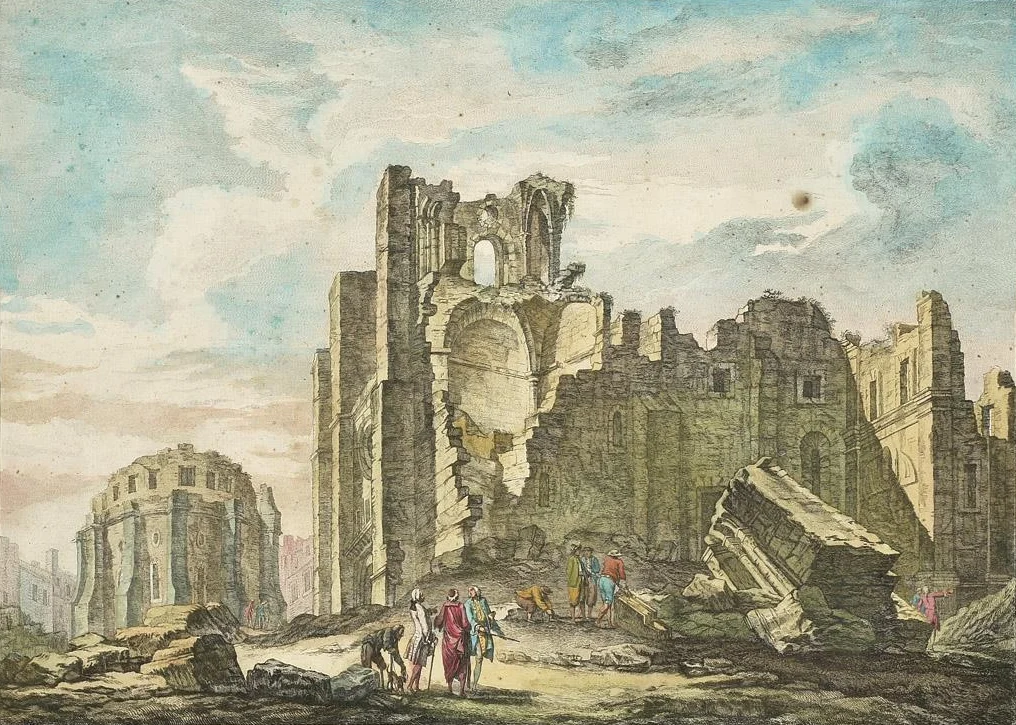

Historical images answer a different question: how the destruction was represented. The 1755 harbor engraving brings shaking, water and fire into one scene; Le Bas’s later view concentrates on ruined architecture. Neither image should be treated as a measured reconstruction of every moment it depicts.
For another example of why adjacent disasters need separate explanations, see the Great Plague of London and the claim that the Great Fire ended it.