The Index / Science & Horror
Can ScareScore Measure Fear? What Horror Biometrics Actually Tell You
ScareScore turns wearable data into a horror score. Explore what heart rate, HRV and movement reveal about bodily reactions—and what they cannot prove.
Topics: ScareScore, Screamfest, horror science, biometrics, heart rate, heart rate variability, wearables, fear
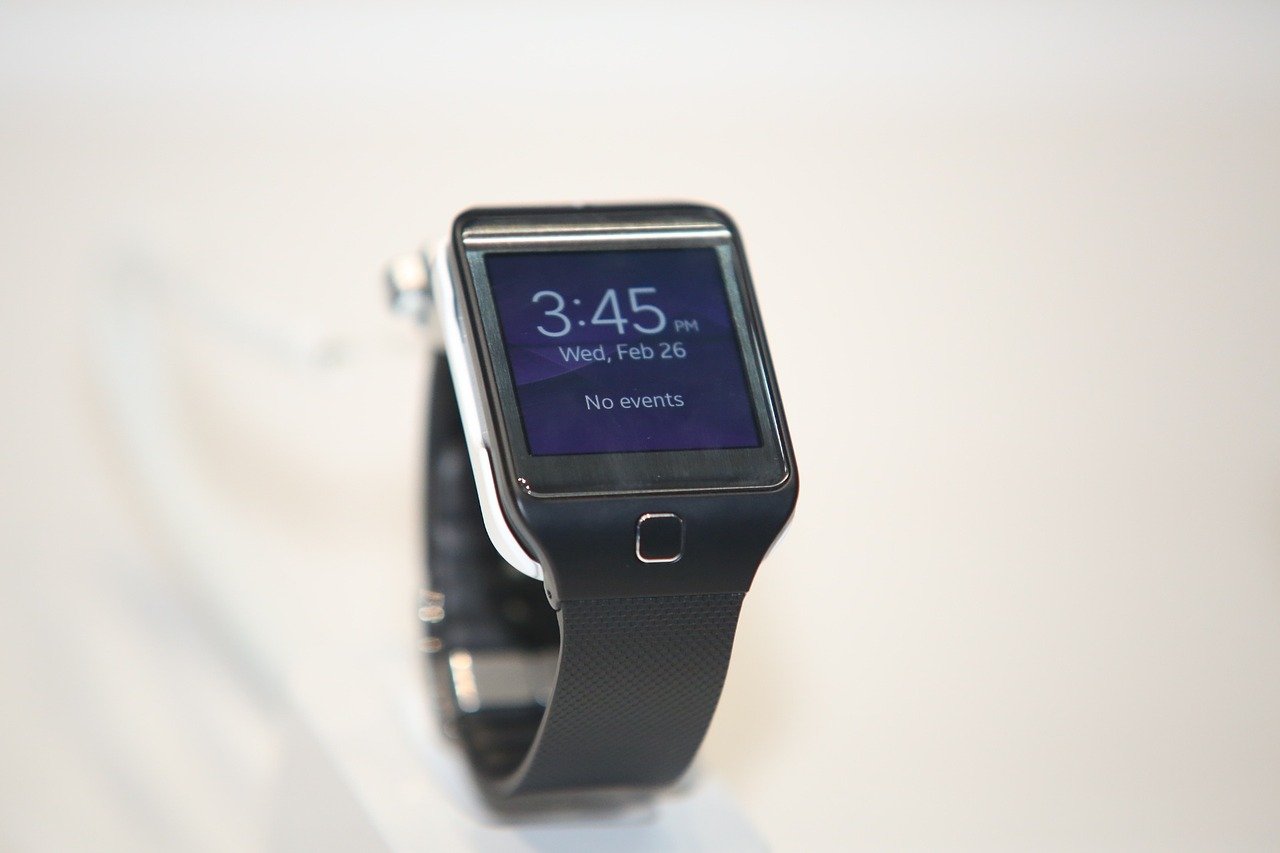
hawkHD via Wikimedia Commons (CC0)
A horror movie can make your heart race.
That does not automatically mean a smartwatch has measured how frightened you were.
That distinction matters now because a new platform called ScareScore is turning wearable data into a shareable entertainment score. The company says it uses signals including heart rate, heart-rate variability and movement, compares them with an individual baseline, and synchronizes those reactions with moments in a movie or attraction.
The idea arrives in public just as horror festival season peaks.
Screamfest 2026, which runs October 6–15 at the TCL Chinese 6 Theatres in Los Angeles, says ScareScore will be available across most of its feature screenings. One film is scheduled to receive an award for producing the festival’s strongest biometric scare response.
Toronto After Dark has also announced ScareScore as its lead sponsor and says selected films at its 2026 festival will use the system.
That makes the technology more than a speculative app pitch.
Audiences are about to encounter it in actual horror screenings.
The interesting question is not whether wearable sensors can detect bodily change. They can.
The harder question is what those changes mean.
Hero: a generic smartwatch, not a ScareScore interface or a demonstration of compatibility. Photo by hawkHD, originally shared on Pixabay under CC0, via Wikimedia Commons; compressed under CC0 1.0.
What ScareScore says it measures
ScareScore’s October 2, 2026 launch announcement says the platform connects to smartwatches and wearable devices and monitors:
- heart rate;
- heart-rate variability, or HRV;
- movement;
- the intensity and recovery pattern of a reaction over time.
It establishes a personal baseline rather than comparing every viewer to one fixed heart-rate number.
That is an important design choice.
A resting heart rate that is ordinary for one person can be unusual for another. The same is true for HRV, which is influenced by age, fitness, sleep, stress, medication and many other factors.
A within-person change can therefore be more informative than asking whether everyone crossed one universal threshold.
The company says ScareScore converts those changes into a personalized score and aligns audience reactions with specific moments in a film.
For an entertainment platform, that is genuinely interesting.
It can potentially show when a room collectively reacted.
It cannot, by itself, tell us exactly why.
Heart rate is not a fear detector
Fear affects the autonomic nervous system.
So do excitement, surprise, exertion, anticipation, embarrassment, laughter, sexual arousal, stress and many other states.
That is the central problem with calling a heart-rate spike an objective measurement of fear.
A broad review of laboratory emotion research published in Emotion Review found that basic emotions do not map neatly onto one unique physiological signature. Heart rate during experimentally induced fear, for example, has been reported as increasing, decreasing or remaining comparatively unchanged depending on the study and context.
That does not make heart-rate data useless.
It means the signal is not specific.
If a viewer’s pulse rises sharply during a jump scare, the timing is consistent with a scene-linked bodily reaction.
But the watch cannot independently determine whether the person experienced:
- terror;
- surprise;
- excitement;
- disgust;
- nervous laughter;
- anticipation;
- or some combination of those responses.
The body reacted.
The emotional label still requires interpretation.
What heart-rate variability adds
Heart-rate variability is the variation in time between successive heartbeats.
A perfectly healthy heart does not beat like a metronome. The intervals change as the autonomic nervous system adjusts the body to breathing, activity, stress, recovery and other demands.
A review in Physiological Measurement found HRV useful for studying emotional response and autonomic regulation. Wearable emotion-recognition research also commonly uses cardiac data because it is relatively easy to collect continuously.
HRV can therefore add information that raw beats-per-minute data misses.
But it still does not turn a smartwatch into an emotion-reading machine.
As psychophysiology measurement guidelines explain, HRV depends on recording conditions and individual characteristics. Patterns can be influenced by:
- breathing;
- posture;
- physical movement;
- caffeine;
- alcohol;
- sleep;
- cardiovascular fitness;
- illness;
- medication;
- measurement quality;
- and the specific sensor and algorithm being used.
A horror score can account for some of that by establishing a baseline.
It cannot make those sources of variation disappear.
Movement can help identify the jump
Movement is especially intuitive in a horror context.
If a viewer physically flinches at the exact instant a loud scare lands, accelerometer data can help distinguish that moment from a quieter change in heart rate.
This is where multimodal measurement becomes more useful than one number.
If recordings are reliable and motion artifacts have been excluded, synchronized cardiac change and abrupt movement can provide complementary evidence of an acute bodily reaction.
Movement can also introduce noise into wrist-based cardiac measurements.
Even then, the safest description is reaction intensity, not “fear units.”
A person throwing their hands up because they are laughing at an absurd kill can create movement too.
Context still matters.
Wearables can classify emotion — but real life is harder than the lab
Research on wearable emotion recognition is promising.
A systematic review in IEEE Transactions on Affective Computing examined attempts to identify emotional states using physiological signals collected from wearable devices. The field includes heart rate, HRV, electrodermal activity, movement and other data.
But the review also highlights a recurring problem: results obtained under controlled laboratory conditions do not automatically generalize to ordinary life.
In a lab, researchers can control the stimulus.
They can ask participants how they felt.
They can compare the wearable signal with questionnaires, known events or additional sensors.
In a theater, dozens or hundreds of people arrive with different bodies, expectations, sleep histories, caffeine intake, medications, anxiety levels and relationships to horror.
One viewer may know every scare from the trailer.
Another may be watching through their fingers.
A third may find the same scene funny.
That variation is not noise around the “real” answer.
It is part of what fear is.
A 2026 systematic review makes the limitation especially clear
A large 2026 review in ACM Transactions on Interactive Intelligent Systems surveyed 386 papers and 448 studies, published from 2020 to 2022, using peripheral physiological signals such as heart rate, respiration and galvanic skin response for emotion recognition.
The existence of that research field shows that physiological emotion detection is not pseudoscience.
There are real, measurable relationships between emotional processes and the body.
But the need for hundreds of studies, multiple sensors, signal-processing choices, annotation methods and machine-learning models also shows why no single wearable metric should be treated as a transparent window into subjective experience.
Emotion recognition is an inference problem.
It is not the same thing as reading temperature from a thermometer.
ScareScore may be better at measuring impact than fear
This is where the platform’s most defensible value may lie.
If ScareScore can reliably synchronize individual baselines with changes in heart rate, HRV and movement, it can create a map of physiological impact.
That can answer questions such as:
- Which scene produced the largest collective reaction?
- Did the audience react before or after the visible scare?
- How quickly did viewers recover?
- Did a sequence produce sustained arousal or one brief spike?
- Did different screenings respond at similar points?
Those questions are useful to filmmakers, festivals and attractions.
They are also narrower than claiming to know exactly how scared everyone felt.
A scene that creates a huge bodily response has done something.
Whether that “something” is dread, shock, delight or revulsion is a second question.
The Screamfest award will measure a specific thing
Screamfest says one 2026 film will receive an award based on the strongest biometric scare response.
That is a fascinating experiment.
It should not be confused with an objective award for best horror movie.
The films most effective at creating a sudden measurable reaction may not be the films that create the deepest dread.
A slow-burn movie can make a viewer uncomfortable for hours without producing the same explosive wrist-sensor pattern as a perfectly timed jump scare.
Likewise, a graphic effect can trigger disgust and movement without producing what the viewer would personally call fear.
Biometric awards therefore reward a particular dimension of the experience:
how strongly bodies reacted according to the platform’s measurement model.
That is a real category.
It is not every category.
An ECG records cardiac activity — and still needs interpretation
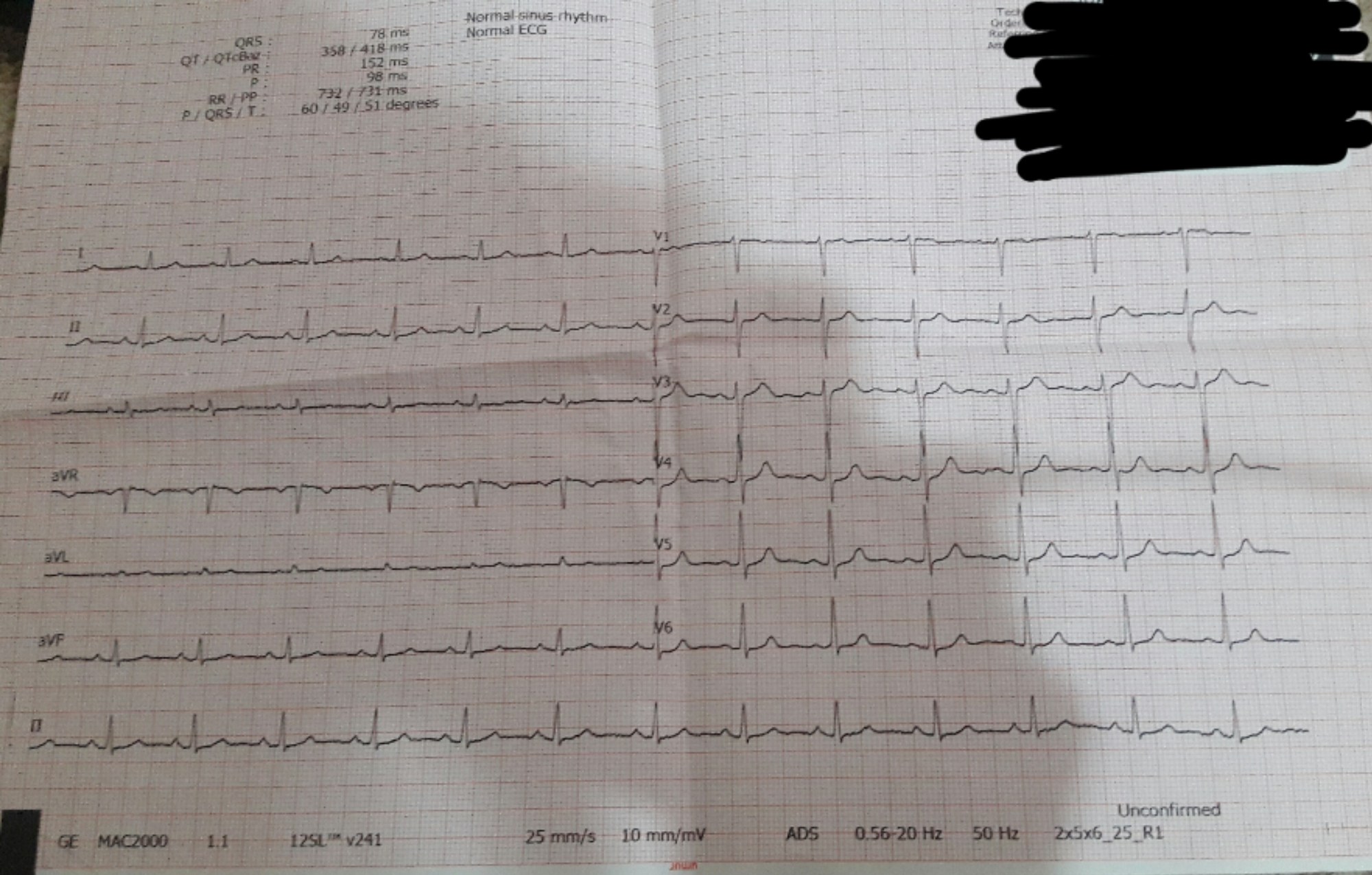
Context image: a real electrocardiogram. It is not ScareScore data and does not depict a fear response. Original image by Pixel0525 via Wikimedia Commons, dedicated to the public domain under CC0; resized and compressed.
A clinical electrocardiogram records the electrical activity of the heart rather than an emotional label.
Yet even an ECG does not print the word fear beside a waveform.
It records cardiac activity.
Doctors, researchers and algorithms interpret that activity for specific purposes.
The same conceptual boundary applies to entertainment biometrics.
A sensor measures a signal.
A system interprets it.
Those are two separate steps.
Horror has always wanted an objective scare test
The appeal of ScareScore is easy to understand because horror culture has spent decades asking versions of the same question:
What is the scariest movie?
Studios have marketed audience fainting, screaming and leaving theaters.
Haunted attractions count how many visitors quit.
Fans compare jump-scare counts, heart-rate experiments and personal tolerance.
Biometrics give that old argument a new layer of data.
That can make the debate more interesting.
It does not end the debate.
Two people can produce different physiological responses and still agree that a film was terrifying.
Two people can produce similar heart-rate spikes and describe the experience completely differently.
Fear is both bodily and subjective.
Measuring one part does not erase the other.
Could filmmakers use the data to redesign horror?
ScareScore’s launch materials explicitly pitch synchronized audience data to filmmakers, studios, streamers and location-based entertainment creators.
The potential is obvious.
If hundreds of viewers consistently react at the same second, a filmmaker can see that a beat landed.
If almost nobody reacts where a scare was intended, that may also be useful.
But optimization creates its own question.
If horror is edited only to maximize measurable spikes, the result could privilege short, intense reactions over atmosphere, ambiguity and psychological discomfort.
A pulse graph can reward the scream.
It may undervalue the silence ten minutes earlier that made the scream work.
That is not a flaw in the sensor.
It is a reminder that every metric rewards what it is designed to count.
What ScareScore’s signals could tell you
The company describes a wearable measurement system. The cited scientific reviews do not provide independent validation of ScareScore itself.
ScareScore’s own Terms of Service also describe its scores as estimates, rather than definitive measures of fear, emotional state or the quality of an experience.
The scientific boundaries are these:
ScareScore says it measures physiological signals associated with arousal and reaction.
The company says it compares those signals with an individual’s baseline.
It says it synchronizes those changes with specific moments in entertainment.
Such signals can contribute to an inference about emotion; they do not uniquely establish fear.
What it cannot establish from heart rate, HRV and movement alone is that one numerical score is a direct, objective measurement of a person’s complete subjective fear.
That difference is not an attack on the technology.
It is what makes the technology scientifically interesting.
The body is providing evidence.
It is not writing the review by itself.
Frequently Asked Questions
What is ScareScore?
ScareScore is a biometric entertainment platform launched in 2026. The company says it uses compatible wearables to track signals including heart rate, heart-rate variability and movement during movies and other experiences.
Is ScareScore being used at Screamfest?
Yes. Screamfest says ScareScore will be available across most features at its October 6–15, 2026 festival, and one film will receive an award for the strongest biometric scare response.
Can a smartwatch tell if you are scared?
It can detect physiological changes that may accompany fear, including changes in heart rate and movement. Those signals are not unique to fear, so they require context and interpretation.
Does a higher heart rate always mean more fear?
No. Heart rate can rise because of many forms of arousal, including excitement, surprise, physical movement and stress. Fear itself can also produce different cardiovascular patterns depending on the situation.
What is heart-rate variability?
Heart-rate variability, or HRV, is the variation in time between successive heartbeats. Researchers use it as one measure of autonomic nervous-system activity, including in emotion research.
Is biometric fear measurement scientific?
Psychophysiology and wearable emotion recognition are established research fields. The scientific limitation is not whether the body changes during emotion — it does — but whether a small set of signals can uniquely identify one subjective emotion in every person and context.
Does ScareScore measure how good a horror movie is?
No. A biometric reaction score can measure one aspect of audience response. Film quality also includes storytelling, performance, atmosphere, ideas, craft and the viewer’s subjective experience.
Why is ScareScore important for horror?
It aims to give festivals, filmmakers and audiences a new way to map when bodily reactions happen during a horror experience. Screamfest’s 2026 biometric award will be an early public demonstration of that kind of measurement in a festival setting.
For more coverage, explore Morbid Index’s Horror archive.
Sources & further reading
- ScareScore: official platform website
- ScareScore: Terms of Service, measurement limitations (September 1, 2026)
- ScareScore launch announcement via EIN Presswire (October 2, 2026)
- Screamfest: 2026 lineup and ScareScore partnership
- Toronto After Dark: 2026 ScareScore partnership
- ACM Transactions on Interactive Intelligent Systems: systematic review of emotion recognition from peripheral physiological signals (2026)
- IEEE Transactions on Affective Computing: wearable emotion recognition systematic review
- Emotion Review: experimental methods for inducing basic emotions
- PubMed: Heart rate variability monitoring for emotion and disorders of emotion
- Quigley et al.: Publication guidelines for human heart rate and heart rate variability studies, Part 1 (Psychophysiology, 2024)
- Wikimedia Commons: Smart Watch.jpg
- Wikimedia Commons: Normal ECG 17yrs old.jpg