Lore & Explained / Literature
Why Frankenstein's Creature Reads Paradise Lost
Why does Mary Shelley's creature compare himself to Adam and Satan? A close reading of Paradise Lost in the 1818 Frankenstein.
Topics: Frankenstein, Mary Shelley, Paradise Lost, Horror Literature
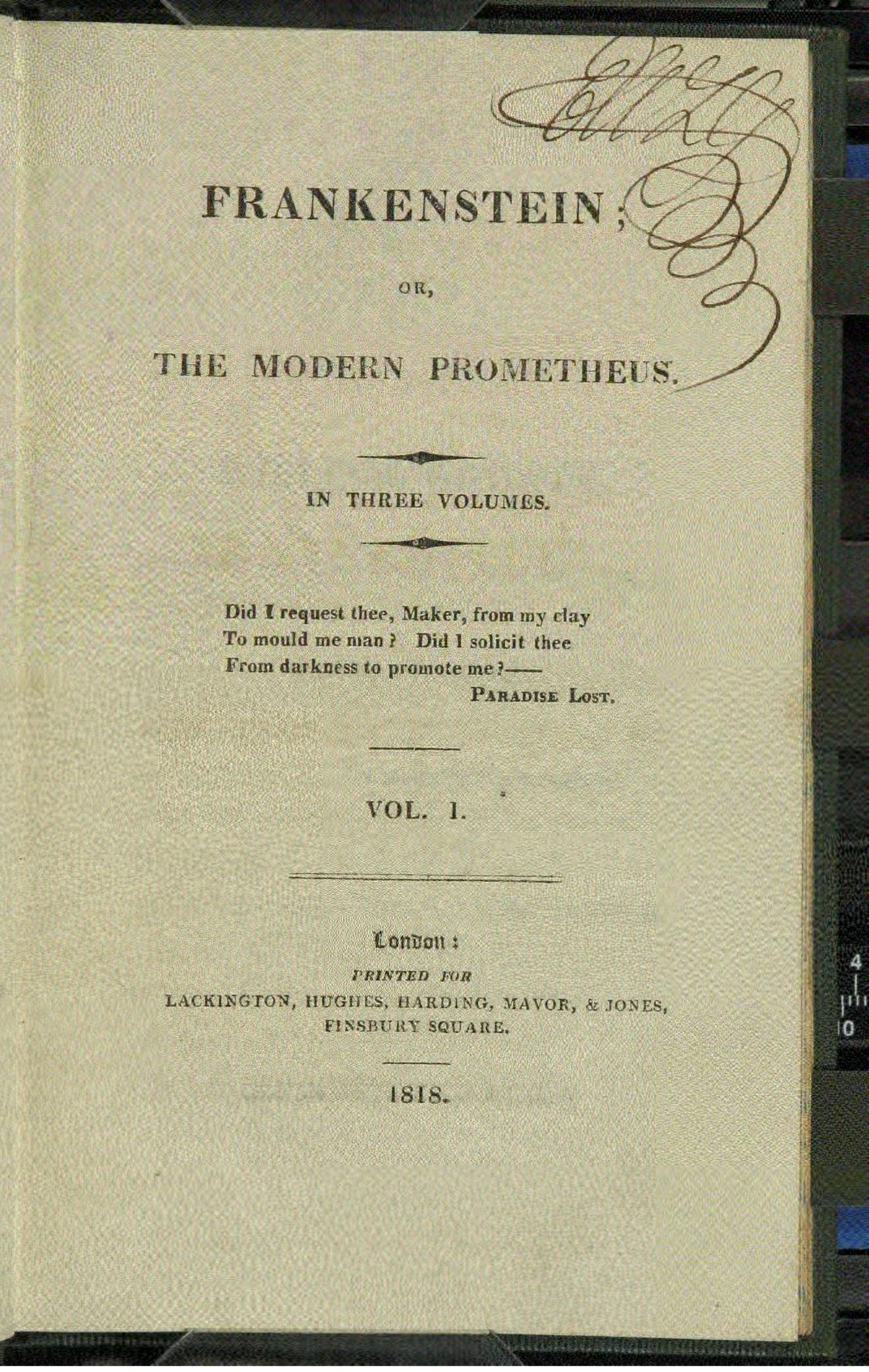
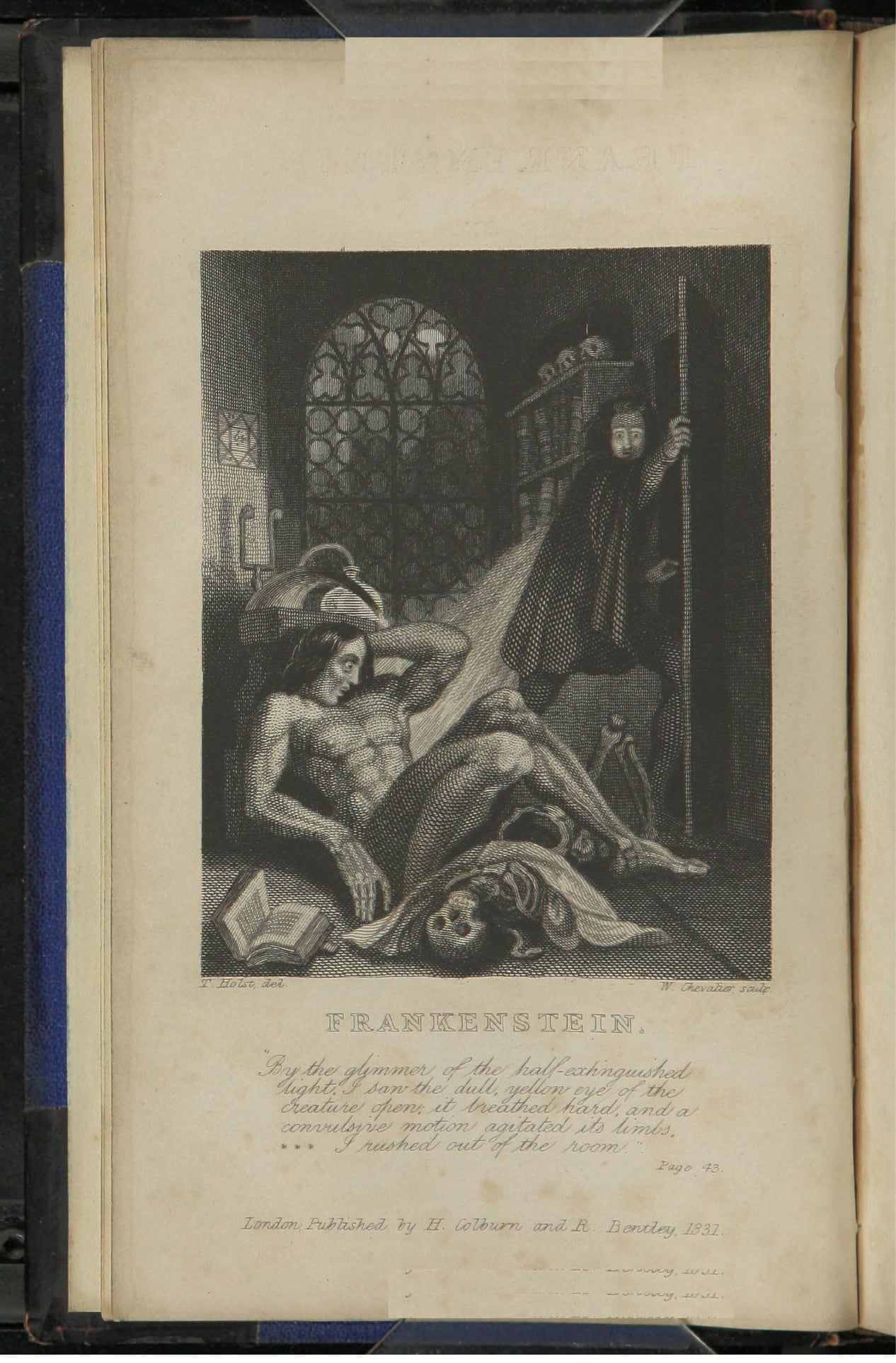
1818 first edition, via Emory University / HathiTrust (public domain)
The creature in Mary Shelley’s Frankenstein reads John Milton’s Paradise Lost because he is trying to understand what it means to be made and then left alone. Adam initially seems like his closest counterpart: both are created beings without parents of their own kind. But Adam has a creator who speaks to him and a place in a world. Victor Frankenstein offers his creature neither. The creature therefore begins to see himself in Milton’s fallen angel as well.
This reading concerns the 1818 edition of Shelley’s novel and Milton’s poem, not the continuity of a film adaptation. Spoilers follow for the novel, including the creature’s later violence. For the wider story and differences from familiar screen designs, see our guide to Frankenstein’s creature.
The question on the title page
The connection appears before the novel’s first chapter. Shelley’s 1818 title page borrows Adam’s question to his maker from Book X of Paradise Lost: whether he asked to be formed at all. In Milton’s poem, Adam voices it after the Fall, while grappling with the consequences of his own disobedience. In Shelley’s book, the epigraph asks readers to consider a different situation: Victor created a being who did not choose to exist, and then fled when that being opened his eyes.
That distinction matters. The epigraph does not make Victor identical to Milton’s God or the creature identical to Adam. It sets a problem of responsibility before the reader. What does a maker owe someone whose existence was the maker’s decision?
How the creature finds the book
Shelley’s creature learns language by watching the De Lacey household from a hidden shelter. He later finds a bag containing Paradise Lost, Plutarch’s Lives and Goethe’s The Sorrows of Werter. These are not books Victor gives him as an education. He discovers them after already observing affection and companionship from the outside.
He says he read Paradise Lost as if it were true history. That is his understanding inside the novel, not a claim by this article that Milton documented actual events. The poem gives him names for relationships he has never had. He can imagine a maker, a first being, a companion and an exile. He tests each role against his own life.
The comparison to Adam fails almost as soon as he makes it. Milton’s Adam has care, instruction and eventually Eve. The creature has Victor’s notes describing the making of his body, but no parental welcome. Reading those notes after the poem deepens the injury: the creator’s own words record disgust at the life he brought about.
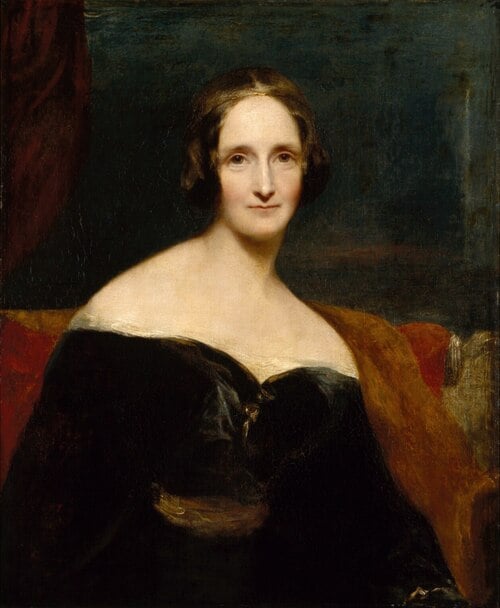
Mary Shelley, painted by Richard Rothwell and exhibited in 1840. Source. Public domain. The portrait postdates the 1818 novel; it depicts the author, not a scene from the story.
Why Satan becomes the closer comparison
The creature’s other comparison is with Satan, the figure cast out after rebellion in Milton’s poem. Watching the De Laceys’ happiness, he recognizes his own envy. He also notices a difference: even Satan has companions among the fallen angels, while he has no one who shares his condition.
This is a reading the creature makes of himself. Shelley does not hand the reader a fixed label saying he was always a devil. The comparison develops alongside his rejection and bitterness. When he confronts Victor, he says he should have been Victor’s Adam but has instead been driven from joy. That is part of an argument intended to make Victor listen and take responsibility.
The argument is powerful without excusing everything the creature does. He later kills William, helps bring about Justine’s conviction and attacks others close to Victor. His injuries explain why the Adam and Satan images matter to him; they do not erase his victims or settle the moral judgment in his favor.
A story about interpretation as well as creation
Paradise Lost gives the creature a language for creation and abandonment, but it does not give him a complete map of his own fate. He moves between Adam and Satan because neither comparison fits. Adam’s care is missing. Satan’s rebellion offers an image of anger, but the creature’s life begins without a war against his maker.
Shelley makes that imperfect fit productive. Victor would prefer to describe his creation as a monster. The creature answers with books, analogies and a demand to be heard. Readers can question his account while recognizing that he has become capable of interpreting the stories that others might use to define him.
The central horror is therefore larger than the moment of animation. A created being reads a story about a maker and asks why his own maker abandoned him. The novel never lets that question make violence harmless, and it never lets Victor’s disgust count as an answer.