News / Literature
Ryū Murakami Dies at 74: How Audition and His Novels Shaped Psychological Horror
Ryū Murakami, author of Audition, died October 17, 2026. His publisher announced it October 23. Explore his novels and their psychological horror legacy.
Topics: Ryū Murakami, Audition, Takashi Miike, Japanese Horror, Psychological Horror, In the Miso Soup, Piercing
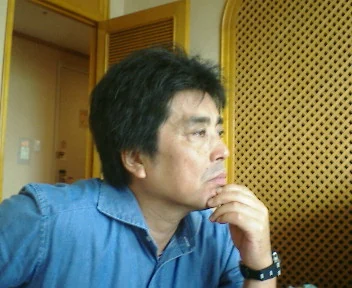
Joi Ito, 3 June 2005 / Wikimedia Commons — CC BY 2.0
Japanese novelist and filmmaker Ryū Murakami, whose fiction supplied the basis for Takashi Miike’s influential horror film Audition, died on October 17, 2026, at the age of 74. His publisher Gentosha announced the death on October 23. The publisher’s announcement, also reported by EFE, did not publicly specify a cause of death.
For international horror audiences, Murakami’s name is closely tied to the 1999 screen adaptation of Audition. But describing him only as the man who inspired one disturbing film misses the extent of his work: his novels repeatedly explored fear arising from isolation, violence, social pressure and uncertainty about other people’s intentions. His horror rarely required ghosts or curses. The threat was often ordinary human contact pushed to a point where nobody could feel safe.
That distinction is worth preserving now, particularly because the novel and film are sometimes treated as a single interchangeable work. Murakami wrote the book; Daisuke Tengan wrote the screenplay and Takashi Miike directed the film. The film’s techniques and performances matter enormously, but the underlying premise came from the novelist.
What has been confirmed about Murakami’s death?
Gentosha published a notice dated October 23, 2026. News agencies, including EFE, reported that Murakami had died at home six days earlier, on October 17, and that a private funeral was attended by close family. They did not report a publicly confirmed cause of death. Claims about a medical condition or circumstances beyond the publisher’s disclosure should not be inserted into the record.
Murakami was born in Sasebo, Nagasaki Prefecture, in 1952. His debut novel, Almost Transparent Blue, won the Akutagawa Prize in 1976. The work’s attention to disaffection, drugs and violence placed him among Japanese writers who refused to idealize the lives of young people. Later titles included Coin Locker Babies, In the Miso Soup, Audition and Piercing. The publisher’s announcement and Penguin Random House’s author bibliography provide useful starting points for his career beyond horror cinema.
The two Japanese writers Ryū Murakami and Haruki Murakami are different people and were not related. Their shared surname has repeatedly caused confusion in English-language coverage.
Hero photograph: Ryū Murakami in 2005, photographed by Joi Ito. Wikimedia Commons, CC BY 2.0. This is an archival author portrait, not an image from Audition. Converted to WebP without cropping and displayed at its natural 352 × 288 pixel size or smaller.
Audition began as Murakami’s novel, not as an original movie screenplay
The central premise is chilling because it is morally compromised before the explicit horror begins. A widower, Shigeharu Aoyama, arranges a supposed acting audition as a means of meeting a woman he might marry. He is attracted to Asami Yamazaki, but the process that brings them together is built on a deception: women believe they are competing for a role, while Aoyama is making a private choice about a potential partner.
This is not a plot invented solely for Miike’s film. Gentosha’s listing for Murakami’s Audition identifies the novel’s 1997 paperback edition and describes the same central encounter between Aoyama and Asami. The publisher labels the book a psychological-horror love story. That unusual combination helps explain why treating Audition as merely an exercise in shocking the audience is inadequate.
The novel was adapted by screenwriter Daisuke Tengan and director Takashi Miike into the 1999 film. The British Film Institute’s film record lists their respective credits. Ryō Ishibashi plays Aoyama, while Eihi Shiina plays Asami. Those are the creators and performers of a film adaptation, not authors of the original book.
Miike’s handling of pacing helped give the movie its particular identity. In a 2024 BFI interview, he discussed the deliberate mismatch between what viewers initially think they are watching and the increasingly threatening direction of the film. The first movement appears closer to a quiet drama about bereavement and remarriage. That slowness is part of the mechanism, rather than material to be hurried past on the way to the infamous final sequences.
The BFI account also records the film’s strong reception at international festivals, including Vancouver in 1999 and Rotterdam in 2000. When discussing these reactions, it is important to attribute descriptions of audience walkouts to the publication reporting them; a memorable festival anecdote does not become more reliable through repetition.
Why Audition is unsettling even without the supernatural
Audition offers no need for an actual haunting to produce dread. It begins with an abuse of social trust disguised as a normal professional process. Aoyama believes he can assess another person from limited information. Asami initially appears to answer his expectations, while the audience is left unsure how much either party understands about the other.
Horror emerges in that widening gap. The situation raises uncomfortable questions about manipulation, objectification and the desire to make another human being fit a preferred story. Viewers and readers may interpret those themes differently. Neither Murakami’s authorship nor Miike’s approach makes a single interpretation of gender or punishment mandatory.
There is also a difference between explaining why a fictional figure has a traumatic background and turning that background into a general claim that trauma inevitably produces violence. Miike and Shiina discuss the character’s suffering in the BFI interview; it remains characterization inside a work of fiction, not a clinical account of a real person or a model for mental illness.
That human-centered tension helps explain why a film with some extremely graphic moments is often remembered for what happens before them: polite conversations, unanswered questions, and the feeling that the ordinary rules of interaction have already been broken.
Beyond Audition: In the Miso Soup and Piercing
In the Miso Soup is another example of Murakami placing horror inside recognizable urban life. Its narrator, Kenji, guides an American visitor named Frank through Tokyo’s nightlife. He begins to suspect that the man he has agreed to accompany could be dangerous. Penguin’s publisher description establishes that premise without treating the novel as a documented true-crime account.
The dynamic differs from Audition: instead of a staged audition used to find a spouse, a commercial arrangement traps a guide with a client whose intentions he cannot read. Yet both premises begin with an everyday transaction that becomes frightening when one participant no longer understands the other.
Piercing turns inward. Its central figure, Kawashima, lives with his wife and infant daughter while struggling with frightening violent thoughts. The novel develops a psychological thriller from his attempt to redirect those impulses. Penguin Random House describes the setup and identifies the book as the source for a later film starring Christopher Abbott and Mia Wasikowska. A premise about fictional violent thoughts should not be used as evidence about real people with mental-health difficulties.
The point is not that these books share one plot or that all three should be classified in exactly the same subgenre. It is that Murakami returned to situations where routine life offers no guarantee of safety: a date, a guided night out, a family home. Readers who discovered him through a movie could recognize that interest across his prose without reducing the whole body of work to film adaptations.
What belongs to Murakami, and what belongs to Miike?
An author-and-adaptation story can flatten the distinction between invention and execution. Murakami created the premise and characters of Audition in fiction. Miike, Tengan, the cast and the film crew made further artistic decisions about its rhythm, visual framing and performance. The reputation of the screen version is not proof that every memorable image or line originated verbatim in the novel.
Miike’s own account in the BFI’s 25th-anniversary interview emphasizes how the film makes viewers misread its direction and how he thought about its disturbing conclusion. That is unusually valuable source material for discussing the film. It should not be confused with a firsthand statement of Murakami’s literary intentions.
The connection also situates Murakami within a broader conversation about Japanese horror without implying that all Japanese horror descends from his writing. Ghost cinema, traditional supernatural motifs, psychological thrillers and urban folklore have overlapping but distinct histories. For a different thread of Japanese storytelling, Morbid Index’s guide to onryō and yūrei explains how revenge and haunting work in ghost traditions. Those traditions are context, not the basis of an assertion that Audition features an actual ghost.
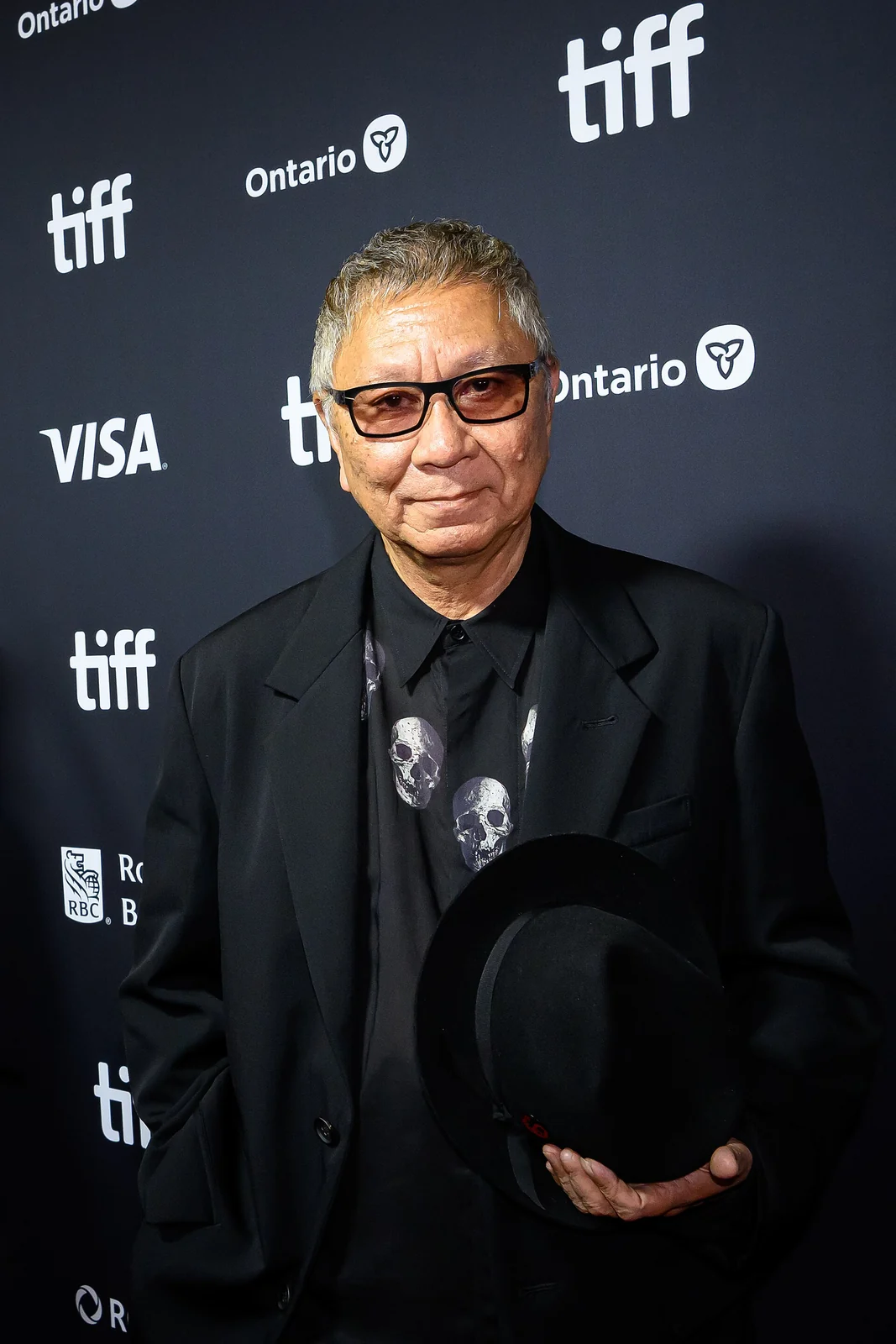
Photograph: Director Takashi Miike at the 2026 Toronto International Film Festival, photographed by K6ka / Enoch Leung. Wikimedia Commons, CC BY-SA 4.0. This is a later portrait of the film’s director, not an Audition still. Resized and converted to WebP without additional cropping; derivative licensed CC BY-SA 4.0.
The lasting contribution: horror as an uneasy social relationship
Murakami’s significance to horror is not measured by how many graphic moments can be traced to his books. Audition became internationally prominent through Miike’s film, but the novel’s setup already placed dishonesty, desire and misjudgment at the center of a threatening encounter. In the Miso Soup and Piercing took different routes into comparable unease.
It would be easy to turn his death into an exaggerated claim that he invented psychological horror or single-handedly transformed Japanese cinema. The available evidence supports a more precise assessment. He was a major Japanese novelist whose dark fiction supplied one of the most recognized modern horror film adaptations and whose other books continued to test how little people may know about those closest to them.
His publisher’s October 23 notice records a death. The books and films remain separate works to revisit, each with its own authorial contributions. Remembering Murakami accurately means giving the writer credit for what he wrote, the filmmakers credit for what they made, and readers room to encounter the unsettling stories on their own terms.
Sources & further reading
- Gentosha: publisher’s death announcement, October 23, 2026
- Gentosha: original announcement and bibliography (PDF)
- EFE: Murakami’s death and publisher announcement, October 23, 2026
- Gentosha: Audition book record, 1997 edition
- BFI: Audition (1999), film credits
- BFI: Miike and Shiina discuss Audition, 2024
- Penguin Random House: Ryū Murakami author bibliography
- Penguin Random House: In the Miso Soup
- Penguin Random House: Piercing
- Joi Ito, 3 June 2005 — image source and reuse terms
- Enoch Leung / K6ka, 14 September 2026 — image source and reuse terms