News / TV & Streaming
The Black Tapes Is Becoming an MGM+ Series: Richard Strand, the Podcast's Fake-Documentary Horror, and What Changes
MGM+ has ordered The Black Tapes with Nikolaj Coster-Waldau as Strand and Sosie Bacon as physicist Alex Regan. Here is what the series changes from the podcast.
Updated
Topics: The Black Tapes, MGM+, Nikolaj Coster-Waldau, Richard Strand, Alex Reagan, Terry Miles, Paul Bae, Horror Podcasts, Found Audio, Podcast Adaptations, Sosie Bacon, Alex Regan


Hero photograph: Nikolaj Coster-Waldau at the 2022 Berlin International Film Festival, photographed by Harald Krichel, CC BY-SA 3.0. This is a portrait of the announced lead actor, not an image from the unfilmed MGM+ series. Resized and converted to WebP under the same image license.
MGM+ has ordered an eight-episode television adaptation of The Black Tapes, the fictional investigative-horror podcast created by Terry Miles and Paul Bae. The October 26, 2026 announcement names Nikolaj Coster-Waldau as Dr. Richard Strand, a skeptical investigator whose supposedly inexplicable cases become the foundation for a much larger occult mystery. The project’s most interesting question is not simply who plays Strand. It is whether a television drama can preserve the podcast’s unsettling trick: letting an entirely invented investigation feel, at first, like something someone might really have recorded.
The newly commissioned series is a real production announcement, not evidence that the podcast’s ghosts, occult groups or cases are real. Nor is it evidence that the television adaptation has already settled the original audio drama’s unanswered questions. Those distinctions are central to understanding what MGM+ is adapting.
The order, casting, creative team and planned January 2027 production start were reported on October 26 by Bloody Disgusting and Fangoria, which reproduce details and statements attributed to MGM+ and the producers.
Spoiler scope: This article explains the premise and a few examples from the podcast’s published episode descriptions, but does not disclose its later revelations or assume the television version will reproduce them.
What has MGM+ actually ordered?
Eight episodes have been ordered for MGM+, with MGM+ Studios producing. Nikolaj Coster-Waldau is set to play psychiatrist Dr. Richard Strand. John Rogers is writing alongside podcast creators Terry Miles and Paul Bae and serves as an executive producer; Miles and Bae are also executive producers. The announced producing team additionally includes Jennifer Court and Kearie Peak, according to the October 26 production announcement reported by Bloody Disgusting.
October 27, 2026 brought an important casting update: Sosie Bacon, the lead of Smile (2022), will play Alex Regan, the scientist investigating the purported paranormal cases alongside Strand. Industry coverage describes this television character more specifically as a methodical physicist. Bloody Disgusting reported the casting on October 27, citing Deadline’s report. Bacon is not playing a new character invented for this article: Regan is the name used in the announced television synopsis. The spelling and profession differ from the podcast’s journalist Alex Reagan, a distinction explored below.
Production is planned to begin in Vancouver in January 2027. A planned start is not the same as filming already being underway. Neither the October 26 series order nor the October 27 casting report established a premiere date, episode-release calendar or released first-season footage.
The announced platform territories include the United States, United Kingdom, Ireland, Germany, Italy, Spain, Belgium, the Netherlands and Latin America. That list is not a promise of worldwide availability, and no Swedish premiere or Swedish distribution agreement has been confirmed in the announcements reviewed here. Fangoria’s original order coverage reports the initial territory list.
The expanded casting announcement names both central performers; it does not confirm the complete supporting cast, that the show will copy the podcast’s plot or ending, or exactly how the mysteries will be translated from audio to television. An eight-episode order confirms a format, not a scene-by-scene adaptation plan.
What is The Black Tapes podcast actually about?
The podcast began in 2015 and is presented as a serialized investigation from the fictional Pacific Northwest Stories organization. Its own official description calls it a docudrama about journalist Alex Reagan, a secretive subject and the ghosts that follow their search for answers. It uses interviews, apparent field reporting, recordings and case investigations to invite listeners into a story that borrows the surface language of nonfiction.
At the center is Strand, whose work involves investigating paranormal claims. He is not simply a believer cataloguing spectacular hauntings. The character’s skeptical posture creates the premise’s productive tension: why does someone committed to rejecting supernatural explanations keep a set of cases that seem to resist his usual methods?
The titular black tapes are those unresolved cases in the podcast’s fiction. Their significance is narrative: individual recordings and investigations gradually seem connected to Strand’s private history and to an expanding mythology involving people, secretive groups and religious imagery.
There is an important factual boundary here. The podcast is scripted horror, not a documentary proving possession or demonic activity. Its journalist, cases and interlocking mysteries belong to a fictional story, even when the presentation imitates a real investigation. The official page explicitly uses the term docudrama. The way a claim is recorded in-universe should never be mistaken for historical confirmation outside that universe.
Why did the original feel like found evidence?
Audio makes a particular kind of horror possible. A listener hears a narrator hesitate, a recording change texture or a supposed witness describe an event without immediately seeing what happened. The absence of an image leaves space for both skepticism and dread. In The Black Tapes, the investigation format turns uncertainty into a continuing engine rather than treating every episode as a separate ghost story with an obvious monster at the end.
The format also establishes a relationship between the two central characters. Alex approaches Strand’s files as a journalist examining another person’s claims. Strand tries to retain the authority of a skeptical expert. The central drama is not simply whether either character believes in ghosts; it is what happens when their methods of determining what counts as evidence begin to diverge.
The official episode archive illustrates the gradual shift from individual cases to a wider mythology. The 2015 episode “The Codex Gigas” places Alex’s investigation alongside the history of a secretive order. A 2016 episode, “Welcome to the Machine,” links an alleged exorcism machine to clues about Strand’s past. These are summaries of fictional episodes, not archival findings about actual occult activity.
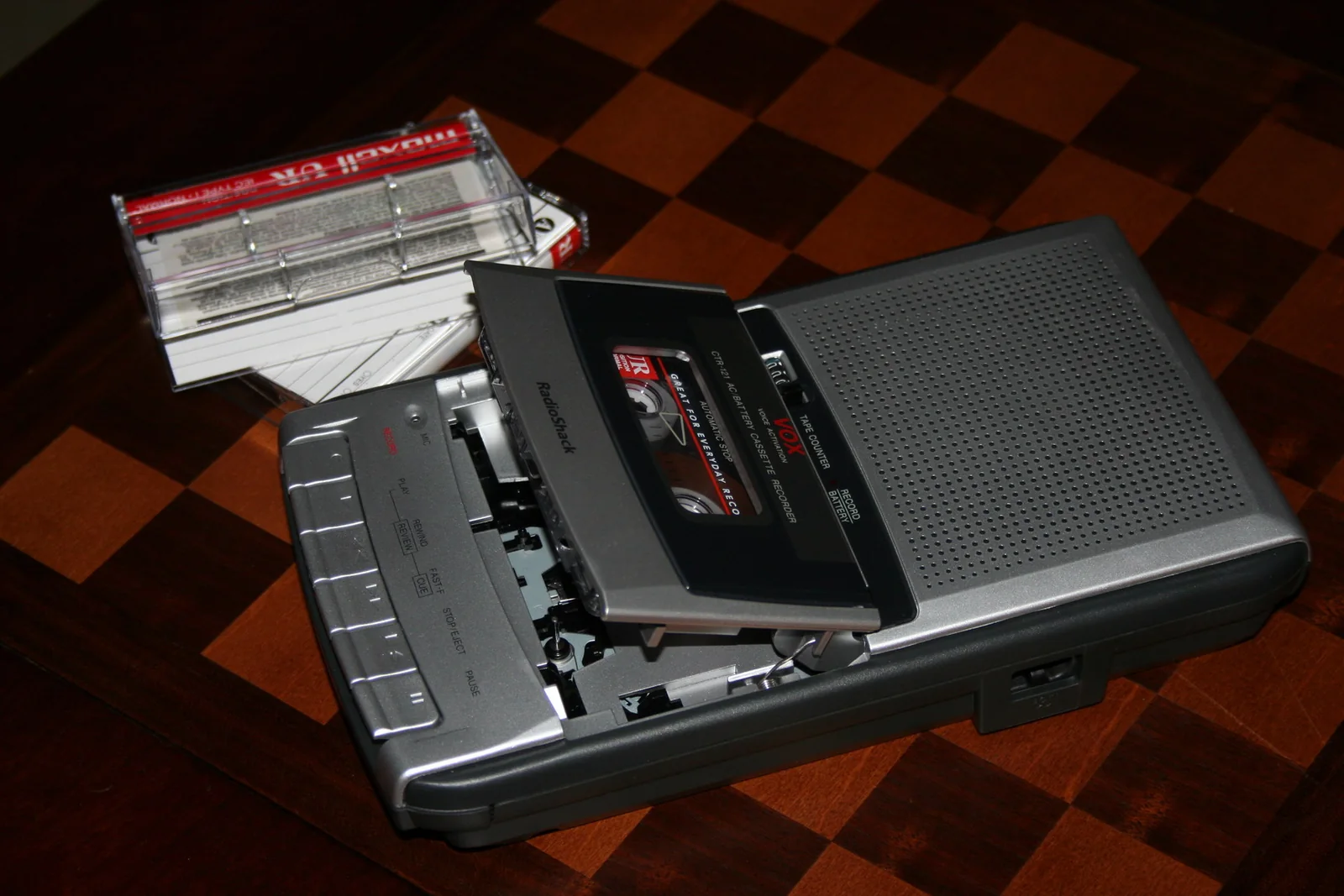

That separation between the apparatus and the claim is part of what the podcast exploits. A physical recording can exist. Its existence alone does not validate the paranormal meaning a character assigns to it. The story asks audiences to inhabit that ambiguity while ultimately building a supernatural fictional world.
The most important difference in the television synopsis
The original podcast describes Alex Reagan as a journalist. The television synopsis describes Strand teaming with a scientist named Alex Regan; the October 27 casting coverage further calls her a physicist, with Sosie Bacon now attached to the part. It also spells her surname Regan, rather than the podcast’s Reagan. The podcast’s official description, the October 26 MGM+ series-order coverage and the October 27 casting report do not describe the character in identical terms.
The specificity of physicist makes the television description more concrete, but it still does not establish why the podcast’s journalist has been described differently for the adaptation. The change may be deliberate, or promotional language and spelling may yet be clarified. Until a creator or the network explains it, the difference should not be presented as proof of a comprehensive rewrite of the character’s backstory.
This distinction matters to the storytelling. A journalist investigating an expert’s case files approaches evidence from a different professional position than a physicist attempting to debunk unexplained claims alongside a psychiatrist. That could change the relationship at the centre of the story. What is confirmed is Bacon’s casting and the television synopsis’s description; how that difference plays out on screen remains unknown.
The show’s announced premise also points toward a hidden occult world and a centuries-old apocalyptic conspiracy. Such elements fit the podcast’s broad evolution from individual mysteries to interconnected mythology. The casting announcement does not establish which original cases, supporting characters or revelations will appear in the first eight episodes.
Can a filmed series preserve a story built around sound?
The obvious benefit of television is that it can show the people behind the recordings, the places investigators visit and the consequences of their discoveries. The risk is that visual certainty removes something the podcast carefully controlled: the listener’s inability to see the alleged evidence clearly.
That is a question of adaptation technique, not a prediction that the show will succeed or fail. A filmmaker could choose to emphasize recorded audio, incomplete footage, contradictory accounts or skeptical interviews. Equally, the series could move toward more conventional dramatized scenes. No released footage establishes which approach the MGM+ version has chosen.
John Rogers has described the original as a mixture of unsettling horror and elaborate conspiracy mystery, and said the involvement of Miles and Bae gives the writers an opportunity to expand its mythology. Those comments, reported by Bloody Disgusting, establish an intention to develop the material. They do not promise a specific answer to a particular unresolved podcast mystery.
Morbid Index has examined a different but useful example of documentation-shaped horror in its history of the SCP Foundation. The two projects are not the same creative property and do not share a continuity. What connects them as a reading comparison is the use of seemingly procedural evidence and case files as a storytelling technique. Both should be understood as fiction.
Has The Black Tapes been adapted for television before?
An earlier television version was announced in December 2018, when NBC was reported to be developing a series based on the podcast. That project was linked to writer Matthew Arnold and the podcast creators. The contemporaneous report describes development, not a finished program.
The MGM+ version is a distinct, later order. October 2026 coverage reports that the NBC attempt did not proceed to a pilot. A previous development announcement is not equivalent to an earlier television series that viewers could have watched.
That history is useful because adaptations can remain at the development stage for years. The October 26 order is more concrete than an uncommitted pitch, but filming, release and final story choices still remain future milestones.
Does the TV series solve the podcast’s unanswered mysteries?
Nothing released with the current announcement establishes that MGM+ will resolve any particular question left hanging by the audio story. The eight-episode format and creators’ involvement make it reasonable to discuss the opportunity to revisit the mythology. They do not make an ending, a resolution or the return of every character a fact.
It is also worth resisting an easy but misleading headline: the new show is not a nonfiction investigation reopening real paranormal cases. Its premise comes from a fictional audio drama, and the show’s planned occult conspiracy belongs to that narrative tradition.
Readers interested in how real testimony becomes a haunting story can compare a genuinely documented case, the Greenbrier Ghost murder trial. That article deals with surviving nineteenth-century reports and actual legal proceedings, not an invented audio case file. The contrast helps show why distinguishing source type matters even when the subject is frightening.
What remains unconfirmed?
After the October 27, 2026 casting update, the two central performers have been identified: Nikolaj Coster-Waldau as Richard Strand and Sosie Bacon as Alex Regan. The remaining uncertainties include whether the altered profession and spelling of Alex’s name are an intentional adaptation choice; the complete supporting cast; the actual start and completion of filming; the first official trailer; a precise premiere date; Swedish distribution; which podcast cases will appear; and whether the show revisits or resolves the audio drama’s ending.
The confirmed order, two lead casting announcements, creative team and planned production window provide substantial information without requiring invented details. Whether the adaptation can reproduce the unsettling ambiguity of its audio source is a question for the finished series, not a fact established by promotional materials.
Frequently asked questions
Is The Black Tapes a true story?
No. It is a fictional serialized audio docudrama, even though it is framed like a real investigative podcast. The hauntings, cases and overarching conspiracy are story material, not demonstrated historical events.
Who will play Dr. Richard Strand?
Nikolaj Coster-Waldau is announced as Strand in MGM+’s eight-episode adaptation. The actor has not been shown in costume or a production image in the sources reviewed here.
Is Alex Reagan in the show?
Sosie Bacon has been cast as Alex Regan, described in the MGM+ television coverage as a methodical physicist. The original podcast’s lead is journalist Alex Reagan. Their similar names suggest the adapted counterpart, but the sources do not explain the difference in spelling or profession. The casting was reported on October 27, 2026.
When will The Black Tapes premiere?
No premiere date has been announced. Production is planned for January 2027 in Vancouver, according to reporting dated October 26, 2026.
Will the series be on MGM+ in Sweden?
Sweden is not included in the announced territory list reviewed here. A Swedish premiere or distribution arrangement has not been confirmed by these sources.
Is there an official trailer?
Not in the announcement reviewed here. No teaser or promotional edit should be passed off as an official trailer without verifying an original studio or network upload.
Sources & further reading
- Bloody Disgusting: MGM+ order, casting and production details (October 26, 2026)
- Fangoria: Eight-episode adaptation, creators and territories (October 26, 2026)
- The Black Tapes official website: About the podcast
- The Black Tapes official episode archive
- Bloody Disgusting: Earlier NBC development announcement (December 14, 2018)
- Wikimedia Commons: Nikolaj Coster-Waldau by Harald Krichel (CC BY-SA 3.0)
- Wikimedia Commons: RadioShack Tape Recorder by Justin Smith (CC BY-SA 3.0)
- The Black Tapes: The Codex Gigas episode description (September 29, 2015)
- The Black Tapes: Welcome to the Machine episode description (July 19, 2016)
- Bloody Disgusting: Sosie Bacon cast as Alex Regan (October 27, 2026)