The Index / Folklore
The SCP Foundation Explained: How a 4chan Post Became a Massive Collaborative Horror Universe
SCP-173 started as a single 2007 post on 4chan's /x/ board. It's now a Creative Commons-licensed, collaboratively written fiction universe with thousands of entries -- and it has never claimed to be real.
Topics: SCP Foundation, Internet Folklore, Collaborative Fiction, Creepypasta, Horror

SCP Foundation emblem by far2; white background added / Wikimedia Commons, CC BY-SA 3.0
The SCP Foundation is fiction, and it has never pretended otherwise. That needs saying up front because the format — clinical containment reports about impossible objects, written in flat bureaucratic language with no wink to the reader — is convincing enough that people genuinely ask whether it’s real. It started as a single anonymous post on 4chan in June 2007 and grew into a sprawling, openly collaborative, Creative Commons-licensed fiction project with thousands of contributors and no single author or canon.
The Original Post
SCP-173 first appeared in June 2007 on 4chan’s /x/ board, the site’s paranormal discussion section. The post is now generally attributed to a user identified as Wesley “Moto42” Williams, though authorship attribution for material from anonymous imageboards always carries some inherent uncertainty. The entry described a concrete statue that could only move when nobody was looking directly at it, written in a dry, procedural style — containment instructions, incident reports — rather than as a conventional horror story. That specific format, treating an impossible object as a bureaucratic containment problem rather than a monster to be feared or explained, is the core creative idea the entire SCP project grew out of.
A Real Sculpture, Used Without Permission
The image originally posted alongside SCP-173 was a photograph of an actual sculpture, Untitled 2004, by Japanese artist Izumi Kato, used without his knowledge or permission. This became a genuine, unresolved point of tension as the SCP Foundation grew into a large, actively monetized creative property built partly around an image its subject never agreed to have associated with it. After being contacted around 2013 and 2014, Kato reluctantly permitted non-commercial use of the image while explicitly warning he would pursue legal action against commercial use. The SCP Foundation wiki ultimately removed the image entirely in February 2022, with the community acknowledging that Kato’s artistic work had, in his own words, been effectively hijacked by its association with the fictional object. This is exactly why no photograph of the original SCP-173 sculpture appears in this article: its use, even now, remains legally and ethically unsettled, and reproducing it here would repeat the same problem rather than document it responsibly.
From 4chan to a Real Wiki
The project moved from 4chan to a wiki hosting service called EditThis, and then, in July 2008, to Wikidot, after EditThis switched to a paid subscription model that the project’s contributors didn’t want to follow. That relocation to Wikidot had a significant, largely accidental consequence: it placed all SCP Foundation content under Wikidot’s standard Creative Commons Attribution-ShareAlike 3.0 license by default, a licensing decision that shaped everything about how the project could legally grow afterward.
What “SCP” Actually Stands For
The official in-universe designation is “Special Containment Procedures,” referring to the specific instructions each catalogued entry, or “SCP,” requires for safe handling. The now-famous three-word motto “Secure, Contain, Protect” developed later as a community-adopted backronym rather than the project’s original founding phrase, but it’s become the phrase most people actually associate with the Foundation’s identity.
How Object Classes Work
As the collection of SCP entries grew, contributors developed a shared classification system describing how difficult a given object is to contain, rather than how dangerous it is. A “Safe” object is reliably containable under current procedures; “Euclid” describes something less predictable or harder to fully understand; “Keter” describes an object that’s extremely difficult or currently impossible to contain reliably. Additional classes, including “Thaumiel,” developed later as the collaborative universe’s internal logic expanded. This isn’t a fixed system handed down from a single creator — it evolved through community consensus over years, the same way the rest of the project’s internal rules did.
No Single Canon, on Purpose
One of the SCP Foundation’s defining structural features is that it explicitly has no single, official continuity. With thousands of contributors writing independently, the project doesn’t attempt to reconcile every entry into one consistent timeline or universe. Instead, related articles are often grouped into informal “canons” — clusters of stories sharing specific characters, locations, or ongoing plotlines that individual writers or small groups maintain consistency within, without those groupings ever being binding on the wider project. This is a genuinely unusual approach to worldbuilding, closer to how a decentralized rumor mill treats a shared list of local legends than how a single studio manages a franchise.
Why the License Actually Matters
Because SCP Foundation text content is released under Creative Commons Attribution-ShareAlike terms, anyone can legally adapt, remix, and even commercially sell derivative work, provided they give appropriate attribution back to the original wiki and the specific article’s author, and release their own derivative work under a compatible license. This is a significant part of why the SCP universe has produced so many independent games, videos, and other adaptations without the legal friction that usually surrounds fan-made content based on traditionally copyrighted franchises.
How the Community Actually Grew
Individual entries beyond SCP-173 helped build the project’s reputation and demonstrate its range. SCP-682, nicknamed informally as an almost indestructible reptilian creature, and SCP-096, an entity that becomes violently lethal if its face is seen, are both frequently cited as examples of how the format could sustain genuinely tense, escalating horror premises using the same dry documentation style as the original post. SCP-049, a plague-doctor-styled entity convinced it can cure death, is another widely referenced early example. None of these need to be treated as more historically important than the thousands of other entries the project has produced; they’re simply commonly cited touchstones for how the format expanded beyond its original single-object premise.
The clearest evidence of the project’s reach outside its own wiki is SCP: Containment Breach, an independently developed, unofficial survival-horror video game built directly on the CC-licensed material, featuring SCP-173, SCP-096, SCP-049, and other entries as in-game threats. The game reportedly introduced a substantial number of players to the SCP Foundation who had never encountered the original wiki, functioning as a significant, if unofficial, gateway into the broader project. Since then, additional games, YouTube series, audio dramas, and independently published books have continued to build on the same CC-licensed foundation.
SCP vs. Creepypasta, Slender Man, and the Backrooms
The SCP Foundation shares obvious DNA with broader online “creepypasta” horror-story culture, but its specific format sets it apart. Creepypasta as a general category covers a wide range of styles, tones, and lengths, often built around a single scary image or short narrative shared for its own sake. SCP entries are deliberately narrower and more procedural: nearly every entry follows the same bureaucratic-document format regardless of author, which is part of what makes the collaborative universe feel unusually coherent despite having no central creative authority.
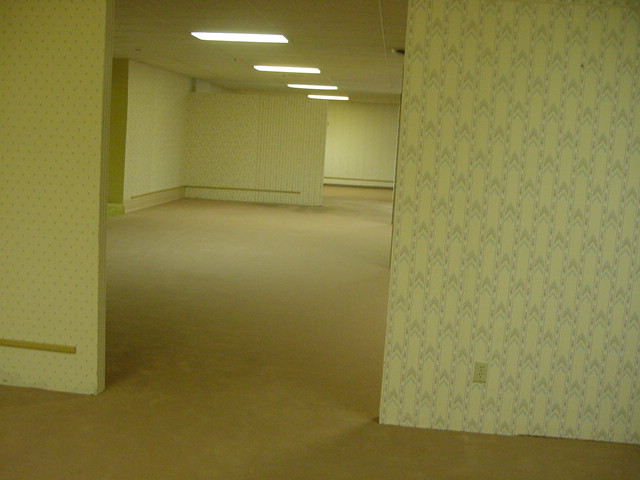
It’s also worth distinguishing SCP from other major internet-horror phenomena with similarly traceable origins. Slender Man began as a specific 2009 image-editing contest entry with a single identifiable creator, developing primarily through fan art and creepypasta writing built around one central figure. The Backrooms began even more minimally, as a single unsettling photograph posted without much accompanying text, and grew mostly through visual and atmospheric elaboration by later contributors rather than structured documentation. The SCP Foundation is distinct from both in scale and structure: rather than one central figure or image, it’s an entire deliberately bureaucratic documentation format, applied independently by thousands of different writers to thousands of different, mostly unrelated fictional objects and entities, unified by shared tone and format rather than a shared central character.
Frequently Asked Questions
Is SCP real? No. It’s openly acknowledged, collaborative fiction, written in a documentary style specifically designed to feel plausible. It has never claimed to describe real events or organizations.
What does SCP stand for? Special Containment Procedures. The Foundation’s popular motto, “Secure, Contain, Protect,” is a community-adopted phrase that developed after the project’s initial creation.
What was the first SCP? SCP-173, posted to 4chan’s /x/ board in June 2007, describing a statue that can only move when unobserved.
Who created SCP-173? The post is generally attributed to a user identified as Wesley “Moto42” Williams, though authorship on an anonymous imageboard carries inherent uncertainty. The image originally used alongside it depicted a real sculpture by Japanese artist Izumi Kato, used without his permission — a licensing issue the project only partially resolved decades later.
What are SCP object classes? A community-developed system, including categories like Safe, Euclid, and Keter, describing how difficult a given fictional object is to reliably contain, not how dangerous it is.
Is there one SCP canon? No. The project explicitly has no single official continuity; related stories are informally grouped into separate “canons” maintained by individual authors or small groups, without being binding on the wider collaborative universe.
Is SCP copyrighted? SCP Foundation text content is released under a Creative Commons Attribution-ShareAlike license, permitting reuse, adaptation, and even commercial derivative works, provided proper attribution is given and derivatives use a compatible license.

.svg)
.jpg)