News / TV & Streaming
Crystal Lake Moves Jason Voorhees’ Drowning From 1957 to 1971 — What the Prequel Changes
A24’s Crystal Lake tie-in places Jason’s drowning in 1971 at age 11. Compare the original film’s 1957 chronology and the prequel’s new Pamela backstory.
Updated
Topics: Crystal Lake, Friday the 13th, Pamela Voorhees, Jason Voorhees, Linda Cardellini, Brad Caleb Kane, Peacock, A24, Camp Crystal Lake, slasher lore

Daniel Benavides via Wikimedia Commons (CC BY 2.0); resized and recompressed
Peacock’s eight-episode Crystal Lake premiered on October 15, 2026. Its version of Jason Voorhees’ origin changes more than a date: the show’s later episodes give his extraordinary survival an explicit fictional explanation. That makes it important to distinguish three things—what the original Friday the 13th says, what the official Crystal Lake novelization dates, and what the television season eventually reveals.
Major spoilers for Crystal Lake Season 1, particularly Episodes 6–8, follow. Readers looking only for the release-date and chronology comparison can use the earlier sections without reading the spoiler-heavy explanation below.
In the 1980 film’s chronology, Pamela Voorhees says her son drowned one year before two camp counselors were murdered in 1958. That puts the reported drowning in 1957, although Pamela’s account does not independently prove that Jason actually died. The American Film Institute’s film catalog documents the original film and its 1958 opening murders.
The official A24 tie-in novelization, by contrast, places 11-year-old Jason’s drowning in 1971. The screen version develops a further new premise: according to Peacock’s October 19 explanation of Episode 7, Jason and his mother were subjected to experiments connected to Project Argonaut, a program operated by the fictional Bellflower corporation. The series uses those experiments to account for Jason’s uncanny resilience.
The distinction matters: a newly supplied cause for survival inside the 2026 television continuity does not rewrite the dialogue, dates, or necessarily the supernatural ambiguities of earlier films. The film’s 1957 chronology and the series’ 1971 chronology describe different treatments of the same franchise mythology.
What does the original Friday the 13th actually establish?
The cleanest starting point is the 1980 film itself.
The American Film Institute’s catalog synopsis opens at Camp Crystal Lake in 1958, when two counselors sneak away from the group and are murdered.
Later in the film, Pamela Voorhees explains the earlier tragedy.
She says a young boy drowned the year before those two counselors were killed.
She identifies that boy as Jason, her son.
She also says she was working at the camp when it happened and was preparing meals there as the cook.
That produces the original chronology:
1957 — Jason Voorhees’ reported drowning, according to Pamela.
1958 — two Camp Crystal Lake counselors are murdered.
This dates the drowning in Pamela’s account; it does not settle whether Jason actually died. The sequels develop the possibility that he survived, a separate question from when the original film places the tragedy.
The movie does not spend an hour dramatizing Jason’s childhood.
The drowning functions as the hidden wound underneath the story.
Pamela’s revelation near the end reinterprets everything the audience has already seen.
A24’s novelization now pins the new drowning to 1971
Earlier Crystal Lake interviews had already established that the series was moving Pamela and Jason’s origin into the 1970s.
A24’s official tie-in novelization now narrows that down.
The book, written by Tim Waggoner, was released on October 15, 2026, the same day as the eight-episode Peacock season.
Its published synopsis says that 11-year-old Jason Voorhees drowns in 1971 and that Pam’s grief drives the story that follows.
That is the clearest current date attached to the new version of the origin.
It also sharpens the comparison with the 1980 film:
Original-film chronology: 1957.
Crystal Lake tie-in chronology: 1971.
There is still an important source boundary.
An official novelization can expand interior thoughts, backstory and scenes beyond what appears on screen. Showrunner Brad Caleb Kane describes the book as a companion piece that can deepen material the series cannot communicate in exactly the same way.
So the safe conclusion is that the official A24 tie-in places this version of Jason’s drowning in 1971.
That does not mean every novel-only thought, scene or detail should automatically be treated as something the television episodes explicitly show.
Crystal Lake is reimagining the origin, not inserting itself unchanged into 1957
The new series does something different on purpose.
Entertainment Weekly reports that the Pam of Crystal Lake works at the camp in the 1970s, and that the eight-episode story begins with Jason’s drowning.
A24 and Peacock describe the show as a prequel centered on Pam almost a year after Jason’s reported drowning.
The novelization now supplies the missing precision: 1971.
So the timeline difference is not an obscure continuity error hiding in a prop.
It is part of the show’s design.
A drowning that belonged to the 1950s in the original chronology now belongs to the early 1970s story world.
That means viewers should be cautious with phrases like:
“This is exactly what happened before the 1980 film.”
A better description is:
“This is a new prequel version of how Pamela and Jason’s origin unfolds.”
Jason is 11 in the new version
The novelization announcement also gives Jason an exact age at the drowning:
11 years old.
That helps separate the new continuity from assumptions based on older films, fan timelines or character databases.
When discussing Crystal Lake, the source-based formulation is now straightforward:
this version of Jason is 11 when the 1971 drowning occurs.
That age should not automatically be projected backward onto every earlier Friday the 13th continuity.
One thing the series preserves: Pamela works at the camp
Not every detail is being replaced.
In the original film, Pamela says she was the camp cook when Jason drowned.
Peacock’s current Crystal Lake material also places Pam at the camp, while Entertainment Weekly describes her as working in food service there.
That is a useful example of how the new show handles source material.
It can preserve a small original-film fact while rebuilding the life around it.
The job comes from old canon.
The detailed 1970s Pamela around that job is largely new territory.
Pamela’s former singing career is new series material
Entertainment Weekly revealed one of the clearest additions.
Before the murders, Crystal Lake gives Pam a singing career that she gave up to focus on Jason.
Cardellini was announced to sing in the role.
Nothing in the 1980 movie establishes that Pamela Voorhees had a professional or semi-professional singing past.
The original tells us she is Jason’s mother, that she worked at the camp and that she blames negligent counselors for his death.
That is enough to establish motive.
It is not a full biography.
The singer backstory belongs to the new series unless another earlier licensed continuity source is being deliberately imported and identified.
For viewers trying to keep versions straight, that is the useful rule:
Pamela the camp cook has roots in the 1980 film. Pamela the former singer is Crystal Lake’s expansion.
Chief Levon Brooks is also part of the new version
The new series builds a larger social life around Pam.
William Catlett plays Levon Brooks, a police chief investigating deaths around Crystal Lake while also courting Pam.
His sister, journalist Briana Brooks, is pursuing the story from another direction.
These characters give the show a procedural structure the original movie did not need.
Pamela is no longer an almost completely hidden killer who arrives late and explains herself.
The audience is meant to spend time with her before and during the transformation.
That changes the suspense.
In the film, the question is:
Who is killing the counselors?
In Crystal Lake, the audience already knows what Pamela Voorhees becomes.
The question becomes:
How does this version of Pamela get there?
Jason’s hydrocephalus is an explicit new characterization
Entertainment Weekly also describes young Jason as having hydrocephalus, with an enlarged cranium, and being bullied and socially excluded by other children.
The original film presents Jason through Pamela’s memory, a brief drowning flashback and the nightmare image associated with Alice’s final lake sequence.
It does not name hydrocephalus as a diagnosis.
That means the new series is making a more specific choice about Jason’s body and childhood.
That choice should not automatically be projected backward onto every earlier Friday the 13th continuity.
The same is true of the showrunner’s description of Jason’s development from an “othered” child into the monster associated with the franchise.
That is a thematic arc built for Crystal Lake.
It is not dialogue hidden somewhere in the 1980 film.
Jason’s mask in Crystal Lake
Jason’s hockey mask is the franchise’s most recognizable image, but it does not originate in the 1980 Friday the 13th. The mask first becomes part of the character’s look in Friday the 13th Part III (1982). Crystal Lake therefore does not put the familiar hockey mask on its young Jason.
There is a more pointed visual connection in the finished first season. Peacock’s October 16 explainer says the figure who emerges late in the story wears a burlap mask, echoing Jason’s hooded appearance in Friday the 13th Part 2. That choice functions both as a reveal within the television story and as a reference to an earlier on-screen version of the character.
Showrunner Brad Caleb Kane told Variety, as relayed by Peacock, that keeping the hockey mask out was a timeline decision, not a licensing restriction. This is another example of a prequel retaining familiar iconography while choosing a new explanation for how its characters reached that point.
The original film gives Pamela less biography than people remember
Decades of sequels, novels, games, fan discussion and retrospectives can make the first movie feel more detailed than it actually is.
Its Pamela material is extremely concentrated.
The important facts are delivered late:
- Jason is her son;
- he drowned at the camp;
- counselors were not watching him;
- Pamela worked there as the cook;
- she blames the camp and counselors;
- she is the killer.
That sparseness is exactly what gives a prequel room to expand.
But expansion is not the same thing as recovered history.
When Crystal Lake gives Pamela romances, music, friendships, local relationships and a longer psychological progression, it is creating the version of Pam needed for an eight-episode drama.
Is Crystal Lake a retcon?
“Retcon” is tempting, but it is too blunt if it implies that Peacock has permanently overwritten every prior Friday the 13th continuity.
The safer description is:
Crystal Lake reimagines the original origin chronology.
The official tie-in places the drowning in 1971, compared with the original film’s 1957 chronology, while the series expands people the original treated much more minimally.
Whether every future licensed story must now follow those changes is a separate franchise-continuity question.
There is no reason to pretend the 1957/1958 dates vanished from the 1980 movie simply because a new series tells another version.
Why move the origin to the 1970s?
The creators’ own comments make the practical and aesthetic reasoning visible.
The show wants to live in a recognizable pre-1980 America rather than spend most of its story in the 1950s.
Its world pulls from 1970s popular culture, paranoid thrillers, gender politics and period genre references.
Even Pamela’s hair became part of that decision.
Cardellini has said the production considered giving her a version of Betsy Palmer’s famous short hairstyle, then abandoned the idea because this younger Pam lives roughly a decade earlier.
The costume team keeps other visual echoes, including Pamela’s familiar blue sweater.
That is the larger strategy in miniature:
keep recognizable pieces, but do not pretend the new version occupies exactly the same historical moment.
Blairstown connects the production to the original without making it Crystal Lake
There is another kind of continuity happening outside the fiction.
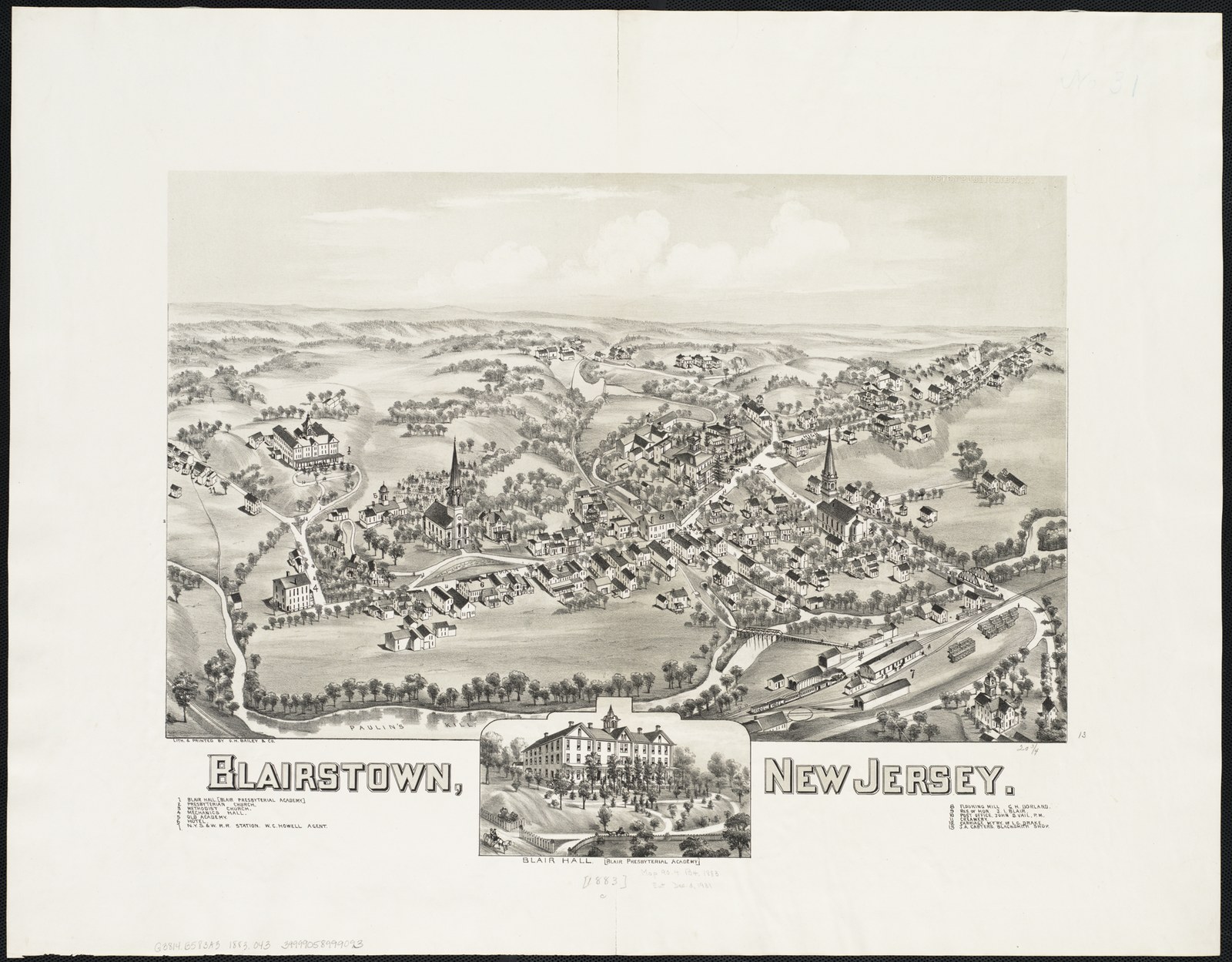
Cardellini told Entertainment Weekly that the new production shot in and around Blairstown, New Jersey, an area also associated with the original film’s production.
That is a real-world homage.
Blairstown is not literally the fictional town of Crystal Lake.
The show can use the same regional texture without turning every real street, building or landscape into canonical franchise geography.
Crystal Lake’s survival explanation (Season 1 spoilers)
Crystal Lake does eventually offer an answer to an old franchise question: how can Jason survive events that would ordinarily be fatal? Instead of leaving his return solely in the territory of nightmare imagery or an unexplained camp legend, this series adds a Cold War experiment to the Voorhees family story.
According to Peacock’s account of Episode 7, “Friday…”, a flashback beginning in 1959 shows Pamela facing a high-risk pregnancy. Elias Wittering, Jason’s father, persuades her to accept treatment connected to his employer, Bellflower Chemical. The treatments are not an innocent medical miracle: Peacock describes the harm inflicted on both mother and child and the program’s ultimate interest in creating people able to survive catastrophic radiation exposure.
Elias, played by Hamish Linklater, is a key figure in the scheme. In the series, Bellflower presents Jason as its success: a child possessing extreme physical durability as a consequence of its experiments. Peacock’s feature about Jason’s father identifies Elias Wittering and traces his connection to Pam and Project Argonaut. The corporation, the project, and the treatments are fictional plot devices, not a documented Cold War research program.
The name Project Argonaut matters because it supplies a causal chain that the 1980 movie never provides. In the television continuity, Pamela’s pregnancy, Jason’s childhood suffering, his survival of the lake, and the violence that follows become parts of the same story of exploitation. The premise also shifts the emphasis of the mystery: Pamela is not merely grieving a child whose fate is unknown; she has reason to fear people who treated that child as an experimental subject.
What is the “cockroach” explanation?
In Peacock’s recap, Elias describes Bellflower’s goal by comparing Jason’s apparent resistance to radiation with the durability popularly associated with cockroaches. This is a character’s description of fictional science. It is not evidence that real humans can acquire Jason’s abilities, that the program copied a genuine biological process, or that insects can survive an actual nuclear explosion without qualification.
In an October 23 interview with Bloody Disgusting, updated October 26, Kane specifically rejected the idea that Jason was spliced with cockroach DNA. He described the intended concept as biomimicry: replicating processes found in nature. That creative explanation does not establish that the fictional treatment would work in real life.
The series’ claim is more limited and easier to state accurately: Bellflower’s treatments supposedly give this version of Jason extraordinarily high resilience. It is unnecessary to invent genetic procedures, new chemical compounds, or precise mechanisms that the sources do not establish.
Does Project Argonaut make Jason immortal?
The show offers its own reason for Jason’s apparent survival, but “immortal” overstates what an in-universe account can prove. Peacock calls the character seemingly indestructible and uses his altered resilience to explain how he could endure drowning and other severe injuries. That is the franchise’s fictional explanation, not a medically testable proposition or a promise that the character could never be harmed under any imaginable circumstances.
It also does not follow that the earlier films now share one revised history. Crystal Lake moves the crucial drowning date from 1957 to 1971 and gives Jason a different family and experimental backstory. The older movies still contain their own contradictory, sometimes overtly supernatural treatments of his returns. The 1981 sequel, the lightning revival in Part VI, and later mythology should not be silently merged into a single perfectly consistent account.
How the revelation changes Pamela’s story
The experiment makes Pamela’s attachment to Jason more complicated without reducing her to a single motive. Peacock describes her undergoing treatment herself and later removing Jason from the laboratory. In other words, Crystal Lake makes her both a parent protecting her son from a fictional corporation and a figure whose later actions are not erased or justified by what happened to her.
The horror has two levels: the franchise’s familiar suspicion that someone is still alive in the woods, and the newer revelation that people deliberately manipulated Jason’s body and childhood. These details belong to the Peacock/A24 continuity. They should not be described as hidden facts that viewers were supposed to know when the first film opened in 1980.
For the episode-by-episode spoiler discussion, see the original network’s Jason survival explainer. This comparison is based on available primary-source recaps and published records; it is not a first-person review or a claim that the Morbid Index author screened the season.
What is original-film canon, and what belongs to Crystal Lake?
The cleanest approach is to name the source and continuity every time an origin detail becomes disputed.
The original 1980 Friday the 13th establishes: Pamela is Jason’s mother; she tells Alice that her son drowned while counselors should have been watching him; she worked at the camp as a cook; and two counselors were murdered in 1958, placing her account of Jason’s drowning one year earlier, in 1957. The film does not identify Bellflower Chemical, Project Argonaut, Elias Wittering, or a medical origin for Jason’s resilience.
The 2026 television season and its official tie-in establish a different telling: the novelization dates young Jason’s drowning to 1971, at age 11. The television series expands Pamela’s life as a singer, adds investigative characters around the camp, dramatizes Jason’s isolation, and introduces Elias and Bellflower’s Project Argonaut. Peacock’s episode reporting identifies experimental treatments as the reason this version of Jason survives seemingly fatal injury. The show also uses a burlap mask rather than bringing forward the hockey mask introduced later in the film series.
The boundary: promotional interviews, novel-only material, and the finished television episodes are not interchangeable sources. A detail may be part of the official Crystal Lake universe without having appeared on screen; a film detail may remain true of the 1980 continuity without carrying over unchanged into the 2026 reimagining. Calling the new origin a retcon is understandable, but it should not imply that every earlier version has been retroactively harmonized.
What does the Crystal Lake novelization add?
A24’s official Crystal Lake novelization by Tim Waggoner arrived alongside the television season in October 2026. Its published description places 11-year-old Jason’s reported drowning in 1971, a useful precision that allows a direct comparison with the original film’s 1957 chronology. The October 7 book announcement documents the tie-in and its premise.
A novelization may include interior thoughts or expanded incidents that do not occur exactly as written in the episodes. For the Project Argonaut explanation, rely on Peacock’s description of the televised Episode 7, not on an assumption that every passage of a companion book is screen canon.
What about the full trailer?
Red Reactions’ Crystal Lake trailer breakdown covers the footage, Pamela-centered marketing, young Jason and release details.
The A24 novelization supplied the exact 1971 date and Jason’s age, sharpening the timeline comparison beyond the earlier “1970s” wording.
For the non-fictional background to the franchise’s title, see our history of the Friday the 13th superstition.
Frequently Asked Questions
When did Crystal Lake premiere?
All eight episodes premiered on October 15, 2026, on Peacock in the United States. Regional distribution can differ. Peacock confirms the eight-episode release.
Is Crystal Lake a Friday the 13th prequel?
Yes, but it reimagines significant elements of the original timeline rather than preserving every older detail unchanged.
When did Jason drown in the original movie’s timeline?
The 1980 film opens with two counselor murders in 1958. Pamela says Jason drowned the year before, yielding a 1957 date for her account. His actual fate remains a separate issue.
When does Jason drown in Crystal Lake?
The official A24 television tie-in identifies 1971, when Jason is 11. This date belongs to the new adaptation’s chronology.
What is Project Argonaut?
In Crystal Lake, Project Argonaut is a fictional Bellflower Chemical experiment. Peacock’s Episode 7 explanation says the program exposed Pamela and Jason to treatments intended to create extraordinary resistance to catastrophic radiation exposure. It is not a real documented experiment.
Who is Elias Wittering?
Elias Wittering, played by Hamish Linklater, is Jason’s biological father in the television series and a key Bellflower employee connected to Project Argonaut. See Peacock’s character explanation.
Does Project Argonaut explain all of the Friday the 13th movies?
No single continuity claim should be stretched that far. Peacock presents it as the 2026 series’ explanation for Jason’s resilience. The original movies and sequels developed different chronologies and explanations, so they should be discussed separately.
Is the cockroach radiation claim a scientific fact?
No. It is Elias’s description of an invented program within the show. Do not mistake a villain’s explanation for demonstrated real-world biology or historical research.
Why doesn’t Jason wear a hockey mask in Crystal Lake?
The famous hockey mask was introduced in Friday the 13th Part III (1982). The series instead uses a burlap mask recalling Part 2. Peacock explains that this was a creative timeline decision, not a confirmed rights problem.
Was Pamela Voorhees a cook in the original movie?
Yes. Her role at Camp Crystal Lake is established by her original-film dialogue. Her singing career is a separate expansion in the Peacock series.
Did the original film name Jason’s condition as hydrocephalus?
No such medical diagnosis is explicitly named in the 1980 film’s dialogue. The 2026 series makes the condition part of its portrayal of young Jason; that specificity should not be retroactively attributed to the original script.
Is Chief Levon Brooks in the 1980 movie?
No. Chief Levon Brooks is part of the television prequel’s expanded network of characters.
Is Blairstown, New Jersey, really Camp Crystal Lake?
No. Blairstown is a real filming-associated location, while Camp Crystal Lake is fictional.
Is this a review based on watching the series?
No. This guide compares published franchise material and Peacock’s own episode summaries. It does not claim that a Morbid Index writer watched or personally reviewed the season.
Sources & further reading
- A24: Crystal Lake
- NBCUniversal: Crystal Lake premieres October 15, 2026
- Bloody Disgusting: A24 Crystal Lake novelization by Tim Waggoner
- Peacock: Everything to Know About Crystal Lake
- Peacock: How to Watch the First Three Friday the 13th Movies
- Peacock: October 2026 schedule
- Entertainment Weekly: Linda Cardellini and the new Pamela Voorhees
- Entertainment Weekly: Why Crystal Lake changed Pamela’s 1980 look
- James Francis Jr., Recycled Fear (MTSU, 2010), p. 74: Pamela’s original-film dialogue
- AFI Catalog: Friday the 13th (1980)
- Red Reactions: Crystal Lake trailer breakdown
- Wikimedia Commons: Linda Cardellini (2019)
- Wikimedia Commons: Blairstown, New Jersey (1883 map)
- Peacock: Project Argonaut and Jason’s survival (October 19, 2026)
- Peacock: Why Crystal Lake uses a burlap mask (October 16, 2026)
- Peacock: Elias Wittering and Hamish Linklater (October 15, 2026)
- Peacock: Crystal Lake Episode 8 ending explained (October 15, 2026)
- Bloody Disgusting: Brad Caleb Kane clarifies Jason’s new origin (October 23, updated October 26, 2026)