Lore & Explained / Folklore
Why Is Friday the 13th Unlucky? The Real History Behind the Superstition
The Friday the 13th superstition appears in nineteenth-century records. Trace its older ingredients, false origin stories, and the evidence about bad luck.
Topics: Friday the 13th, Superstition, Folklore, Unlucky 13, Crystal Lake
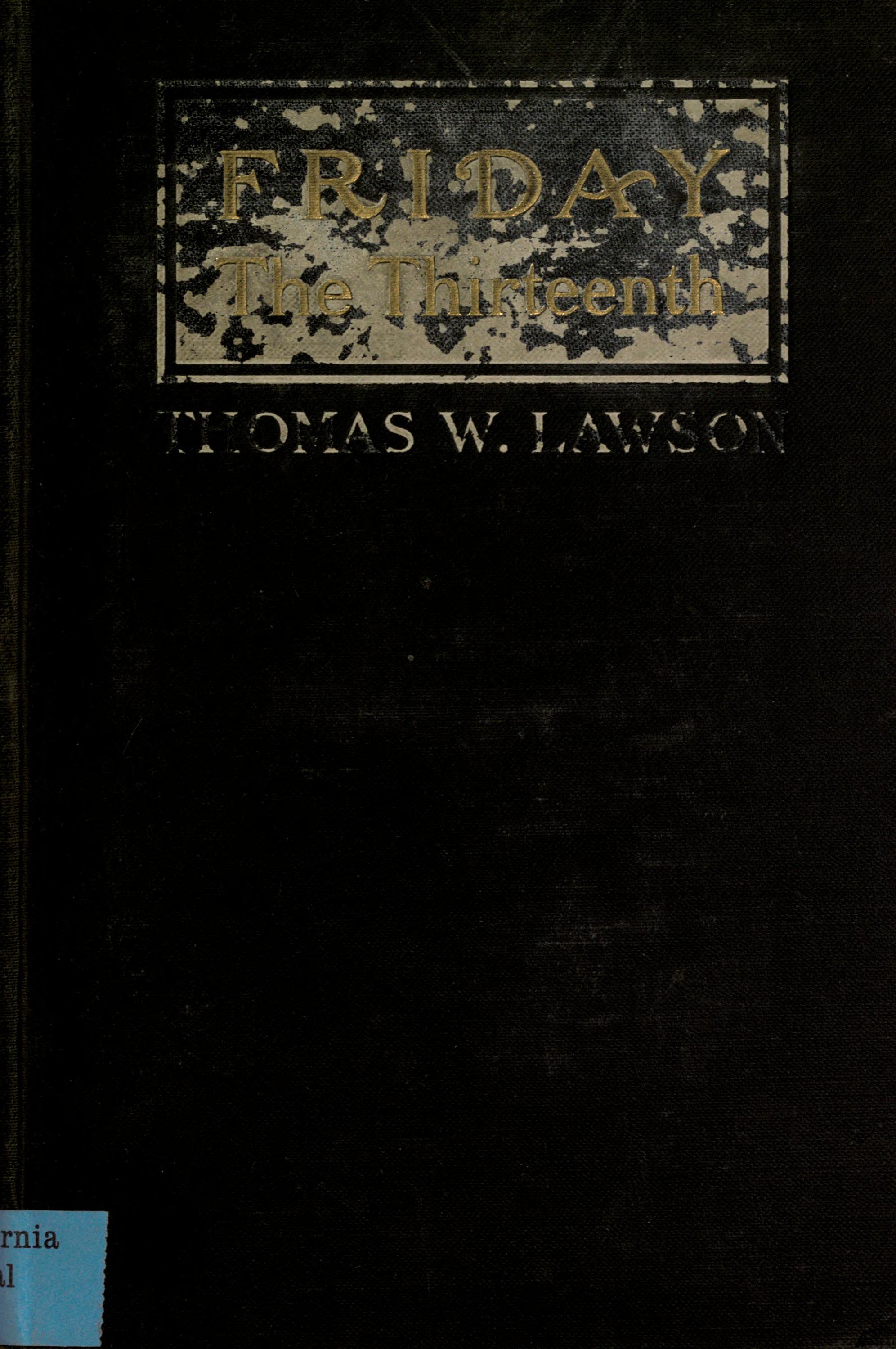
Doubleday, Page & Company (1907) / Internet Archive, University of California copy (Public Domain)
Friday the 13th is considered unlucky because two older beliefs met: the number 13 could be an ominous dinner-table guest, and Friday could be an inauspicious day to begin something. The combination is documented in nineteenth-century Europe and then in American newspapers. No surviving evidence shows that a single biblical event, Norse banquet, or medieval arrest created the superstition on its own.
Its history is a good example of how folklore works. People inherited separate rules, joined them, and later supplied dramatic explanations for a date that already felt familiar. The title of a 1907 Wall Street thriller helped spread the fear; a 1980 slasher film turned it into horror branding. Neither invented Friday the 13th.
Why was 13 unlucky before the date was?
The most relevant older taboo concerned thirteen people at a meal. In Christian tradition, Jesus ate the Last Supper with his twelve apostles before his arrest; Judas, one of the twelve, betrayed him. Later Europeans associated thirteen at a table with the possibility that one diner would die. That association helps explain the symbolism of the number, but it does not establish when people began to fear every thirteenth day of a month.
Even the number’s meaning was never uniform. The Library of Congress’s American Folklife Center notes that thirteen can be favorable in other settings, including American imagery recalling the thirteen original colonies. A dinner custom is a specific belief; a universal curse attached to the numeral is a much broader claim.
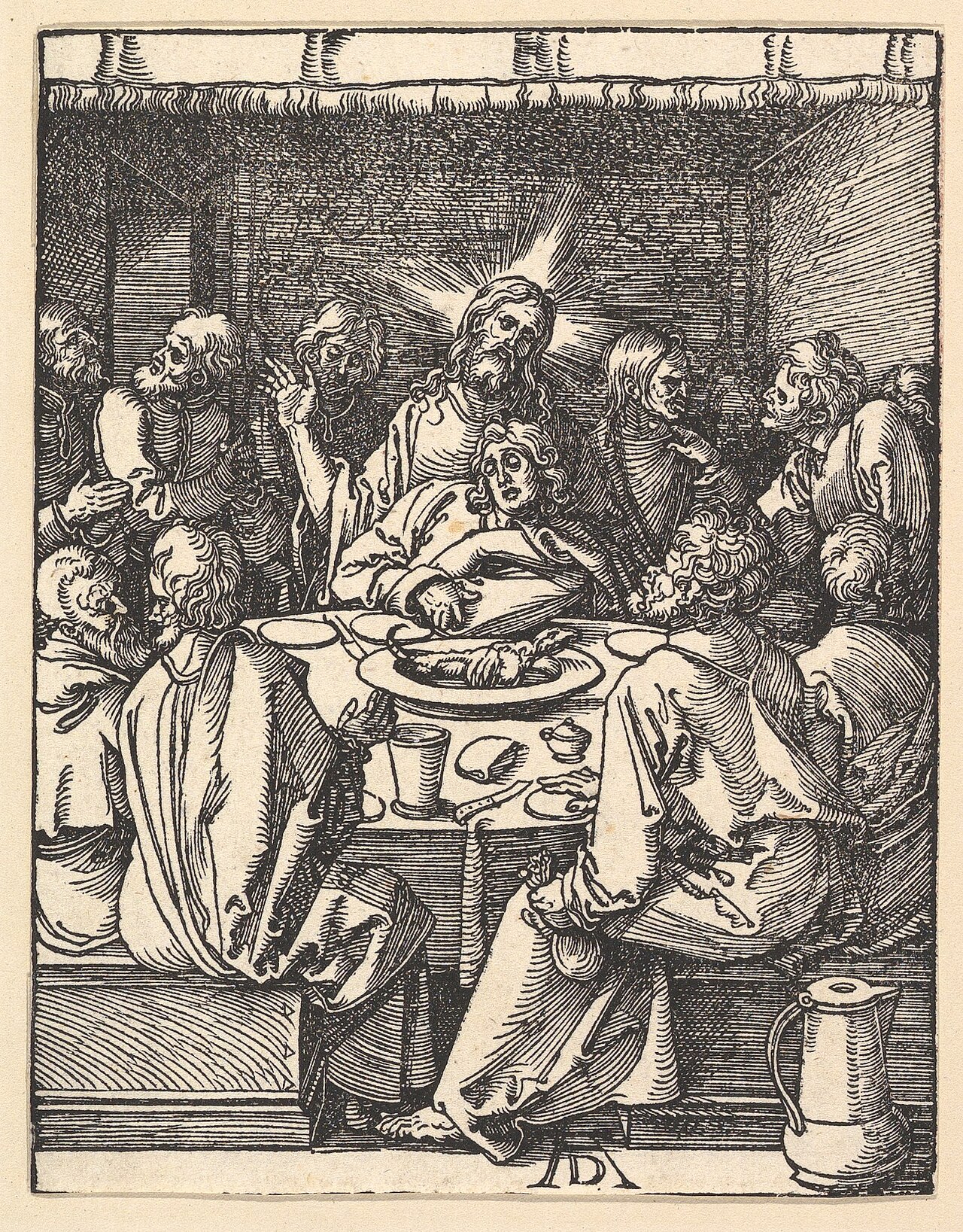
Albrecht Dürer’s woodcut of the Last Supper, from his early sixteenth-century Small Passion series. The meal is part of a later explanation for unlucky thirteen; this artwork is not evidence that Christians feared Friday the 13th in Dürer’s lifetime. The Metropolitan Museum of Art, open-access collection, CC0 1.0.
Why was Friday considered unlucky?
In parts of Christian Europe, Friday had its own reputation as a bad day to start a voyage, marry, or launch a new undertaking. Good Friday, the commemoration of Jesus’s crucifixion, supplied one religious association. Folk customs about beginning work on a Friday supplied another. That does not mean the Christian observance itself taught that every Friday was cursed; devotional meaning and popular omen-making are different things.
The maritime version lasted particularly well: sailors were said to avoid sailing on a Friday. Yet Friday is not unlucky across religions or countries. In some places the feared combination is Tuesday the 13th, or a different number altogether. The Western Friday rule was a local tradition that traveled, not a property of the calendar.
The difference between an old rule and a later explanation matters. A person might have avoided starting a journey on Friday without having any opinion about the thirteenth. Likewise, someone could refuse a thirteenth dinner guest without treating Friday as dangerous. The question is when those two ideas became a single named day.
When did Friday the 13th become an unlucky day?
Folklorist Stephen Winick’s Library of Congress investigation finds suggestive French references from 1834 and clearer ones by the middle of the nineteenth century. An 1858 French play has a character blame lifelong bad luck on having been born on a Friday the 13th. Those examples do not identify the first believer. They show that the combined idea circulated well before the date became a modern media fixture.
American newspaper references appear by the late 1880s. Winick cites an 1888 joke about an unlucky baseball team with thirteen players that set off on Friday the thirteenth. A Texas newspaper in 1897 called the date a “double hoodoo”; an 1899 Missouri report linked it to fewer marriage-license applications. Newspaper humor, anxious behavior, and reporters’ assumptions about what other people believed all appear together. They show a recognizable superstition, though they cannot tell us how many readers sincerely accepted it.
There were organized skeptics too. New York’s Thirteen Club held its first dinner on Friday, January 13, 1882, deliberately challenging taboos about the day and the number. Its members were not proof that everyone feared the date. The club was an answer to a belief already available for parody.
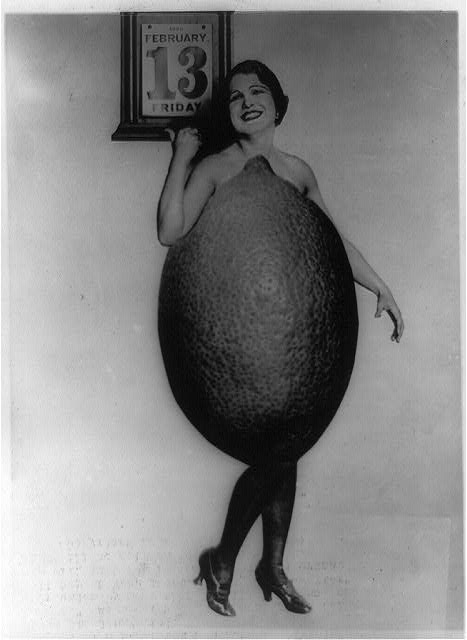
Rose Cade, advertised as a “Swat the Jinx” figure, points to Friday, February 13, 1920. The playful publicity photograph shows how recognizable the superstition had become. Photographer not identified; National Photo Company Collection / Library of Congress, no known restrictions on publication.
Did Loki or the Knights Templar start it?
The most cinematic origin stories are also the least secure. One popular version says Loki arrived as the thirteenth guest at a Norse divine dinner and caused Baldr’s death. Baldr’s death is part of Norse myth, but, as Winick observes, the surviving Poetic and Prose Eddas do not place it at a dinner of twelve gods interrupted by a thirteenth. The guest count looks like a later retelling that borrows the Last Supper’s pattern. Calling it an ancient documented source for the date gives modern folklore a pedigree the texts do not support.
The Knights Templar explanation has a real date at its center. Agents of Philip IV of France began arresting Templars on Friday, October 13, 1307. The leap from that event to a centuries-old Friday the 13th taboo is unsupported. Winick could find no medieval connection between the arrests and the superstition; the explanation gained modern traction through later retellings, including The Da Vinci Code. Medieval accusations against the order have their own history, including the contested imagery discussed in our Baphomet history. They do not establish an origin for this calendar fear.
These are origin legends, not equivalent pieces of evidence. The arrest date is documented; the claim that it caused the superstition is an inference without a contemporary trail. Loki’s thirteenth seat is not even part of the primary Norse account. Both stories are useful for understanding what later tellers wanted the fear to mean.
What did the 1907 novel change?
Thomas W. Lawson published Friday, the Thirteenth in 1907. Its plot turns a feared date into an opportunity for stock-market manipulation. In the novel itself, traders already speak of a Wall Street “hoodoo-day” and act on the reputation of the date. Lawson was using an existing belief to make his fictional panic plausible. The earlier French and American records settle the point: the book cannot be the superstition’s first appearance.
Its cover, reproduced above from a 1907 copy digitized by the Internet Archive, makes an effective marker for the date’s move into popular entertainment. It is a novel, not a historical account of how the fear began. The distinction also applies to the later horror films: a memorable title can keep a belief in circulation without creating it.
Was there really an HMS Friday?
Another story says the Royal Navy built a ship called HMS Friday, laid its keel and launched it on Fridays, then sent it to sea on Friday the 13th with a Captain Friday. Ship and crew supposedly vanished. There is no recorded Royal Navy vessel by that name. Folklorist Bonnie Taylor-Blake traced versions of the tale to an 1828 American account about a private Connecticut merchant’s ship, before the modern Royal Navy wording or the date’s extra thirteens were attached. Some later tellings even gave the vessel a safe return.
That changing ending is a clue to the story’s function: it dramatizes the older fear of sailing on a Friday. Treating it as a lost naval disaster turns a travelling cautionary tale into a fabricated event.
What is the fear called, and how does it show up now?
Triskaidekaphobia means fear of the number thirteen. Paraskevidekatriaphobia and friggatriskaidekaphobia are long names sometimes used for fear of Friday the 13th specifically. They appear in discussions of the superstition, but are not a diagnosis just because someone dislikes the date. A Brill linguistics editor noted that the two Friday-specific compounds were not in the Oxford English Dictionary when she checked in 2017. Most people simply say “fear of Friday the 13th.”
The number’s everyday visibility can matter more than the terminology. Some buildings label the floor above twelve as 14. The physical floor has not vanished; the label has. Airlines and hotels may omit a row or room number as well, although practices differ and should not be assumed for every company. These choices can reflect customer expectations as much as the owner’s beliefs.
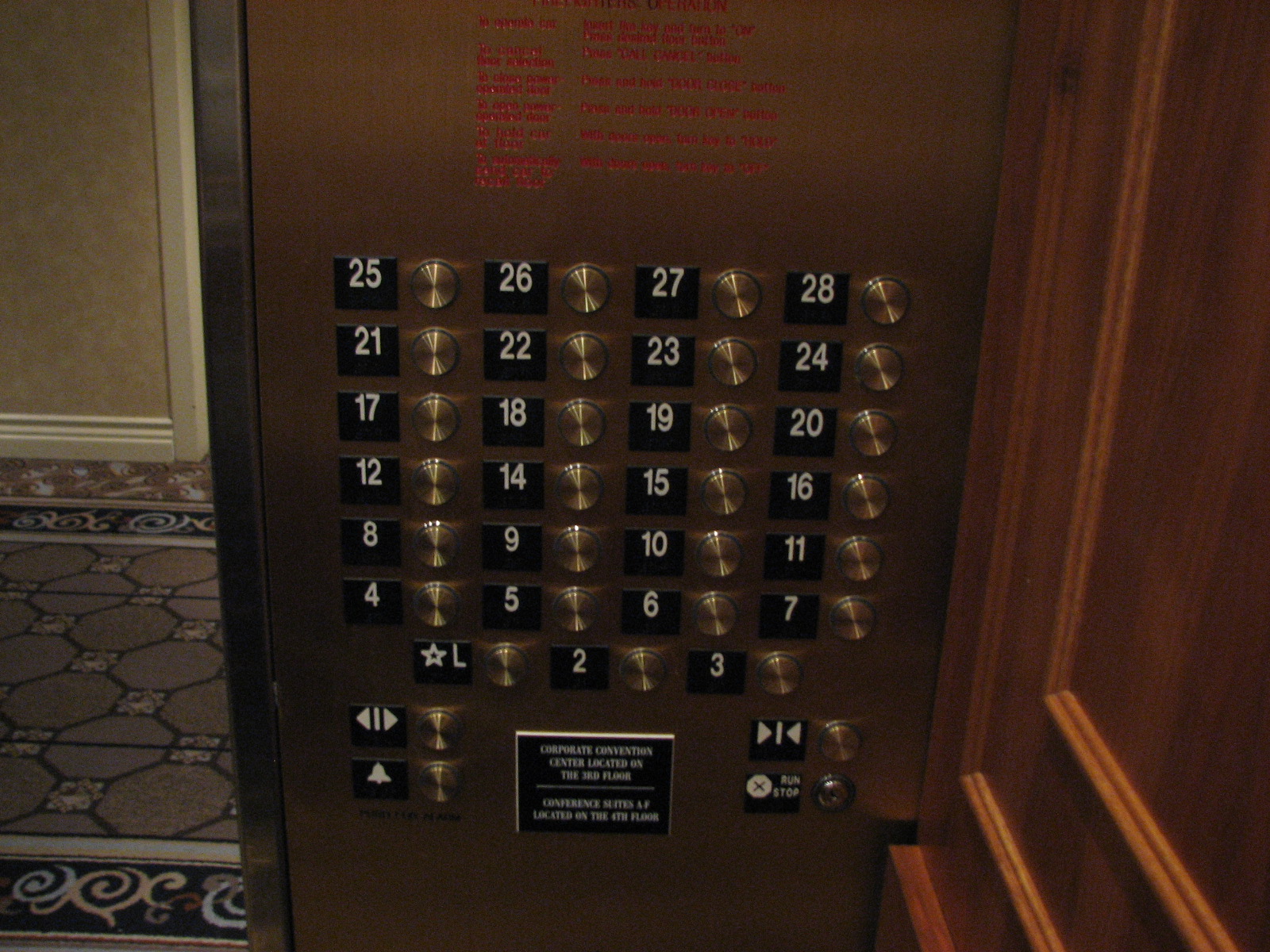
An elevator panel with no button labelled 13. The photograph documents a real numbering practice, not a missing physical storey. Sgerbic, 2008 / Wikimedia Commons, released into the public domain by the photographer.
Psychologist Stuart Vyse explains that superstitions can offer a feeling of control when an outcome matters but cannot be guaranteed. A Friday the 13th mishap is easy to remember because the date gives it a ready-made story. An ordinary Friday’s equally inconvenient mishap rarely gets the same label. Knowing the story exists can influence choices even for someone who says they do not believe it.
Do more accidents happen on Friday the 13th?
The evidence does not support a simple yes. A small 1993 British study compared Friday the 13th with the previous Friday in one region and found 65 versus 45 hospital admissions after transport accidents, while traffic on a section of the M25 was lower on the thirteenth. The authors suggested a higher risk. That paired result cannot establish a universal effect of the date, or explain whether different numbers and kinds of journeys changed who was exposed to risk.
A later Finnish analysis reported a higher traffic-death risk among women, but a 2004 matched study of 21 Friday-the-13th dates and adjacent Fridays found no significant difference in injury accidents for either sex. Its authors also cautioned that without knowing how much people drove, a null accident count cannot settle every question about anxiety and exposure. Mixed studies of behavior are not evidence that a calendar date itself causes crashes.
From superstition to Crystal Lake
The Friday the 13th film franchise borrowed a title audiences could already read as a warning. Its fictional Camp Crystal Lake is a product of horror cinema, not a clue to the superstition’s beginnings. Peacock’s upcoming Crystal Lake prequel is currently scheduled to premiere October 15, 2026; Peacock has released an official trailer. That release may renew searches for the name, but the historical trail still runs through older European beliefs, nineteenth-century print, and the stories people later made to explain them.
The nearest answer to “why” is therefore modest and more interesting than a curse: Friday and thirteen had separate reputations; by the nineteenth century, people were treating their meeting as unlucky. The exact first moment is lost. The surviving record lets us trace the belief’s spread while keeping medieval, religious, and fictional explanations in their proper places.
Sources & further reading
- Stephen Winick, On the Possible Origins of Friday the Thirteenth, Library of Congress
- Stephanie Hall, Who's Afraid of Friday the Thirteenth?, Library of Congress
- Thomas W. Lawson, Friday, the Thirteenth (1907), Project Gutenberg
- Bonnie Taylor-Blake, Thank God It's Not HMS Friday, FOAFTale News
- Scanlon et al., Is Friday the 13th bad for your health?, BMJ
- Radun and Summala, Females do not have more injury road accidents on Friday the 13th, BMC Public Health
- American Psychological Association, Stuart Vyse on the psychology of superstition
- Peacock, Crystal Lake premiere and official trailer