Lore & Explained
Abaddon and Apollyon Explained: The Angel of the Abyss
Are Abaddon and Apollyon the same figure? Read Revelation 9 in context and separate its angel of the abyss from Bunyan's later dragon-like adversary.
Topics: Abaddon, Apollyon, Bible, Religious Imagery
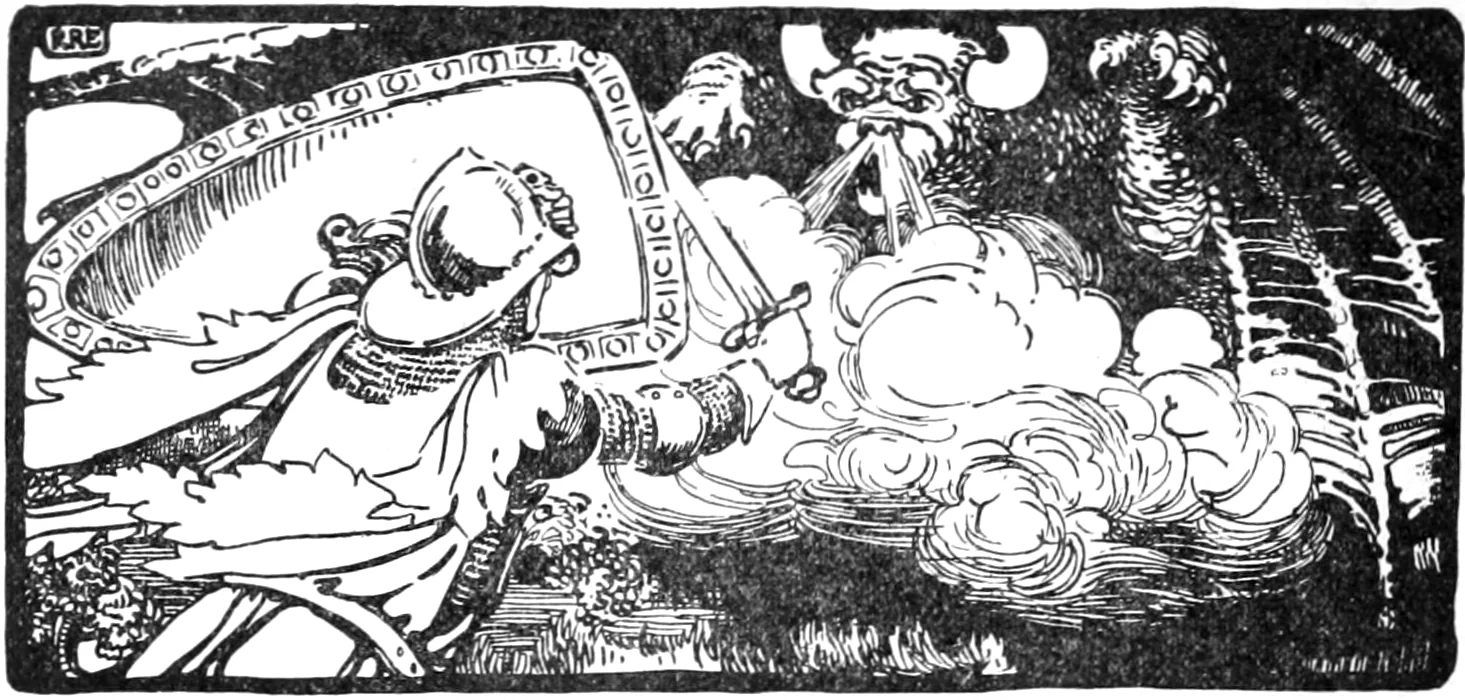
Abaddon and Apollyon are the Hebrew and Greek names given in Revelation 9:11 to the king of the locust-like beings, identified as the angel of the abyss. They name the same figure in that verse, rather than two rival demons. The Greek name is associated with destruction, which explains the familiar title “the Destroyer.”
The passage is apocalyptic religious literature. Explaining its imagery does not establish that the events or beings it describes have been observed.
Where does Abaddon appear in Revelation?
The figure appears during the fifth trumpet sequence in chapter 9. The opening of the abyss releases smoke, followed by extraordinary locust-like creatures. The narrative gives them limits: they torment particular people rather than destroying vegetation in the way an ordinary swarm would.
Their king is then named Abaddon in Hebrew and Apollyon in Greek. Both names occur in a single sentence. A translation may retain both, translate their meaning, or explain them in a note, but the structure of the verse is not a list of two different rulers.
This context is more useful than extracting “angel of the bottomless pit” and attaching a complete modern demon biography to it.
What do the creatures actually look like?
Revelation’s locusts combine features that do not belong to an ordinary insect: an appearance like horses prepared for battle, human-like faces, hair, lion-like teeth, armor, noisy wings and scorpion-like tails. These are the swarm’s features in the vision.
They are not all stated to be Abaddon’s personal anatomy. An illustration of the locust army should not automatically be captioned as an eyewitness-style portrait of its king.
The distinction is small but important. The chapter spends more time describing the creatures and their permitted actions than giving Abaddon a physical description.
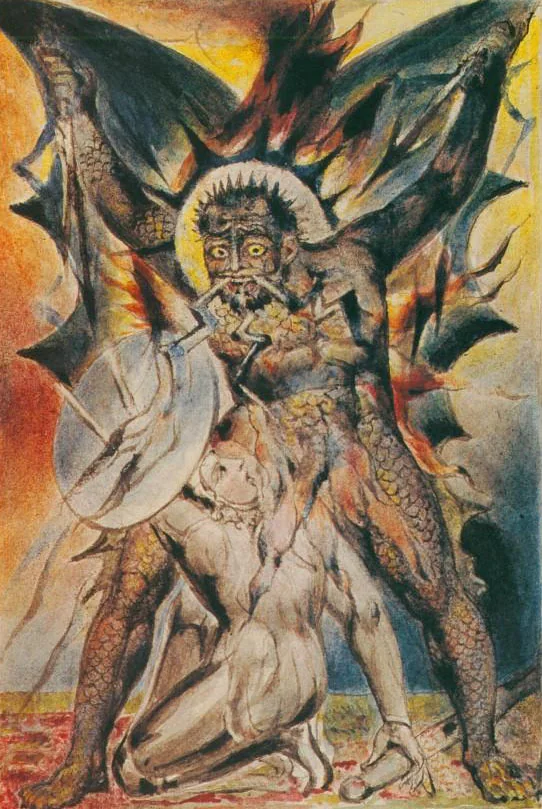
William Blake’s interpretation of Christian and Apollyon in The Pilgrim’s Progress. Source. William Blake. Public domain. Resized and converted to WebP.
Is Abaddon the same as Satan?
Revelation 9:11 does not explicitly say so. It identifies the figure as the angel of the abyss and gives his two names. Interpretations of his relationship to Satan and divine judgment differ across theological traditions.
The star that receives the key earlier in the chapter, the angel named as king, and other figures elsewhere in Revelation should not be merged without explaining the interpretive argument. A confident chart can conceal distinctions that the text leaves open.
The safe textual answer is narrower: the verse supplies a name and a role. It does not settle every later question about a hierarchy of evil.
For another name whose meaning changes between biblical context and later demonology, see Mammon. Leviathan offers a different example of scriptural imagery developing a long afterlife.
Why does Apollyon fight Christian in The Pilgrim’s Progress?
John Bunyan uses Apollyon as an opponent in The Pilgrim’s Progress, first published in 1678. In that allegory, Christian encounters him in the Valley of Humiliation. Apollyon challenges Christian’s allegiance, recalls his failings and then attacks him.
The fight belongs to Bunyan’s story. It is not another scene in Revelation 9. Bunyan gives the adversary a vivid composite body and an individual confrontation suitable for an allegory about spiritual struggle.
This is why older illustrations can show a dragon-like warrior battling a single pilgrim rather than a king presiding over a locust swarm. The artists are illustrating a later book.
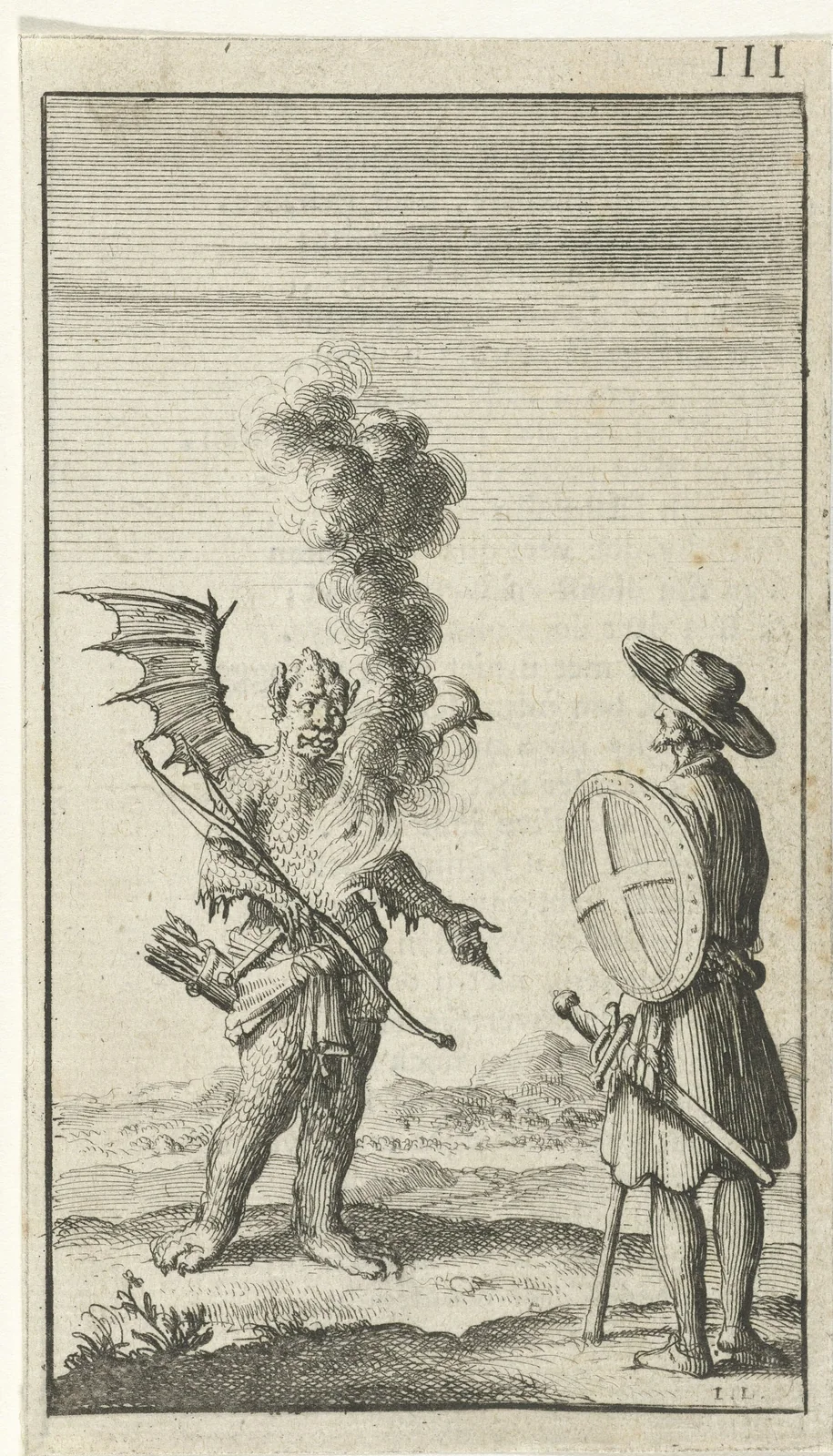
Another illustrated encounter from Bunyan’s story, preserved by the Rijksmuseum. Source. Jan Luyken / Rijksmuseum. CC0. Resized and converted to WebP.
How to tell the traditions apart
| Context | What the name is doing |
|---|---|
| Revelation 9 | Naming the angel-king of the abyss’s locust-like beings |
| Bunyan’s The Pilgrim’s Progress | Naming Christian’s adversary in an allegorical combat |
| Later demon illustrations | Giving the figure a particular artist’s visible form |
| Modern horror and games | Adapting a name and selected motifs into new fiction |
None of those contexts should be treated as interchangeable. A game can borrow “Apollyon” without following Bunyan, and a Bunyan illustration can be historically significant without representing the original biblical appearance.
The strongest starting point is the shortest: read Revelation 9 around the name, identify what the passage says about the king and what it says about his army, then follow later adaptations separately. That preserves the striking imagery without inventing certainty where the source does not provide it.