News / Movies
Hammer's Susan Hill Deal: What The Woman in Black Rights Actually Mean
Hammer owner John Gore Studios has acquired Susan Hill rights. What the deal covers, which ghost stories it opens up and what remains unannounced.
Topics: Susan Hill, John Gore Studios, Hammer Films, The Woman in Black, British ghost stories, Gothic horror, Film adaptations
The company that owns Hammer Films has acquired rights to the works of Susan Hill, the British novelist behind The Woman in Black. It is a substantial addition to Hammer’s gothic-horror library. It is not, however, an announcement of a new Woman in Black movie.
On October 12, 2026, John Gore Studios announced the acquisition. The company says it intends to develop Hill’s writing for film and television, with possible theatrical opportunities where existing contracts permit. Hill will remain involved in development and is expected to serve as an executive producer on new projects.
That brings a specific question into focus: beyond a familiar ghost in black, which stories and rights have actually changed hands—and how much of Hammer’s future slate is confirmed?
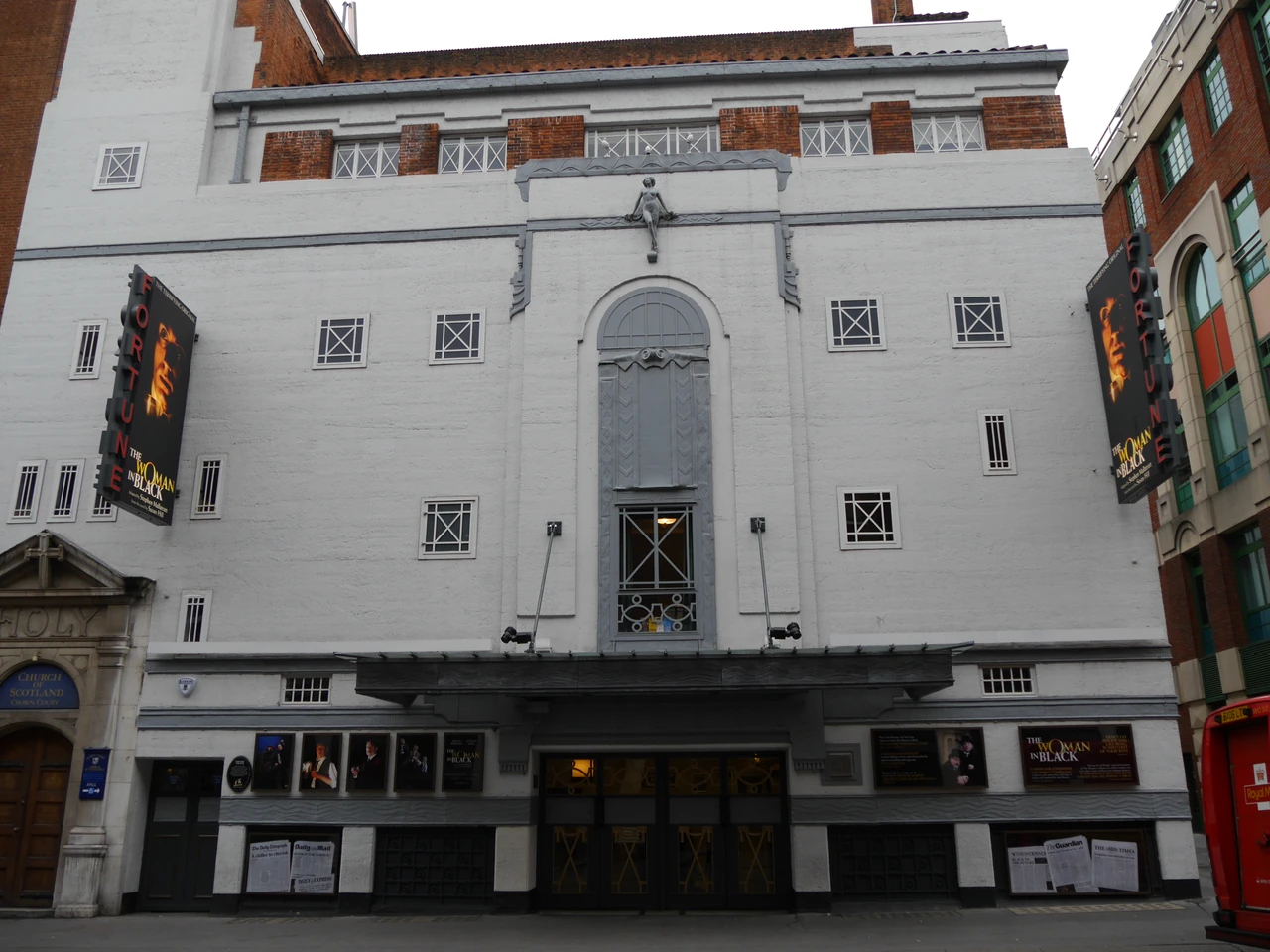
Hero image: The Fortune Theatre in London photographed in October 2014, with signage for the long-running stage production of The Woman in Black. This is a historical photograph of the theatre, not promotional art for an unannounced film. Edwardx / Wikimedia Commons, CC BY-SA 4.0. Resized to 1280 × 960 and converted to WebP; derivative licensed CC BY-SA 4.0.
What John Gore Studios actually bought
The announcement is unusually broad: the deal concerns rights to Hill’s works across her career, rather than the option for one newly selected novel. The author’s writing spans ghost stories, literary fiction, crime fiction, children’s literature, memoir and radio drama.
John Gore Studios is the buyer. Hammer Films is part of John Gore Studios, so it is understandable that some coverage calls this a Hammer deal. But those two company names should not be treated as interchangeable. Nor does buying adaptation rights mean that Hammer itself will necessarily produce every future project arising from the catalogue.
The company identifies film and television development as its principal ambition. It also discusses theatre, expressly subject to existing rights arrangements. Its statement says that existing publishing, stage and other contractual agreements will be respected. The announcement does not publish the complete legal schedule of which rights are exclusive in every territory and format.
The people named to manage the next steps include chief creative officer Francis Hopkinson for development and chief operating officer Anouska Spiers for portfolio strategy. Hill’s participation is more than ceremonial, according to the buyer: the official announcement says she will remain involved and serve as an executive producer on future projects.
What is not confirmed: a new adaptation title, a director, a cast, a screenplay, a shooting date, a distributor for an individual film or a release date. The existence of a catalogue deal should not be presented as production starting on a Woman in Black sequel, remake or shared horror universe.
Why The Woman in Black is central to the deal
Hill’s 1983 novel made a familiar ghost-story mechanism remarkably precise. Arthur Kipps, a solicitor, is sent to deal with the estate of a deceased client at Eel Marsh House. The house is accessible across a causeway in a hostile marsh landscape. A recurring figure dressed in black becomes connected to a family tragedy and the fear surrounding the isolated property.
Those details are the fictional story, not evidence of a documented haunting. The publisher’s description of the novel provides a useful baseline for understanding what the title denotes before any new adaptation changes it.
The story has moved through several formats. Stephen Mallatratt wrote the celebrated stage adaptation, which became a fixture of London’s West End. The production’s official history traces the show from Scarborough in 1987 to London in 1989, including its move to the Fortune Theatre on June 7, 1989. The West End run ended in 2023, but the production has continued to tour; a 2025–26 UK tour was announced separately.
The stage version makes an important structural change: a man trying to explain what happened to him enlists an actor to help reconstruct his experience. The official stage synopsis describes the play as an encounter with storytelling, memory and terror, not simply a literal recreation of every scene in the novel. Its success depends heavily on theatrical suggestion and what remains unseen.
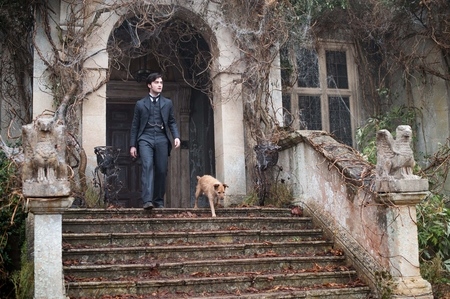
Hammer’s 2012 film, directed by James Watkins and starring Daniel Radcliffe as Arthur Kipps, brought the tale to a much larger cinema audience. It is part of the corporate link explicitly cited in John Gore Studios’ new announcement. But the book, stage play and 2012 film remain distinct versions; none should be mistaken for a factual report of a haunting.
Five Hill ghost stories that could interest Hammer readers
One reason this acquisition matters is that The Woman in Black is not the extent of Hill’s supernatural fiction. The publisher’s descriptions establish several other premises with their own imagery, locations and types of dread. No adaptation of the following titles has been announced by John Gore Studios as part of the October 12 deal.
The Small Hand: an encounter at an abandoned house
In The Small Hand, antiquarian bookseller Adam Snow makes a wrong turn and encounters a derelict Edwardian house. A sensation of a child’s hand in his own initiates the story’s disturbances. Its mechanism is unusually intimate: not a distant apparition, but a seemingly physical touch that refuses to disappear from memory.
The Man in the Picture: a painting that threatens its viewers
The Man in the Picture centres on a picture of masked Venetian carnival-goers displayed in a Cambridge academic’s rooms. The premise involves the troubling possibility that the artwork can entrap a person rather than merely depict one. That is an existing fictional story, not confirmation that Hammer has commissioned an art-world horror film.
Dolly: childhood cruelty and delayed consequences
The setting of Dolly is a decaying house in the English Fens. Two cousins, Leonora and Edward, recall a summer visit and the lasting repercussions of a birthday doll. Here the menace comes from resentment and childhood memory as much as from an uncanny object.
The Mist in the Mirror: an investigation shadowed by a boy
The Mist in the Mirror follows Sir James Monmouth, who tries to trace the life of the mysterious traveller Conrad Vane. His investigation is disrupted by warnings and the recurring presence of a pale boy. It has a different shape from The Woman in Black: an inquiry into a person and a past rather than an isolated estate assignment.
Printer’s Devil Court: another story in the publisher’s collection
Penguin includes Printer’s Devil Court alongside these tales in The Woman in Black and Other Ghost Stories. Its inclusion establishes that Hill’s well-known ghost-fiction catalogue extends well beyond a single bestselling title. It does not indicate which story will be filmed first.
These summaries describe the published fiction as characterized by its publisher. They are not plot leaks, casting hints or assertions about film rights beyond the umbrella acquisition.
Why Hammer is a meaningful name here
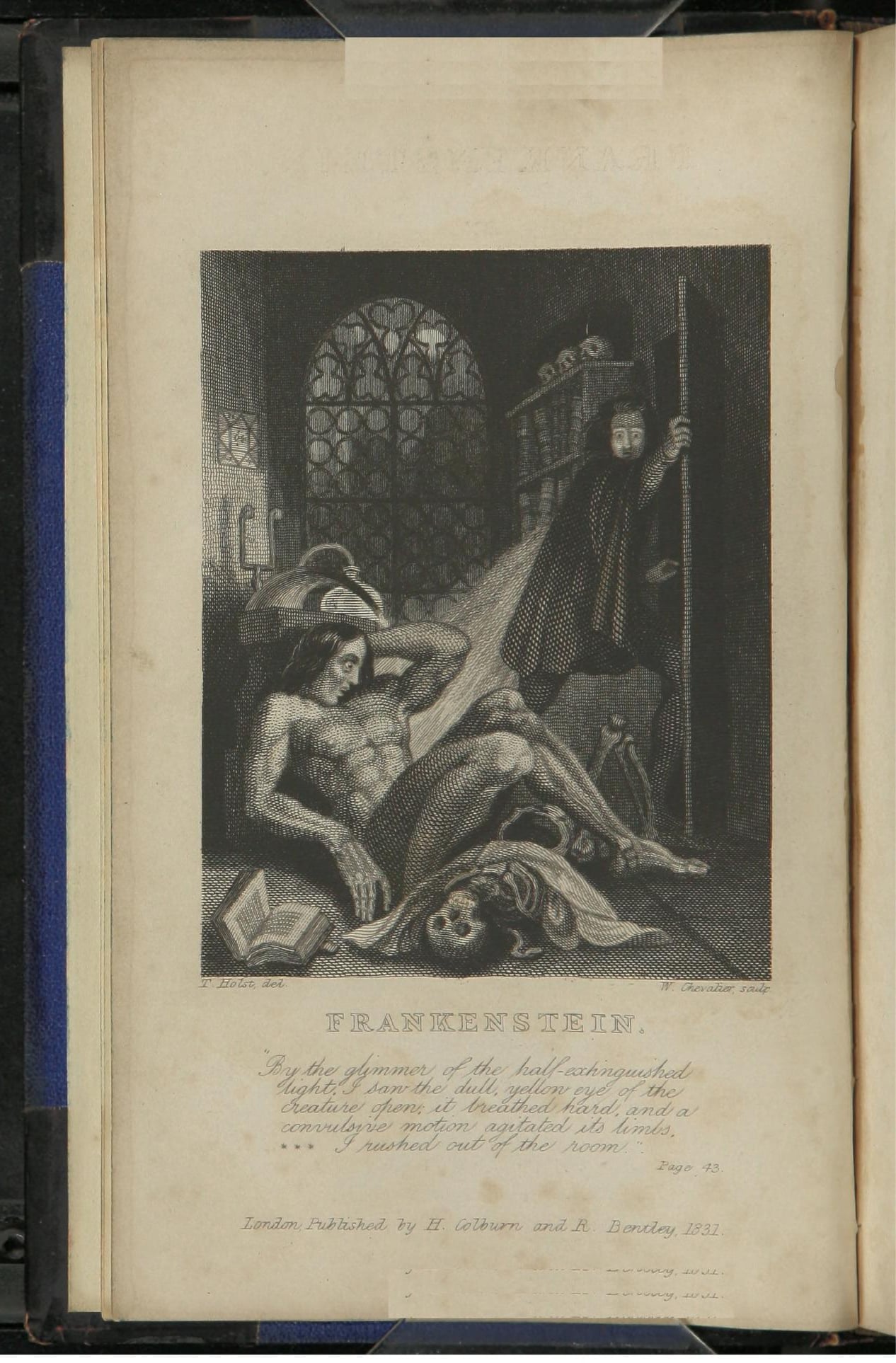
Hammer’s brand is closely associated with Britain’s mid-century wave of gothic horror filmmaking. Its productions helped make cinematic versions of Dracula and Frankenstein enduring screen icons. Morbid Index has separately examined how the historical Vlad III differs from Bram Stoker’s fictional Dracula; that distinction is also useful whenever old literary monsters are adapted again.
Hammer worked for years at Bray Film Studios. The studio’s own history identifies its association with The Curse of Frankenstein, Dracula and other classic Hammer films, and describes how the site’s buildings and production methods helped shape the studio’s visual style.

The connection between Hammer and Hill is consequently more than the coincidence of two recognizable names. Hill’s writing often builds terror through observation, constrained space and things that remain unspoken. The older Hammer reputation rests on a much more visibly theatrical gothic cinema. The 2012 Woman in Black film is a real point of contact between those approaches; the new rights transaction may permit more such projects, but no artistic direction has yet been disclosed.
Does this mean a new Woman in Black movie or franchise is coming?
Not yet. John Gore Studios has announced the rights acquisition and a general intention to develop adaptations. That creates possibilities, not a confirmed production slate. The same caution applies to potential new editions of The Small Hand, Dolly or other titles: the availability of a story within the new portfolio is not a commission.
Existing theatrical and publishing arrangements also matter. In particular, the stage production has a lengthy history and active touring arrangements; the press release explicitly says the buyer will respect existing contractual rights. It is inaccurate to imply that a single purchase automatically cancels those arrangements.
The most meaningful next development would be an identified project with a format, creative team and official production announcement. Until then, the October 12 news is best read as a major change in who controls the screen-adaptation possibilities for Hill’s work—not as an announcement that the Woman in Black herself has returned to cinemas.
The confirmed position, as of October 13, 2026
John Gore Studios has confirmed the acquisition of rights to Dame Susan Hill’s works; it owns Hammer Films; it plans to explore adaptations; and Hill is expected to remain creatively involved. Those are documented business developments.
Everything else—whether the next project is a remake, sequel, film, series, stage production or a previously unadapted ghost story—remains undecided in the material publicly released so far.
That distinction matters to readers who want real horror news rather than a new project inferred from an available book.
Sources & further reading
- John Gore Studios: Susan Hill rights acquisition (October 12, 2026)
- The Woman in Black: official history and 2025–26 theatre tour
- The Woman in Black: official stage production description
- Bray Studios: history of the home of Hammer Films
- Penguin: The Woman in Black and Other Ghost Stories
- Penguin: The Small Hand
- Penguin: The Man in the Picture
- Penguin: Dolly
- Penguin: The Mist in the Mirror
- Wikimedia Commons: Fortune Theatre photograph (CC BY-SA 4.0)
- Wikimedia Commons: Daniel Radcliffe filming The Woman in Black (CC BY 3.0)
- Wikimedia Commons: Bray Film Studios (CC BY-SA 2.0)