The Index / Dark History
Dracula's True Story: Vlad the Impaler, Bram Stoker, and the Real History Behind the Vampire
Bram Stoker's own notes show he took Vlad's name and a scrap of geography, not his biography. There's no evidence Stoker even knew Vlad was called 'the Impaler.'
Topics: Dracula, Vlad the Impaler, Bram Stoker, Vampire, Dark History
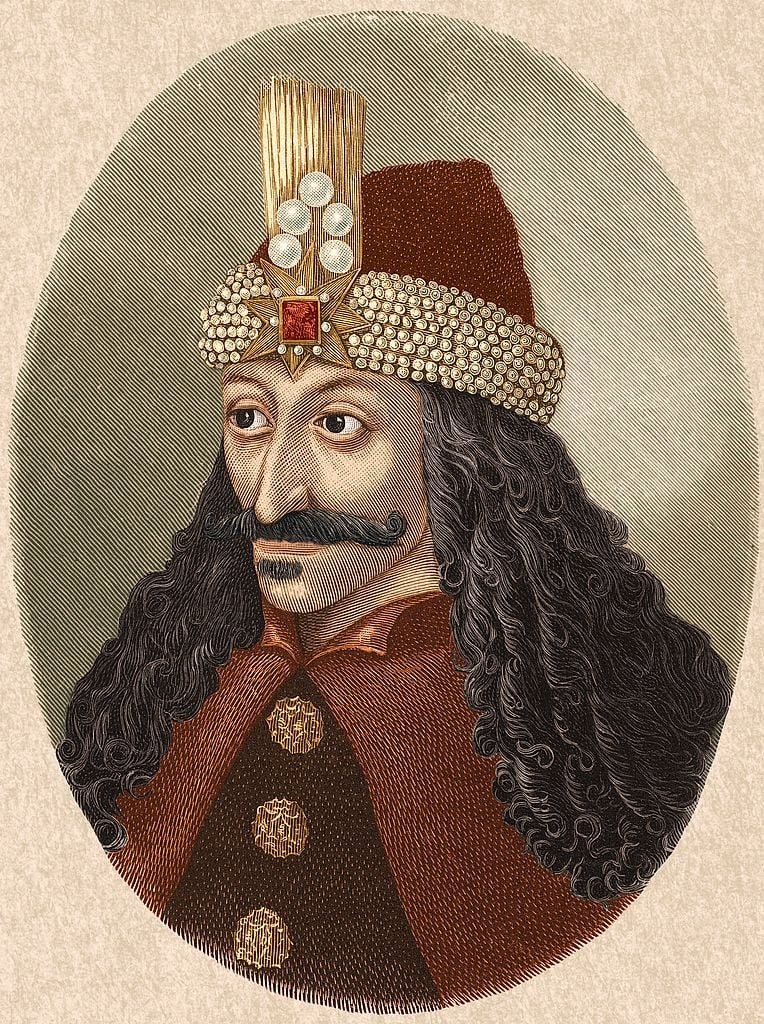
Unknown artist, c. 1560 copy of a lifetime original (Public Domain)
Bram Stoker’s own research notes, which survive and have been studied directly by scholars, contain no evidence that he knew Vlad III was called “the Impaler,” and nothing suggesting he researched Vlad’s specific biography at all. What Stoker actually took from history was considerably narrower: a name, a country, and a single sentence about a warlord crossing the Danube to fight the Turks. The popular claim that Dracula is “based on Vlad the Impaler” gets the relationship backward in an important way — Stoker built an almost entirely original character and then, almost as an afterthought, borrowed a striking historical name to attach to him.
Who Vlad III Actually Was
Vlad III, born around 1431, ruled Wallachia — a principality in what’s now southern Romania — across three separate reigns between 1448 and his death around 1476/77, during a turbulent period defined by pressure from the expanding Ottoman Empire on one side and rival Hungarian and regional political interests on the other. His father, Vlad II, had been inducted into the Order of the Dragon, a chivalric order founded by Holy Roman Emperor Sigismund and dedicated to defending Christian Europe against Ottoman expansion, and took the epithet “Dracul” (Romanian for “dragon,” later also carrying connotations of “devil”) from that membership. Vlad III became known as “Dracula” — “son of Dracul” — well before any vampire association existed; the name is a patronymic, not a supernatural title.
His better-known epithet, “Țepeș” (“the Impaler”), refers directly to his preferred method of execution: impalement on stakes, used extensively against enemies, political rivals, and captured Ottoman soldiers, sometimes on a scale contemporary accounts describe as producing forests of impaled bodies as a deliberate deterrent and psychological weapon.
Separating Fact From Propaganda
This is where responsible historical treatment gets genuinely difficult, and it’s worth being explicit about why. A substantial share of what’s commonly repeated about Vlad’s atrocities — including the most extreme numbers, sometimes cited as high as 100,000 victims — comes from German-language pamphlets printed and circulated starting in the 1480s, years after Vlad’s political conflict with Transylvania’s Saxon German merchant communities, whose trade privileges he had curtailed. Those merchants had strong financial and political motive to portray Vlad as a monster, along with unusually early access to the printing press for mass political propaganda. That doesn’t mean Vlad wasn’t genuinely, extensively violent — independent Ottoman, Wallachian, and Hungarian sources also describe brutal impalement campaigns — but it does mean the specific, highest atrocity figures and some of the more elaborate individual anecdotes should be treated as likely inflated wartime and political propaganda rather than precise historical accounting.
Where Vlad Was Actually Buried
Popular tourism and older scholarship long identified Snagov Monastery, on an island north of Bucharest, as Vlad’s burial site. More recent historical research has found this claim considerably weaker than its popularity suggests — it traces to a 17th-century assertion that Vlad founded the monastery, which he didn’t, with the burial claim apparently layered on top of that separate, already-incorrect premise. A number of historians now consider Comana Monastery, south of Bucharest, a more plausible resting place, though the question remains genuinely unresolved rather than settled in either direction.
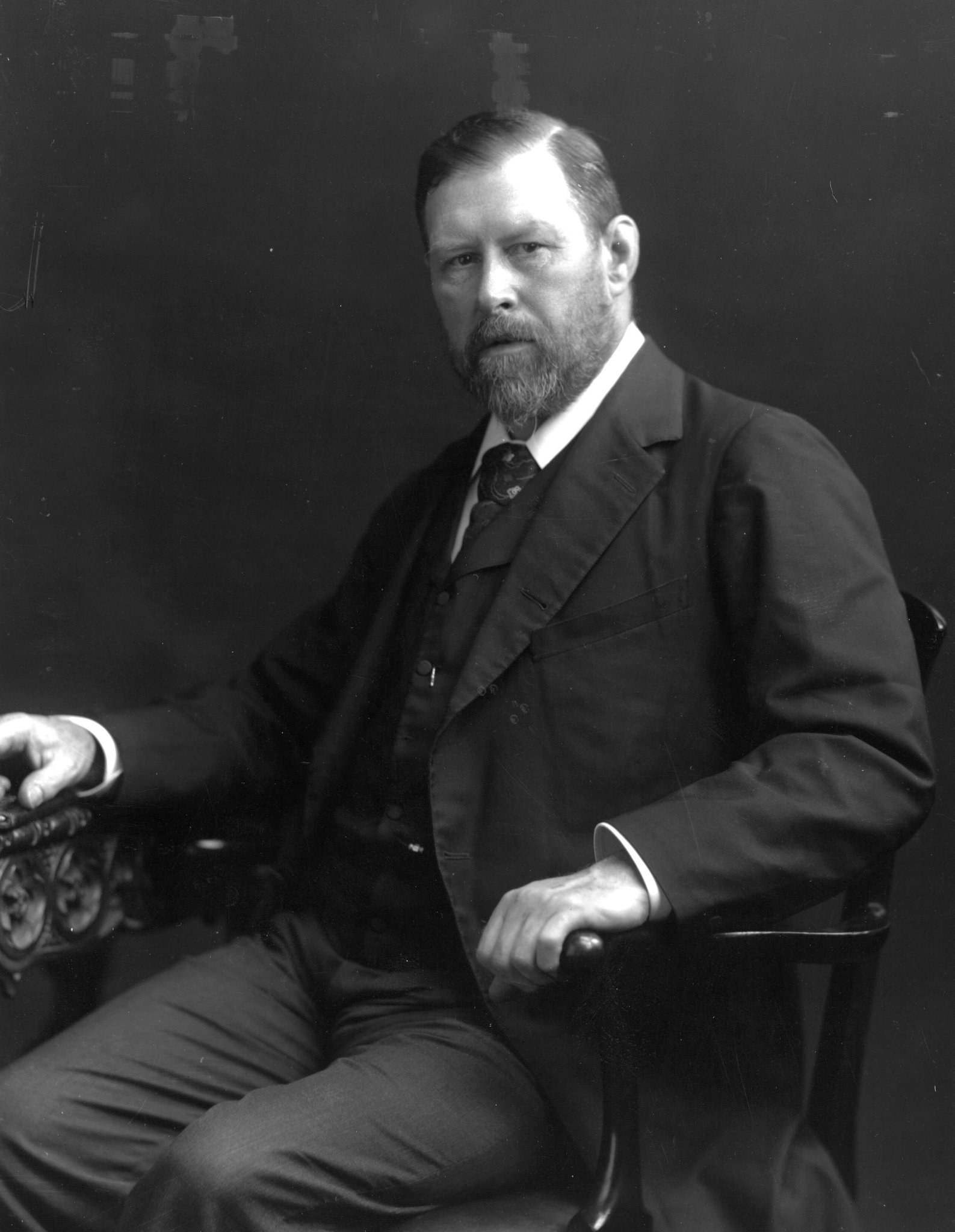
Bram Stoker, photographed around 1906, nine years after publishing Dracula*. His surviving research notes show minimal engagement with Vlad III’s actual biography. Source. Public Domain.*
What Bram Stoker Actually Borrowed
Stoker’s primary historical source, identifiable from his own surviving working notes, was William Wilkinson’s An Account of the Principalities of Wallachia and Moldavia, which he encountered during research in Whitby in 1890. Wilkinson’s book references several Wallachian rulers who used the name “Dracula,” including a brief mention of one who crossed the Danube to attack Ottoman forces — a detail that does appear, adapted, in Stoker’s finished novel. Wilkinson’s book does not mention Vlad III by name, and there’s no evidence in Stoker’s notes that he was independently aware of Vlad III specifically, let alone of the “Impaler” epithet or the extensive later-documented atrocity record. What clearly did catch Stoker’s attention was the word itself: his notes record that he found “Dracula” meant “devil” in the Wallachian language, and he built his character and its name primarily around that linguistic resonance rather than around any specific historical figure’s biography.
The vampire mythology Stoker actually wrote — Count Dracula’s specific powers, weaknesses, and behavior — draws far more heavily on broader Eastern European folk vampire tradition and on earlier English-language vampire fiction than on anything connected to the historical Vlad III.
Earlier Vampire Fiction Stoker Was Working Within
Stoker wasn’t inventing the literary vampire from nothing. John Polidori’s 1819 story The Vampyre, featuring the aristocratic predator Lord Ruthven, is widely credited as the first fully developed vampire narrative in English and established the template of the vampire as a charismatic, socially embedded aristocrat rather than a shambling folk monster — a template Stoker’s Count Dracula follows closely. Sheridan Le Fanu’s 1872 novella Carmilla, predating Dracula by twenty-five years, contributed the vampire-as-seductive-outsider dynamic and specific gothic atmosphere that also clearly informed Stoker’s approach. Stoker’s 1897 novel is best understood as the culmination of this existing literary tradition, sharpened and popularized, rather than as a biography of a historical warlord reimagined as fiction.
How Later Films Fused the Two Figures More Than Stoker Did
The tight modern association between Vlad the Impaler and Count Dracula — treated by many people today as simply the same figure under two names — is considerably a product of later 20th-century popular culture rather than of Stoker’s own novel, which only gestures vaguely at a historical warrior past for its Count without naming Vlad III specifically or building any developed backstory around him. Francis Ford Coppola’s 1992 film Bram Stoker’s Dracula did far more than the novel to cement this connection in popular imagination, opening with an extended prologue explicitly depicting its Dracula as Vlad III, a 15th-century Wallachian prince who battles Ottoman forces, loses his wife to suicide after false news of his death, and renounces God in his grief and rage — a fully realized origin story invented for the film, not adapted from either Stoker’s novel or Vlad’s actual documented life. It’s this film, more than any other single source, that fixed “Dracula is Vlad the Impaler” as popular common knowledge rather than the considerably thinner connection Stoker’s original research and text actually support.
Frequently Asked Questions
Was Dracula real? Not as a vampire. Count Dracula is Bram Stoker’s original fictional character, though he borrowed the name and a small amount of geography from real historical Wallachian rulers who used “Dracula” as a patronymic name.
Was Vlad the Impaler a vampire? No historical evidence suggests any vampire association during Vlad’s lifetime. That connection developed centuries later through Stoker’s novel and, especially, later films.
Why was Vlad III called “Dracula”? “Dracula” means “son of Dracul” — Dracul being his father’s epithet from membership in the Order of the Dragon. It’s a patronymic name, not a supernatural title.
Did Bram Stoker know Vlad’s detailed biography? No clear evidence supports this. Stoker’s surviving notes show he drew from William Wilkinson’s general history of Wallachia and were struck mainly by the word “Dracula” itself, not by Vlad III’s specific documented life or his “Impaler” epithet.
Where is Vlad the Impaler buried? This is genuinely disputed. The traditional claim of burial at Snagov Monastery is now considered weak by many historians; Comana Monastery is considered by some a more plausible alternative, but the question remains unresolved.
What inspired Dracula’s vampire characteristics if not Vlad III? Primarily earlier vampire literature, especially John Polidori’s 1819 story The Vampyre and Sheridan Le Fanu’s 1872 novella Carmilla, along with broader Eastern European folk vampire tradition.
Why do people think Dracula and Vlad the Impaler are the same figure? Largely due to later popular culture, especially Francis Ford Coppola’s 1992 film, which explicitly and elaborately fused the two in a way Stoker’s original novel never did.
Are the reports of Vlad’s mass atrocities accurate? Partially, but likely exaggerated. Much of the most extreme detail comes from hostile German pamphlets written by political and commercial rivals, though independent sources do confirm Vlad engaged in extensive, genuine impalement campaigns.
.jpg)
