Lore & Explained / Games
Hunter’s Moon and the Real Witchfinder General: The History Behind the PS5 Folk-Horror Game
Hunter’s Moon draws on English witch-hunting history. Separate its fictional Yorkshire village from Matthew Hopkins’s East Anglian campaign and methods.
Topics: Hunter’s Moon, Matthew Hopkins, Witchfinder General, folk horror, English witch trials, Twin Swans
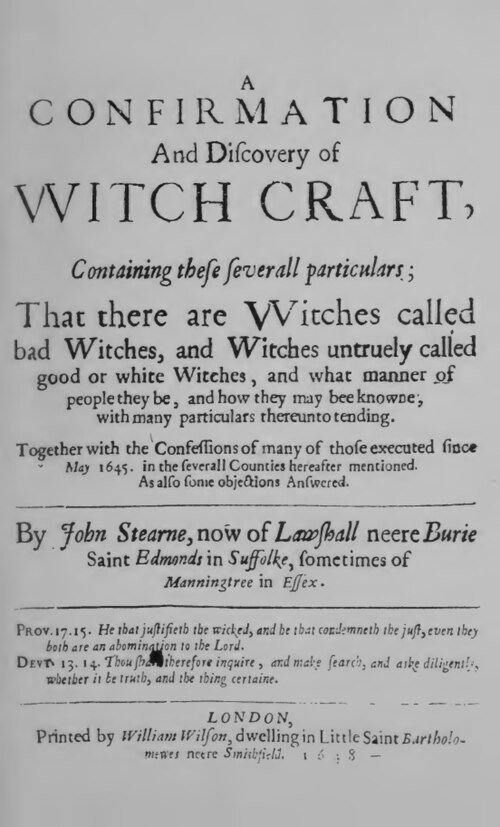
John Stearne; William Wilson, printer, 1648 / Wikimedia Commons — Public domain
Hunter’s Moon imagines a woman pursued through a seventeenth-century English village by witch-hunters. Its most unsettling premise is not that she possesses supernatural powers. It is that other people believe she does—and that their belief is enough to put her in danger.
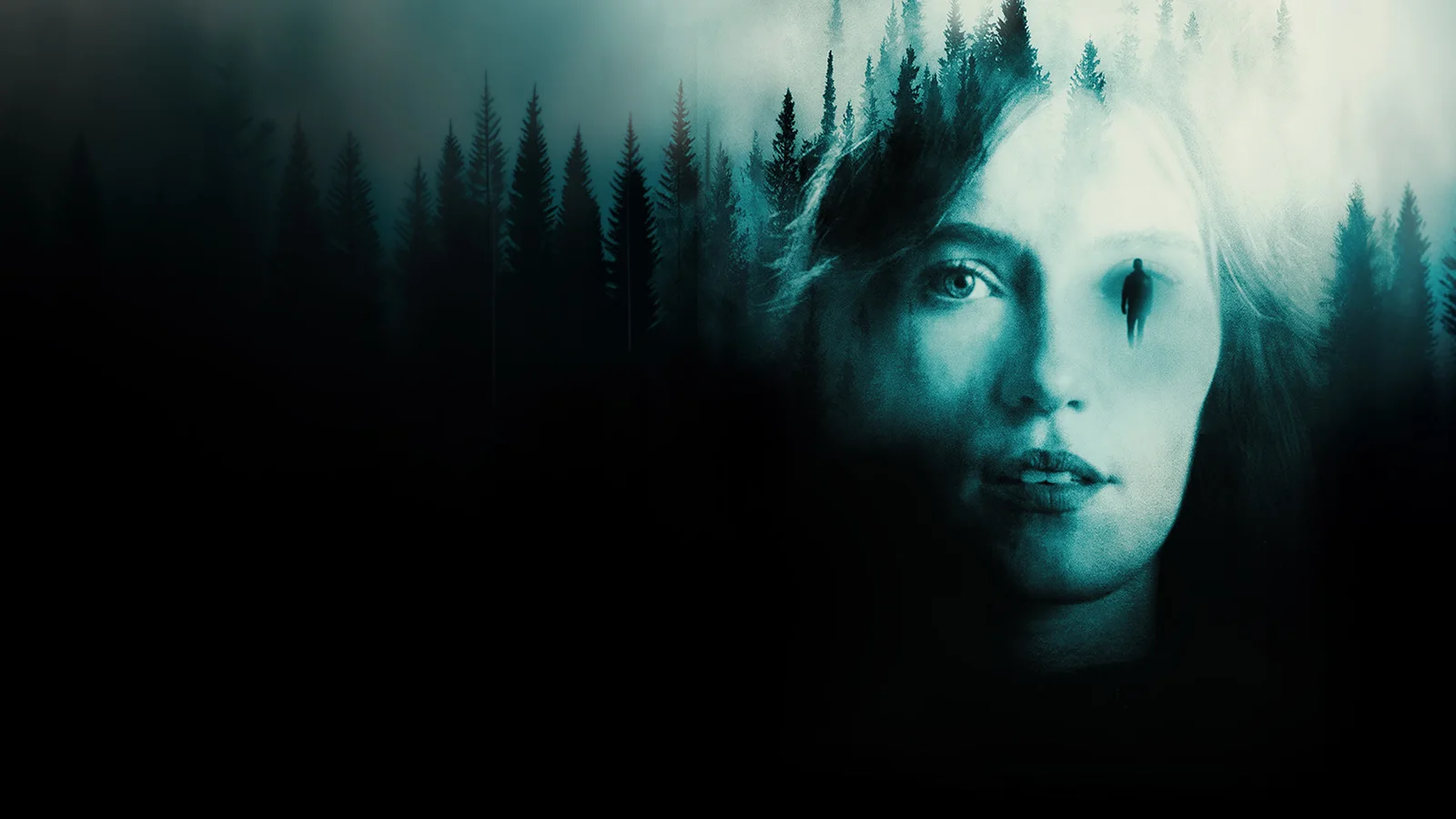
The PlayStation 5 folk-horror game, developed by Twin Swans and written and directed by Alicia Contestabile, is scheduled for October 25, 2026 in North America and October 26 in other regions, according to the studio’s press kit. Players take the role of Lilith Thorne, an accused woman trying to escape a village, its magistrate, a huntsman and a figure called the Witchfinder General. The studio describes a story told through overheard conversations and encounters with more than 100 voiced characters.
There is a real historical source for that last, alarming title. Matthew Hopkins called himself the Witchfinder General during the English Civil War, when a campaign of prosecutions and executions swept through East Anglia. But the game is a fictional story in Yorkshire, not a reconstruction of Hopkins’s trials. Understanding the distinction makes its horror sharper without turning its inventions into historical evidence.
Hero: John Stearne; William Wilson, printer, 1648. Source image. Public domain: 1648 work; expired UK and US rights. No cropping; recompressed for web display. A witch-hunting text, not a game screenshot or proof of witchcraft.
What Does Hunter’s Moon Actually Say About Its Witch-Hunt?
Twin Swans describes Hunter’s Moon as a first-person narrative game set over one night. Lilith must avoid people pursuing her, listen at windows and use what she learns to survive. The atmosphere draws on folk costumes, masked mummers, forests and a community unsettled by hardship. None of that official description establishes that Lilith has committed a crime, has magical powers, or is secretly the monster her pursuers imagine.
In an October 22, 2026 interview with Creative Bloq, Contestabile explained that the idea grew partly out of reading Pam Grossman’s Waking the Witch and researching the English witch-hunts, particularly those associated with Hopkins. She also identified Bloodborne as a gameplay influence: listening at doors and windows suggested a way to reveal a village’s stories without making every resident approach the player.
That is an especially revealing design choice for historical horror. The accused person does not get an authoritative map of everybody’s intentions. Instead, she hears fragments: talk between neighbours, stories passed around a village, possibly warnings or misinformation. The experience can dramatize the uncertainty of an accusation-driven society. It remains a dramatic mechanism, however, not a claim that this exact village or these conversations existed in the 1640s.
The creators have located their fictional village in Yorkshire. Hopkins’s best-documented witch-hunting activity was concentrated much farther south and east. That geographical difference is not a small footnote: it is the boundary between the game’s composite setting and the historical campaign that inspired it.
Who Was Matthew Hopkins, the Real “Witchfinder General”?
Matthew Hopkins was an English witch-hunter who became notorious during 1645–1646, in the midst of the Civil War. The historian Ronald Hutton, in a British Academy talk on Hopkins, traces the campaign from Manningtree, Essex, outward into Essex, Suffolk and Norfolk.
“Witchfinder General” was a title Hopkins used, not proof that Parliament had established a national office with that name. His power relied on people and institutions prepared to listen to accusations, finance investigations and accept the purported results. The title sounds official; the historical authority behind it was considerably more complicated.
Hopkins did not invent witchcraft prosecutions in England. English law had already made forms of witchcraft punishable, and communities had long blamed suspected witches for sickness, dead livestock and economic misfortune. What made Hopkins’s campaign exceptional was its concentration, reach and timing. Hutton estimates that roughly a hundred people died during the campaign, while also stressing that the exact number is not known. Claims of a precisely documented total should therefore be treated with caution.
The image of one man single-handedly condemning everyone also distorts the record. Hopkins worked with others, among them fellow witch-hunter John Stearne; local magistrates, accusers, guards and courts formed part of the wider machinery. A witch-hunt on that scale required cooperation. The danger was social and institutional as well as personal.
Why Did the Civil War Make the Witch-Hunt Possible?
The English Civil War began in 1642. As conflict disrupted normal government, the legal safeguards normally provided by travelling professional judges and the assize courts were weakened or interrupted in some areas. Accusations that might previously have been tested within a more established court structure increasingly fell into the hands of local actors.
Hutton identifies this breakdown as central to the scale of the East Anglian hunt. He also describes a region in which some magistrates were especially zealous in policing religious and moral behaviour. Fear of witchcraft existed before the war, but the war helped create circumstances in which fear could carry greater legal consequences. That explanation is stronger than attributing the whole episode to an inexplicable outbreak of collective madness.
The social context matters for interpreting Hunter’s Moon. The studio’s village is populated by people burdened by war and misfortune, but the historical lesson is not that war automatically produces witch-hunts. It is that fear, local disputes, strongly held religious beliefs and weakened institutions can interact in devastating ways. The game borrows that dynamic for fiction; it does not reproduce an identified case file.
How Were Accusations Turned Into Confessions?
Hopkins’s reputation was built partly on interrogation methods that could make apparently persuasive stories out of unreliable testimony. Hutton describes accused people being kept awake and subjected to prolonged, painful restraint, then pushed toward confessions. Such treatment undermines any claim that a confession reliably established supernatural wrongdoing.
Witchcraft accusations often drew on an existing village grievance: an illness after an argument, an unexplained death, or an animal that had failed to thrive. The explanation supplied by accusers reflected the beliefs of the time, not a verified causal connection. Under coercion, suspects could repeat details demanded of them or accept stories already circulating around them.
Hopkins also defended his practice in print. The Wellcome Collection holds a bibliographic record for his The Discovery of Witches, published in 1647. The pamphlet’s own description says it answers questions put to judges in Norfolk. It is invaluable evidence of how a witch-hunter represented his methods, but it is a partisan source, not independent verification of the supposed witches’ guilt.
His associate John Stearne likewise published A Confirmation and Discovery of Witchcraft in 1648. Its surviving title page provides a concrete object from this argument over witch-hunting, rather than a modern illustration pretending to document a supernatural event.
The original title page survives and is reproduced as the hero image for this feature; it is a contemporary printed document, not a screenshot from the video game. Its public-domain source record identifies Stearne, the London printer William Wilson and the year 1648.
Was the Yorkshire Witchfinder in the Game Matthew Hopkins?
Not on the evidence the developers have released. The official material calls one antagonist “the Witchfinder General” and cites real English witch-hunting as an inspiration. It does not explicitly identify that character as Matthew Hopkins, give him Hopkins’s biography, or move the documented 1645–1646 East Anglian campaign to Yorkshire.
There are at least three different levels to keep separate:
- Historical record: Hopkins and his associates conducted an extensive hunt in parts of eastern England during the Civil War.
- Creative research: Contestabile says the team drew on the history of those hunts and on modern writing about witches.
- Fictional continuity: Lilith Thorne’s village, pursuers and fate belong to the game’s own narrative unless and until the creators establish a particular documented historical connection.
An actor wearing a mask does not turn a folkloric mumming custom into evidence about seventeenth-century witch trials. Nor does the appearance of a “Witchfinder General” prove that a scene depicts Hopkins. These are visual and narrative choices that can evoke a period without reproducing it.
That separation matters when interpreting the release campaign. Promotional descriptions can establish its premise and creative intent, but they cannot establish the outcome of Lilith’s story. No claim here depends on playing, reviewing or seeing the completed game.
What Happened to the Real Witch-Hunt?
Opposition to Hopkins’s methods grew during the campaign. Critics challenged the interrogations, and the return of regular legal processes reduced the room in which his operation could function. Hopkins’s own pamphlet belongs to the dispute that followed, rather than proving that his critics were wrong.
The witch-hunts did not disappear overnight, and English beliefs about harmful magic did not vanish with Hopkins. But the extreme campaign became harder to sustain. Hutton describes the episode as historically unusual because a particular convergence of war, fear and legal breakdown permitted so many deaths in such a short time.
Historians also caution against treating every English witch-hunt as one continuous national campaign led by a single official. Here is an example from a different place and later year:
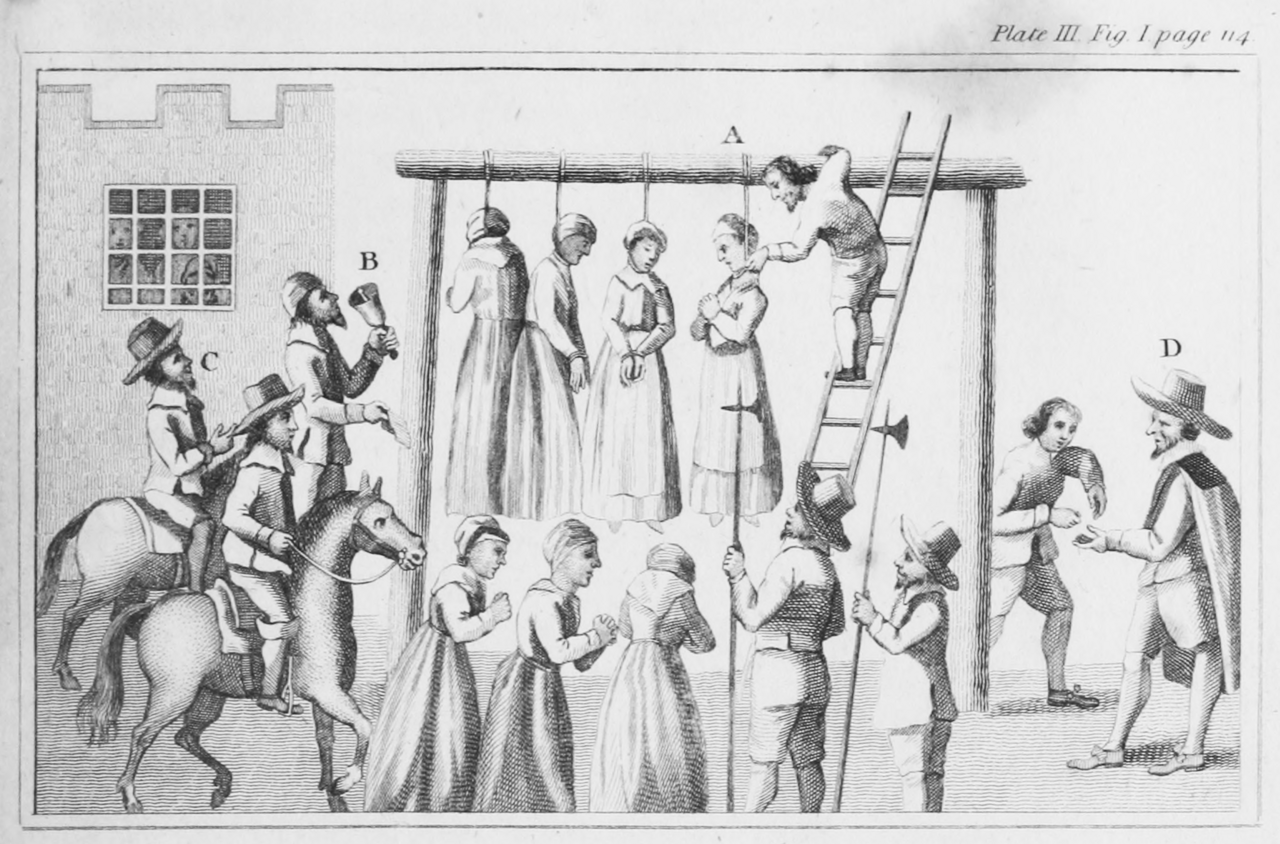
An image published in Ralph Gardiner’s England’s Grievance Discovered (1655) depicts people accused of witchcraft being hanged in Newcastle. The file derives from a 1796 reprint of the 1655 book: 1655 is the publication year, not a verified date for the depicted executions. This is a representation of a separate episode, not a photograph or an illustration of Matthew Hopkins’s Essex campaign. Source rendition recompressed without cropping. Public domain; Wikimedia Commons.
That distinction is worth repeating. Pictures of historical witch executions can be accurate records of what a particular source chose to portray while still being misleading if presented as proof of unrelated events. A modern horror article should give readers the date, place, genre and limitations of each image.
Is This the Same Witch-Hunt as the Salem Trials?
No. The famous Salem witch trials occurred in 1692–1693 in colonial Massachusetts, decades after Hopkins’s campaign. England’s 1640s witch-hunting helped form part of a broader English-speaking culture of demonological fears and interrogation practices, but the Salem proceedings were separate events, under different authorities and local circumstances.
This distinction also matters to viewers and players familiar with generic “witch trial” imagery. Not every hanging, accusation or self-appointed interrogator belongs to Salem. Nor is an English Civil War tale automatically a Salem origin story. For the separate colonial history, see Morbid Index’s Salem witch trials explainer.
Why the Game’s Historical Angle Matters
The most interesting possibility in Hunter’s Moon is an inversion of familiar supernatural horror. In many witch stories, the question is whether the protagonist can defeat a magical creature. Here, the official premise asks what happens when a community makes a monster out of an accused person.
The developers’ account of their research gives that theme a serious foundation. During the historical hunts, investigators and accusers did not need demonstrable supernatural events to cause real harm. Allegations, official-looking authority, coercive questioning and the collapse of normal safeguards were sufficient. The women and men accused in those records were real people, not game characters, and should not be reduced to props for an atmospheric story.
The game’s Yorkshire village and Lilith Thorne are fictional. Matthew Hopkins’s East Anglian campaign, his methods and his 1647 pamphlet are historical subjects that can be researched. Keeping those categories separate is how a folk-horror story can illuminate history without pretending to be history.
Sources & further reading
- Twin Swans: Hunter’s Moon official press kit and regional release dates
- Creative Bloq: Alicia Contestabile interview, October 22, 2026
- British Academy: Ronald Hutton on Matthew Hopkins
- Wellcome Collection: Matthew Hopkins, The Discovery of Witches (1647)
- John Stearne; William Wilson, printer, 1648 — image source and reuse terms
- Ralph Gardiner, 1655 publication / 1796 reprint — image source and reuse terms