The Index / Movies
Is Infirmary a True Story? The Missing Guard Is Part of the Found-Footage Fiction
Infirmary’s missing guard is scripted fiction. Director Nicholas Pineda explains the real hospital, body cameras and experiences behind Shudder’s horror film.
Topics: Infirmary, Shudder, found footage, bodycam horror, Nicholas Pineda, Paul Syre
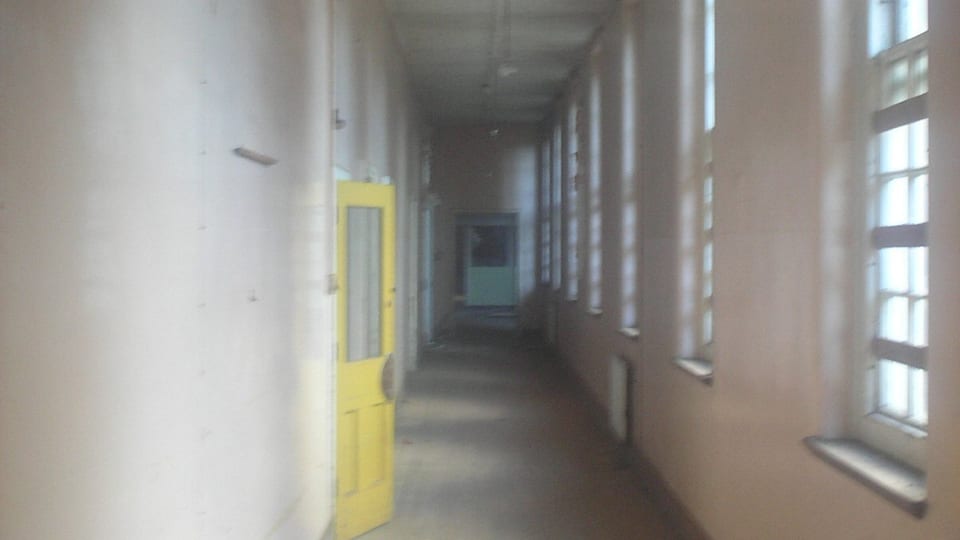
Shudder’s Infirmary arrives with a synopsis that sounds less like a movie pitch than a case file.
A security guard disappears during his first night inside an old psychiatric hospital in 2023. His bodycam survives. The footage contains incidents that investigators supposedly still cannot explain.
That framing is effective enough that a reasonable viewer could ask the obvious question:
Did this really happen?
The available production record says no. Infirmary is a scripted found-footage horror film. Edward, the missing guard at the center of the story, is a fictional character played by actor Paul Syre. The movie was directed by Nicholas Pineda, written by Katy Krauland from a story by Pineda, and built around a real abandoned hospital location.
So there is a real building, real body-camera equipment and a deliberately realistic shooting method.
The missing-guard case is part of the fiction.
Why Infirmary Sounds Like a Real Case
The confusion starts with the official-style synopsis.
Shudder’s announced synopsis describes the film as recovered bodycam footage documenting a security guard’s first night in an abandoned hospital. Other promotional summaries use even more case-file language, saying the guard vanished in 2023 and that the images continue to “baffle investigators.”
That is the movie’s storytelling frame.
It is the same basic found-footage trick that has powered the genre for decades: present fictional material as something discovered, recovered, leaked or assembled after a disturbing event.
The wording does not mean Shudder is documenting an unresolved real-world disappearance.
Edward Is a Character Played by Paul Syre
The clearest evidence is the film’s own production record.
Dances With Films, where Infirmary had its world premiere, lists:
- Nicholas Pineda as director;
- Katy Krauland as writer;
- Nicholas Pineda and Katy Krauland as producers;
- Paul Syre, Mark Anthony Williams and Danielle Kennedy as cast members.
Paul Syre plays Edward, the security guard whose first shift supplies the film’s central footage.
Mark Anthony Williams plays Lester, the veteran guard working alongside him.
Danielle Kennedy plays Ms. Downey.
Those are film roles, not people identified in a missing-person investigation.
The Director Describes Building the Story Around a Real Location
The most useful source is Pineda himself.
In a September 30 interview with Film Obsessive, he explains that the original idea was to shoot inside an empty office building. A friend then connected the production with an abandoned hospital.
Pineda says the location was too good to pass up and that the team created the story around it.
That is a very different origin from filmmakers discovering real bodycam evidence and building a documentary around an actual disappearance.
The location came first.
The fictional story was developed to use it.
The Hospital Was Real
This is the part of Infirmary that is genuinely real-world.
Pineda says the production filmed inside an abandoned hospital roughly 200,000 square feet in size, by his estimate. He describes it as a huge, unpleasant labyrinth where people could easily get lost.
He also says the crew encountered real break-ins during production.
That detail helps explain why the movie may feel unusually convincing. The corridors, institutional rooms and deteriorated surfaces were not all built on a soundstage.
They came from an actual abandoned medical facility.
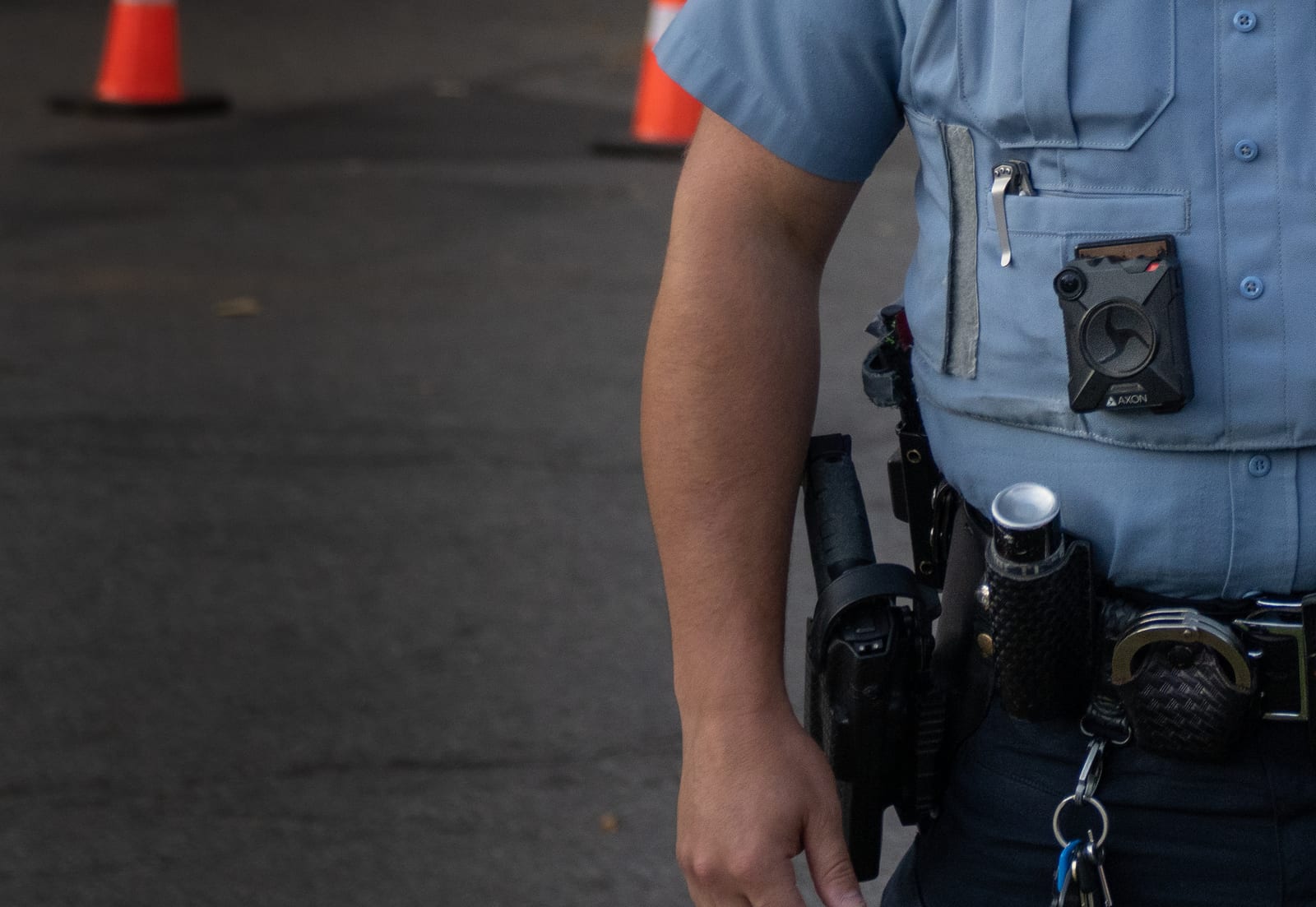
Context image: a Minneapolis police officer’s body camera, photographed October 25, 2019. This is not equipment or evidence from Infirmary. “Minneapolis Police Officer Body Camera” by Tony Webster via Wikimedia Commons, licensed CC BY-SA 2.0. Resized and compressed; this image derivative is also CC BY-SA 2.0.
The Bodycam Method Was Also Real
Pineda did not simply shoot a normal horror movie and add digital bodycam graphics afterward.
He says the actors actually wore cameras during filming.
In the same interview, he explains that this created practical problems traditional filmmaking courses had not prepared him for: performers had to act while also positioning their bodies so the camera mounted on them captured the intended frame.
Flashlights used by the characters also functioned as real light sources.
The production combined those wearable-camera images with fixed security-camera perspectives.
The technique is real.
The events recorded by those cameras are scripted horror.
The Film Was Inspired by Real Bodycam Footage as a Format
Pineda also gives another revealing detail.
When the project was being developed, he says the main visual reference available to him was actual bodycam footage.
That helps explain why the movie can resemble documentary evidence.
The filmmakers studied the visual language of real recording systems: wide lenses, awkward body movement, harsh lights, imperfect framing and fixed surveillance angles.
The goal was not to prove the fictional events happened.
It was to make the fiction look like material a camera happened to record rather than material a cinematographer carefully composed.
A MovieMaker report from the premiere also says the filmmakers incorporated stories shared by the hospital’s real security guards. Those anecdotes are real-world influences on the film; the report does not identify a documented missing-guard case behind Edward’s plot.
Is the Wilshire Infirmary a Real Haunted Hospital?
The film’s story uses the name Wilshire Infirmary for the abandoned psychiatric hospital where Edward works.
The production did shoot in a real abandoned hospital.
That does not establish the movie’s Wilshire Infirmary backstory, supernatural incidents or missing-guard case as real history.
Morbid Index did not find a documented 2023 case matching the film’s promotional description in the sources reviewed for this article.
More importantly, the director openly describes the project as a movie created around the location, with actors wearing cameras to perform scenes.
A real filming location and a fictional haunted-hospital story can exist at the same time.
What About the “Investigators”?
The promotional synopsis refers to incidents that supposedly continue to confuse investigators.
No real law-enforcement agency is identified in the materials reviewed here as investigating Edward’s disappearance.
No case number, missing-person record, police department, court record or contemporary news report is supplied.
Inside the movie’s framing, investigators help sell the idea that viewers are watching recovered evidence.
Outside that fictional frame, the production credits identify a director, writer, actors and producers.
That is the distinction that matters.
Why Found Footage Often Creates This Confusion
Found footage works by borrowing signals viewers normally associate with evidence.
A timestamp suggests documentation.
A bodycam suggests official recording.
A fixed security camera suggests surveillance rather than filmmaking.
Missing frames, poor exposure and awkward camera movement can feel less staged than polished cinematography.
When a film also uses text claiming that someone vanished or that footage was later recovered, it starts to imitate the language of documentaries and criminal investigations.
That does not make the events true.
It makes the fiction more persuasive.
Morbid Index has covered a similar process with the Backrooms, where ordinary images and documentary-style presentation can be separated from the fictional mythology built around them.
Did Anything Strange Really Happen During Filming?
Pineda does describe the abandoned hospital as frightening and says the production encountered real break-ins.
That should not be upgraded into a paranormal claim.
The interview does not establish that the crew witnessed supernatural activity.
A dangerous, decaying building with unauthorized people entering it can be unsettling without being haunted.
That is another place where horror publicity and factual history should remain separate.
When Did Infirmary Come Out?
Infirmary had its world premiere at Dances With Films New York on January 16, 2026.
After its festival run, Shudder scheduled the film to begin streaming on October 2, 2026 as part of its horror lineup.
The planned Shudder release takes the movie beyond its festival screenings — and makes the “is this real?” question more likely to spread beyond found-footage fans.
Is Infirmary Based on a True Story?
Based on the production sources reviewed here, no documented true story has been established as the basis of the missing-guard plot.
The movie is scripted fiction.
What is real:
- Nicholas Pineda directed the film.
- Katy Krauland wrote the screenplay from a story by Pineda.
- Paul Syre plays Edward.
- Mark Anthony Williams plays Lester.
- Danielle Kennedy plays Ms. Downey.
- The production filmed in a real abandoned hospital.
- Actors actually wore body cameras.
- Real bodycam footage helped inform the visual approach.
- Shudder announced a streaming premiere for October 2, 2026.
What belongs to the film’s fictional frame:
- Edward’s 2023 disappearance.
- the recovered “case evidence” presentation;
- unexplained incidents supposedly baffling investigators;
- the supernatural history and events attached to the movie’s Wilshire Infirmary.
That separation is what makes Infirmary interesting.
The film does not need a real missing guard to feel authentic.
Its realism comes from using real spaces and real recording methods to sell a fictional case.
Frequently Asked Questions
Is Infirmary based on a true story?
No documented real case has been established as the source of the film’s missing-security-guard story. Production records identify Infirmary as a scripted feature with actors, a director and a writer.
Did a security guard really disappear in 2023?
Edward’s disappearance is part of the movie’s found-footage narrative. Paul Syre plays Edward.
Is the bodycam footage real?
The production really used body-worn cameras, but the scenes recorded for the movie are performed fiction.
Was Infirmary filmed in a real abandoned hospital?
Yes. Director Nicholas Pineda says the production used a real abandoned hospital and built the story around the location.
Is Wilshire Infirmary a real haunted hospital?
The movie uses Wilshire Infirmary as its setting, but the film’s supernatural history and missing-guard case are not established as documented real-world events.
When did Infirmary reach Shudder?
Shudder scheduled Infirmary to stream beginning October 2, 2026.
Sources & further reading
- AMC / Shudder: Season of Screams announcement, synopsis and October 2 premiere
- Dances With Films: Infirmary festival listing
- Film Obsessive: Interview with director Nicholas Pineda (September 30, 2026)
- MovieMaker: Infirmary premiere report and filmmaker Q&A (January 17, 2026)
- USC Cinematic Arts / Shudder: Infirmary production credits
- Kim Newman: Infirmary review and character credits (August 30, 2026)
- Amalgam Films: Infirmary official teaser on Vimeo
- Bloody Disgusting: Shudder trailer and October 2 release



.jpg)