Lore & Explained / Movies
Is The Blair Witch Project a True Story? How a Fake Legend Became Modern Folklore
The Blair Witch, Elly Kedward and Rustin Parr were invented for a movie. Here is how Haxan Films built the mythology, how the 1999 marketing blurred fiction and reality, and what Maryland history actually says.
Topics: Blair Witch Project, Found Footage, Urban Legend, Burkittsville Maryland, Folklore
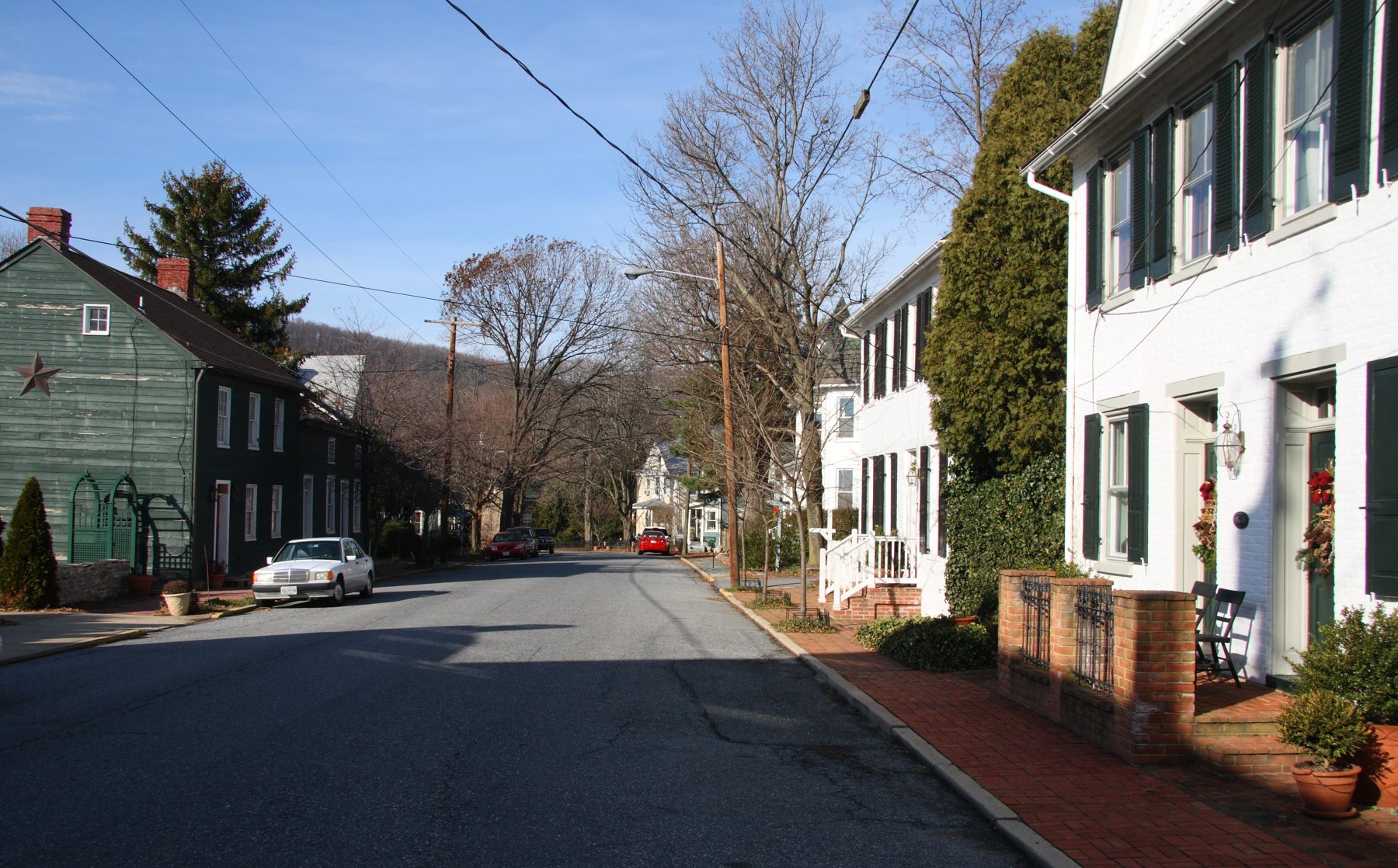
Acroterion, Wikimedia Commons (CC BY-SA 4.0)
The Blair Witch is not an old Maryland legend that filmmakers happened to discover. Elly Kedward did not live in eighteenth-century Blair, Maryland. Rustin Parr did not murder children in the 1940s. The town of Blair did not exist.
Those people, places and incidents were built as fiction for The Blair Witch Project and the material surrounding it.
What made the story unusually effective was not hidden historical evidence. It was the opposite: the filmmakers created enough invented history, documents, testimony and online material to make the fiction feel as if it had been discovered rather than written.
That distinction is the key to the Blair Witch story. Burkittsville is real. The Blair Witch mythology is not.
The Blair Witch began as a movie idea, not a folk tradition
Daniel Myrick and Eduardo Sánchez began developing what they called their “woods movie” in 1993. They were interested in the uneasy realism of paranormal documentaries and pseudo-documentaries: programs that presented extraordinary claims in the language of investigation rather than conventional horror.
The film that eventually emerged from that idea would follow three student filmmakers who disappeared while researching an alleged witch legend in rural Maryland. But the legend itself had to be created.
That work was not simply a case of the directors borrowing an existing local tale. Production designer and Haxan Films collaborator Ben Rock later described being asked to flesh out the backstory, give the mythology dates and names, and make the fictional history feel coherent.
Rock also explained where two of its most famous names came from. Elly Kedward was constructed as an anagram of the occultist Edward Kelley, while Rustin Parr began as an anagram of Rasputin. The names were designed inside the production, not recovered from Maryland records.
Elly Kedward and Rustin Parr were invented
Within the fictional mythology, Elly Kedward is accused of witchcraft in 1785, driven from the community of Blair and blamed after children disappear. More than a century later, the mythology introduces Rustin Parr, a hermit said to have murdered children while claiming that an old woman commanded him to do it.
Those incidents are part of the Blair Witch story world.
They are not documented Frederick County history.
That matters because the franchise’s supporting material was deliberately presented in forms that normally signal nonfiction: timelines, interviews, photographs, supposed police material and recovered evidence. A reader encountering those fragments outside their original marketing context can easily mistake fictional documents for historical ones.
The names and dates should therefore be treated the same way as any other fictional canon: useful for understanding the story, but not evidence about a real Maryland witch case or murder investigation.
Burkittsville is real, but the fictional town of Blair is not
Burkittsville, Maryland, is a real municipality in Frederick County.
Maryland records show that Henry Burkitt bought the tract on which the town developed in 1810. A post office opened at the crossroads in 1824, and the settlement later became known as Burkittsville. The town was incorporated in 1894.
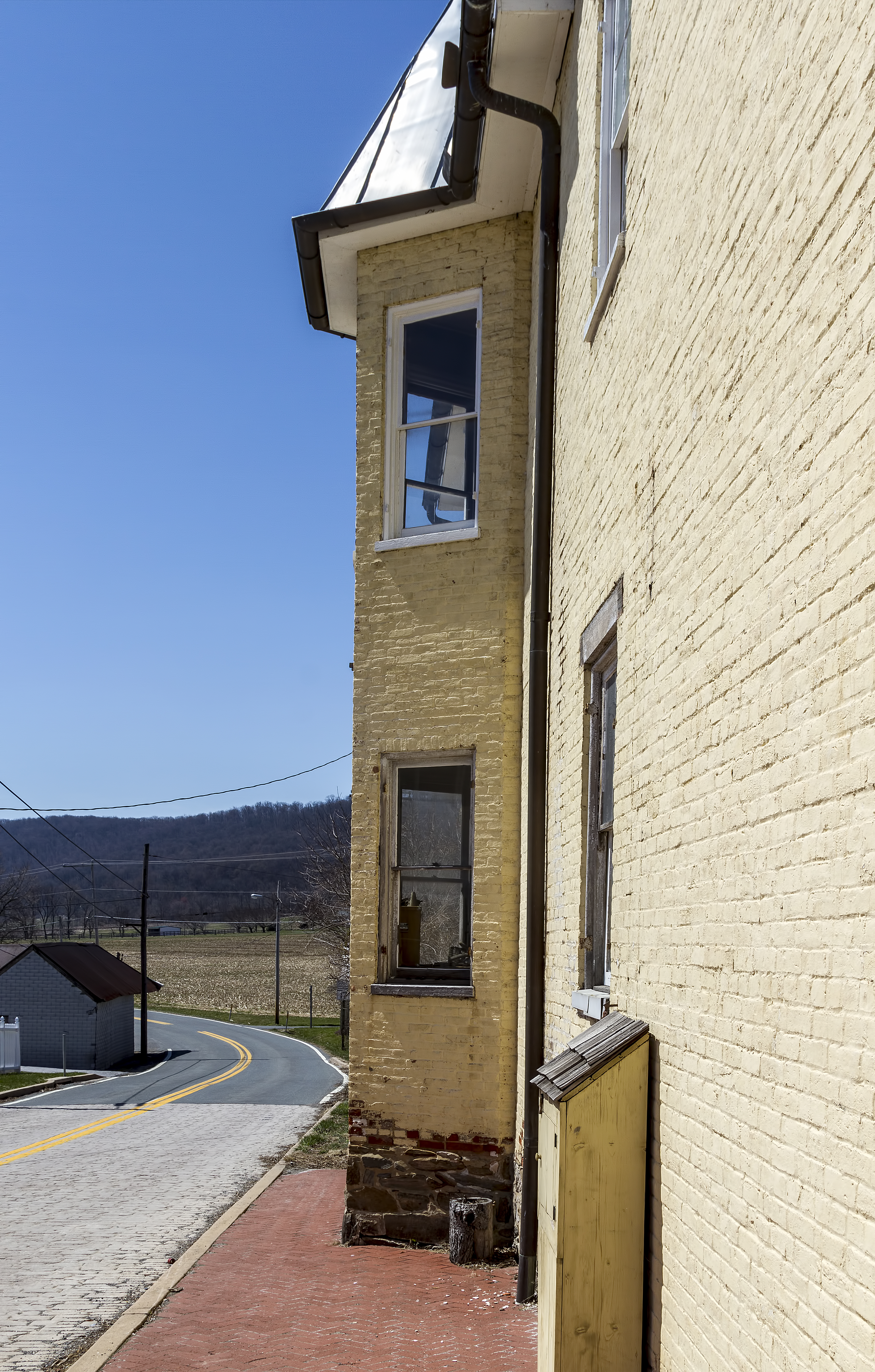
Burkittsville’s historic district, part of the real nineteenth-century town the filmmakers used as a backdrop for an invented legend. Acroterion, Wikimedia Commons (CC BY-SA 4.0).
That documented history does not include a colonial settlement called Blair or an eighteenth-century Elly Kedward case.
The film used the real town because a real place made the invented legend easier to anchor. Burkittsville appears in the movie and became inseparable from its public identity after the film’s success, but the fictional “Blair” chronology should not be folded backward into the town’s actual history.
The wooded footage also should not be treated as a documentary map of Burkittsville. The production used multiple Maryland locations. The setting is part real geography and part constructed horror geography.
Maryland does have older witch folklore
Saying that the Blair Witch is fictional does not mean Maryland lacks witch legends.
One of the best-known is the story of Moll Dyer, associated with St. Mary’s County in southern Maryland. Local tradition says Dyer was accused of witchcraft during a harsh winter in the late seventeenth century, driven from her home and later found dead beside a rock.
Modern St. Mary’s County heritage material preserves that story as local legend and cultural memory. It also notes a later association between Moll Dyer and The Blair Witch Project.
But the two stories should not be collapsed into one.
Moll Dyer belongs to a separate southern Maryland tradition. Elly Kedward, Rustin Parr, Blair and the Black Hills mythology belong to the fictional universe created around the film. A regional legend may have helped make Maryland feel like fertile ground for the movie’s story, but that is different from saying the movie adapted the Moll Dyer tale.
The production was designed to feel discovered
The movie’s realism was not created by mythology alone.
The three leads — Heather Donahue, Michael Williams and Joshua Leonard — worked from a loose outline rather than a conventional dialogue-heavy screenplay. Much of what viewers hear was improvised.
The production also limited the actors’ direct contact with the crew while they were in the woods. Instructions and supplies were delivered in ways that allowed the actors to keep filming while reacting to situations without knowing every detail in advance.
Eduardo Sánchez later said the team wanted the film to feel real enough that the audience’s imagination would do much of the frightening work. The low-fi cameras, improvised dialogue and incomplete information were therefore part of the method, not signs that the footage was an actual recovered record.
The website made the fiction look like evidence
Before the film became a theatrical phenomenon, the filmmakers had already built an online version of the Blair Witch case.
The website presented biographies of the missing student filmmakers, a timeline of the supposed legend and material framed as evidence from the disappearance. It did not foreground a large disclaimer explaining that the case was fictional.
That ambiguity was intentional.
In a July 1999 Associated Press report, Sánchez openly discussed the site’s role in making the story believable. The report noted that the site carried the fictional timeline and treated the disappearance with the visual language of a real case.
The filmmakers later described receiving messages from people who genuinely wanted to help with the supposed investigation. Sánchez recalled having to tell one police officer who contacted them that the case was fake.
The marketing extended beyond the website
The illusion did not stop at a web page.
At Sundance, the missing-person concept was part of the film’s presentation. The campaign also expanded into material such as Curse of the Blair Witch, a television mockumentary that treated the invented history with the tone and structure of a paranormal documentary.
This was especially effective in 1999 because the web was still new enough that audiences had fewer shared expectations for how fictional marketing campaigns would imitate police files, historical archives and missing-person pages.
The result was not that everyone believed the movie was real. Plenty of viewers understood that it was fiction.
But enough people were uncertain that the uncertainty itself became part of the film’s reputation.
Did people really think the footage was real?
Yes, some did.
Contemporary reporting documents viewers treating the fictional case seriously. The filmmakers received messages from people responding to the story as though Burkittsville had a real witch history and the students were actually missing.
That reaction is important because it is sometimes exaggerated in two opposite directions.
One version says nearly everyone in 1999 believed the movie was genuine recovered footage. That is too broad.
The opposite version says nobody could possibly have believed it and the “people thought it was real” story was invented later as publicity. Contemporary 1999 reporting does not support that either.
The safer conclusion is narrower: the campaign created real uncertainty for a meaningful part of the audience, and that uncertainty was documented while the film was still in release.
Did the Blair Witch become real folklore?
Not in the sense of becoming a real supernatural event or an old Maryland tradition.
But the invented legend did begin to behave like contemporary folklore.
People repeated it outside the film. They debated whether it was true. They searched for real-world locations. Details detached from their original fictional context and circulated as supposed history. Later audiences encountered the story through fragments rather than through the original movie campaign.
That process resembles the way modern legends spread, especially online.
The comparison is useful because another deliberately invented horror figure, Slender Man, later followed an even clearer internet-native path: a known fictional creation was copied, expanded and sometimes stripped of the context that identified it as fiction.
The Blair Witch is therefore best understood as invented mythology that entered real-world legend circulation, not as a centuries-old legend uncovered by filmmakers.
Frequently Asked Questions
Is The Blair Witch Project a true story?
No. The disappearance, the Blair Witch mythology, Elly Kedward and Rustin Parr were created for the film and its surrounding fictional material.
Was Elly Kedward a real person?
No reliable historical record establishes Elly Kedward as a real eighteenth-century Maryland witch figure. Ben Rock, who helped build the film’s mythology, has explained that he created the name as an anagram of Edward Kelley.
Was Rustin Parr a real murderer?
No. Rustin Parr is a fictional character in the Blair Witch mythology. Rock has said the name began as an anagram of Rasputin.
Is Burkittsville a real town?
Yes. Burkittsville is a real town in Frederick County, Maryland. Its documented history is much older than the movie, but the Blair Witch events attached to it are fictional.
Was there really a town called Blair, Maryland?
Not in the historical sense used by the movie’s mythology. “Blair” is part of the invented backstory.
Is Moll Dyer the real Blair Witch?
No. Moll Dyer is a separate Maryland legend associated with St. Mary’s County. Modern local heritage material links the legend to the film’s inspiration, but Elly Kedward is not a renamed historical Moll Dyer.
Why did some viewers think the movie was real?
The film combined improvised found-footage aesthetics with a website, mock-documentary material and a missing-person marketing campaign that presented fictional information in the style of a real investigation.
Did the movie create real folklore?
It created fiction that later circulated like contemporary legend. That does not make the supernatural claims true, but it does make the Blair Witch a useful example of how modern folklore can form around deliberately invented material.
Sources & further reading
- Ben Rock, 'The Making of The Blair Witch Project: Part 1 - Witch Pitch,' Dread Central (2016)
- Andrea Meyer, 'Off the Beaten Track: The Blair Witch Project,' The Independent (1999)
- Associated Press, 'Reality Check On Blair Witch,' CBS News (July 28, 1999)
- Steve Rose, 'How we made The Blair Witch Project,' The Guardian (2018)
- Maryland State Archives, Burkittsville, Frederick County
- Maryland Department of Planning, Design Characteristics of Maryland's Traditional Settlements
- St. Mary's County Tourism, 'The Legend of Moll Dyer'
- Wikimedia Commons, 'Burkittsville street.JPG' (CC BY-SA 4.0)