News / Movies
Molepeople (2027): What the Movie Confirms and the Real History Behind New York's Tunnel Myth
Molepeople opens August 27, 2027 with LaKeith Stanfield and Ben Mendelsohn. Separate Rob Savage's fictional horror film from New York's real tunnel history.
Topics: Molepeople, Rob Savage, LaKeith Stanfield, Ben Mendelsohn, Freedom Tunnel, New York City
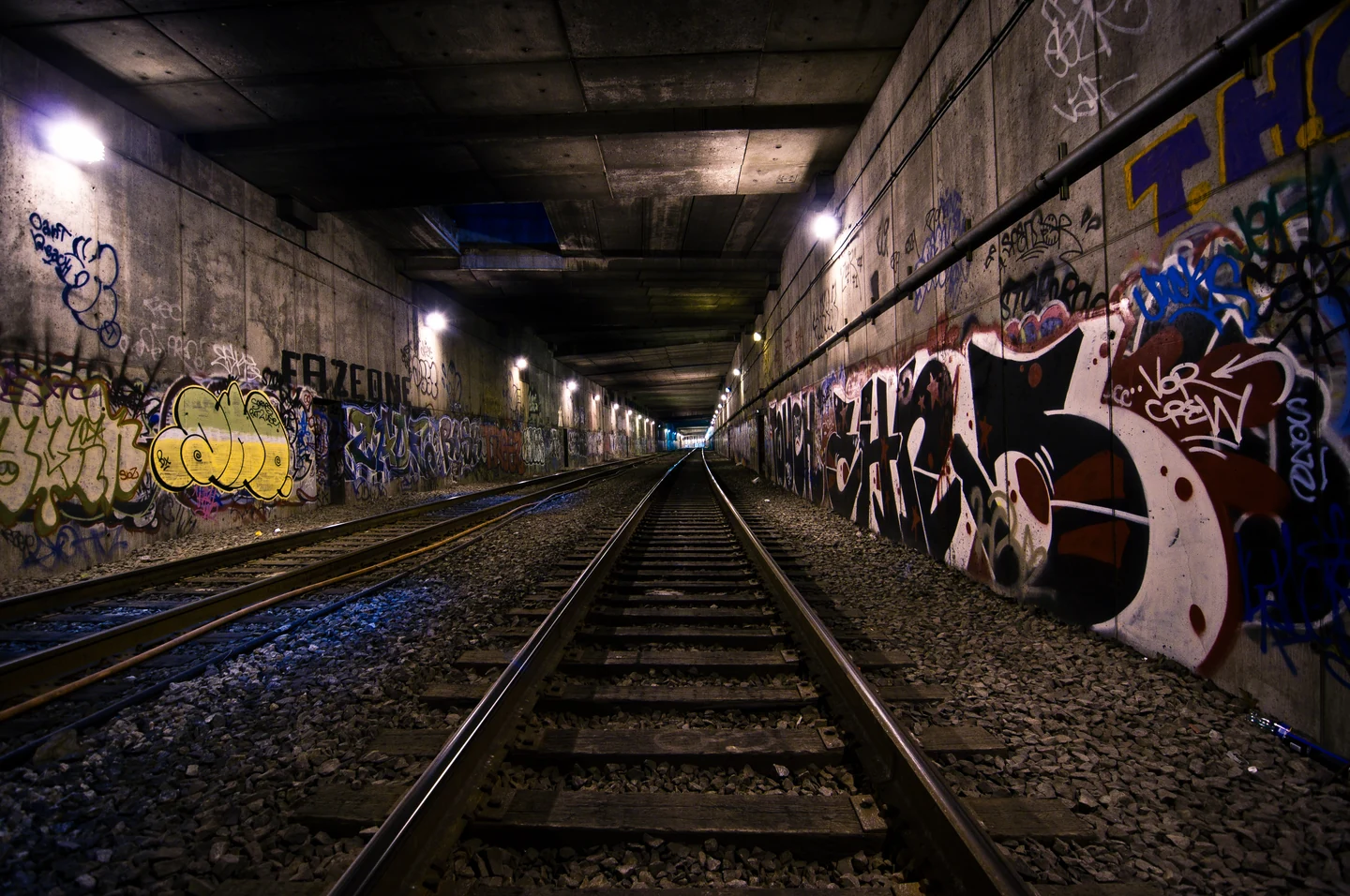
Stuart McAlpine / Wikimedia Commons, CC BY 2.0 (original 2013 photograph; optimized derivative)
The hero photograph shows the real Freedom Tunnel in Manhattan in 2013, not a set or publicity image from the upcoming film. Photo: Stuart McAlpine / Wikimedia Commons, CC BY 2.0; proportionally resized and recompressed as WebP without additional cropping.
A new horror film called Molepeople is heading to theaters on August 27, 2027. At New York Comic Con on October 9, 2026, Blumhouse Atomic Monster and Paramount Primal announced the date and a significant casting change: LaKeith Stanfield is replacing Anthony Ramos and will appear alongside Ben Mendelsohn. Rob Savage is directing from a screenplay by Nathan Elston. TheWrap reported the announcement.
The story follows a man descending into abandoned tunnels beneath New York City and discovering an unsettling society below the streets. That premise deliberately evokes a familiar urban nightmare: the sense that another city exists out of sight beneath the one everyone knows.
But there are two separate questions here. What has been announced about the fictional film? And what, if anything, does the idea of New York’s underground “mole people” have to do with documented history?
What is confirmed about Molepeople?
The announcement provides a small but concrete set of facts. Molepeople is a feature film directed by Rob Savage. Its credited screenwriter is Nathan Elston, and its new theatrical date is August 27, 2027. LaKeith Stanfield and Ben Mendelsohn are attached to star. The project is associated with Blumhouse Atomic Monster and Paramount Primal.
The same October 9 report names Jason Blum, J. D. Lifshitz, Raphael Margules and James Harris as producers. It also reports that the project moved to Paramount after Lifshitz and Margules established the Primal genre label.
The notable casting change is not an addition to the earlier lineup: Stanfield replaces Anthony Ramos. The announcement does not establish which named character Stanfield will play, or whether Mendelsohn’s character belongs to the world above or below ground. Guessing either role from the brief premise would turn speculation into a casting fact.
Trade reporting places production preparations in late 2026, but that is not the same as confirmation that cameras have started rolling. There is no official trailer or finished-film footage to analyze in the cited announcement.
Is Molepeople based on a true story?
No specific real-life incident has been established as the film’s source. The premise involves a fictional underground society. The existence of people who once sheltered in railway tunnels does not make this script an adaptation of their lives, and the announcement does not describe it as a true-story film.
There is a real background worth understanding, though. In New York, the phrase “mole people” has long been used in reporting and popular culture for people living in subterranean spaces, especially alongside railway infrastructure. The label can make them sound like a strange hidden species rather than people responding to homelessness, exclusion and danger.
The distinction is essential to the film’s context. A horror screenplay can invent a threatening society beneath the streets. That is not evidence that such a society existed, and it should not be treated as a description of real unhoused New Yorkers.
The real Freedom Tunnel beneath Riverside Park
One well-documented location is Manhattan’s Freedom Tunnel, part of the West Side rail corridor beneath Riverside Park. The history of this space is less mysterious than its reputation.
Transit researcher Joseph Brennan explains that the railroad alignment originally ran along the Hudson River. In the 1930s, the city extended Riverside Park over the tracks, creating a substantial roofed structure that came to be experienced as a tunnel. For a period, railway use diminished, leaving areas where people could seek shelter. Amtrak later used the line for passenger service. These are changes in transport infrastructure—not evidence of secret, uncharted levels of city.
Brennan’s history and critique of tunnel mythology is particularly useful because it distinguishes actual track arrangements from sensational accounts of enormous interconnected networks.
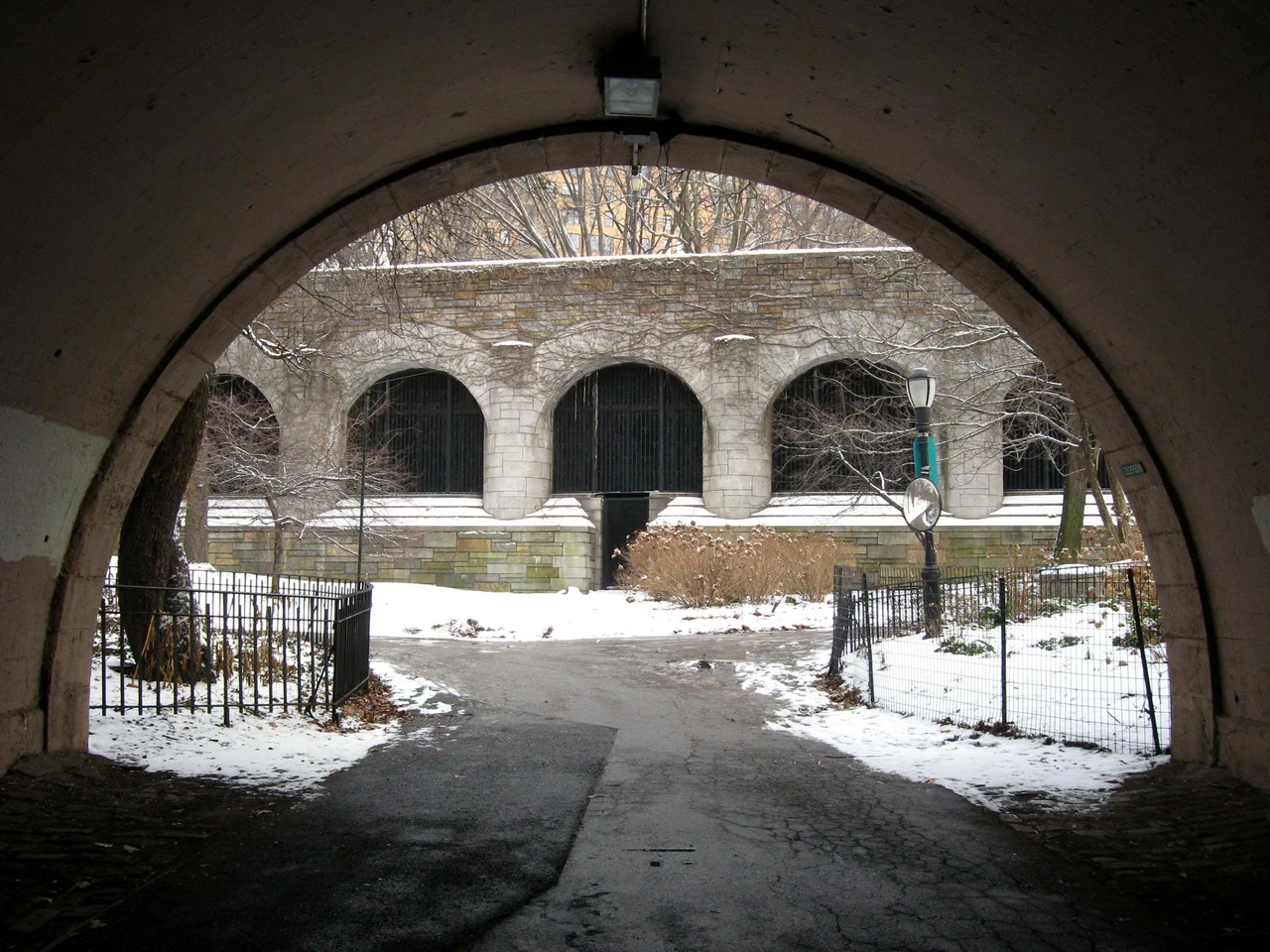
The photograph below shows a West Side Line maintenance access gate in Riverside Park on a snowy day in January 2009. It documents part of the surrounding rail infrastructure, not the fictional society or a shooting location for Molepeople.
How the “mole people” story mixed reporting with urban legend
Jennifer Toth’s 1993 nonfiction book The Mole People: Life in the Tunnels Beneath New York City helped popularize the idea of extensive hidden communities. Its existence and cultural influence are documented; the accuracy of every remarkable incident it describes is another matter.
Toth interviewed people associated with tunnel life and reported accounts that were at times extraordinary. Yet critics later questioned whether some of the tunnels and routes in the book were accurately described. Brennan’s detailed examination found major problems with the geography of several claimed locations. His critique concerns identifiable railway structures, rather than proving that nobody lived underground.
The distinction became sharper when columnist Cecil Adams revisited the book. He compared Brennan’s objections with comments from a woman who had spent time in New York tunnels. She did not recognize some of the elaborate community arrangements described in Toth’s account. Adams concluded that readers should not automatically accept every detail. See The Mole People Revisited.
The sensible conclusion is neither that the entire story was fabricated nor that all its most dramatic claims are true. Real people lived in real underground spaces. The dramatic image of a self-contained hidden civilization is much harder to substantiate.
That separation resembles a pattern seen elsewhere in urban horror: an actual location becomes the foundation for imaginative stories whose later retellings may be mistaken for the place’s history. Morbid Index has examined another kind of underground confusion in our history of the Paris Catacombs, which is an ossuary in former quarries, not a surviving secret society.
What more recent research tells us about tunnel residents
A stronger basis for discussing everyday life beneath Riverside Park comes from sociologist Terry Williams. His 2024 book, Life Underground: Encounters with People Below the Streets of New York, draws on repeated field visits, observations, conversations and the experiences of residents.
According to Columbia University Press, Williams visited tunnels between West 72nd and West 96th Streets hundreds of times during 1991–1996, returning in later years. The publisher describes his work as a study of how people sought shelter and dignity under conditions of marginalization. The tunnels’ earlier residents were displaced when the railway area was cleared for Amtrak service; this was a matter of housing and infrastructure, not an encounter with monsters.
Williams’s research should not be turned into a direct explanation for Savage’s movie. No such connection has been announced. It is valuable for a different reason: it offers documented social history against which to recognize the exaggerations of the urban legend.
Why the location works for horror—without making its myths factual
Rail tunnels are visually effective horror locations because they restrict visibility, complicate escape and separate characters from the busy city overhead. Molepeople has announced a descent and an encounter with an underground society; it has not disclosed the society’s rules, its origin, or whether any danger will be supernatural.
That leaves several important boundaries. The film’s antagonist, if there is a single one, is unconfirmed. No public synopsis in the sources reviewed identifies the protagonist by name. There is no verified evidence that the filmmakers have adapted Toth’s book, Williams’s research or a particular Freedom Tunnel incident. Even the exact New York tunnel that might appear in the finished movie has not been announced.
A useful horror article should not fill those gaps with invented mythology. The title evokes an existing idea, but the film will have to tell us which parts of that idea it actually uses.
When will Molepeople be released?
The announced theatrical date is August 27, 2027, as of the October 9, 2026 New York Comic Con announcement. The available announcement does not establish a country-by-country rollout or a streaming date. Those details may follow closer to release, and all theatrical schedules can change.
For now, Molepeople is best understood as a newly dated, cast-adjusted horror film with a provocative setting—not a documentary, not a verified true story, and not an invitation to mistake real homeless communities for fictional monsters.
Sources & further reading
- TheWrap, Molepeople release date and casting announcement, October 9, 2026
- Columbia University Press, Terry Williams, Life Underground (2024)
- Joseph Brennan, Fantasy in The Mole People (1996, subsequently revised)
- Cecil Adams, The Mole People Revisited, The Straight Dope (originally 2004; page republished)
- Wikimedia Commons, Freedom Tunnel, Stuart McAlpine (CC BY 2.0)
- Wikimedia Commons, West Side Line Riverside Park maintenance access, Jim.henderson (public domain)
- Morbid Index, Paris Catacombs: The Real History Behind the Underground Ossuary