Lore & Explained / Movies
Other Mommy Ending Explained: How the Film Changes Incidents Around the House
Why Bela survives the 2026 Other Mommy film but faces a different fate in Josh Malerman's Incidents Around the House, and what the post-credits moment means.
Topics: Other Mommy, Incidents Around the House, Josh Malerman, Jessica Chastain, Rob Savage, Horror endings, Book-to-film adaptations
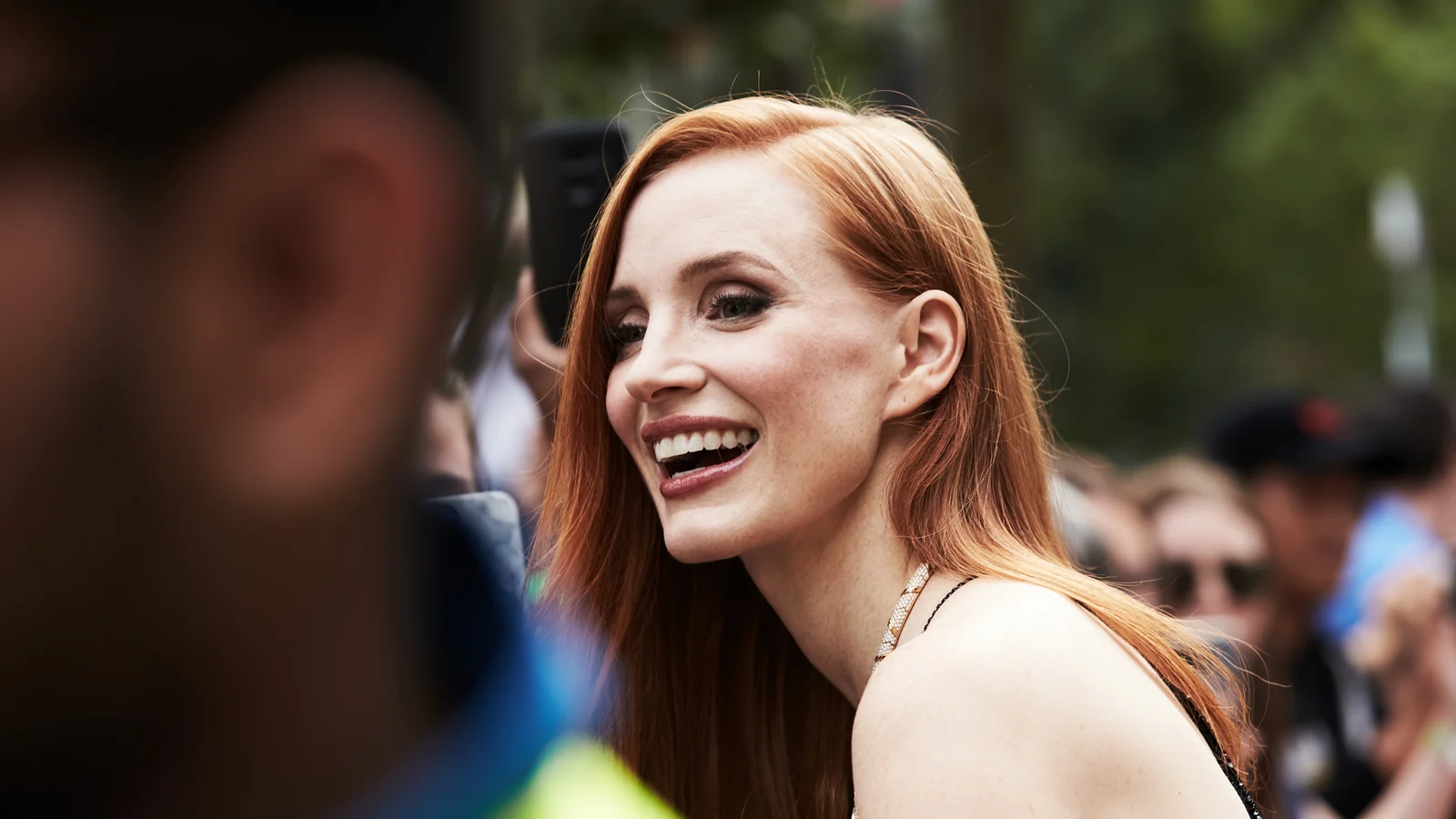
The hero image shows Jessica Chastain greeting fans at the 2023 Toronto International Film Festival. It is an archival photograph of the actor, not a still, costume or scene from Other Mommy. Photo: Gabriel Hutchinson / Wikimedia Commons, CC BY-SA 4.0. Proportionally resized and recompressed as WebP without additional cropping; this derivative is licensed CC BY-SA 4.0.
Major spoilers for the 2026 film Other Mommy and Josh Malerman’s novel Incidents Around the House. This is a source-based explanation and adaptation comparison, not a review or a claim that the author personally watched the film or read the entire novel. The ending details below are attributed to the published reporting identified in the text.
The ending of Other Mommy is not the ending of the book that inspired it. In Rob Savage’s 2026 film, Bela refuses to surrender herself to the entity that looks like her mother. In Josh Malerman’s 2024 novel Incidents Around the House, the child finally allows the entity to enter her after a far more devastating final confrontation. That difference changes what each story ultimately says about the terrifying question the monster keeps asking.
Both versions begin with an apparently simple demand. A presence called Other Mommy wants a young girl to let it inside her heart. The words sound reassuring, almost affectionate. Their meaning is anything but. The threat in this story is not a documented haunting or a religious claim presented as history; it is an invented rule inside a work of supernatural fiction.
The film opened in U.S. theaters on October 9, 2026. NBCUniversal’s official announcement identifies Jessica Chastain in the dual role of Bela’s mother and the entity that impersonates her, Arabella Olivia Clark as Bela, Jay Duplass as her father, and Rob Savage as director. The screenplay is by Nathan Elston, adapted from Malerman’s novel. Those are production facts; the interpretation of the ending begins with what the two stories actually do.
Who is Other Mommy, and what does she want?
In the author’s description of the novel, eight-year-old Bela lives with Mommy, Daddo and Grandma Ruth. Another figure, whom she calls Other Mommy, repeatedly asks whether it can go inside her heart. As the requests continue, the family faces increasing danger, while the adults’ troubled relationship makes Bela’s sense of safety less secure.
The premise combines two kinds of unease. Bela is afraid of something inexplicable in her home. She is also a child trying to understand the adults who are meant to protect her. Other Mommy exploits that confusion by presenting an invitation as love or comfort. The child’s answer matters because, within the fiction, the entity wants her cooperation to take possession of her body.
Universal’s film description retains the central situation: Bela forms a relationship with a sinister presence that looks like her mother. The casting makes that resemblance especially explicit. Chastain performs both the human parent and the threatening double. The film is therefore not simply a story about a stranger lurking in a closet. It is about a familiar appearance that becomes impossible to trust.
The question about entering Bela’s heart is not a verified occult formula, a real possession ritual or evidence of a creature from historical folklore. It is the fictional mechanism around which Malerman built his novel and the screen adaptation built its conflict.
What happens at the end of the Other Mommy movie?
According to People’s October 10, 2026, ending breakdown, the film’s Bela does not grant the entity permission to possess her. She recognizes that her parents are imperfect people: they can disappoint her, fail to protect her and cause her pain without that meaning the impersonating entity offers a better form of love. This recognition removes much of the power Other Mommy gains by promising absolute protection.
That is an unusually domestic resolution for a story with a supernatural antagonist. The deciding event, as described in the report, is not a successful exorcism or the discovery of a secret weapon. It is Bela refusing the emotional bargain she has been offered. She can acknowledge painful truths about home without giving up control of herself.
This does not make the family suddenly happy. People’s account describes a final family scene in which Bela and her father appear relieved while Ursula remains unhappy. The danger embodied by Other Mommy has been resisted, but the underlying difficulties between the adults are not simply erased. A monster can be rejected without a troubled household instantly becoming harmonious.
There is also a post-credits moment. People reports that Other Mommy briefly turns toward the audience and makes a shushing gesture. That leaves room for the entity’s continued existence, but it does not, by itself, announce a sequel or establish that Bela has secretly been possessed. The safer reading is narrower: the immediate attempt has failed, while the film declines to guarantee that the supernatural threat has vanished from its fictional world.
How does Incidents Around the House end in the novel?
The novel goes in the opposite direction. In the book-ending comparison published by People, Bela’s parents attempt to defeat Other Mommy, but the confrontation ends with the deaths of family members. Bela is left facing the entity without the protection she expected from the adults around her. The report also identifies a final revelation concerning Grandma Ruth, whose fate makes Bela’s isolation still more complete.
Bela then accepts Other Mommy’s demand. The entity takes control of her body, while Bela’s own consciousness is displaced. The invitation that sounded like emotional reassurance becomes the mechanism of a devastating loss of agency.
This is an account of Malerman’s fictional ending, not an assertion about a real child or an independently observed supernatural event. The publisher’s 2024 book description establishes the family’s predicament and Other Mommy’s repeated demand; the more detailed finale above comes from the explicitly spoiler-bearing comparison, not from the publisher’s spoiler-free synopsis.
The contrast matters because it changes the emotional contract with the reader. The novel does not reassure us that recognizing manipulation necessarily leads to safety. Its bleak ending follows through on the possibility that the child may be cornered into saying yes. The film, by contrast, lets Bela reject the promise of perfect protection and survive the attempt.

The biggest difference: What does Bela’s answer mean?
| Question | Incidents Around the House (2024 novel) | Other Mommy (2026 film) |
|---|---|---|
| Does Bela let Other Mommy enter? | Yes, at the end described in published spoiler coverage. | No, she refuses the invitation. |
| What happens to the family? | The final confrontation leaves Bela bereaved and unprotected. | Bela and her father are shown after the confrontation, while family tensions remain. |
| What happens to the entity? | It takes control of Bela’s body. | It fails to possess Bela; a post-credits beat suggests it may remain at large. |
| What does the resolution emphasize? | The horror of a child left with no viable refuge. | The child’s ability to reject manipulative promises without pretending her parents are flawless. |
These are story differences, not a ranking of which version is better. They also should not be treated as an exhaustive scene-by-scene comparison. The table addresses the ending and the most consequential change documented in the sources. It does not invent differences in scenes, character backgrounds or novel chapters that have not been independently checked.
A subtle distinction is easy to lose here: both stories can be about the vulnerability of a child living with adults whose relationships are fraying. The adaptation does not abandon that foundation when it changes the ending. What it changes is how much power Bela can ultimately exercise over the situation. The novel ends by demonstrating the catastrophic result of surrendering. The film creates an escape from that result.
Why does Jessica Chastain play both Ursula and Other Mommy?
The studio’s official description explicitly credits Chastain in two roles: Bela’s mother and the entity wearing her likeness. It makes the central visual trick unambiguous for an audience. An apparently loving maternal face may belong to the actual parent, or to a presence using that face to secure trust.
That choice helps explain the film’s emphasis on Bela’s relationship with her parents. If the person offering perfect affection looks like her real mother, the danger cannot be separated neatly into a friendly home and an obviously foreign monster. Bela must judge not just an appearance but what the presence asks her to surrender.
It would be too strong to claim that a dual performance proves the film has a different supernatural species, that Ursula herself is secretly the entity, or that the filmmakers established some shared demon mythology beyond this movie. The resemblance is confirmed. A larger occult canon is not.
Does the post-credits scene confirm Other Mommy 2?
No sequel announcement follows from a fictional stinger alone. The described final moment suggests that Other Mommy is not conclusively gone. It does not set an official sequel date, name a second film or establish a future story. As of the October 10 sources consulted for this article, neither the studio’s release announcement nor the cited ending report confirms a follow-up production.
An ending can preserve uncertainty simply because a monster that seemed defeated is more unsettling than one whose fate is fully explained. That is a possible interpretation of the film’s structure, not an inside account of future studio plans.
Is Other Mommy based on a true story?
No source consulted for this article presents the events as a documented case. Other Mommy is a film adaptation of a published horror novel, not an independently verified account of possession. Penguin Random House dates the original hardcover to June 25, 2024. The author identifies Bela and Other Mommy as characters in the novel on his own book page.
Its emotional concerns—how children understand unreliable adults, and how a promise of safety can become manipulative—have real-world meaning. The bodily possession, shape-shifting mother-double and supernatural bargain are fiction. They should not be confused with evidence for a real haunting, a religious teaching or a medical diagnosis.
The change between novel and film is enough to sustain two different readings. One is a bleak story of coercion and the loss of self. The other allows a child to recognize a false offer of protection and reject it, without claiming that her life will henceforth be uncomplicated. Neither requires treating Other Mommy as anything more or less than what the verified sources describe: a supernatural antagonist in fiction.
For another example of how a modern horror narrative changes across formats, see Morbid Index’s account of Seasons, from a NoSleep story to Old Country and a planned film, or browse the site’s lore and adaptation coverage.
Frequently asked questions
Does Other Mommy possess Bela in the film?
No. The October 10 ending report says Bela refuses, rather than granting the entity permission to enter her.
Does Bela survive in the book?
The novel’s ending, as described in the published comparison, involves Other Mommy taking control of Bela’s body after the family is destroyed. Bela’s own self does not retain control.
Is the novel called Other Mommy?
No. The novel is Incidents Around the House by Josh Malerman, originally published in 2024. Other Mommy is the 2026 adaptation’s film title and the name Bela gives the entity in the original story.
Does the post-credits scene mean the monster won?
It indicates that the apparent defeat may not be permanent. It does not overturn the specific report that Bela refuses possession, and it does not confirm another movie.
Is this a review of Other Mommy?
No. It compares the two published story endings using cited sources. It does not assign a rating or claim that a Morbid Index author has personally seen the finished film or read the complete book.
Sources & further reading
- NBCUniversal: Other Mommy release, cast, filmmakers and official film premise, September 30, 2026
- Josh Malerman: Incidents Around the House official author synopsis
- Penguin Random House / Del Rey: Incidents Around the House publication and book synopsis
- People: Other Mommy ending and book comparison, October 10, 2026 (major spoilers)
- Wikimedia Commons: Jessica Chastain at TIFF 2023 by Gabriel Hutchinson, CC BY-SA 4.0
- Wikimedia Commons: Josh Malerman in 2017 by Luigi Novi, CC BY 4.0