Lore & Explained / Movies
Why Night of the Living Dead Is Public Domain — and Why Room418 Can Remake It Vertically
Why Night of the Living Dead entered the U.S. public domain, which rights remain separate, and what Room418’s planned vertical adaptation means.
Topics: Night of the Living Dead, George A. Romero, Room418, public domain, copyright, zombies
A new horror platform called Room418 is developing a vertical-video reimagining of George A. Romero’s Night of the Living Dead. That is possible for a reason almost as famous as the movie itself: the original 1968 film entered the public domain in the United States because it was published without the copyright notice the law then required.
The new project was reported on October 2, 2026 as part of Room418’s launch slate. The Los Angeles company describes itself as a horror-focused destination built around vertical-first storytelling, with an invite-only beta planned before a wider commercial rollout.
For horror fans, the headline is unusual enough on its own: one of the most influential zombie films ever made is being rebuilt for the phone screen.
But the more interesting question is why Room418 can adapt the film without treating the original movie like a normally licensed studio property.
The answer is not that Night of the Living Dead is “too old” to be copyrighted.
It is that the original U.S. release lost copyright protection under the law that applied in 1968.
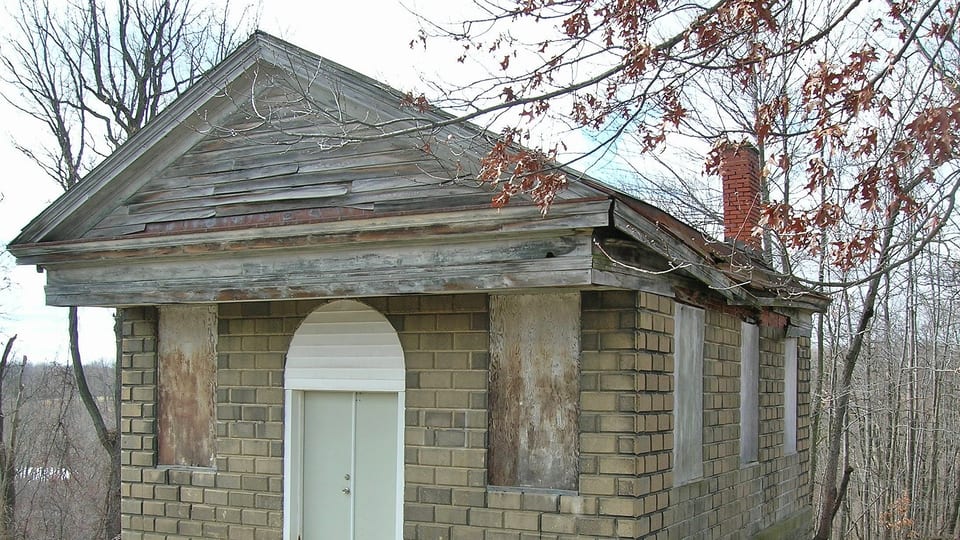
Hero photograph: Evans City Cemetery in Pennsylvania, the location used for the original film’s opening. Its chapel is shown in February 2009 before renovation. This is a historical location photograph, not Room418 production imagery. Photo by Marty Aligata via Wikimedia Commons, licensed CC BY-SA 4.0. Cropped, resized and compressed; this derivative remains CC BY-SA 4.0.
What Room418 is making
Room418’s current site says the platform is “Horror Built for Vertical” and is preparing to stream soon.
Trade reporting on October 2 says the company has ten original and adapted projects in development, including a vertical reimagining of Night of the Living Dead. The development slate also includes an adaptation of Ben Sobieck’s When the Black-Eyed Children Knock and an original project with horror creator Monse Gutierrez.
The Night of the Living Dead project is described as a vertical reimagining rather than a restoration or rerelease of Romero’s film.
That distinction matters.
Room418 is not merely taking the 1968 movie and cropping it into a phone-shaped frame. The reported plan is a new adaptation designed for vertical microdrama storytelling.
Why the original film is public domain in the United States
The cleanest record comes from the Library of Congress.
Its catalog entry records no registration for the original and explicitly notes that registration PA46-101 for the black-and-white version was cancelled because the film had been published before 1978 without a copyright notice.
That last point was decisive under the law in force at the time.
The U.S. Copyright Office’s regulation for pre-1978 works explains that copyright protection could be lost when a work was published without the statutory notice required by the law then in effect. For works published before January 1, 1978, adding a notice later could not necessarily repair a publication that had already occurred without one.
So the film’s public-domain status is not folklore about a studio forgetting paperwork.
It is reflected directly in the Library of Congress copyright record.
The title change is the famous part of the story
The film was planned for release as Night of the Flesh Eaters, according to the Copyright Office’s account of the title change.
The familiar account is that when the distributor changed the title to Night of the Living Dead, the new title card did not carry over the copyright notice that had appeared with the earlier title.
That omission became far more consequential than anyone involved could have expected.
Under modern U.S. law, forgetting a copyright notice does not normally throw a new work into the public domain. Copyright protection now attaches without requiring a visible © notice.
But Night of the Living Dead was released under an older legal system.
The result is one of the strangest accidents in horror history: a film that became enormously influential also became unusually easy for later distributors, exhibitors and creators to reproduce and adapt in the United States.
Public domain does not mean “nothing around the film is protected”
This is where simple summaries often become misleading.
The original 1968 black-and-white film is the key public-domain work in the United States.
That does not automatically mean every later version, every poster, every restoration, every soundtrack recording, every logo, every documentary extra and every modern piece of artwork connected with the movie is also public domain.
The Library of Congress record makes this distinction unusually clear.
It lists later colorized versions with separate copyright registrations covering the added color work.
That means someone can start with the underlying public-domain film, but they should not assume they can simply copy a later protected edition wholesale.
The same principle matters for modern adaptations.
A new creator can make original use of public-domain story material, but the new creative material another adapter adds can itself be protected. The Copyright Office’s derivative-work guidance limits that protection to original additions; a new edition does not acquire copyright over the underlying public-domain film merely by being restored or repackaged.
What the public domain allows a new adaptation to do
In the United States, public-domain material can generally be reproduced, performed, distributed and adapted without obtaining permission from a copyright owner for the public-domain work itself.
That is why Night of the Living Dead has had such an unusual afterlife.
The film has circulated through countless inexpensive home-video releases, public screenings, online uploads and derivative projects.
A creator can build a new work from the public-domain material embodied in the 1968 film.
But a careful adaptation still needs to distinguish between material actually present in the 1968 public-domain film, material created for later sequels or remakes, modern copyrighted artwork and promotional materials, trademarks and branding questions, and newly created music, footage or visual elements from later editions.
“Public domain” is powerful.
It is not the same thing as “every object associated with the franchise is free to copy.”
The U.S. public-domain answer is not automatically the worldwide answer
The Library of Congress record and the U.S. Copyright Office rules establish the film’s status under United States copyright law.
Copyright terms and the treatment of foreign works differ between countries.
A company distributing a new adaptation internationally still has to consider the law in the places where it operates.
So the accurate statement is: The original 1968 film is public domain in the United States.
That is stronger and more precise than saying the movie is simply “copyright-free everywhere.”
Why Night of the Living Dead is especially attractive for new formats
The Room418 project is a good example of what public domain can do culturally.
A creator does not have to wait for one rights holder to approve every experiment with the original film.
That lowers the barrier to trying formats that would be unusual for a tightly controlled franchise.
In Room418’s case, the company is betting on vertical microdrama — stories designed around the way people watch short-form video on phones.
Room418 co-founder and CEO Dylen Postnikoff told Deadline that vertical storytelling changes more than the frame: it changes pacing, how quickly a world is established, where suspense is placed and how each installment earns the next episode.
That does not guarantee the format will suit Romero’s story.
It does explain why a public-domain classic is useful for experimenting with it.
Vertical video changes the storytelling problem
The original Night of the Living Dead depends heavily on confinement.
Characters are trapped inside a farmhouse while danger closes in outside. Much of the tension comes from the relationship between people sharing cramped physical space, the information they receive through television and radio, and the breakdown of cooperation inside the house.
A vertical adaptation has to solve a different visual problem.
A tall phone frame reduces horizontal space. Group blocking changes. Wide compositions change. The rhythm of a microdrama may also demand more frequent cliffhangers than a 96-minute feature.
Those are adaptation choices, not facts already established by Room418.
The project has been announced, but details such as cast, episode count, director, exact structure and release date were not included in the reporting reviewed for this article.
The new adaptation will not replace Romero’s film
Public-domain adaptations can sometimes create the impression that the original work has become ownerless in a cultural sense.
That is not what public domain means.
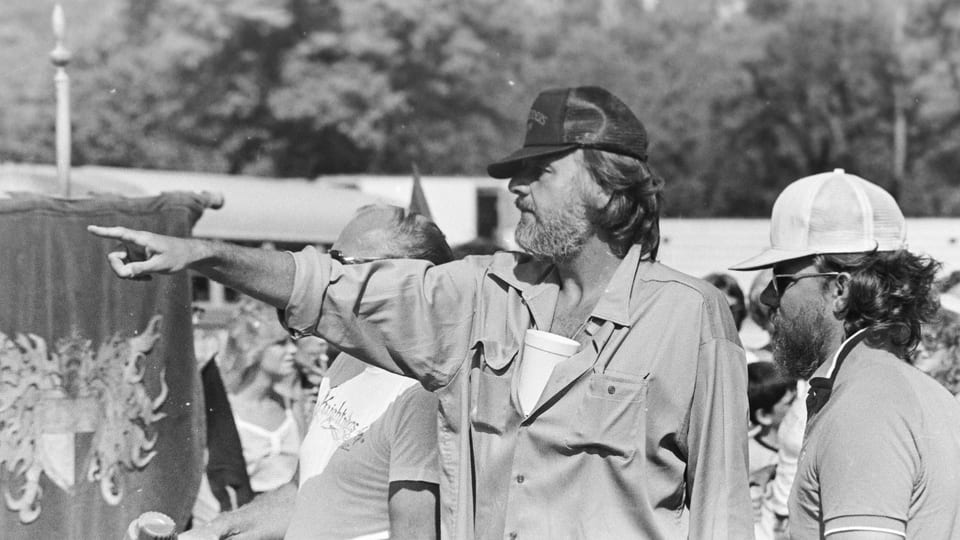
George A. Romero directed Night of the Living Dead and co-wrote it with John A. Russo. Duane Jones, Judith O’Dea and the rest of the original cast remain part of the documented history of the 1968 production.
A new adaptation can legally build from public-domain material without erasing who made the original. Romero’s later zombie saga is also continuing through Twilight of the Dead, which has completed filming; that estate-backed project has a different production history from Room418’s reimagining.
That is an important distinction for a film whose financial history was deeply affected by its copyright status.
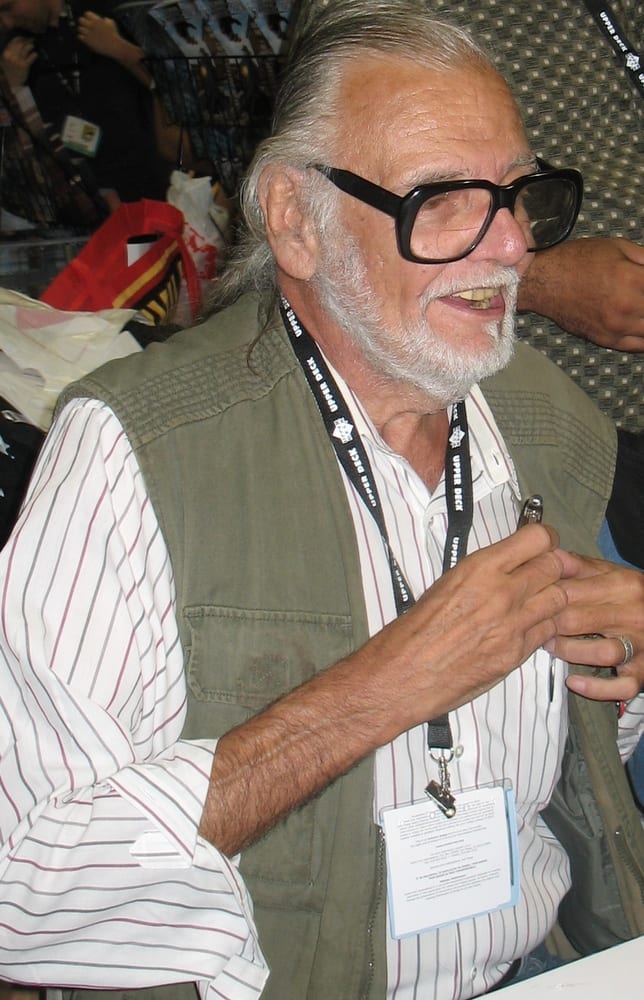
George A. Romero at Comic-Con in 2007. Photo by Lindsey8417 via Wikimedia Commons, licensed CC BY-SA 3.0. Compressed; this derivative remains CC BY-SA 3.0.
Later versions can still create new rights
One of the easiest mistakes is assuming that a public-domain movie can never generate new copyright protection.
It can.
A new adaptation can contain original acting, photography, music, dialogue, editing and design.
Those new elements may be protected even though the underlying public-domain source remains free for other creators to use.
The Library of Congress colorization records are a simple historical example: the underlying black-and-white movie remained public domain, while later added color work was separately registered.
Room418’s vertical adaptation would therefore not make the 1968 film private again.
It could, however, create a new protected version of its own.
Why this matters beyond one new app
Night of the Living Dead has become one of the clearest examples of how copyright status can shape a horror film’s afterlife.
Its public-domain status helped the movie circulate far beyond ordinary studio control.
It also created decades of cheap editions, restorations, screenings, remixes and adaptations of wildly different quality.
Now the same legal history is enabling another format shift.
A black-and-white independent film made in Pennsylvania in the 1960s is being rebuilt for vertical phone screens in 2026.
That is not proof that every classic should become a microdrama.
It is proof that public domain keeps a work available for people to argue with, reinterpret and rebuild.
Frequently Asked Questions
Is Night of the Living Dead public domain?
The original 1968 black-and-white film is public domain in the United States. The Library of Congress says a registration for the original version was cancelled because the film had been published before 1978 without the required copyright notice.
Why did Night of the Living Dead lose copyright protection?
Under the U.S. law that applied when the film was released, publication without a proper copyright notice could cause protection to be lost. The famous title-change story concerns the change from Night of the Flesh Eaters to Night of the Living Dead and the missing notice on the released version.
Can anyone remake Night of the Living Dead?
In the United States, creators can adapt the public-domain material from the original film without licensing that underlying film. They still need to avoid copying separately protected material from later versions or unrelated copyrighted assets.
Are later colorized versions public domain too?
Not necessarily. The Library of Congress lists separate copyright registrations for added color work in later colorized editions.
Is Night of the Living Dead public domain everywhere?
Do not assume that. The clear public-domain status discussed here is under U.S. law. Other countries can apply different copyright terms and rules.
What is Room418?
Room418 is a horror-focused streaming project built around vertical-first content. Its site says it is “streaming soon,” and October 2, 2026 trade reporting says an invite-only beta is planned before a wider launch.
When will Room418’s Night of the Living Dead be released?
No exact release date was announced in the reporting reviewed for this article.
Sources & further reading
- Room418: official site
- Deadline: Night of the Living Dead microdrama set for Room418 (October 2, 2026)
- Library of Congress: Night of the Living Dead copyright record
- U.S. Copyright Office: 37 CFR § 202.2 — copyright notice for pre-1978 works
- Library of Congress / U.S. Copyright Office: Copyright Horror Stories (October 29, 2020)
- U.S. Copyright Office: Circular 14 — copyright in derivative works
- U.S. Copyright Office: copyright protection and registration FAQ
- Criterion Collection: Night of the Living Dead credits and runtime
- Museum of the Moving Image: George A. Romero interview transcript (January 11, 2003)
- Image Ten: original Night of the Living Dead filming locations
- U.S. Copyright Office: Circular 22 — investigating copyright status