The Index
The Pendle Witch Trials: What Happened in 1612 and Who Was Executed?
Follow the Pendle witch trials of 1612, Jennet Device's testimony and the executions at Lancaster and York, with Thomas Potts's account read critically.
Topics: Pendle Witch Trials, Witch Trials, Lancashire, 1612
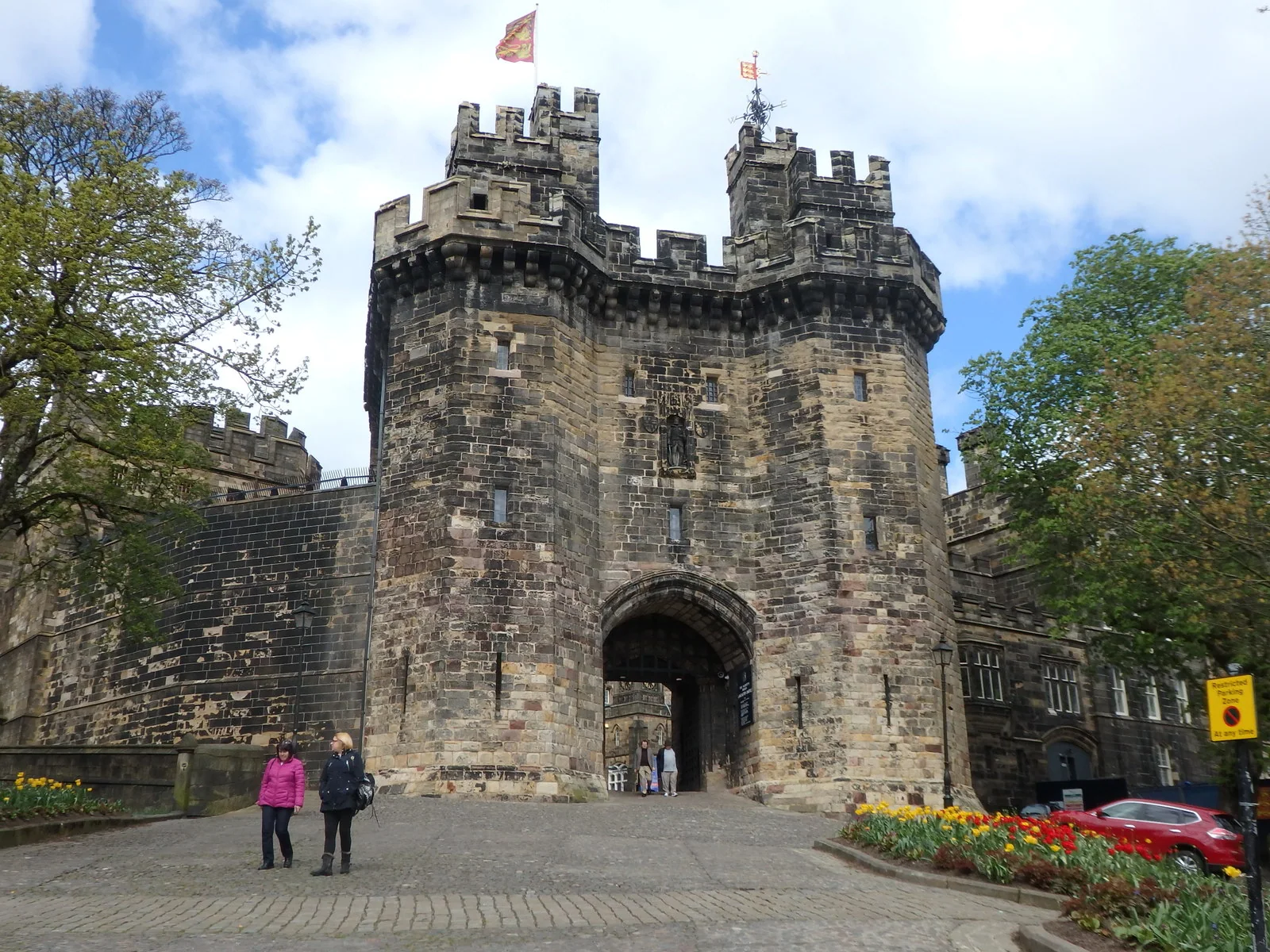
The Pendle witch trials grew from accusations in Lancashire in 1612 and ended in executions, not proof of supernatural crimes. The familiar count of ten executed Pendle defendants can be confusing: nine were hanged at Lancaster and Jennet Preston was tried and executed separately at York. Lancaster’s group of ten also included Isobel Robey, from Windle, outside the Pendle group.
The central surviving narrative is Thomas Potts’s The Wonderfull Discoverie of Witches in the Countie of Lancaster, published in 1613. It is detailed, but it is a prosecution-era account shaped to justify the proceedings.
How did the accusations begin?
In March 1612, Alizon Device encountered the pedlar John Law on the road. After a disagreement, Law became seriously ill. The episode was interpreted as a curse, and magistrate Roger Nowell’s inquiries drew in members of the Device and Whittle families and other neighbors.
The Lancaster Castle history describes how an individual accusation expanded into a much larger prosecution. Illness, remembered disputes and allegations reaching back years were brought together as evidence of witchcraft.
The historical fact is that people made and acted on those accusations. It is not necessary to accept the alleged familiar spirits or magical injuries in order to explain why the trials happened. Nor can a modern writer confidently diagnose Law from the surviving narrative alone.
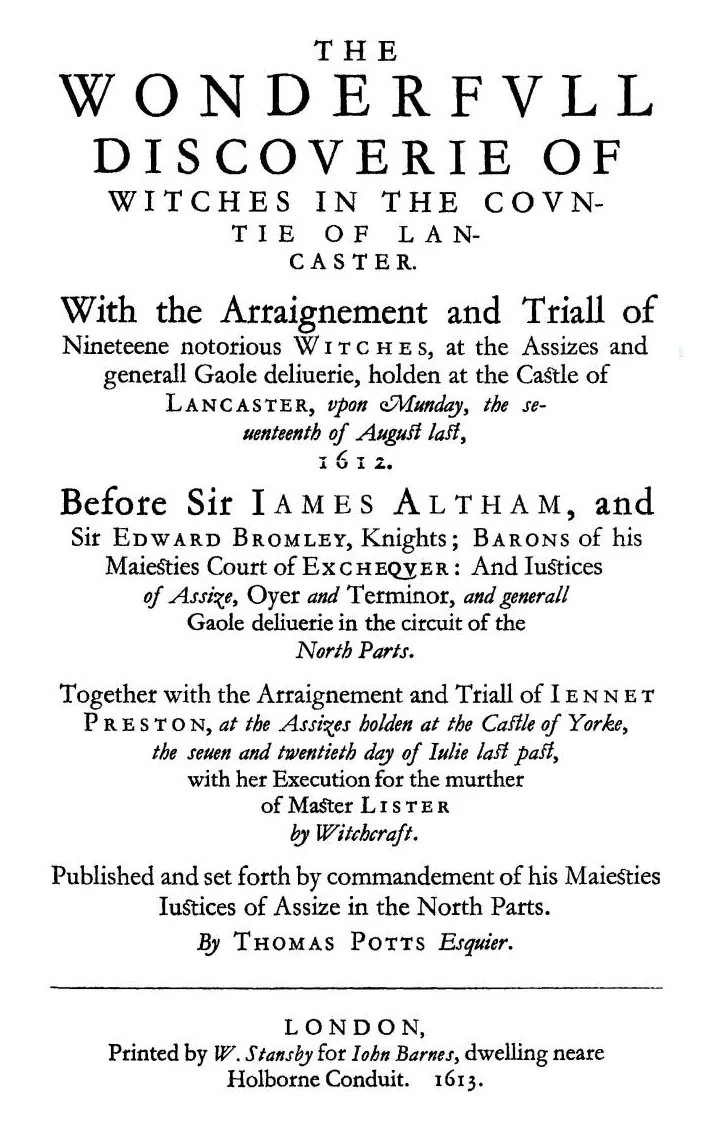
Potts’s title page. The book documents the prosecution’s narrative, not proof of magical crimes. Source. Thomas Potts (1613); scan: ElinorD. Public domain. Resized and converted to WebP.
What was the Malkin Tower meeting?
Potts’s account presents a Good Friday gathering at Malkin Tower as a meeting of witches. The prosecution connected it with a proposed attack on Lancaster Castle to free prisoners. Those are allegations recorded in the case, not independently established descriptions of a supernatural conspiracy.
An ordinary detail could acquire an incriminating meaning once the gathering was framed that way. Being present, eating food or recognizing another attendee became part of the prosecution’s account of association. Readers should therefore distinguish the possibility of a gathering from the extraordinary purpose attributed to it.
The public-domain text of Potts is available in an edition that also contains a much later introduction and notes by James Crossley. The 1613 narrative and the nineteenth-century editor’s commentary are separate voices.
Why was Jennet Device’s testimony important?
Jennet Device was nine years old when her testimony was used against members of her family and others. Potts makes her a striking courtroom presence, including her accusations against her mother, Elizabeth Device.
Her role illustrates how the proceedings could turn household relationships into prosecution evidence. It does not allow us to reconstruct her private motives with certainty. Claims that she knowingly engineered the entire case, or that we know exactly what pressure she experienced, go beyond what the surviving narrative can establish.
She must also be distinguished from Jennet Preston, an adult defendant tried at York. Similar names are one reason simplified accounts become confusing.

Pendle Hill and its surrounding landscape, photographed long after the trials. Source. Mike Lee. CC BY-SA 2.0. Resized and converted to WebP.
Who was executed?
The nine Pendle defendants executed at Lancaster were Anne Whittle, Anne Redferne, Elizabeth Device, James Device, Alizon Device, Alice Nutter, Katherine Hewitt, Jane Bulcock and John Bulcock. Spellings vary between editions and modern accounts. Jennet Preston was executed at York.
| Outcome | People or group |
|---|---|
| Executed at Lancaster on 20 August 1612 | Nine Pendle defendants, plus Isobel Robey of Windle |
| Executed separately at York | Jennet Preston |
| Died in custody before trial | Elizabeth Southerns, known as Demdike |
| Acquitted among the Pendle defendants | Alice Gray |
They were hanged. Describing this English case as a group burning imports an execution image that does not fit the record.
How reliable is Potts’s book?
It is indispensable evidence for what the authorities said had happened. It is not a neutral recording of every word spoken in court. Its arrangement, moral judgments and celebration of judicial authority are part of the evidence too.
Reading it critically means retaining the names, dates and legal outcomes while refusing to turn every accusation into fact. Compare the North Berwick prosecutions and the later Salem witch trials for different settings in which belief, authority and unreliable accusations could become lethal.