Lore & Explained / Games
Valor Mortis Explained: How Body Horror Rewrites Napoleon and Waterloo
Valor Mortis rewrites Napoleon and Waterloo as body horror. Separate its fictional plague and resurrection from real Napoleonic history.
Topics: Valor Mortis, Napoleon, Battle of Waterloo, body horror, Grande Armée, One More Level, Lyrical Games
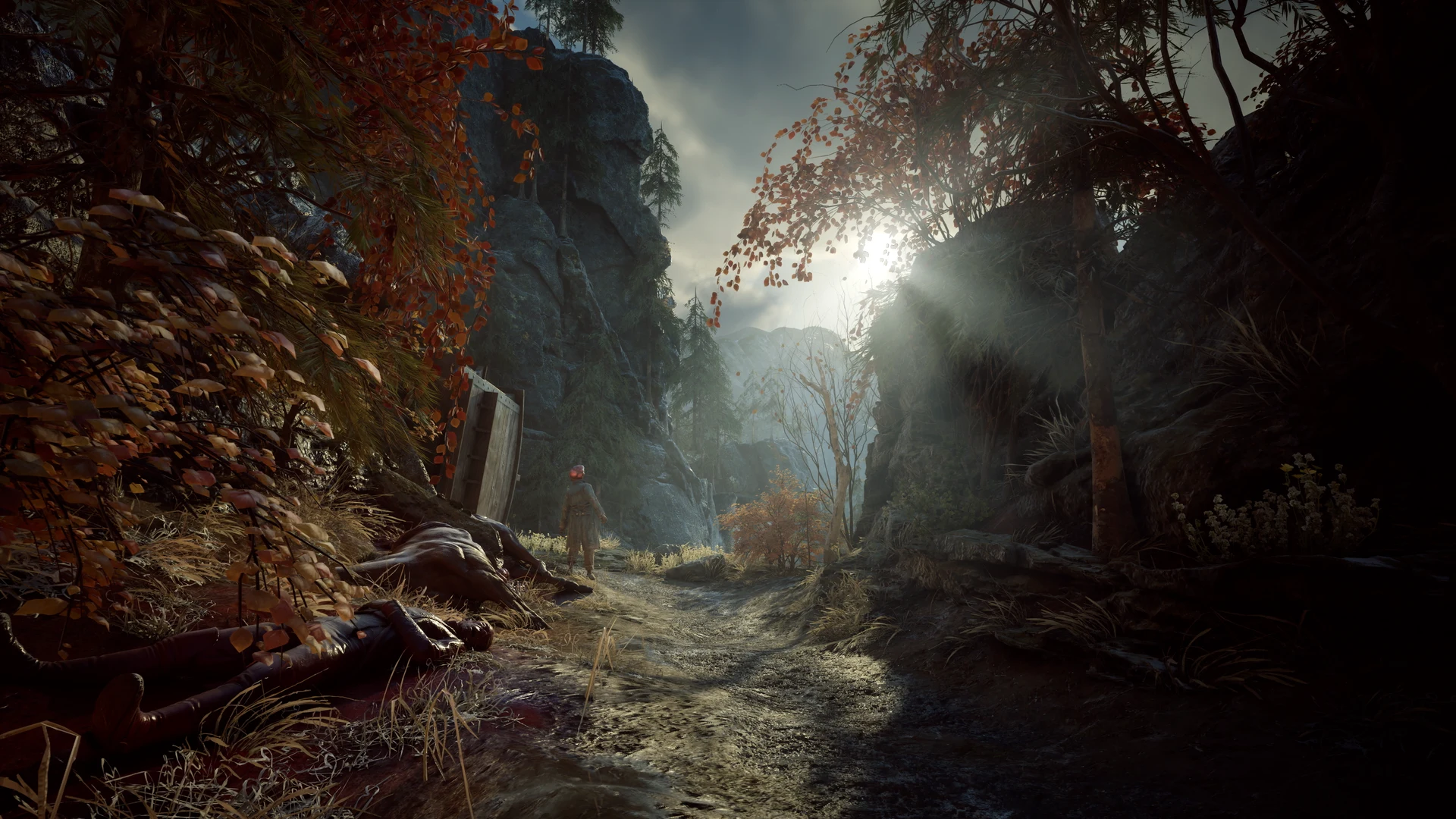
Valor Mortis does not merely put zombies into the Napoleonic Wars. Its horror depends on rewriting one of the most decisive events in Napoleon’s real history: Waterloo.
One More Level’s first-person action RPG is scheduled to launch on October 13, 2026, and a new October 2 featurette focuses specifically on the game’s body-horror design. Members of the art team discuss how the history of body horror shaped the corrupted soldiers and other abominations that occupy its alternate 19th-century Europe.
Hero: an official game environment image, supplied in the publisher’s press kit. © One More Level / Lyrical Games; resized and converted to WebP.
That makes the game a useful case study in historical horror.
The uniforms, weapons, Napoleon and the Grande Armée have real historical foundations.
The outcome of Waterloo, William’s resurrection, the continent-wide plague and the grotesque transformations do not.
Keeping those categories separate makes the game’s premise more interesting, not less.
What is Valor Mortis?
The official PlayStation description puts the player in the role of William, a soldier of Napoleon’s Grande Armée who has returned from a battlefield grave.
Europe has been consumed by a mysterious plague. The same corrupting force that transforms Napoleon’s soldiers into monsters also flows through William and gives him supernatural abilities.
The game combines:
- Napoleonic-era firearms and blades;
- a fictional alternate 19th century;
- supernatural powers;
- plague-ridden soldiers;
- body horror;
- a conspiracy surrounding William’s resurrection.
Steam describes Valor Mortis as a first-person action Soulslike developed by One More Level, the studio behind Ghostrunner, and published by Lyrical Games and One More Level.
The setting is deliberately historical-looking.
It is not a claim that these supernatural events occurred.
The biggest historical change: Napoleon wins Waterloo
The real Battle of Waterloo was fought on June 18, 1815.
According to Britain’s National Army Museum, Napoleon’s French army fought an Anglo-Allied force led by the Duke of Wellington and a Prussian army led by Gebhard von Blücher.
Napoleon lost.
The defeat ended his remaining imperial power. Napoleon abdicated on June 22, 1815, four days after Waterloo, and was later exiled to Saint Helena.
Valor Mortis begins from the opposite result.
In an interview with One More Level representatives, brand manager Michał Azarewicz explained that the game’s alternate Europe is one in which Napoleon won Waterloo and went on to control Europe with the help of a supernatural force.
That is the central historical break.
Everything after it belongs to an invented timeline.
Waterloo was already horrific without monsters
The game uses mutation and supernatural corruption to visualize the cost of endless war.
The real battle did not need a fictional plague to produce catastrophic human damage.
The National Army Museum estimates that Napoleon lost nearly 40,000 men killed, wounded or captured, while the Allied armies suffered about 22,000 casualties.
Those numbers describe human beings, not horror-game enemies.
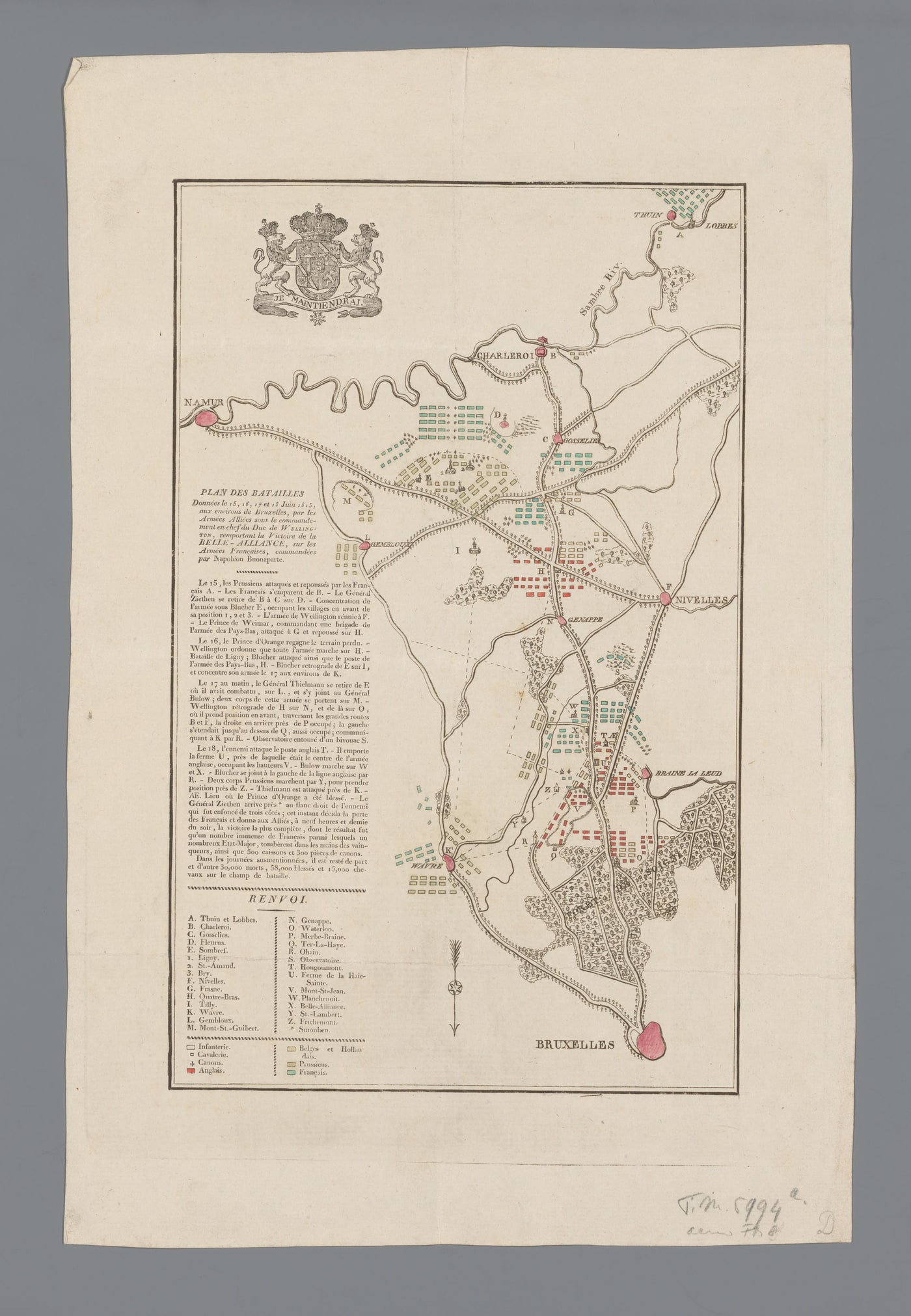
An anonymous 1815 map of the battles around Waterloo, Quatre-Bras, Ligny and Wavre. This is historical context, not the game’s alternate timeline. Rijksmuseum, RP-P-1925-124, via Wikimedia Commons, CC0 1.0; resized and compressed.
Scottish surgeon and artist Charles Bell treated wounded men after Waterloo and made watercolour studies of their injuries, as documented by the Royal College of Surgeons of Edinburgh.
Bell’s work gives the game’s body-horror theme a real historical contrast.
The physical destruction of Napoleonic warfare is documented.
The game’s mutations are fiction.
The Grande Armée was real — and more international than the name may suggest
William is described as a soldier of the Grande Armée.
That name is historical.
Napoleon’s armies were not composed only of soldiers from France. The Fondation Napoléon notes that the Grande Armée included foreign units, including Polish, Dutch, Italian and Spanish regiments.
In the vast 1812 army, Napoleon also drew large contingents from allied and subordinate European states, as historian Marie-Pierre Rey explains.
That historical multinational character makes the game’s idea of soldiers from different parts of Europe serving Napoleon plausible as a starting point.
But the specific Valor Mortis organization around William belongs to the game’s fictional timeline.
Historical context can support the setting without validating invented regiments, characters or supernatural events.
William is fictional
The game’s protagonist should not be confused with a recovered historical soldier.
The public material reviewed for this article presents William as the player character inside Valor Mortis.
Morbid Index found no historical source establishing him as a documented Waterloo soldier whose biography the game is adapting.
That is worth saying because alternate-history games often mix famous people with invented characters so seamlessly that the boundary becomes difficult to see.
Napoleon Bonaparte is historical.
William, as used by the game, is fictional.
The plague is not a forgotten Napoleonic epidemic
The official game pages repeatedly describe a mysterious plague or corrupting force spreading across the continent.
That language belongs to the game.
Europe in Napoleon’s era certainly experienced disease, battlefield infection and epidemics. Armies could lose enormous numbers of people to illness even without combat, as the Walcheren expedition of 1809 demonstrates.
But Valor Mortis is not presenting an obscure medical theory about a historical pathogen.
Its plague raises the dead, changes bodies and grants supernatural power.
Those features place it firmly in horror fiction.
Nephtoglobin belongs to the game’s mythology
An official development update uses the name Nephtoglobin for the supernatural substance associated with the game’s transformations and altered technology.
It should not be mistaken for a historical chemical, medicine, biological agent or Napoleonic military project.
In the fiction, corruption is both a threat and a source of player power.
That is a classic body-horror contradiction: the force destroying the body also becomes something the protagonist depends on.
The body is not merely attacked.
It becomes unstable.
Why the new featurette matters
The October 2 Bloody Disgusting featurette is useful because it makes the game’s artistic intent unusually explicit.
The short piece includes members of the art team discussing the history of body horror and showing concept art for the game’s abominations.
That matters because grotesque enemy design could otherwise be treated as decoration.
The developers are describing it as part of the project’s horror language.
The bodies of Napoleon’s soldiers have become the battlefield.
What body horror means here
Body horror centers fear on physical change.
The body can become infected, fused, distorted, invaded or transformed until a person no longer recognizes what they are.
In Valor Mortis, that idea is tied to war.
Soldiers who would already have been subjected to firearms, blades, artillery, disease and exhaustion are pushed into supernatural deformation.
This is where the historical and fictional layers meet most effectively.
The real wars provide the setting and human cost.
The body horror exaggerates that cost into nightmare.
Napoleon becomes more than a historical ruler
The publisher’s story announcement says William hears Napoleon’s voice in his mind, urging him against resistance to the Empire.
It also leaves William’s loyalty open to player choice. Napoleon is a central force in the fictional timeline; his exact role should not be reduced to an assumed boss fight.
That is not a neutral biography of the historical emperor.
It is a horror reinterpretation.
The real Napoleon can be studied through military, political and imperial history.
The Valor Mortis Napoleon belongs to a world where Waterloo went the other way and supernatural corruption helps sustain an expanding war.
Those are two different subjects.
A later painting should not be mistaken for an eyewitness image
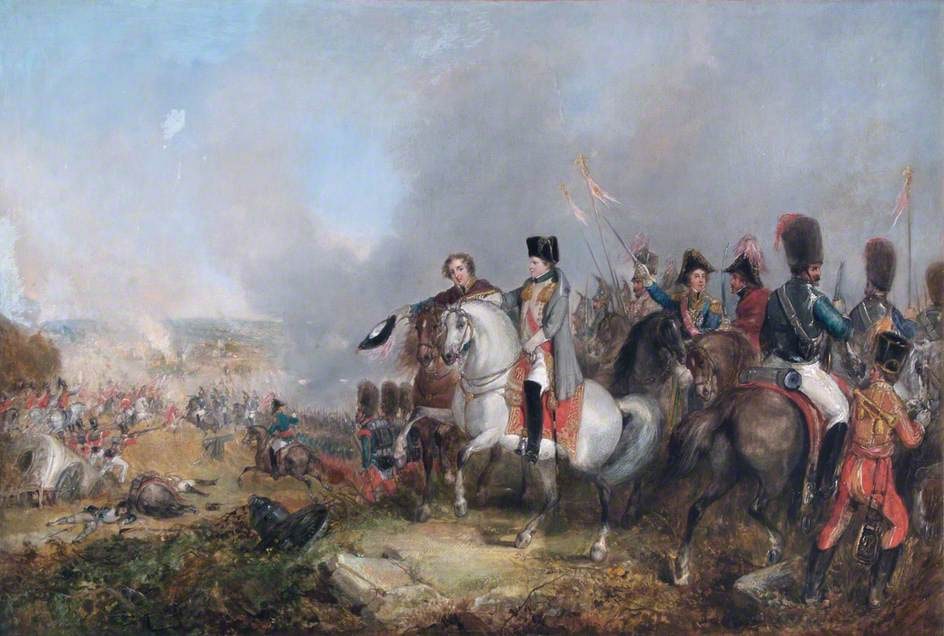
Thomas Jones Barker’s 1879 painting Napoleon at Waterloo is a later historical representation, not eyewitness imagery or game art. Thomas Jones Barker / Royal Military School of Music via Wikimedia Commons, public domain.
The historical image here is Thomas Jones Barker’s 1879 painting Napoleon at Waterloo.
Barker was born in 1815, the same year the battle took place.
The painting was created more than six decades later.
It is therefore not an eyewitness photograph or a battlefield document from June 18, 1815.
It is a later historical artwork depicting Napoleon at Waterloo.
That difference matters on a site devoted to separating documentation from later representation.
What Valor Mortis gets to change
Alternate history works because something recognizable is altered.
Here, the recognizable elements include:
- Napoleon Bonaparte;
- the Grande Armée;
- 19th-century European warfare;
- Waterloo;
- sabres and black-powder firearms;
- the physical vulnerability of soldiers in mass warfare.
The invented elements include:
- Napoleon winning Waterloo in this timeline;
- William’s resurrection;
- the supernatural plague;
- Nephtoglobin;
- mutated soldiers and creatures;
- supernatural abilities;
- the game’s conspiracy.
That separation is the simplest way to read the setting.
Does historical accuracy matter in a supernatural game?
Not in the sense that a game about resurrected soldiers must behave like a textbook.
But accuracy still matters when the fiction uses real history for authority.
If the player knows what actually happened at Waterloo, the alternate victory means more.
If the Grande Armée is understood as a real military institution, the corruption of its soldiers carries more weight.
And if the genuine human damage of Napoleonic warfare is kept distinct from supernatural body horror, the game does not need to pretend history was stranger than it was.
The horror works because the historical foundation is real enough to recognize.
Then Valor Mortis breaks it.
When is Valor Mortis released?
Valor Mortis is scheduled for October 13, 2026 on PlayStation 5, Xbox Series X|S and PC via Steam.
The PlayStation store and Steam both list the October 13 release date.
Frequently Asked Questions
Is Valor Mortis based on real history?
It uses real historical figures, military language and a 19th-century Napoleonic setting, but its timeline is alternate history. Its plague, resurrection and monsters are fictional.
Did Napoleon win the Battle of Waterloo?
No. Napoleon lost Waterloo on June 18, 1815. The loss helped end his imperial rule and led to his final exile.
Does Napoleon win Waterloo in Valor Mortis?
Yes, according to a One More Level interview describing the game’s alternate timeline. That outcome is fictional.
Was the Grande Armée real?
Yes. Napoleon used the name for his army, which included both French and foreign units during different campaigns.
Was Nephtoglobin real?
No historical source reviewed for this article identifies Nephtoglobin as a real Napoleonic substance. It belongs to Valor Mortis’ supernatural game mythology.
Is William a real Napoleonic soldier?
The public game materials present William as a fictional player character. Morbid Index found no evidence that the character is a direct biography of a documented historical soldier.
Why is Valor Mortis described as body horror?
The developers’ October 2026 featurette explicitly discusses body horror as an influence on the game’s mutated enemies and concept art.
When does Valor Mortis come out?
The game is scheduled for October 13, 2026 on PlayStation 5, Xbox Series X|S and PC.
Find more game coverage in Morbid Index’s Games archive.
Sources & further reading
- Lyrical Games: official story announcement and press kit (August 25, 2026)
- One More Level: Nephtoglobin development update (March 27, 2026)
- Bloody Disgusting: Valor Mortis body-horror featurette (October 2, 2026)
- PlayStation: Valor Mortis official game page
- Steam: Valor Mortis
- VGTimes: One More Level interview on the alternate Waterloo timeline
- National Army Museum: Battle of Waterloo
- Fondation Napoléon: Napoleon's Grande Armée
- Fondation Napoléon: imperial timeline and June 22, 1815 abdication
- Marie-Pierre Rey / Fondation Napoléon: the multinational army of 1812
- Royal College of Surgeons of Edinburgh: Charles Bell and Waterloo
- Peter Hicks / Fondation Napoléon: disease during the Walcheren expedition
- Rijksmuseum: 1815 Waterloo campaign map, RP-P-1925-124




_-_Napoleon_at_Waterloo_-_1_-_Royal_Military_School_of_Music.jpg)