The Index
Abydos Retainer Sacrifice: What 46 Skulls Can Tell Us
A study identifies potentially lethal injuries in 18 of 46 skulls from Abydos. What supports the retainer-sacrifice interpretation, and what remains unknown?
Topics: Abydos, Ancient Egypt, Archaeology, Burial Practices, Human Sacrifice

A modern reassessment of 46 skulls from Abydos identified potentially lethal injuries around the time of death in 18 individuals. That strengthens the case for retainer sacrifice in early Egypt, but it does not establish how everyone in the surrounding cemeteries died.
Roselyn A. Campbell’s paper in Frontiers in Environmental Archaeology was published on October 5, 2026. It revisits remains excavated a century ago, rather than reporting a newly uncovered mass grave.
Whose burials are being discussed?
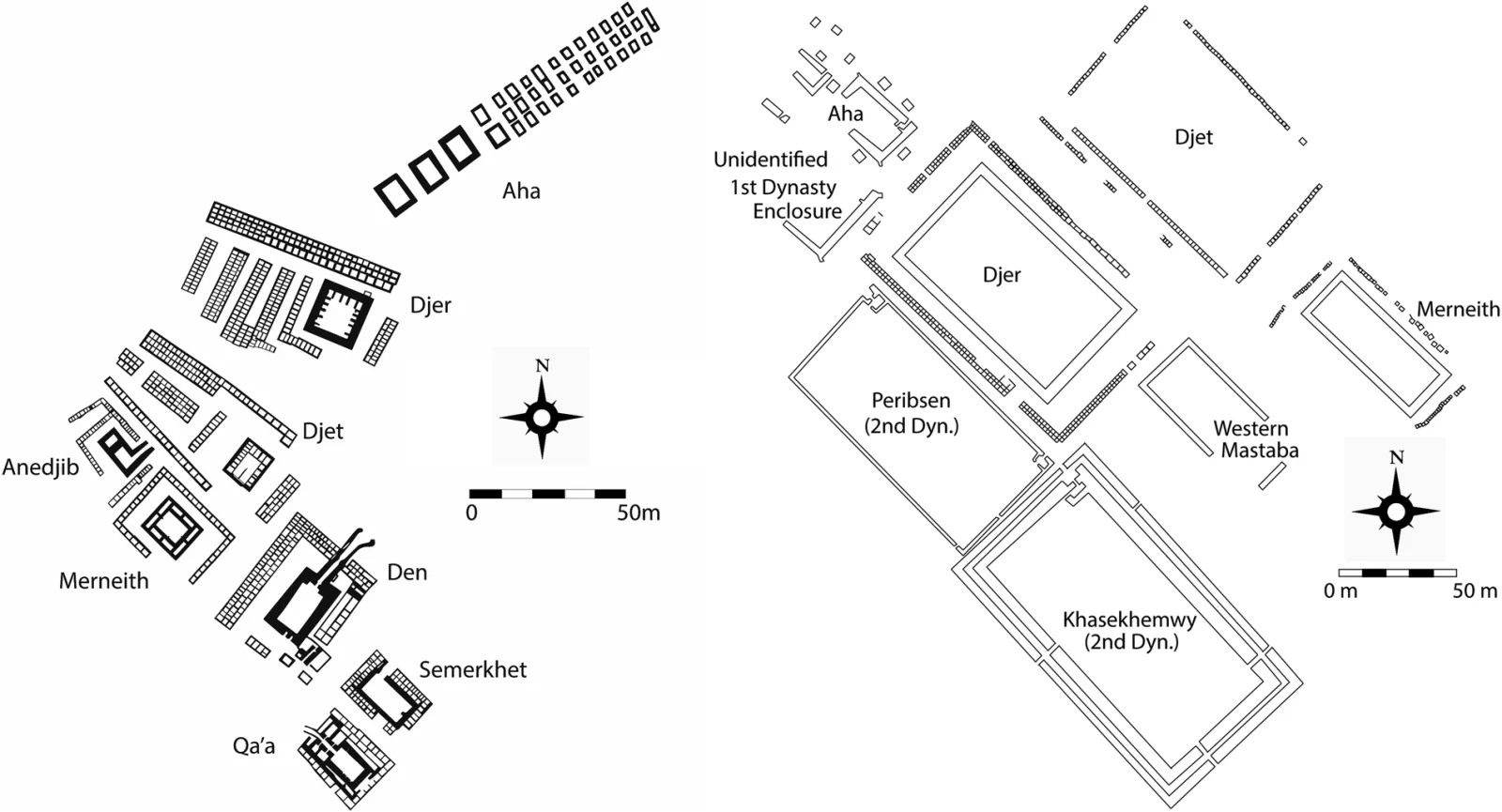
At Abydos, southern Egypt, subsidiary graves surround First Dynasty royal funerary complexes dating to roughly 3000 BCE. “Retainers” refers to people associated with a royal household or court. Some surviving names and titles connect these burials with officials and craftspeople.
As the publisher’s research announcement explains, the proposed sacrifice involved killing people to accompany a deceased ruler into the afterlife. The arrangement of graves had long prompted that interpretation. The unresolved question was whether the human remains supported it.
What the skull evidence adds
Campbell studied remains in Cambridge’s Duckworth Collection from graves around the funerary enclosures of Djer, Djet and Merneith. Those enclosures and the royal tombs are distinct parts of the site.
The paper reports perimortem, or around-death, trauma in 18 of 46 preserved crania: 39% of this sample. It suggests early excavators saw some fractures but mistook them for later damage. Perimortem does not pinpoint an injury to the exact moment of death.
What the evidence cannot settle
The preserved skulls represent only 5–15% of the burials at each enclosure. Missing bodies, disturbance and old wax treatments limit the analysis. The 39% figure cannot simply be extended to every surrounding grave.
The publisher also stresses that some people may have died naturally or by means that left no skull injury. Whether individuals participated willingly or were forced remains unknown. Neither a grave’s location nor an injury supplies a complete account of a person’s final circumstances.
The useful distinction is between evidence of potentially lethal trauma and an interpretation of why it happened. Here, the injuries and burial context make retainer sacrifice more plausible; they do not turn every unresolved detail into a documented fact. A similar separation between a physical discovery and its wider interpretation matters in the Qinngua church burial evidence.