The Index
Seddin’s Bronze Age ‘Temple’: What the Evidence Shows
A square building and burned animal bones suggest ceremonies at Seddin. The excavation evidence leaves an important question open: feasting or sacrifice?
Topics: Seddin, Bronze Age, Archaeology, Ritual, Brandenburg
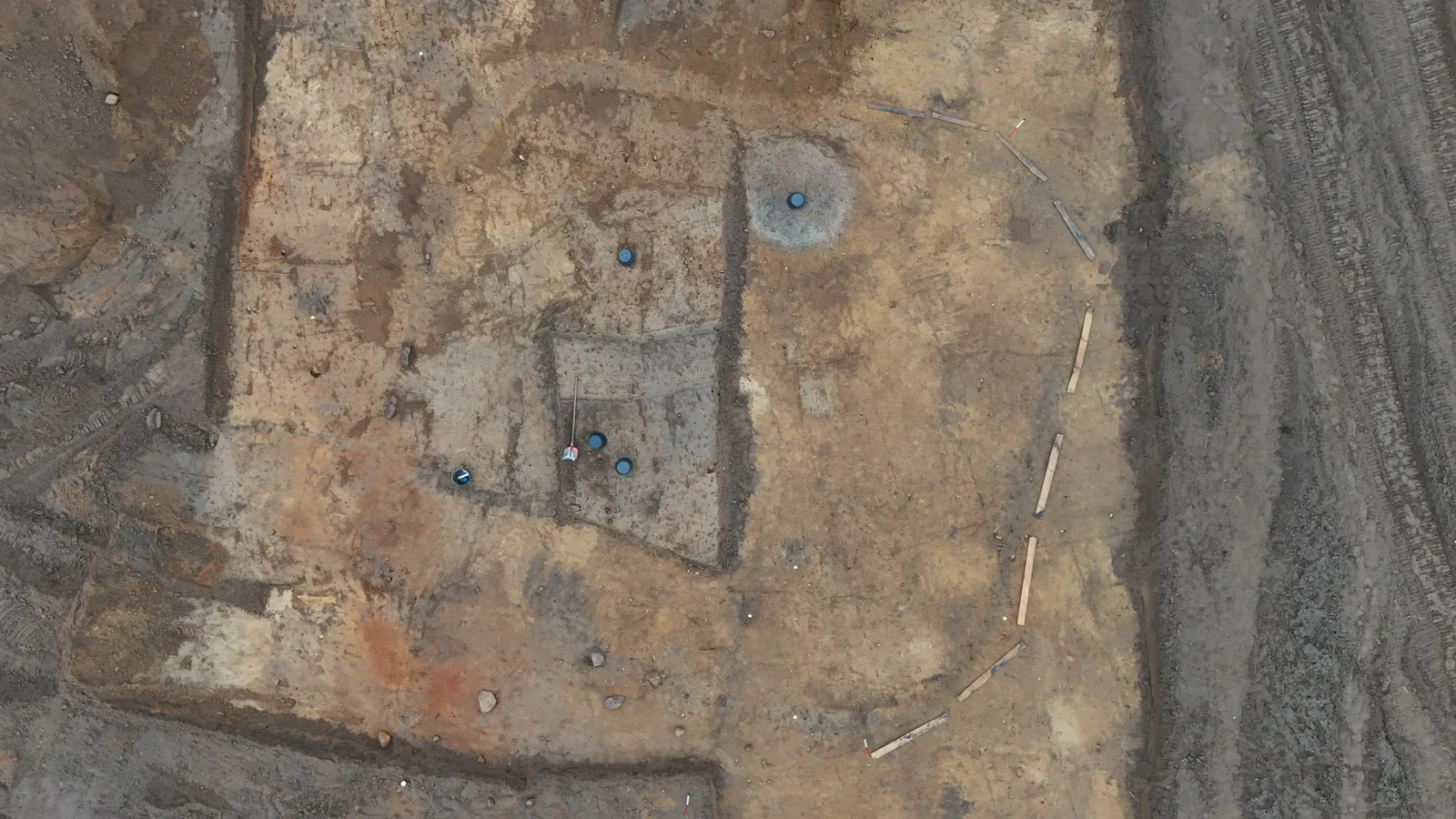
Archaeologists at Seddin in Brandenburg, Germany, have identified a possible Bronze Age ceremonial building. Its unusual plan, large pottery vessels and burned animal bones support a ritual interpretation. They do not yet establish whether whole animals were sacrificed. The discovery was excavated in September 2026 and announced by Brandenburg’s archaeology authority, BLDAM, on October 14.
Why this building stands out
The footprint measures 10.6 by 11.4 metres, almost square where the region’s later Bronze Age buildings were typically elongated rectangles. It stood on a slight rise, about 900 metres from the monumental burial mound known as the Königsgrab, or King’s Grave. Pottery and the available radiocarbon dates place the building alongside the burial in time.
Nearby pits contained unusually abundant pottery, including vessels with rims wider than 50 centimetres. BLDAM suggests these could have served food and drink to substantial gatherings.
What the pottery floor adds
The district’s October 21 account describes another feature inside the building: a patch of paving, roughly 1 by 1.6 metres, made from pottery fragments that had been exposed to fire after their original firing. Traces of building clay also led the researchers to propose distinctive plasterwork.
State archaeologist Franz Schopper interprets the building as a special structure and its area as a templum: a space set apart from ordinary use. That is an archaeological interpretation of the arrangement and finds, not an ancient name recovered from an inscription.
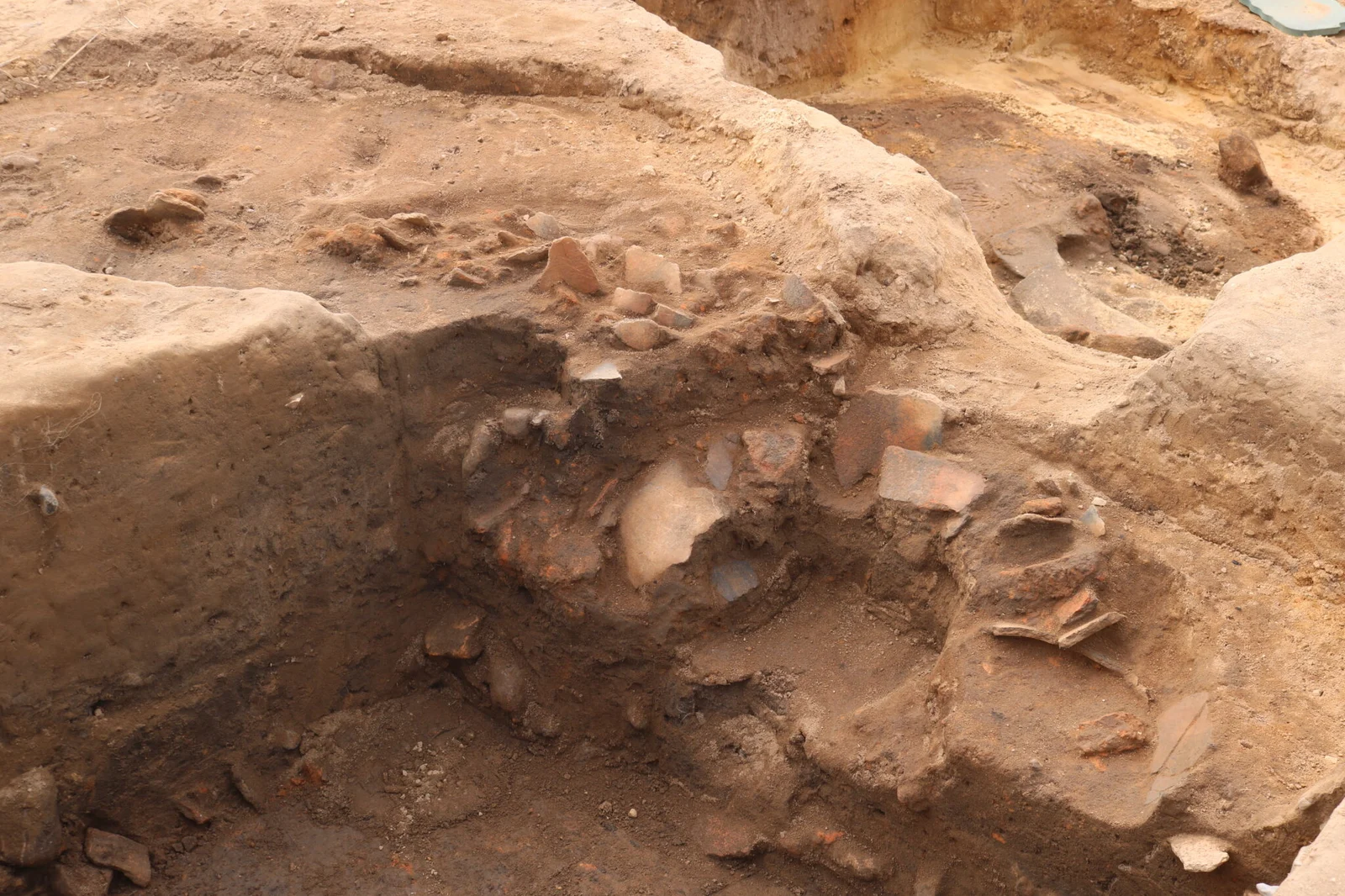
Feasting or sacrifice?
BLDAM leaves two possibilities open for the burned animal remains: bones burned after communal meals, or whole animals burned as offerings. Further scientific examination is needed to distinguish them. Neither official announcement reports human sacrifice.
Burning is the observation. The purpose of the burning is the question. A headline calling the site a temple should preserve that distinction.
A settlement around the famous grave
The University of Göttingen’s project history describes settlement investigations underway since 2015, with larger excavations enabled by research funding from 2023. Houses, pits and cooking or fire features put the mound within an inhabited landscape.
The square structure is also separate from the large “King’s Hall” discovered in 2023. Treating both as one building would collapse two discoveries into a misleading account. The wider project helps explain why archaeologists examine relationships between buildings, burials and deposited objects, rather than treating an unusual floor plan as sufficient proof of a particular ceremony.
For another distinction between a find and its proposed ritual meaning, see the cannabis evidence from the Tunnug 1 burial mound.