Lore & Explained
Astaroth Explained: The Demon in the Lesser Key of Solomon
Who is Astaroth? Read the grimoire descriptions, understand his rank and appearance, and separate later demon lore from the ancient goddess Astarte.
Topics: Astaroth, Demons, Grimoires, Ars Goetia
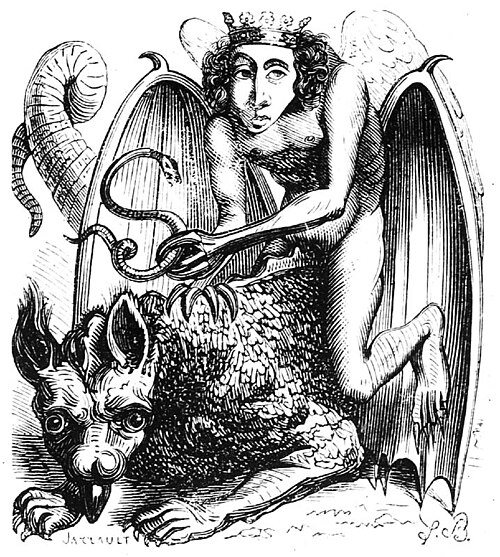
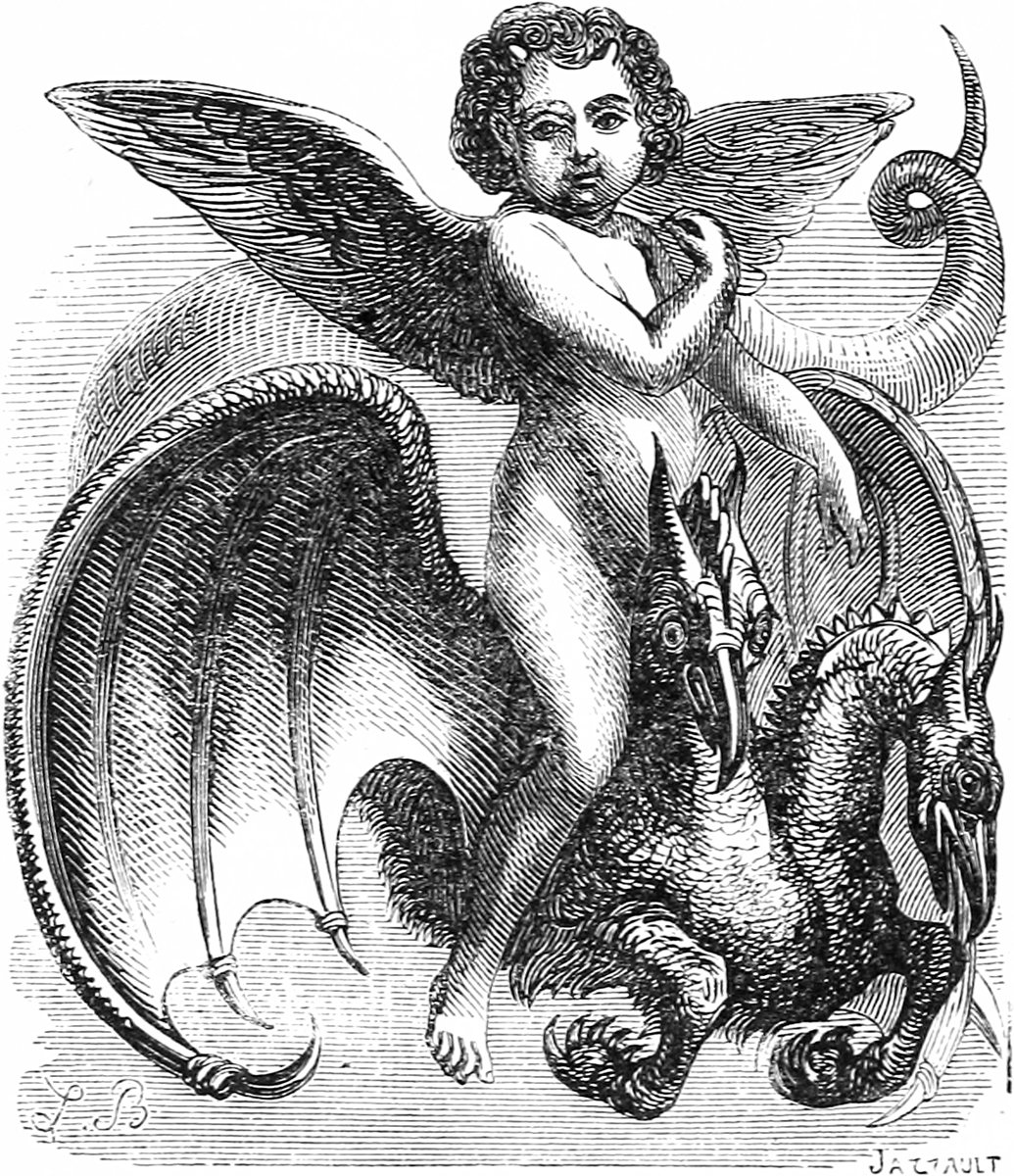
Louis Le Breton, from Collin de Plancy's Dictionnaire Infernal, 1863 edition (Public Domain)
Astaroth is a named demon in European grimoire literature. In the Ars Goetia, the first part of the Lesser Key of Solomon, he appears as the twenty-ninth spirit and is described as a powerful duke. The text gives him a dragon-like mount, a serpent and knowledge of things hidden from ordinary people.
Those are claims made by an occult text, not verified descriptions of a supernatural being. Astaroth’s historical record is a record of books, manuscript copying and changing representations. Reading those sources produces a more specific figure than a generic horned ruler of Hell.
Where the familiar description comes from
One useful place to start is Joseph H. Peterson’s transcription of the Goetia, based on British Library Sloane manuscript 3825 with variants from other manuscripts. Its Astaroth entry presents an angelic but unattractive figure riding an infernal dragon-like creature and carrying a viper.
The description also warns about his breath and connects him with answers concerning past, present and future, hidden matters and learned knowledge. Within the catalogue, these details distinguish his assigned role from those of neighboring spirits.
“Duke” is therefore a rank within this text’s supernatural organization. It is not a title archaeologists have independently verified, and it should not be inflated into “the supreme ruler of all demons.” The catalogue contains several ranks and many different assignments.
The engraving above, published in the 1863 edition of Collin de Plancy’s Dictionnaire Infernal, shows how 19th-century illustrators visualized that description: a crowned figure with wings, riding a dragon-like beast and holding a serpent. It is a much later artistic interpretation, not an image from the original grimoire manuscripts.
Astaroth was in demon catalogues before the familiar printed Goetia
Johann Weyer’s Pseudomonarchia Daemonum, added to the 1577 edition of his larger work on demonic deception, includes Astaroth too. He is entry twenty-eight there, rather than twenty-nine.
That small difference is helpful. It shows why a demon’s catalogue number is not a universal supernatural identity. Order changes between texts. Names, descriptions and translations also have histories. A modern page that silently combines several editions can make their contents look more uniform than they are.
Weyer’s catalogue and the Goetia are connected through a history of textual transmission, including the English material printed in Reginald Scot’s Discoverie of Witchcraft. They should not be counted as unrelated eyewitness confirmations of the same being. Repeated descriptions may tell us that writers copied or adapted a source.
What Astaroth’s seal does, and does not, establish
The Goetia supplies a character or seal alongside Astaroth’s description. In the ritual framework of the book, such marks identify spirits and belong to the magician’s preparations. An image of a historical seal can therefore help explain how the text was used and organized.
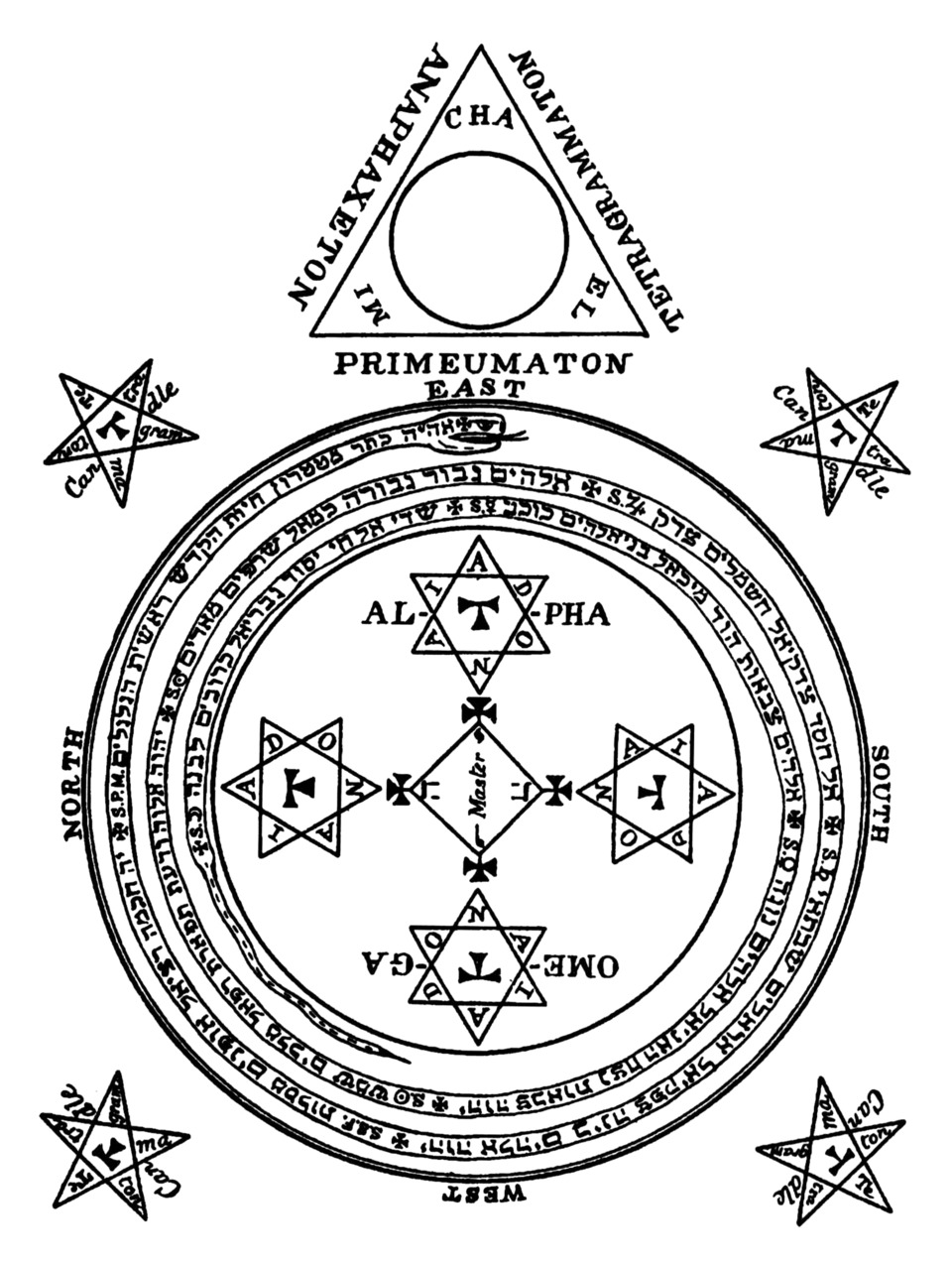
The magic circle and triangle from The Lesser Key of Solomon*, as printed in the 1904 edition prepared by S. L. MacGregor Mathers and Aleister Crowley — the ritual apparatus surrounding entries like Astaroth’s, not a portrait of any single spirit. Source. Public domain.*
A seal is not the equivalent of an archaeological footprint. Its existence establishes that someone wrote or printed a particular symbol. It does not demonstrate that the spirit answered to it.
Image provenance matters here. A recently redrawn version can look cleaner than a scan of an old edition, but the modern drawing may carry separate copyright. A publishing project should use a rights-cleared historical scan or an independently licensed reproduction, not assume that every symbol found online is free to copy.
Is Astaroth the same as Astarte?
The names are frequently connected in discussions of the demon’s older background, but a reader should not treat the grimoire figure and the ancient goddess as an unchanged character with a single biography.
Astarte belongs to an ancient eastern Mediterranean religious setting. The Met’s catalogue of a Cypriot terracotta woman, dated around 600–480 BCE, discusses the possibility that it represents Astarte and notes her established veneration on Cyprus. Even the identification of that particular figure is qualified.
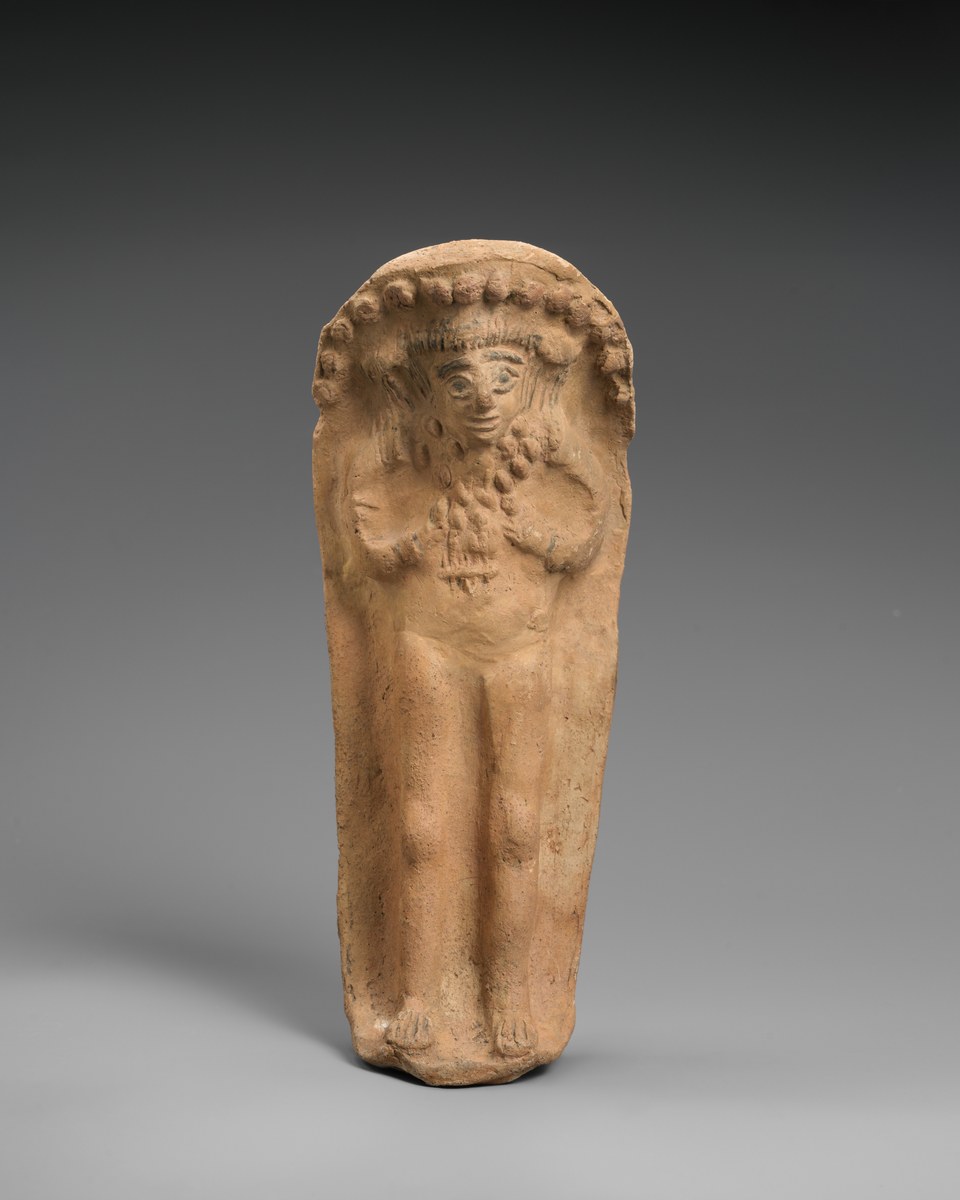
A Cypriot terracotta figure the Metropolitan Museum of Art catalogues as possibly representing Astarte, ca. 600-480 BCE — an ancient goddess whose name is often connected to Astaroth’s, though the two figures belong to different periods and traditions. Source. Public Domain.
The male duke in the Goetia belongs to a much later European demonological setting. Similar or related names do not make the beliefs, imagery or religious functions identical. An ancient goddess’s image should not be captioned as a portrait of the Goetic demon.
A useful explanation separates three questions: what ancient communities called a deity, how later religious writers represented other traditions, and what a specific grimoire says about its spirit. Compressing all three into “Astarte became Astaroth” leaves out the very changes that require explanation.
How Astaroth differs from Paimon and Valak
Astaroth shares a catalogue tradition with Paimon and Valac, better known in modern horror as Valak. That is a useful connection for readers, but it does not mean the three are interchangeable.
Each entry gives a different combination of rank, appearance and attributed abilities. Later fiction can keep a name while discarding almost everything else. The appearance of a character in a film or game therefore answers a different question from the appearance described in a manuscript.
For Astaroth, the dragon-like mount and serpent are strong visual reference points for the grimoire tradition. A muscular warrior, glamorous human figure or modern occult portrait may instead belong to a particular adaptation. The caption and surrounding text should tell the reader which version is being discussed.
Why the differences between sources matter
A demon entry is a compact piece of writing. Its authority is largely created by its confident cataloguing: a name, a title, a number and a list of capacities. Presented without context, those features can resemble the identifying details in a zoological handbook.
But the historical questions are different. Which manuscript is being quoted? When was the printed edition made? Did a translator change a phrase? Does an illustration belong to that edition, or was it added centuries later?
Answering those questions does not require dismissing every practitioner or treating belief as a joke. It requires identifying what kind of evidence a reader is seeing. An occult author can be a primary source for an occult tradition without becoming an eyewitness whose claims are automatically true.
Astaroth is best understood through that distinction: a recognizable figure in the history of demon literature, with a specific textual appearance and role, but no single depiction or modern adaptation that overrides all the others.