Lore & Explained
Belial Explained: From Biblical Word to Goetic Demon
What does Belial mean? Follow the name from biblical language about wickedness to later supernatural figures and the king described in the Goetia.
Topics: Belial, Demons, Bible, Grimoires
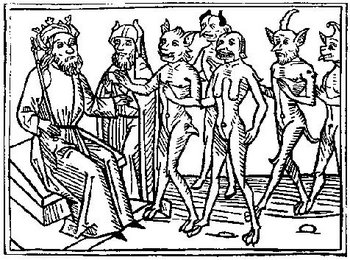
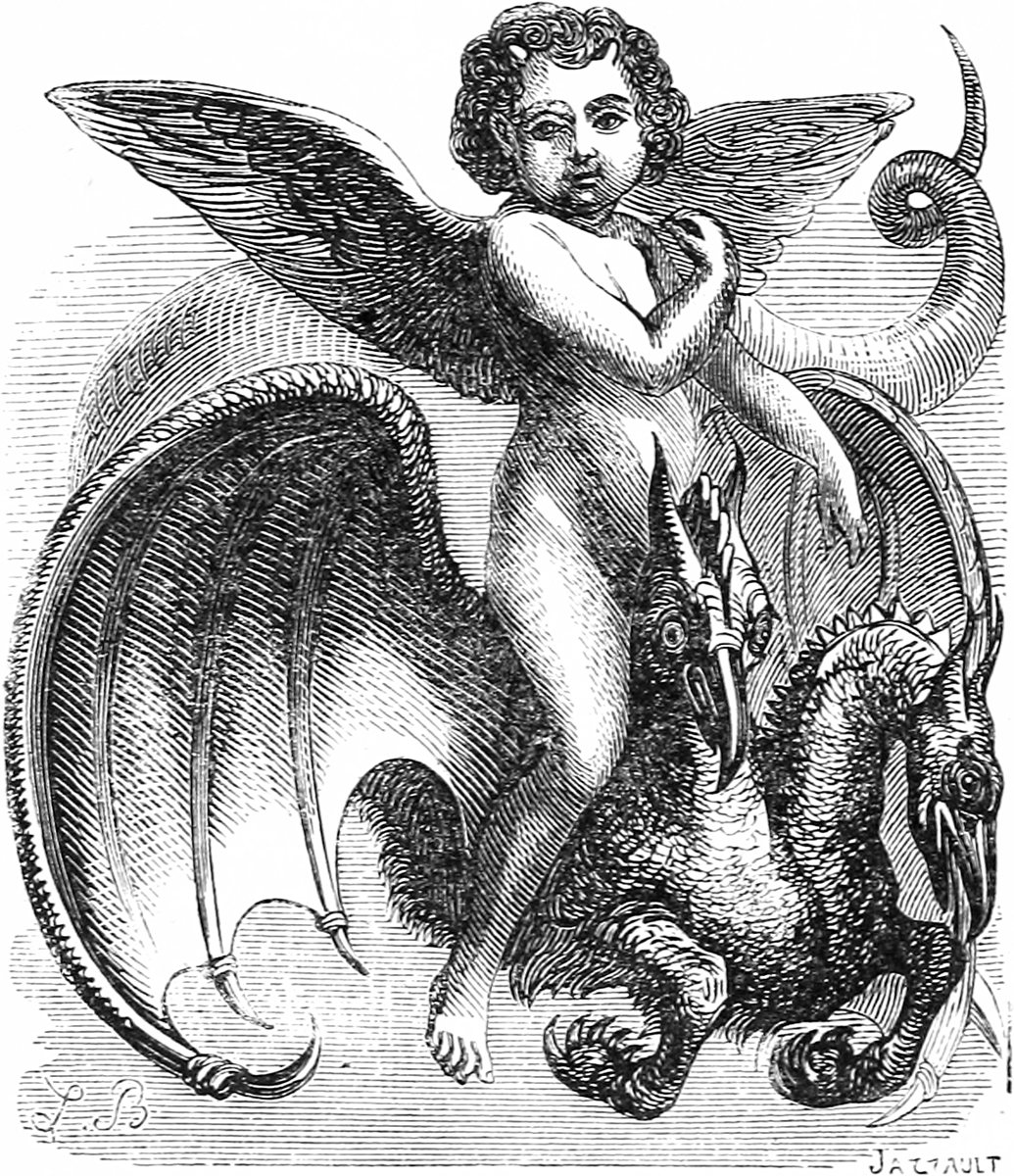
19th-century reproduction of a historical woodcut (Public Domain)
Belial does not have one meaning in every source. In the Hebrew Bible, the word is associated with wickedness or worthlessness and can describe human conduct. In later religious texts it becomes a name for a supernatural adversary. In the Ars Goetia, Belial is a king among the catalogue’s spirits.
That is the essential distinction. A phrase translated as “sons of Belial” is not automatically an account of a demon’s literal children, and a later grimoire description should not be read back into every earlier biblical passage.
What does the word Belial mean?
The scholarly reference work Store norske leksikon explains the Hebrew term through meanings including wickedness, worthlessness and uselessness. It also notes its use concerning people, before the name’s later association with Satan in some Jewish and Christian texts.
English translations can make this history harder to notice. Keeping a word as a capitalized name gives it the appearance of a person. Translating its meaning instead makes the description of conduct more visible. Neither the capital letter in a modern edition nor a familiar horror interpretation should replace attention to the passage itself.
The question to ask is simple: is the text describing a person as morally corrupt, or is it naming a supernatural opponent? The same-looking word does not guarantee the same answer.
How a description becomes an adversary
Later religious writings use Belial or Beliar as a proper name. The reference entry identifies this development in the Dead Sea Scrolls and other Jewish literature. In the New Testament, the form Beliar appears in 2 Corinthians 6:15 in a contrast with Christ.
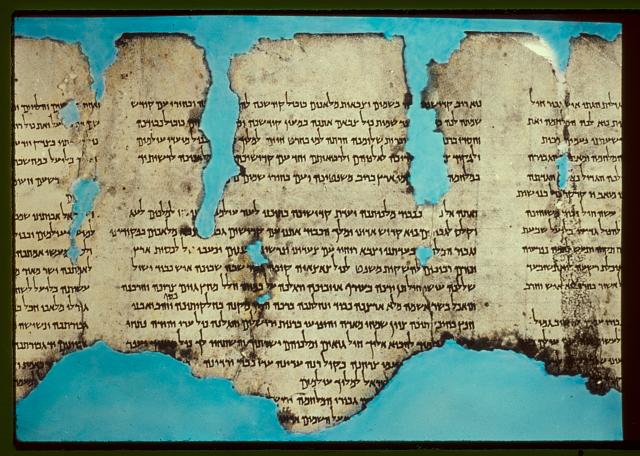
A fragment of the War Scroll (1QM), one of the Dead Sea Scrolls found at Qumran, which repeatedly names Belial as the commander of the forces of darkness in an end-times battle. Source. Public domain.
These uses belong to particular religious arguments. They should not be collapsed into a claim that every Jewish or Christian community held exactly the same demonology. A textual tradition can change, and different works can organize supernatural evil differently.
It is also worth resisting a common shortcut in online explainers: the idea that a single word’s later meaning reveals what it “really meant” all along. Later readers and writers are part of a history of interpretation. Their versions do not erase earlier uses.
Belial in the Ars Goetia
The Goetia entry for Belial offers something much more like a character description. He is the sixty-eighth spirit in its sequence, carries the rank of king and is represented through a beautiful angelic figure in a fiery chariot. The entry attributes influence over honors, favor and other benefits to him.
These details are the book’s claims. They are useful for identifying its version of Belial, not for establishing the existence of a being with those powers.
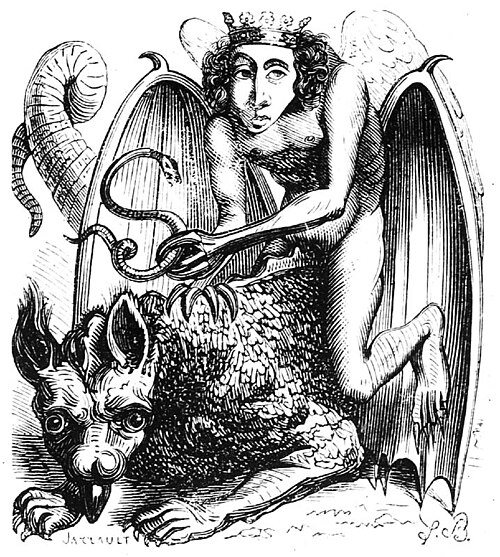
The attractive appearance is especially easy to lose when a modern image substitutes an enormous horned monster. A frightening illustration may suit a game perfectly while failing to show what the historical entry describes. “Demon” does not guarantee a uniform visual design, even within the same catalogue.
The Goetia also supplies a seal. As with Astaroth, the symbol belongs to the book’s ritual organization. It should be introduced as a historical diagram associated with the named spirit, rather than an authenticated supernatural signature.
Why the numbers differ between books
Belial is not entry sixty-eight everywhere. He appears as entry twenty-three in Johann Weyer’s Pseudomonarchia Daemonum. The difference is a useful warning against assembling a definitive profile from unattributed facts found across the internet.
A catalogue number tells you where an entry sits in a particular arrangement. It is not the spirit’s age, power level or place in a universal league table. Even manuscript variants can complicate apparently straightforward details.
This is one reason a readable explanation should name its edition instead of piling up every reported attribute. Giving five incompatible descriptions without explaining their sources does not make an article more complete. It leaves the reader with a composite that no single source actually contains.
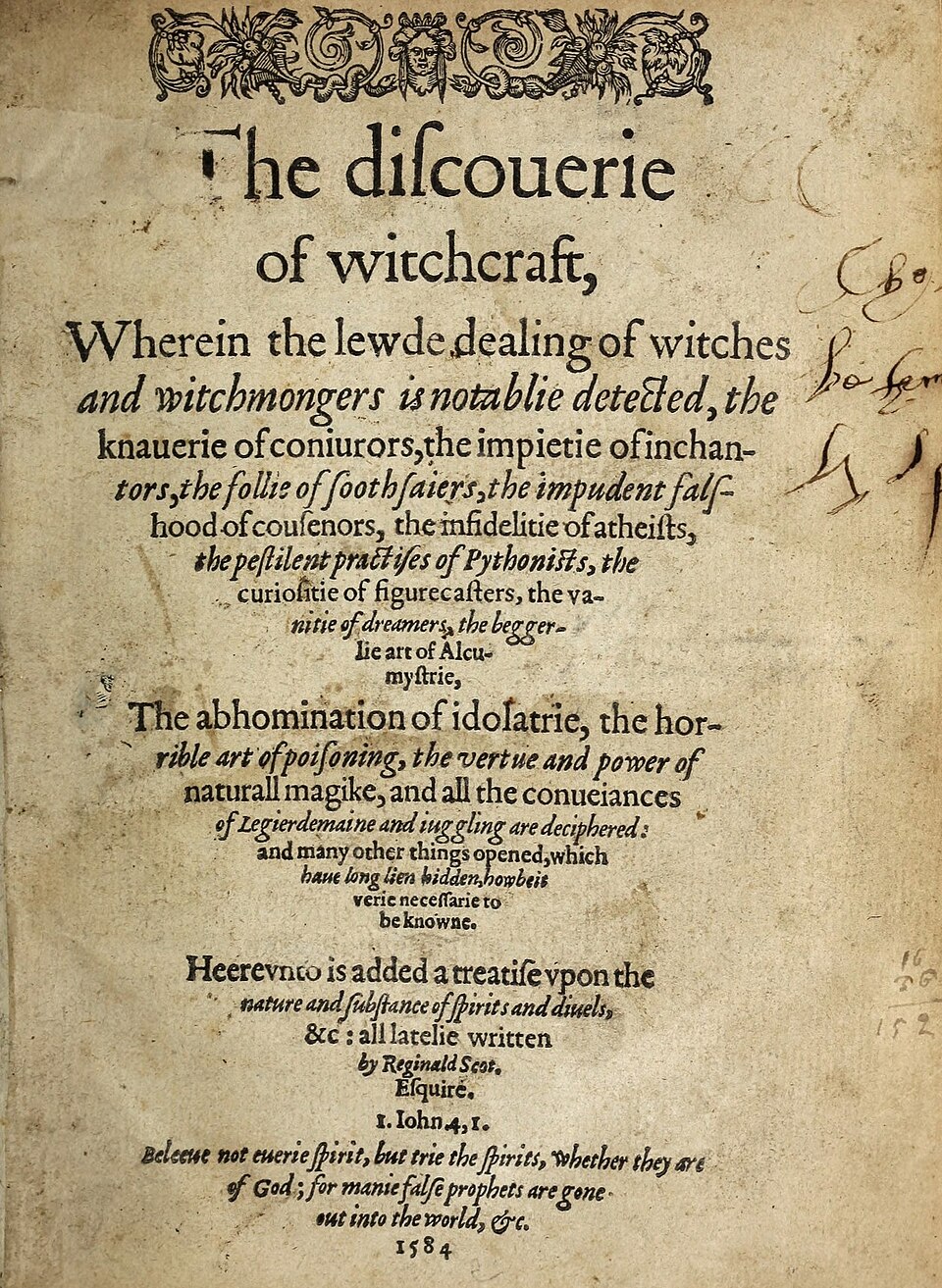
The title page of Reginald Scot’s The Discoverie of Witchcraft*, printed in London in 1584. Scot’s appendix on “spirits and divels” is one of the routes by which demon-catalogue material circulated in English before the Goetia’s own printed editions. Source. Public domain.*
Is Belial another name for Satan?
In some religious texts and interpretations, the name functions as a designation for Satan or a comparable adversarial figure. That does not mean every later use is a simple synonym.
The Goetia describes Belial within its own catalogue and relates him to other named powers. A fictional work may do something different again. The responsible answer is therefore source-specific: in which passage, tradition or adaptation?
This is similar to the problem of translating every ancient dangerous being as “the Devil.” The familiar word can help readers orient themselves, but it can also erase the structure of the original belief. The histories of Azazel and Beelzebub have their own complications and should not be substituted for Belial’s.
How to read an image of Belial
A caption should identify the work and date before assigning meaning. A nineteenth-century demon illustration is evidence of nineteenth-century publishing. A manuscript seal is evidence of a particular textual witness. Neither is a photograph of the being, and neither necessarily illustrates the earlier biblical word.
The same principle protects against more subtle mistakes. An image of a biblical manuscript may offer context for the text, but it must not be called a page mentioning Belial unless the relevant passage has actually been located. An attractive archive image is not automatically a relevant one.
The clearest way through the name
Belial is easier to understand as a sequence of uses than as a fixed monster biography. First comes language about wickedness. Later texts give the name a supernatural identity. Demon catalogues then supply ranks, appearances and promised abilities. Modern fiction can draw from any of those stages or invent its own version.
Keeping those stages visible answers the main question without pretending the tradition is simpler than it is. The history is real. The supernatural descriptions remain religious or occult claims made within that history.


.jpg)