The Index / Unsolved Cases
The Axeman of New Orleans Explained: Murders, Letters, and the Unsolved Identity
Between 1918 and 1919, someone attacked at least a dozen people in New Orleans with an axe. A letter promising to spare jazz-loving households is real. The killer's identity was never established.
Topics: Axeman of New Orleans, True Crime, Unsolved Cases, New Orleans, 1919
Public domain, via Times-Picayune archive
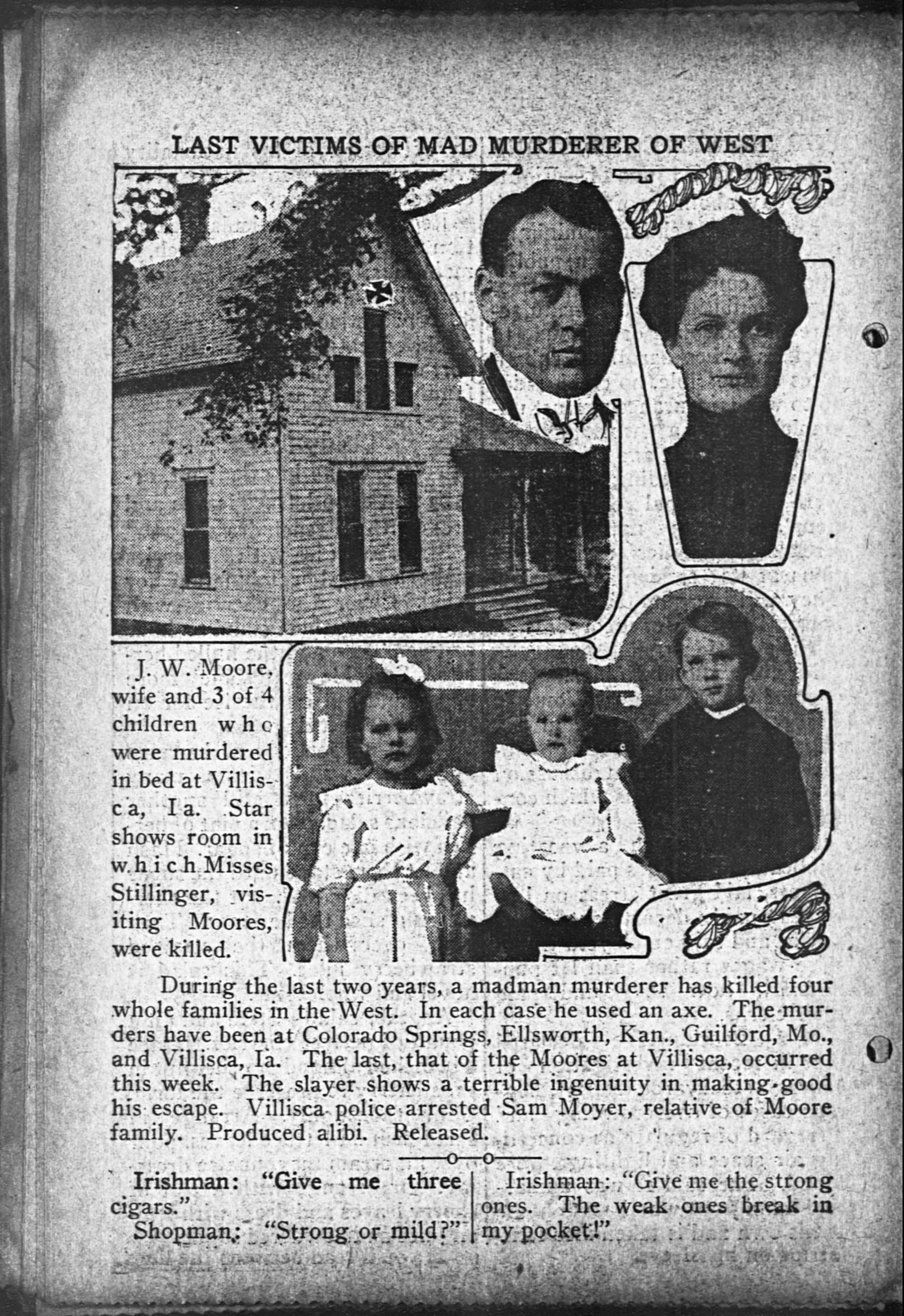
Someone attacked at least a dozen people in and around New Orleans with an axe between May 1918 and October 1919, killing several of them. A letter published in the city’s newspapers in March 1919, claiming to be from the killer, promised to spare any household playing jazz music at a specific hour on a specific night. New Orleans took it seriously: dance halls filled, bands played across the city, and no one was attacked that night. It’s one of the strangest, best-documented details in American true crime. What’s far less solid is almost everything that gets said about who did it.
The First Attacks
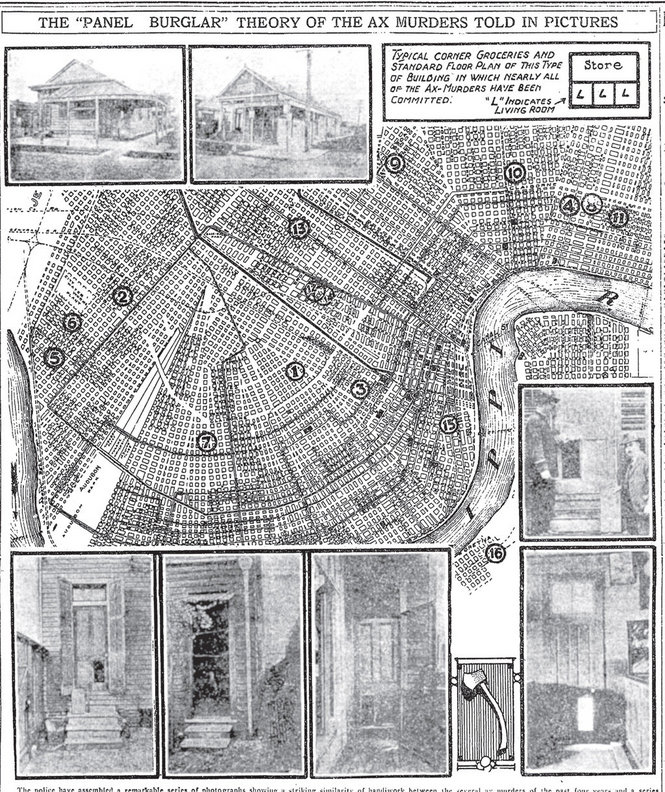
The first confirmed attack most historians tie to the case happened on May 23, 1918, when grocer Joseph Maggio and his wife Catherine were attacked in their home with a straight razor and an axe; Joseph died of his injuries. Similar attacks followed over the next several months: Louis Besumer and Harriet Lowe, struck with a hatchet in June 1918; Anna Schneider, eight months pregnant, beaten in August; Joseph Romano, who died two days after an attack later that same month. In each case, the pattern was similar — nighttime break-ins, a bladed or bludgeoning weapon, often left behind at the scene, and no theft that would explain a financial motive.
The Jazz Letter
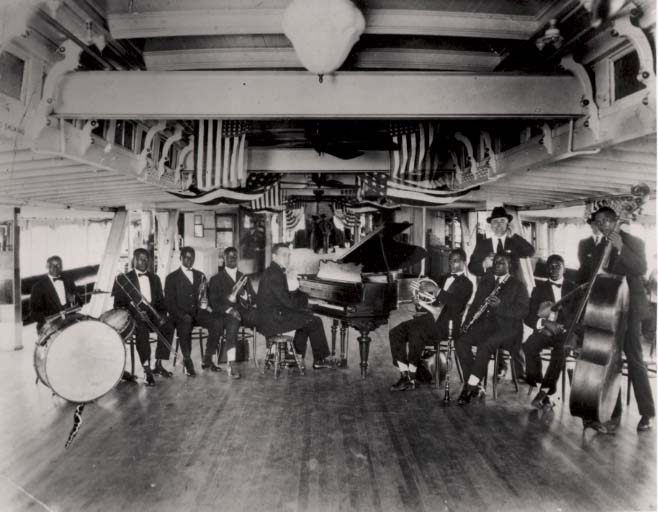
A New Orleans riverboat jazz band of the same era as the “Jazz Letter,” photographed in 1918 or 1919. Public domain, via Wikimedia Commons.
The case’s most famous moment came on March 13, 1919, when New Orleans newspapers published a letter purportedly written by the killer. It claimed the writer was not human but a supernatural entity, and promised that at 12:15 a.m. on March 19, anyone with a jazz band playing in their home would be spared. The letter’s authenticity was never established — there’s no way to confirm it came from whoever committed the attacks rather than an opportunistic hoaxer capitalizing on the panic — but its effect on the city was real and well documented. On the appointed night, New Orleans dance halls filled to capacity, jazz bands played in homes across the city, and no attack was reported. Whether that was because the letter’s author kept a promise, or simply because a city full of witnesses and noise is a bad night for any attacker, is not something the historical record settles either way.
The Attacks Continue
The violence didn’t stop with the jazz letter. In March 1919, Charles and Rosie Cortimiglia were attacked in their home; their infant daughter Mary was killed. Steve Boca was attacked while sleeping in August 1919. Sarah Laumann was severely injured in September. The final attack widely attributed to the Axeman came on October 27, 1919, when Mike Pepitone was killed in his bed — after which the attacks stopped as abruptly as they’d started, with no arrest, confession, or clear explanation for why.
Investigators at the time pursued several people connected to the case, including a member of the Maggio family and members of the Jordano family, who were formally charged in the Cortimiglia attack. The Jordanos were later cleared after Rosie Cortimiglia, the surviving victim, recanted her identification of them. No one was ever convicted for any of the attacks generally attributed to the Axeman.
The Joseph Mumfre Theory
The most widely repeated modern explanation for how the case “ended” involves a man named Joseph Mumfre (sometimes spelled Mumphrey or Monfre), who is said to have been shot and killed in Los Angeles in December 1921 by Esther Pepitone, the widow of the Axeman’s last victim. In the popular version of the story, Mumfre confronted her demanding money, she shot him, and she was acquitted after telling police she believed he was her husband’s killer.
This version of the story should be treated with real skepticism. True-crime researcher Michael Newton searched New Orleans and Los Angeles police, court, and newspaper records and found no documentation of a man named Joseph Mumfre or Monfre being shot in Los Angeles in 1921, and no record of Pepitone’s widow being arrested, tried, or connected to any such shooting. The Mumfre story functions more like an urban legend that calcified into a widely repeated “solution” than a documented resolution to the case. It’s frequently presented online as settled fact. It isn’t.
What Remains Genuinely Unknown
No physical evidence, confession, or trial ever established who committed the Axeman attacks, and more than a century later, the case remains formally unsolved. The victims, the dates, and the letter are documented. The identity behind them is not, and treating any single suspect theory — Mumfre included — as a confirmed answer goes beyond what the historical record actually supports.
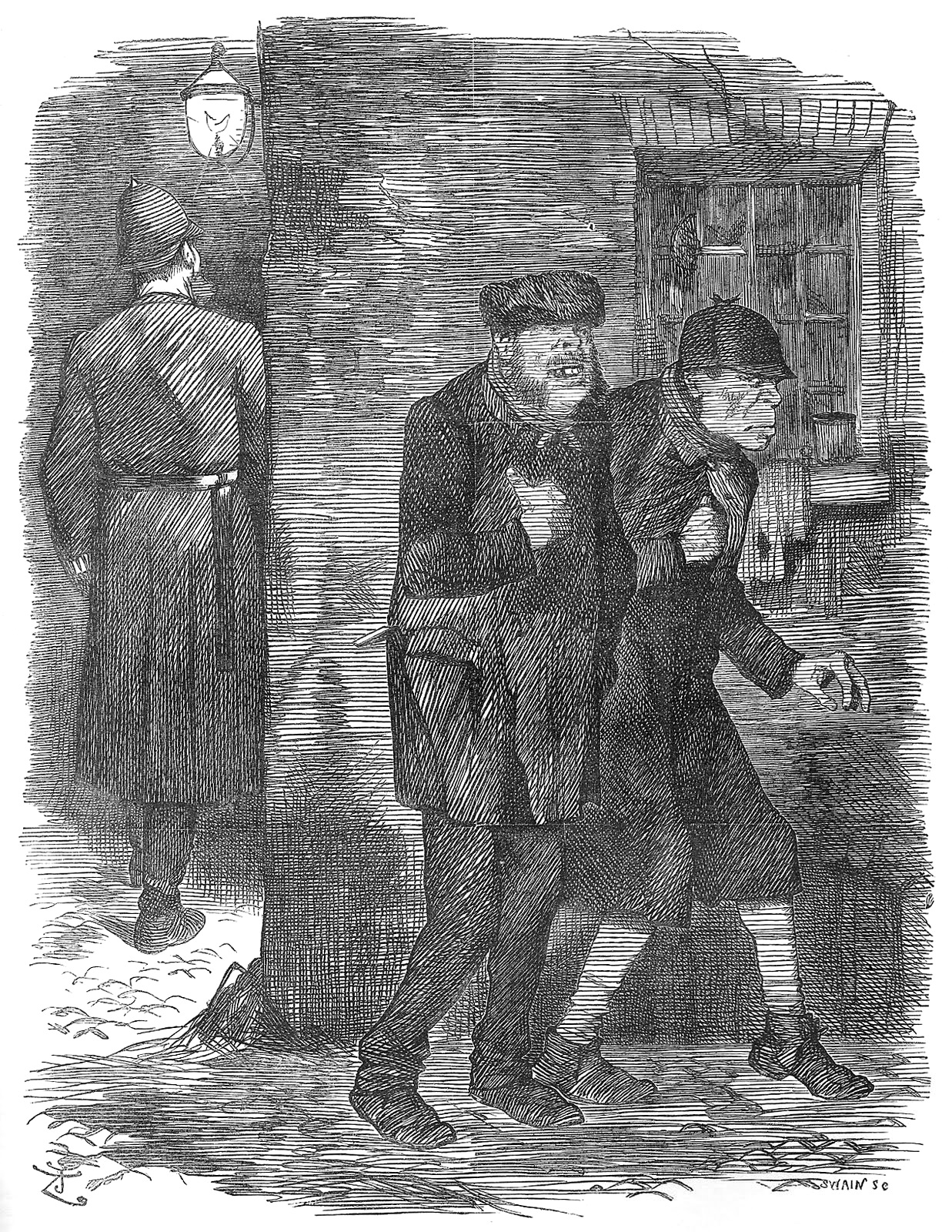
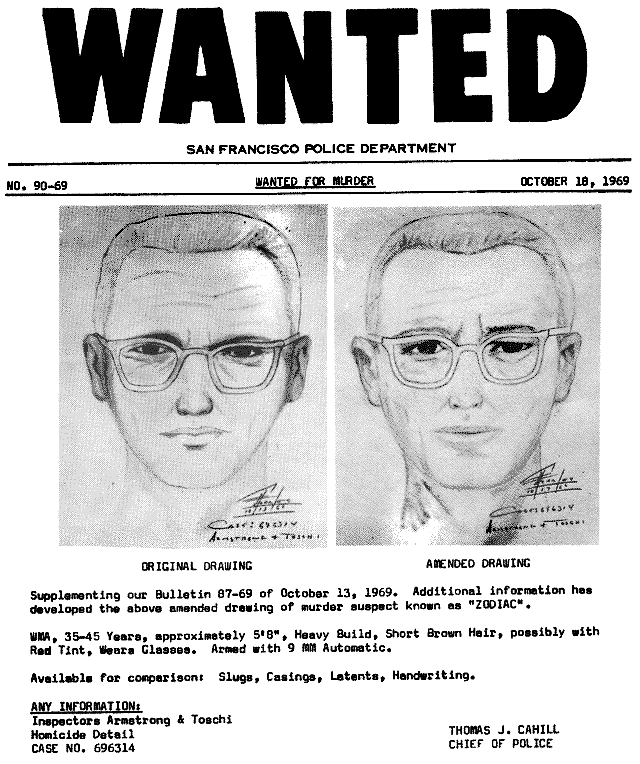
The pattern of an unidentified attacker who wrote directly to the public is one this site has covered before, in very different form, in our coverage of the Zodiac Killer, whose taunting letters to California newspapers decades later produced the same mix of genuine investigative leads and unresolved speculation. Like Jack the Ripper, the Axeman’s case shows how quickly an unsolved series of attacks accumulates confident-sounding theories that the actual evidence never supports.
Frequently Asked Questions
Was the Axeman of New Orleans ever caught? No. No one was ever convicted, and the killer’s identity has never been officially established.
Is the jazz letter real? A letter matching that description was genuinely published in New Orleans newspapers in March 1919, and the city’s documented response — filled dance halls, jazz played across the city that night, no attack reported — is real. Whether the letter actually came from the person responsible for the attacks was never confirmed.
Was Joseph Mumfre the Axeman? This is the most commonly repeated theory, but it is poorly supported. Researcher Michael Newton found no documentary evidence for the Los Angeles shooting story most often used to “close” the case, and no record connecting a man named Mumfre to the attacks beyond circumstantial timing.
How many people did the Axeman attack? At least a dozen people were attacked across the 1918–1919 period, with several confirmed deaths, though sourcing and attribution vary somewhat by account.
When did the attacks stop? The last attack widely attributed to the Axeman was the killing of Mike Pepitone in October 1919. The attacks ended without an arrest or clear explanation.