The Index / Unsolved Cases
Zodiac Killer Case Explained: Victims, Suspects and What Remains Unsolved
A careful guide to the Zodiac Killer case: the four confirmed attacks, victims, letters, ciphers, major suspects, DNA claims and what remains unsolved.
Topics: Zodiac Killer, Unsolved Crimes, Serial Killers, Ciphers, Cold Cases
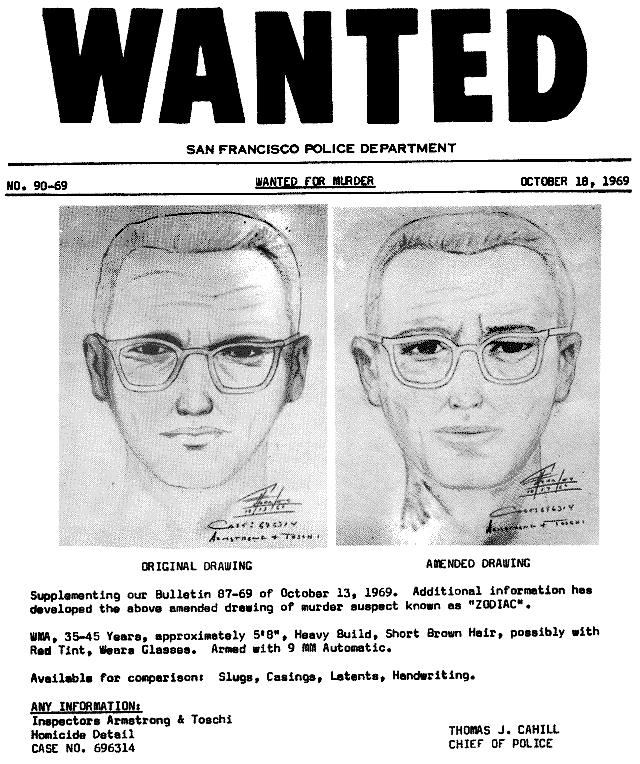
San Francisco Police Department / Wikimedia Commons (public domain in the United States)
Between December 1968 and October 1969, an unidentified attacker targeted seven people in four attacks across Northern California. Five died. Two survived. Then the killer turned the crimes into a public spectacle, mailing newspapers taunting letters, coded messages and, after one murder, a bloodstained piece of the victim’s shirt.
He called himself Zodiac.
The case has produced thousands of tips, a long list of suspects, competing interpretations of the evidence and repeated headlines claiming that the mystery has finally been solved. None of those claims has led to a publicly verified identification accepted by the agencies that investigated the murders.
The basic record is smaller and more concrete than the legend around it. Four attacks are generally treated as the confirmed Zodiac series. Two of four ciphers have been solved. Several pieces of correspondence are considered authentic, while others remain disputed. And although one suspect became far more famous than the rest, no one has ever been charged as the Zodiac Killer.
The Four Confirmed Zodiac Attacks
The known series begins on December 20, 1968, on Lake Herman Road near Benicia.
David Faraday and Betty Lou Jensen
David Faraday, 17, and Betty Lou Jensen, 16, were on their first date when they stopped at a turnout on Lake Herman Road. Contemporary reporting described them as two local high-school students with no obvious connection to serious crime or anyone who would have a clear motive to kill them.
Both were shot. Faraday was found near the car and died after being taken from the scene. Jensen was shot as she moved away from the vehicle.
At the time, investigators did not know that the murders would become part of a larger series. That connection emerged months later, when the writer of the first Zodiac correspondence claimed responsibility and supplied details about the crime that had not all been publicized.
Darlene Ferrin and Michael Mageau
Shortly after midnight on July 5, 1969, Darlene Ferrin, 22, and Michael Mageau, 19, were sitting in Ferrin’s car at Blue Rock Springs Park in Vallejo.
Mageau later told police that another vehicle entered the area, left, then returned. A man approached the car with a bright light and opened fire with a 9mm handgun.
Ferrin died. Mageau survived despite serious injuries.
At about 12:40 a.m., a man called Vallejo police from a payphone and reported the shooting. The caller also took credit for the Lake Herman Road murders. That call provided the first direct claim tying the two attacks together.
Mageau’s survival would become important decades later because he was one of the few living victims who had seen the attacker at close range.
Bryan Hartnell and Cecelia Shepard
On September 27, 1969, Bryan Hartnell, 20, and Cecelia Shepard, 22, were at Lake Berryessa in Napa County when a hooded man approached them.
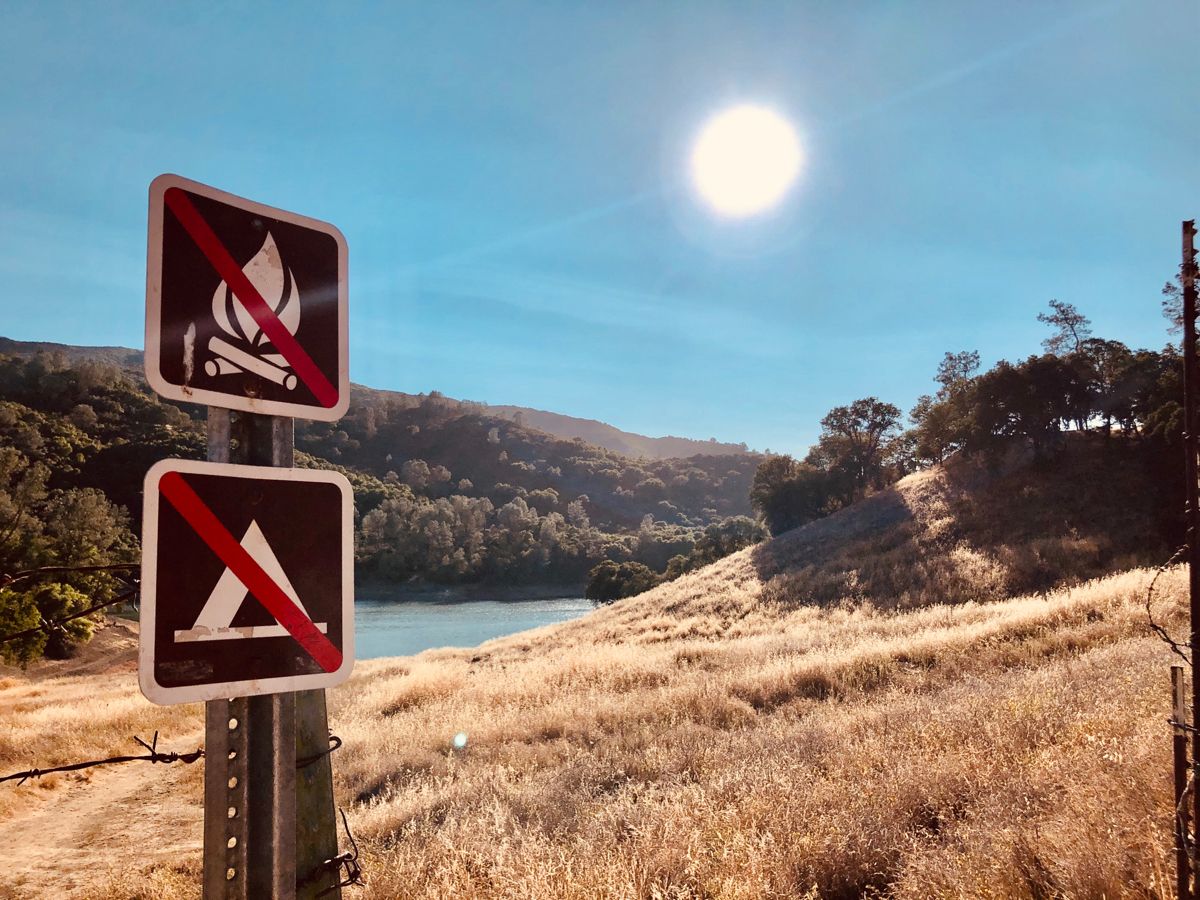
Lake Berryessa today. Eric Statzer, Wikimedia Commons (CC BY-SA 4.0).
Hartnell later described a black hood bearing the crossed-circle symbol that would become associated with Zodiac. The attacker claimed to be an escaped prisoner, tied the couple and stabbed them.
Hartnell survived. Shepard died from her injuries two days later.
The attacker wrote dates connected to the earlier crimes, along with the crosshair symbol, on the door of Hartnell’s car. He later called authorities from a Napa payphone to report the attack.
Unlike the first two confirmed attacks, the Lake Berryessa assault used a knife and involved an elaborate disguise. That change in method is one reason the case has always resisted simple profiling.
Paul Stine
The final confirmed killing took place in San Francisco on October 11, 1969.
Paul Stine, 29, was a taxi driver and graduate student. He picked up a passenger and drove into the Presidio Heights neighborhood, where the passenger shot him in the head.
Three teenage witnesses in a house across the street observed a man around the cab and gave police a description used for the famous composite sketch.
The most important link came two days later. The San Francisco Chronicle received a letter from the killer containing a piece of Stine’s bloodstained shirt. That physical evidence made the connection between the letter writer and Stine’s murder exceptionally strong.
The Victims Zodiac Claimed, and the Cases Police Do Not Confirm
The Zodiac writer eventually claimed a much larger body count than the five confirmed deaths. Those claims are not the same thing as verified crimes.
Several incidents are repeatedly discussed as possible Zodiac cases.
In March 1970, Kathleen Johns reported that a man who had offered assistance on a California highway drove her around for an extended period before she escaped with her young child. Zodiac later appeared to claim the incident in a letter. The method was unlike the four confirmed attacks, and the connection has never been established by physical evidence.
Donna Lass, a 25-year-old nurse, disappeared from South Lake Tahoe in September 1970. A later postcard has been interpreted as a possible reference to her disappearance, but no physical evidence has tied Lass’s case to Zodiac.
The 1966 murder of Cheri Jo Bates in Riverside is even more complicated. Her case was linked to Zodiac in later speculation because of letters and writings associated with the Riverside investigation. Riverside Police now says it does not consider the Bates homicide part of the Zodiac case and is investigating it separately.
One point is often misstated online: DNA work discussed by Riverside Police did not prove through the Bates crime-scene evidence that Zodiac could not have killed her. The department used DNA to identify the writer of a much later hoax letter sent in 2016. That person admitted sending the letter and was not involved in the Bates murder. Riverside continues to treat Bates as its own unsolved homicide.
The Letters Created the Zodiac Persona
The first major newspaper mailings arrived at the end of July 1969.
Letters were sent to the San Francisco Chronicle, San Francisco Examiner and Vallejo Times-Herald. Each claimed responsibility for the Lake Herman Road and Blue Rock Springs attacks and contained part of a 408-character cipher.
A common retelling says those first letters opened with “This is the Zodiac speaking.” They did not.
The name Zodiac appeared in a follow-up letter in early August, after Vallejo Police Chief Jack Stiltz publicly challenged the writer to provide more details proving he was the killer. That later message began with the now-famous introduction and helped turn an unidentified murderer into a self-created public character.
The correspondence grew more threatening and theatrical over time. Zodiac discussed killings, mocked police, threatened further violence and repeatedly inflated his claimed victim count.
After Paul Stine’s murder, the enclosed piece of Stine’s shirt gave investigators something far more valuable than a boast. It demonstrated that the letter writer had access to evidence from the crime itself.
The January 1974 “Exorcist” letter is often treated as the last widely accepted Zodiac communication. Other later mailings have been proposed as authentic, but their status is more disputed. That matters because the case has attracted hoaxers almost from the beginning.
The Z408 Cipher Was Solved Within Days
The three-part cipher mailed in July 1969 became known as Z408 because it contained 408 symbols.
Donald and Bettye Harden of Salinas solved it within days of publication. The message described the killer’s enjoyment of murder and his fantasy that his victims would serve him in an afterlife.
It did not reveal his identity.
That failure is important because Zodiac had suggested that the cipher held information about who he was. Instead, it offered a disturbing statement of motive and self-image.
The Z340 Cipher Took 51 Years
A second major cipher, Z340, was sent to the San Francisco Chronicle in November 1969.
For more than half a century it resisted professional and amateur attempts to solve it.
In December 2020, David Oranchak, Sam Blake and Jarl Van Eycke announced a solution. Their later technical paper describes Z340 as combining homophonic substitution with an unusual transposition pattern. The team used specialized software and large-scale searches of possible arrangements to identify and validate the plaintext.
The FBI confirmed that the solution was valid.
The message again failed to reveal the killer’s name. It referred to the public hunt for Zodiac and rejected the idea that he feared execution.
Two much shorter ciphers, commonly called Z13 and Z32, remain unsolved. Their short length creates a fundamental problem: many different proposed plaintexts can be made to fit, making a unique solution extremely difficult to prove. Claims that one of these short ciphers “reveals the killer’s name” should therefore be treated with caution.
Arthur Leigh Allen: The Best-Known Suspect
No Zodiac suspect has received more attention than Arthur Leigh Allen.
Allen came under police scrutiny in the early 1970s after an acquaintance, Don Cheney, reported statements that investigators considered suspicious. Police searched Allen’s property, interviewed him and compared evidence associated with him against material from the case.
He also became central to Robert Graysmith’s book Zodiac and, later, David Fincher’s 2007 film. That popular exposure helped cement Allen as the name most people associate with the investigation.
There were genuine reasons investigators looked at him. His background, statements attributed to him and some circumstantial coincidences kept attention on him for years. In 1991, survivor Michael Mageau was shown photographs and selected Allen’s image as resembling the man who shot him.
But Mageau’s identification came more than two decades after the attack, and it did not settle the case.
Known fingerprints associated with Allen did not match prints investigators had considered potentially useful in the Zodiac investigation. Handwriting examiners did not match his writing to the authenticated Zodiac letters.
DNA is more complicated than many summaries suggest. In 2002, a partial DNA profile recovered from material associated with Zodiac correspondence did not match Allen. At the time, that result was widely reported as excluding him. Later reporting raised questions about the quality and provenance of the sample and whether the biological material could be confidently attributed to Zodiac himself.
So the careful conclusion is not that DNA “proved Allen innocent” or that DNA secretly proved he was Zodiac. Neither is supported.
Allen died in 1992 and was never charged in the Zodiac murders.
Other Suspects
Dozens of people have been proposed as Zodiac candidates by investigators, journalists, authors and amateur researchers.
Names that recur include Lawrence Kane, Richard Gaikowski and Ross Sullivan. The arguments vary from geographic proximity and personal history to handwriting interpretations and alleged behavioral similarities.
None has been publicly tied to the four confirmed attacks by a conclusive forensic match.
That distinction is essential in an unsolved case. A person becoming popular in books, documentaries or online forums is not the same as law enforcement establishing that person committed the crimes — the same pattern of confident, unverified suspect claims has surrounded Jack the Ripper for well over a century.
The Gary Francis Poste Claim
In October 2021, a private group called the Case Breakers announced that it believed the Zodiac Killer was Gary Francis Poste, an Air Force veteran who died in 2018.
The group pointed to photographs, markings on Poste’s forehead that it compared with the police sketch, alleged hidden references in Zodiac writings and other circumstantial material.
The announcement received enormous attention. It did not close the case.
The FBI’s San Francisco office responded that the Zodiac matter remained open and unsolved, and San Francisco police likewise did not endorse the identification.
The Case Breakers also argued for a connection between Zodiac and the Cheri Jo Bates homicide. Riverside Police does not consider the Bates murder part of the Zodiac series.
Poste remains a theory, not an official identification.
What Does the DNA Evidence Actually Show?
The Zodiac case is often compared with the Golden State Killer investigation because forensic genealogy transformed what was possible in decades-old cases.
But the Zodiac evidence has a major problem: there is no publicly confirmed, complete, single-source DNA profile known to belong to the killer.
In the early 2000s, San Francisco investigators developed a partial profile from biological material associated with Zodiac correspondence. Contemporary reporting said it did not match Arthur Leigh Allen.
A partial profile can be useful for exclusion, but it is not the same as having a full, uncontaminated DNA profile that can be confidently entered into genealogy research.
There are additional uncertainties. Zodiac’s letters and envelopes passed through postal systems, newspaper offices, police departments, laboratories and private hands over decades. Any biological material must be evaluated for contamination and, crucially, whether it actually came from the killer.
Vallejo Police said in 2018 that the case remained open and that detectives continued to use advances in forensic science. No agency has since announced a verified genetic-genealogy identification of Zodiac.
The FBI’s Role Is Often Misunderstood
The Zodiac murders occurred within California and did not originally create a standalone federal murder case.
An archived FBI history page states that the Bureau never opened its own federal investigation into the murders because they were outside federal jurisdiction. Instead, local law enforcement requested FBI help with handwriting analysis, cryptanalysis, fingerprints and other technical work.
That history can sound confusing beside a 2021 statement from the FBI’s San Francisco office saying its Zodiac investigation remained “open and unsolved.”
The safest way to understand the two statements together is that the local agencies remained responsible for the homicide cases while the FBI maintained records and investigative support connected to the broader Zodiac work. The Bureau’s extensive files are now available in the FBI Vault.
Myths That Keep Coming Back
“Zodiac killed 37 people”
Zodiac claimed 37 victims in his correspondence. Five deaths and two surviving victims are generally accepted as the confirmed series. His self-reported tally is not a verified body count.
“Arthur Leigh Allen was proven to be Zodiac”
He was not. Allen was intensively investigated and remains the most famous suspect, but he was never charged and no conclusive forensic evidence publicly identified him as Zodiac.
“DNA solved the case”
It has not. No law-enforcement agency has announced a verified DNA identification of the Zodiac Killer.
“The Cheri Jo Bates case was excluded by Zodiac DNA”
That overstates what Riverside Police has reported. Riverside treats Bates as a separate homicide. Its later DNA work identified the writer of a 2016 hoax letter, not the killer of Bates and not the Zodiac.
“Every Zodiac letter is authentic”
No. Some communications are widely accepted, while others are disputed or considered possible hoaxes.
“The ciphers reveal his name”
The two solved major ciphers do not identify him. The two short unsolved ciphers are too brief to make most proposed name solutions uniquely verifiable.
Is the Zodiac Killer Case Still Open?
The case remains unsolved.
Vallejo Police publicly described its Zodiac investigation as open in a 2018 case update. In 2021, both the FBI’s San Francisco office and San Francisco police said the investigation remained open when responding to the Gary Francis Poste claim.
Public theories have continued since then. In late 2025, another amateur identification claim attracted national attention. It did not produce a law-enforcement announcement that the case had been solved.
There is no publicly confirmed arrest, charge or identification as of August 2026.
What Remains Unsolved
The largest question is still the simplest: Who was the Zodiac Killer?
But several smaller questions remain unresolved too.
Investigators do not know with certainty how many crimes outside the four confirmed attacks were committed by the same person. The status of some correspondence remains disputed. Z13 and Z32 remain unsolved. And the publicly known DNA evidence has not produced the kind of complete, verified profile that transformed other cold cases.
The Zodiac mystery survives partly because there is so much material: letters, ciphers, police reports, witness accounts, suspects and decades of later interpretation. Yet none of that volume substitutes for a forensic identification.
The name behind “Zodiac” is still unknown.