Lore & Explained / Folklore
Boiúna Explained: The Amazon’s Cobra Grande Behind Beware Boiúna
What is the Boiúna? Trace Brazil’s Amazonian Cobra Grande through river folklore, Cobra Norato, regional traditions and the 2026 horror film Beware Boiúna.
Topics: Boiúna, Cobra Grande, Amazon Folklore, Brazilian Folklore, Cobra Norato, Beware Boiúna
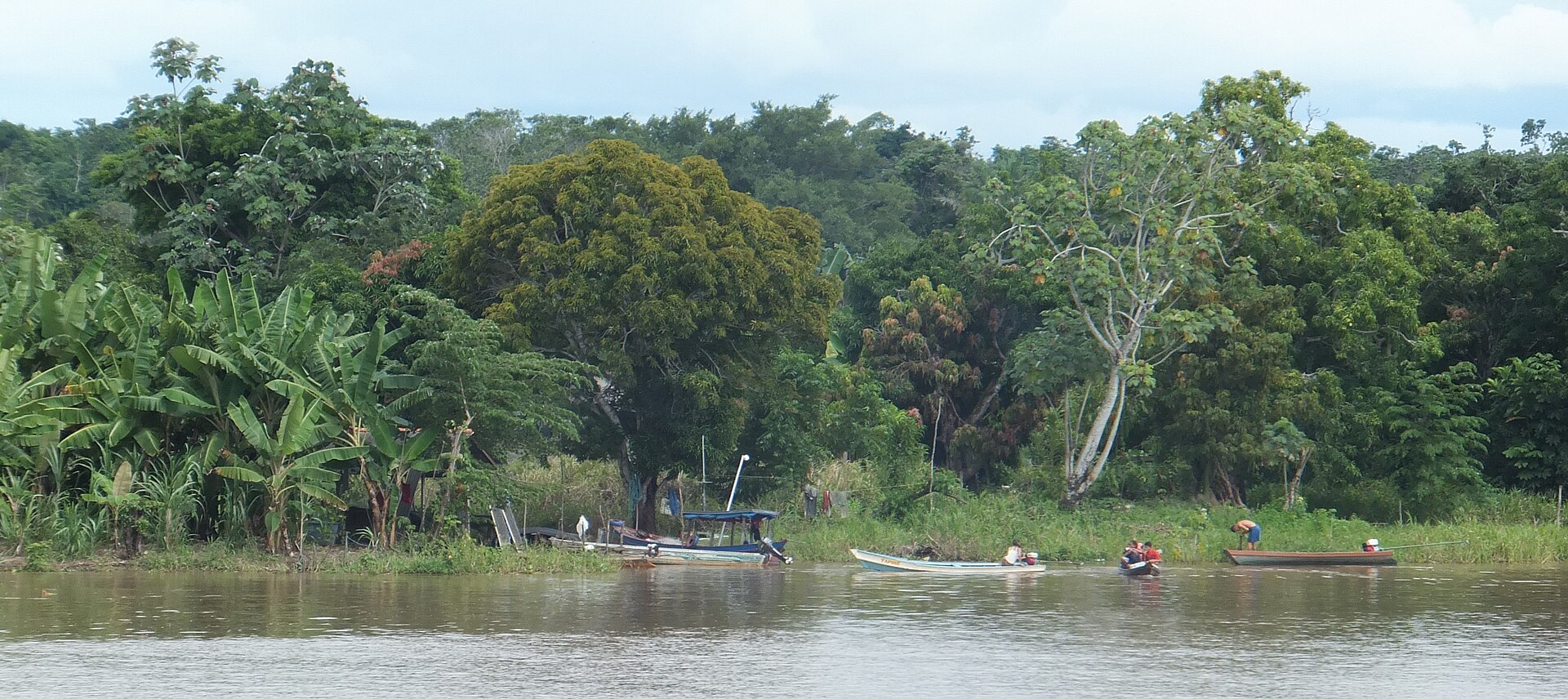
Wikiusuarie / Wikimedia Commons (CC BY-SA 4.0, resized)
The Boiúna is often reduced in English-language horror coverage to one phrase: a giant snake from the Amazon.
That is not wrong, but it is incomplete.
In Brazilian Amazonian folklore, the Boiúna — also called Cobra Grande, or Great Snake — belongs to a much wider world of river stories. Depending on the region and the teller, the serpent may live in the deepest part of a river, frighten fishermen with blazing eyes, reshape waterways, overturn boats, guard or threaten a community, or appear in stories connected with other enchanted serpent figures.
There is no single ancient rulebook for the Boiúna.
That matters in 2026 because Lionsgate’s horror movie Beware Boiúna turns the name into a colossal predator stalking a medical mission in the Amazon. The film is using real folklore as inspiration, but its creature should not be treated as a literal translation of every Boiúna tradition.
The folklore is older, broader and much more regional than one monster movie.
What is the Boiúna?
Brazil’s Centro Nacional de Folclore e Cultura Popular classifies the Cobra-grande as a mythological being of the Amazon and lists Boiúna as a name used for it.
Its short folklore entry gives several recurring features.
The serpent lives in the deepest part of the river. Its eyes can shine like torches and frighten fishermen. The furrows or channels left by its movement may become igarapés, the narrow waterways that thread through the Amazonian landscape.
That description already shows why “giant snake” is too narrow.
The Boiúna is not always merely an oversized animal.
In many tellings, it belongs to the river itself. Its body explains the landscape, its movement changes water, and its presence marks places that people navigate, fish and remember.
The Fundação Cultural do Pará describes the Boiúna, or Cobra Grande, as part of the knowledge of the Amazon and of oral narratives passed through generations. That is a more useful starting point than treating the figure as if it were a cryptid waiting to be zoologically confirmed.
Boiúna is folklore.
The stories can be historically documented as stories without proving that a supernatural serpent exists.
Is Boiúna the same as Cobra Grande?
Often, yes.
Cobra Grande literally means “Great Snake” in Portuguese and functions as a broad name for the enormous or enchanted serpent found in many Amazonian stories.
The national folklore center’s own thesaurus treats Boiúna as a term used for Cobra-grande.
But names and stories vary by place.
A community on one river may preserve a version that differs sharply from a story told hundreds of kilometres away. Some accounts emphasize an immense dark serpent. Others connect Cobra Grande traditions with transformation, enchanted people, creation stories or a serpent sleeping beneath a town.
So “Boiúna” and “Cobra Grande” can overlap without every local Cobra Grande narrative being identical.
That regional variation is not a flaw in the folklore.
It is the folklore.
What does the Boiúna do?
There are several recurring motifs, but none should be presented as mandatory.
It lives in deep water
The national folklore center describes the Cobra Grande as inhabiting the deepest part of the river.
That immediately places the creature within the lived geography of Amazonian waterways. A deep river is not just scenery in these stories. It is a place where visibility disappears, boats can be vulnerable, currents matter, and enormous animals can remain unseen beneath the surface.
Its eyes shine
One recorded feature gives the serpent eyes that illuminate like torches.
That image appears in modern institutional retellings as well. The Instituto Butantan describes the Boiúna as a dark, enormous river serpent whose eyes shine when it comes to the surface.
Glowing eyes are therefore not an invention of a modern horror campaign.
They belong to established retellings of the creature.
It can disturb boats and fishermen
MultiRio’s educational folklore resource describes the Boiúna leaving the depths of Amazonian rivers to attack boats and drag fishermen down.
Again, this is a folklore description, not a claim that unexplained river deaths were caused by a supernatural animal.
The practical danger of rivers and the supernatural language used to narrate those dangers are different categories of evidence.
It can reshape the landscape
One of the most striking motifs is the idea that the serpent’s movement creates or alters waterways.
The national folklore center says the grooves left by the Cobra Grande become igarapés.
MultiRio goes even further in its retelling, connecting the Boiúna with creation and the changing course of water.
A creature that creates channels through the land is doing something much larger than hunting prey.
That is one reason the Boiúna is better understood as a mythic river being than as simply “Brazil’s giant snake monster.”
Is the Boiúna an evil monster?
Not in one universal sense.
Some stories make the serpent dangerous. Fishermen are frightened, boats are threatened, people can be dragged into the water, and the creature’s enormous size itself creates terror.
Other living traditions describe a more complicated relationship.
In Porto Nacional, in the Brazilian state of Tocantins, a local version known as the Buiúna has become part of the city’s cultural identity.
The municipal government describes the Buiúna as an enchanted Great Snake associated with the Tocantins River and with ideas of both protection and fear.
That is important.
Modern horror likes a clean predator: monster appears, monster attacks, humans survive or die.
Folklore often refuses that simplicity.
A supernatural being can be feared and respected. It can threaten a place while also symbolizing that place. It can be part of a community’s identity rather than an outside invader.
The Buiúna beneath Porto Nacional
One of the clearest examples of local variation comes from Porto Nacional.
According to the city’s own account of the tradition, the Buiúna is said to sleep beneath the Cathedral of Nossa Senhora das Mercês. Its head lies beneath the church while its tail stretches across the river.
The legend warns that if the serpent is fully unearthed or awakens, the city will be flooded.
This is not presented here as a geological prediction.
It is a local legend.
But it is also a living cultural tradition.
Porto Nacional stages the Desenterro da Buiúna — the “Unearthing of the Buiúna” — as a public cultural performance. In 2025, a France 5 television crew filmed the procession, and the municipal government described the tradition as part of the community’s relationship with the river, local memory and identity.
In 2026 the city again used the Buiúna in its carnival celebrations, symbolically awakening the serpent to announce the beginning of the festivities.
That is what a living legend looks like.
It is not only a story preserved in an old folklore book. People continue to perform it, adapt it and use it to express where they are from.
Where does Cobra Norato fit in?
The name Cobra Norato appears alongside Boiúna in Brazilian folklore references, but it should not simply be treated as another name for one identical monster.
One popular narrative tells of serpent children often called Honorato or Norato and Maria Caninana.
MultiRio recounts a version in which the Boiúna gives birth to the pair. The children can take both human and serpent form. Honorato is characterized as benevolent while Maria Caninana is destructive, and the siblings eventually fight.
Honorato longs to become permanently human.
The story then turns on breaking his enchantment.
Details differ between versions, and modern retellings may smooth those differences into a single standardized plot.
The safer point is that Cobra Grande traditions intersect with stories of enchanted serpent-people and transformation, not merely with a single gigantic river animal.
That richer supernatural vocabulary is largely absent when Boiúna is described only as “an Amazonian anaconda legend.”
What about the story of the creation of night?
Another tradition connects the Boiúna with a story explaining how night entered the world.
The Instituto Butantan summarizes a version in which the Boiúna keeps night inside a tucumã seed or fruit and sends it to a daughter. The people carrying it open the container despite being told not to, releasing darkness.
The daughter is then able to separate day from night.
Versions of Amazonian creation narratives require particular care.
They should not be casually labeled as the belief of “the Amazonian people” or of all Indigenous peoples. The Amazon contains many nations, languages and storytelling traditions, and stories collected, translated and republished in Portuguese can pass through several layers of retelling.
For Morbid Index, the responsible wording is simple:
This is one documented Brazilian retelling associated with the Boiúna tradition, not a universal Amazonian creation doctrine.
Is Boiúna an Indigenous legend?
The Boiúna is deeply connected with Amazonian cultural traditions and with Indigenous linguistic and narrative influence.
But saying “the Indigenous legend of Boiúna” without identifying a community can flatten a huge region into one culture.
Modern Brazilian folklore sources often present the Boiúna as part of a national or regional folklore canon. Those sources have already passed through collection, translation, education, literature and popular culture.
That does not erase Indigenous roots.
It does mean that a responsible history should distinguish between:
- stories told by particular Indigenous peoples;
- riverine and regional oral traditions;
- later Brazilian folklore collections;
- school and institutional retellings;
- literature, festivals and tourism;
- modern horror adaptations.
When a source does not establish which community a specific version comes from, we should not invent one.
Is the Boiúna supposed to be a real animal?
Folklore sources describe a supernatural or mythological being.
That is different from claiming that an unknown species of gigantic snake lives in the Amazon.
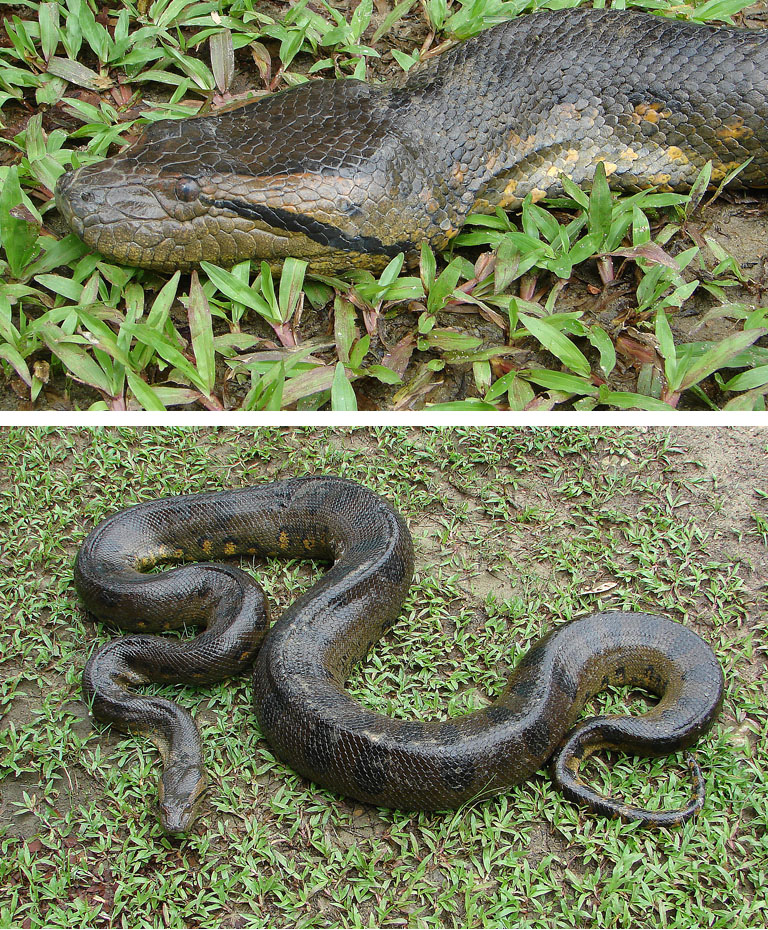
A green anaconda, one of the real species that makes giant-serpent imagery ecologically plausible in the Amazon — though folklore and zoology are different categories of evidence. Dick Culbert, Wikimedia Commons (CC BY 2.0).
The region is home to real large snakes, including anacondas and boa constrictors. That makes enormous-serpent imagery ecologically understandable.
But similarity is not evidence of origin.
It is tempting to say that every Boiúna story began when someone saw an unusually large anaconda. There is no need to make that leap without evidence.
Myths can incorporate real animals while also carrying social, spiritual, geographic and narrative meanings that cannot be reduced to zoology.
The Boiúna is documented as folklore.
A supernatural Boiúna has not been established as a biological species.
How Beware Boiúna changes the legend
The name is about to reach a much larger international horror audience.
Lionsgate’s Beware Boiúna, directed by Mike P. Nelson, opens in U.S. theaters on October 2, 2026.
The film follows a medical mission in the Amazon that becomes a fight for survival after an enormous ancient predator awakens.
Kiana Madeira, Jessica Rothe and Logan Marshall-Green star.
The project was previously known as Titan and later Boiúna: Legend of the Amazon before receiving its final title.
The movie’s official marketing turns Boiúna into a colossal physical predator that dominates both land and water.
That is a valid horror adaptation.
It is not the whole folklore tradition.
Is Beware Boiúna based on one specific legend?
The promotional material uses the Boiúna name and repeatedly describes the creature as an ancient legend.
Director Mike P. Nelson has also discussed wanting the creature feature to feel connected to its location rather than functioning as an interchangeable giant-snake movie.
But the film’s premise is clearly a modern survival-horror construction.
The Boiúna of regional folklore may reshape waterways, glow beneath the surface, appear in creation narratives, connect with enchanted serpent people or sleep beneath a city.
The movie needs a monster that can chase characters.
Those are different storytelling jobs.
So the best way to describe the relationship is:
Beware Boiúna is inspired by the Amazonian Cobra Grande/Boiúna tradition, then reshapes that material into a contemporary giant-creature horror film.
It should not be used as a source for what Amazonian communities historically believed.
Why giant-serpent folklore fits the Amazon so well
The Boiúna makes sense within a landscape defined by water.
Rivers in the Amazon are roads, food sources, boundaries and environments with real physical danger. A story about something immense moving below the surface turns that environment into a character.
The serpent can explain a channel.
Its eyes can transform distant lights into a warning.
Its body can symbolize the scale of the river.
Its awakening can explain flood anxiety.
Its presence can discipline behaviour around dangerous water.
But not every useful interpretation is automatically the historical origin of the myth.
That distinction is worth keeping.
Folklore can perform practical and symbolic functions without being deliberately invented as a safety lesson.
The Boiúna is not one frozen monster
The most useful thing to know about Boiúna folklore is that it resists a clean monster-manual entry.
There is a recognizable core: an immense or enchanted serpent associated with Amazonian waters.
Around that core, the details move.
In one account, its glowing eyes terrify fishermen.
In another, its movement creates waterways.
In another, it belongs to a family of enchanted serpents.
In Porto Nacional, the sleeping Buiúna can flood the city and is publicly celebrated as part of local identity.
In a 2026 Lionsgate movie, it becomes a flesh-and-blood nightmare built for a survival thriller.
All of those versions tell us something.
They just do not tell us the same thing.
Frequently Asked Questions
What is a Boiúna?
The Boiúna is an enormous or enchanted serpent in Brazilian Amazonian folklore, commonly associated with rivers and also known as the Cobra Grande.
Is Boiúna the same as Cobra Grande?
The names often overlap. Brazil’s Centro Nacional de Folclore e Cultura Popular lists Boiúna as a term used for Cobra-grande, but individual stories vary by region.
Is the Boiúna real?
The Boiúna is documented as a mythological and folkloric being. There is no evidence establishing a supernatural Boiúna as a real biological species.
Does the Boiúna have glowing eyes?
Glowing or torch-like eyes appear in institutional folklore descriptions of the Cobra Grande and are one recurring feature of the tradition.
What is Cobra Norato?
Cobra Norato, often associated with the figure Honorato, belongs to a related cycle of stories about enchanted serpents and human transformation. The details vary between retellings.
What is the Porto Nacional Buiúna legend?
A local tradition says an enchanted Great Snake sleeps beneath the city, with its head beneath the cathedral and its body extending toward or across the river. The city preserves the legend through the cultural performance known as Desenterro da Buiúna.
Is Beware Boiúna based on Brazilian folklore?
Yes. The October 2, 2026 Lionsgate horror film uses the Boiúna/Cobra Grande tradition as inspiration, but its colossal predator is a modern fictional adaptation rather than a complete representation of the folklore.
Sources & further reading
- Wikimedia Commons: Amazon river, Brazil, photograph by Wikiusuarie (CC BY-SA 4.0)
- Centro Nacional de Folclore e Cultura Popular: Cobra-grande
- Fundação Cultural do Pará: A Boiuna e a Moça
- Instituto Butantan: Boiúna (Cobra-Grande) in Brazilian folklore
- MultiRio: Boiuna
- Prefeitura de Porto Nacional: Desenterro da Buiúna tradition
- Dread Central: Beware Boiúna retitle and October 2 release
- Bloody Disgusting: Beware Boiúna trailer and folklore-inspired creature