The Index / Unsolved Cases
The Cecil Hotel and Elisa Lam: What the Evidence Says About the Death Behind the Internet Mystery
The LA County Coroner ruled Elisa Lam's death an accidental drowning connected to her bipolar disorder. Here's what the official record actually established.
Topics: Elisa Lam, Cecil Hotel, Internet Mystery, True Crime, Unsolved Cases
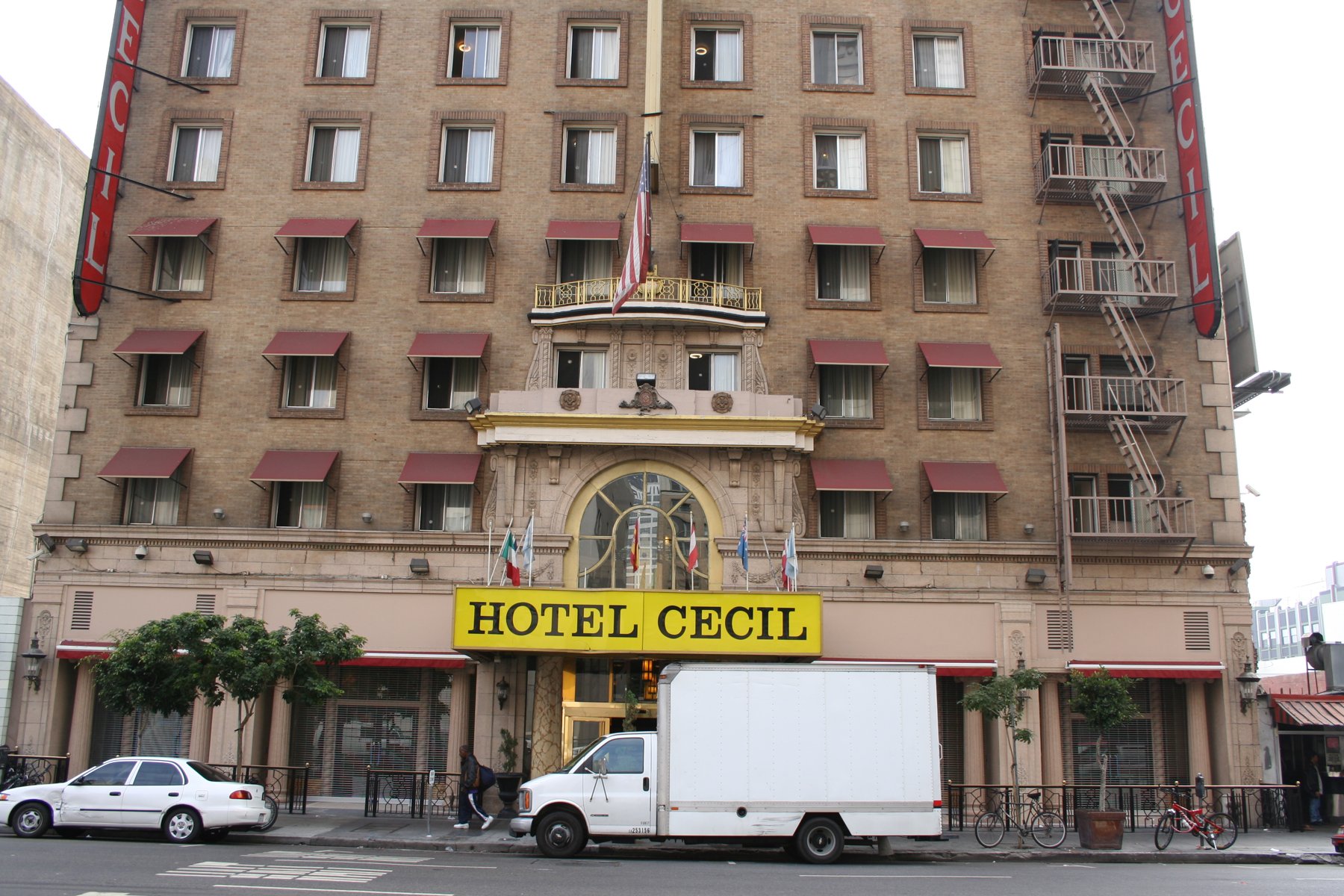
Jim Winstead, Wikimedia Commons (CC BY 2.0)
Elisa Lam’s death was formally investigated, autopsied, and officially ruled by the Los Angeles County Coroner’s office: accidental drowning, with her bipolar disorder listed as a significant contributing condition. That official finding hasn’t stopped over a decade of online speculation treating her death as an open murder mystery, complete with named suspects who were never charged with anything — including a musician whose life was seriously disrupted by an accusation authorities have explicitly said had no basis. The gap between the documented investigative record and the internet mythology built on top of it is itself worth examining carefully.
Who Elisa Lam Was
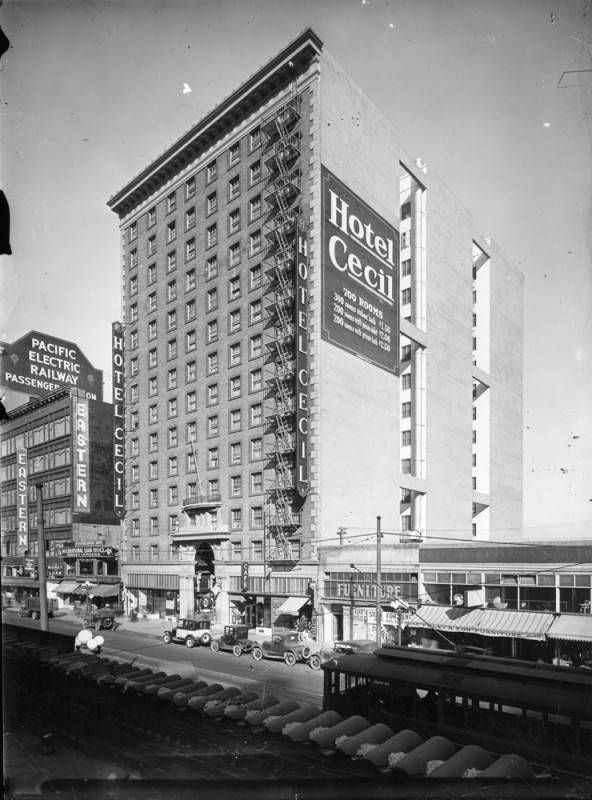
The Hotel Cecil not long after opening in 1924 — the same building, long before Elisa Lam’s 2013 stay. Public domain, via Wikimedia Commons.
Elisa Lam was a 21-year-old university student from Vancouver, Canada, traveling alone in California in January 2013. She checked into the Cecil Hotel, a budget hotel in downtown Los Angeles near Skid Row, on January 26, 2013. Early in her stay, hotel staff moved her from a shared dormitory-style room to a private room after other guests reported concerns about her behavior — a detail consistent, in retrospect, with documented aspects of her mental health history rather than evidence of any external threat to her.
The Elevator Video
Lam was last confirmed seen on January 31, 2013. Los Angeles police, investigating her disappearance after she failed to check out, released a roughly four-minute surveillance clip from one of the hotel’s elevators on February 14, 2013, hoping the public might help identify her. The footage shows Lam behaving erratically: entering the elevator, pressing multiple floor buttons, stepping in and out repeatedly, gesturing and appearing to look around and speak, and at one point seeming to hide or crouch near the elevator’s corner before eventually leaving frame. The video went viral almost immediately after release, and its genuinely strange, decontextualized quality became the engine driving most of the case’s subsequent internet mythology.
It’s worth stating plainly what responsible retrospective analysis, including from mental health professionals who’ve reviewed the footage, has pointed to: the behavior shown is consistent with a person experiencing a serious psychiatric crisis, not necessarily with any external threat or struggle. Reading the video as evidence of a supernatural encounter or a deliberate assault requires ignoring the more straightforward, better-evidenced interpretation connected to her documented health history.
Discovery in the Water Tank
Lam’s body was discovered on February 19, 2013, after hotel guests complained of unusually low water pressure and strange-tasting, discolored water. A maintenance worker investigating the complaint found her body inside one of the rooftop water tanks that supplied the hotel. Access to the roof and the tanks was restricted, requiring passage through several doors, including some described in reporting as alarmed or requiring specific keys — a detail that’s fueled substantial speculation about how she got there, since the path wasn’t a simple, casual one.
What the Autopsy Actually Found
The Los Angeles County Coroner’s office conducted a full autopsy. Examiners found no evidence of physical trauma consistent with an assault, and no evidence of sexual assault. Toxicology testing found no alcohol, no illegal drugs, and no evidence of intoxication at the time of death. The toxicology panel did detect low levels of bupropion and venlafaxine (both antidepressants) and ibuprofen in her system — but notably did not detect meaningful levels of quetiapine, an antipsychotic medication she had been prescribed as part of her bipolar disorder treatment, suggesting she may not have been consistently taking it in the period before her death.
The coroner’s office ultimately ruled the death an accidental drowning, listing bipolar disorder as a significant condition contributing to the circumstances, while acknowledging that the exact sequence of events explaining how she came to be inside the tank couldn’t be established with full certainty. A law enforcement official involved in the investigation has been quoted describing a working theory consistent with this ruling: that a period of acute psychiatric crisis, without consistent medication, led her into behavior and disorientation that ultimately put her in the tank, rather than any deliberate act by another person.
What Investigators Did Not Find
It’s equally important to state clearly what the investigation did not turn up: no evidence of a struggle, no evidence another person was involved in her death, and no forensic finding supporting any of the specific murder theories that circulated online — a hotel employee, a fellow guest, a serial-killer connection to the hotel’s earlier history, or anything else. The absence of a fully reconstructed minute-by-minute narrative explaining exactly how she reached the tank is a genuine, acknowledged gap in the case — but an unanswered logistical question isn’t equivalent to evidence of foul play, and treating it as such is where much of the internet mythology substitutes speculation for what the actual physical and toxicological evidence supports.
The Cecil Hotel’s Earlier History
Part of what made Lam’s case spread as widely as it did is the Cecil Hotel’s genuinely documented earlier history as a site associated with tragedy and, in a couple of cases, real violent crime. Richard Ramirez, the serial killer known as the “Night Stalker,” stayed at the Cecil for stretches during his 1984–1985 killing spree, reportedly discarding bloodied clothing in the hotel’s dumpster before returning to his room. A loose, frequently repeated claim connects Elizabeth Short — the victim in the unsolved 1947 “Black Dahlia” murder — to the hotel as well, based on a contemporaneous police report describing an encounter with a distressed young woman on the same street; researchers who’ve studied Short’s case in depth, including writers who’ve extensively researched the Black Dahlia case specifically, generally consider the direct Cecil Hotel connection unconfirmed rather than established fact. The hotel’s location adjacent to Skid Row also meant it had a documented history of other deaths and troubling incidents over its nearly century-long operation, independent of Lam’s case.
The “LAM-ELISA” Coincidence
One frequently repeated piece of internet “evidence” deserves a direct, simple correction. Around the time of Lam’s death, Los Angeles’s Skid Row area was experiencing a documented tuberculosis outbreak, and public health researchers use a diagnostic test called LAM-ELISA (lipoarabinomannan enzyme-linked immunosorbent assay) to help detect the disease. Online theorists noted the test’s name closely resembles “Elisa Lam” reversed and built elaborate conspiracy narratives around the coincidence. The test name substantially predates Lam’s death — published research describes LAM-ELISA testing in use internationally years before 2013 — making this a genuine linguistic coincidence with a documented, mundane origin, not a hidden connection.
The Falsely Accused Musician
This part of the story caused real, serious harm to an identifiable, uninvolved person, and it’s worth telling accurately. Online amateur investigators identified a Mexican death-metal musician who performs under the stage name Morbid (real name Pablo Vergara) as a suspect, based largely on a 2012 music video whose imagery struck some viewers as thematically similar to details of Lam’s death. The accusation spread rapidly: his social media accounts were mass-reported and terminated, he received a sustained wave of harassment and death threats, his identity was shared on international television as a purported suspect, and a Mexican federal investigative agency reportedly visited his home following the volume of tips generated online. LAPD homicide detectives have explicitly and publicly stated that Vergara was never an actual suspect in the investigation; he had a verifiable alibi placing him outside the United States at the time of Lam’s death. This episode stands as a documented, serious example of how internet “sleuthing” around a genuine, sad death can generate real, unjustified harm to an uninvolved person — worth including precisely because it’s the part of the story most true-crime retellings leave out.
Dark Water and Fictional Comparisons
Some retellings have drawn a comparison between Lam’s case and Dark Water, a 2002 Japanese horror film (remade in the U.S. in 2005) involving a rooftop water tank and a drowned child, treating the resemblance as an eerie, meaningful connection. This is worth being direct about: it’s a coincidental thematic similarity between a real death and an unrelated horror film released over a decade earlier, not a documented influence or connection of any kind, and presenting it as more than a surface-level coincidence misrepresents what’s actually known.
Frequently Asked Questions
What was Elisa Lam’s official cause of death? Accidental drowning, according to the Los Angeles County Coroner, with her bipolar disorder listed as a significant contributing condition.
Was Elisa Lam murdered? No evidence from the autopsy, toxicology, or police investigation supports that conclusion. No trauma, sexual assault, or evidence of another person’s involvement was found.
Why did Elisa Lam behave strangely in the elevator video? The behavior is consistent with a documented mental health crisis, particularly given toxicology findings suggesting she may not have been consistently taking her prescribed antipsychotic medication.
How did Elisa Lam get into the water tank? This specific detail was never fully reconstructed by investigators, which remains a genuine open question — but an unresolved logistical detail isn’t the same as evidence of foul play.
Was a musician named Morbid actually a suspect in Elisa Lam’s death? No. LAPD detectives have explicitly stated he was never a suspect; he had a verifiable alibi and was falsely accused and seriously harassed based on unrelated online speculation.
What is the LAM-ELISA coincidence? LAM-ELISA is a real, pre-existing tuberculosis diagnostic test whose name coincidentally resembles Elisa Lam’s name reversed — a genuine linguistic coincidence, not a documented connection.
Is the Cecil Hotel connected to other crimes? Yes, documented history includes serial killer Richard Ramirez staying there during his killing spree; a claimed connection to the 1947 Black Dahlia murder is disputed and not considered confirmed by researchers who’ve studied that case closely.
Is the Dark Water film connection meaningful? No. It’s a coincidental thematic similarity to an unrelated horror film, not a documented connection to Lam’s actual death.