Lore & Explained
Dullahan Explained: Ireland's Headless Riders and Death Coach
The Dullahan is more varied than a single headless horseman. Explore an Irish folklore collection, the death coach and claims the old stories do not establish.
Topics: Dullahan, Irish Folklore, Ghost Stories, Headless Horseman
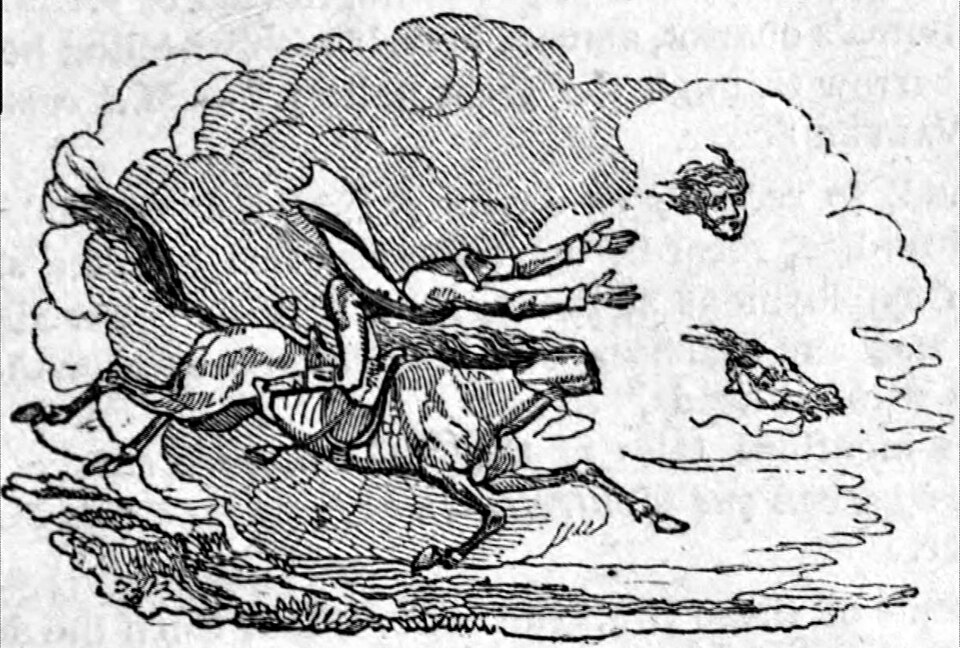
The Dullahan belongs to Irish traditions of headless supernatural figures, including riders and the ominous death coach. It is often summarized as a headless horseman carrying his head, but historical collections contain a wider and less tidy set of stories. Not every encounter ends with the witness’s death, and not every figure is a mounted man.
A useful place to see that variety is T. Crofton Croker’s Fairy Legends and Traditions of the South of Ireland. The collection’s Dullahan section includes a headless rider who rewards courage, notes on a death coach and references to other headless apparitions. These are recorded traditions and literary retellings, not evidence that such beings exist.
What does Dullahan mean in the old collection?
Croker groups a number of headless appearances under the name. His accompanying notes even discuss uncertainty about its derivation. That is a warning against confidently presenting one neat English translation as the key to the entire tradition.
The simplest visual description is often adequate: a figure has a body but no head in its expected place. In some stories the missing head remains present elsewhere, carried or otherwise detached. The uncanny effect comes from a familiar human shape continuing to act after an injury that should make action impossible.
The collection used here is an 1844 edition. That date should not be confused with the invention of the tradition, and it does not establish that every passage appeared in the earliest editions of Croker’s work. A printed collection preserves a particular stage in the telling, not an untouched recording of an ancient original.
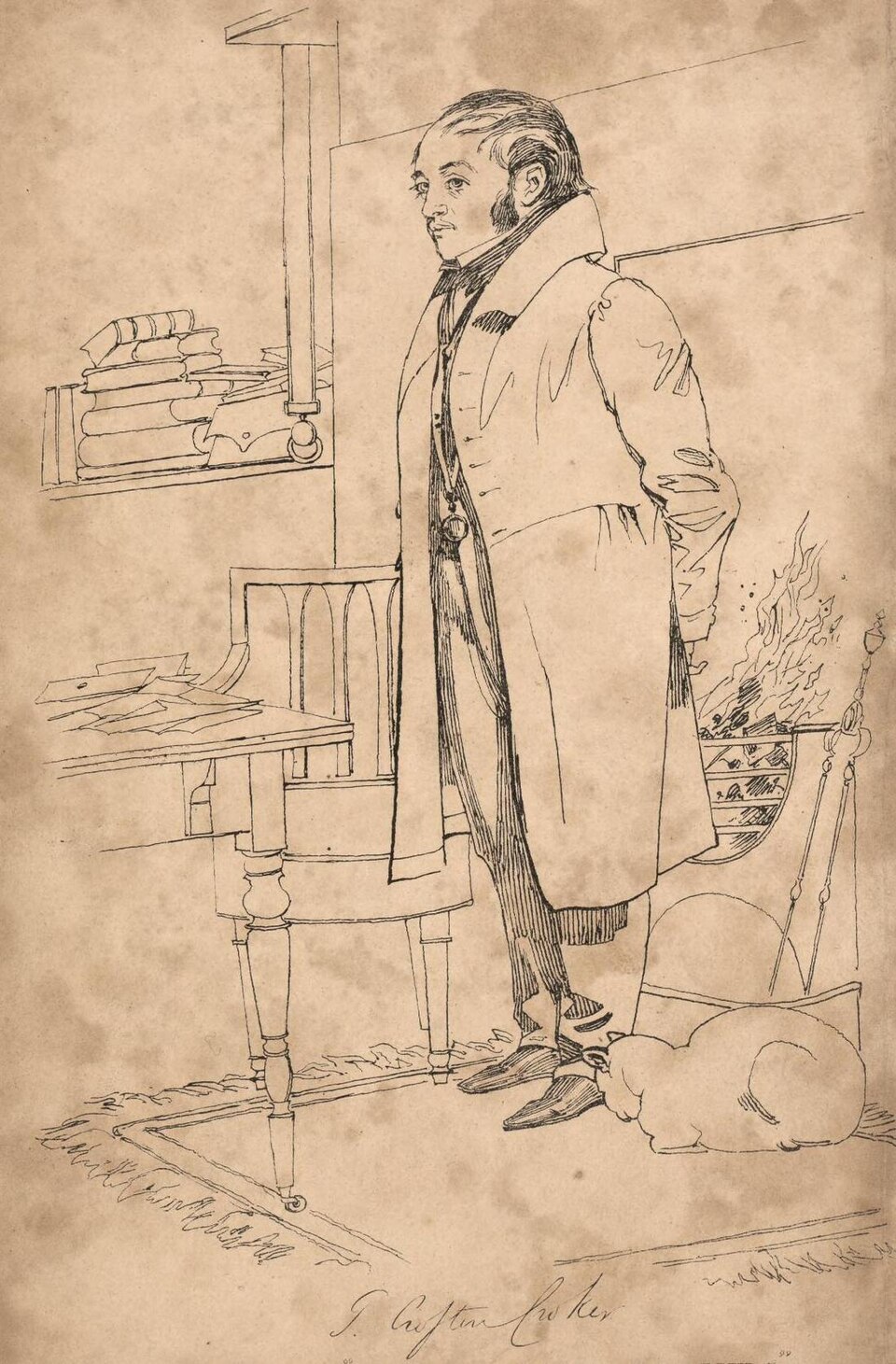
Thomas Crofton Croker, the Irish antiquarian and folklorist who collected and published the Dullahan material discussed here. Source. Public domain.
The rider who meets Charley Culnane
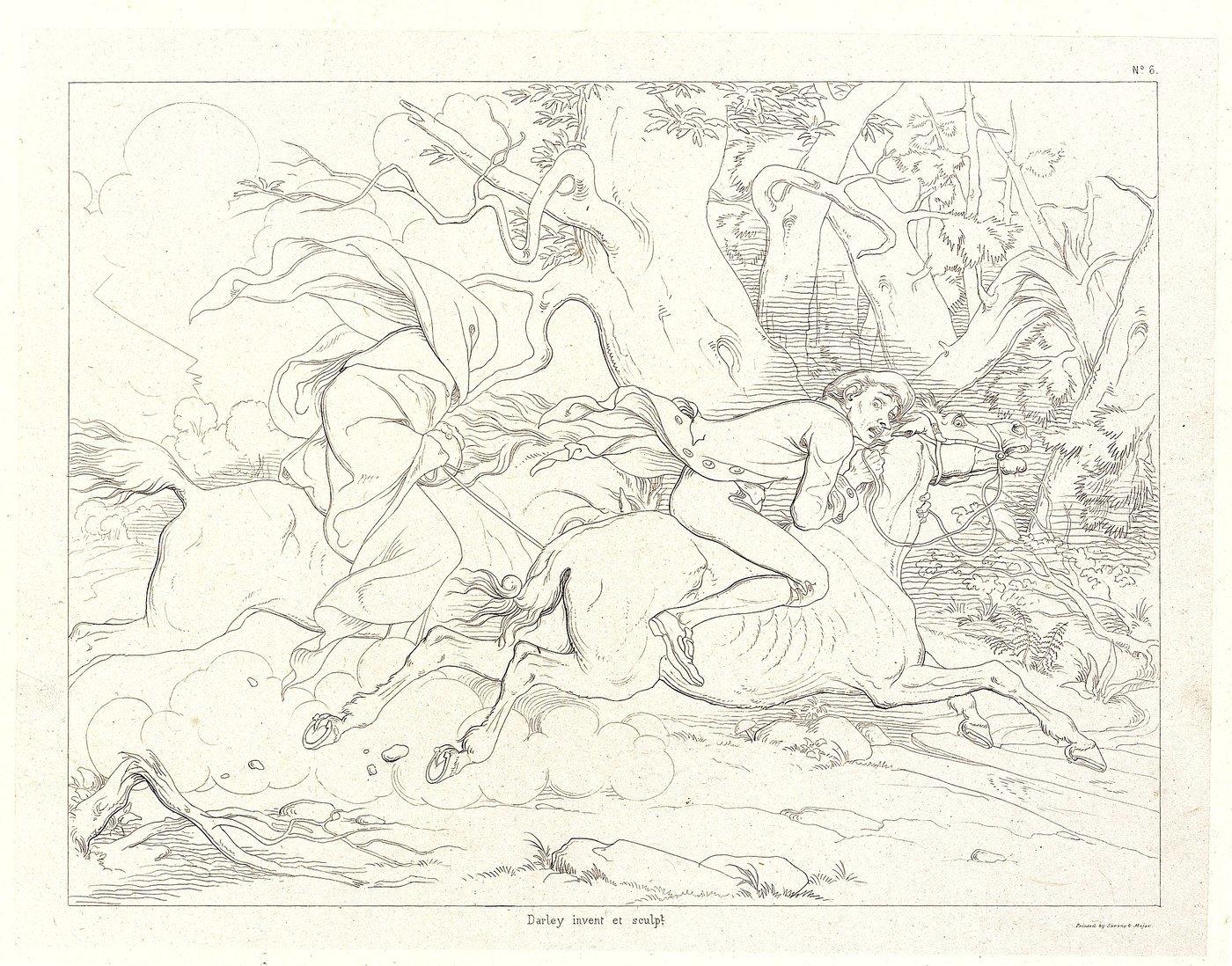
In Croker’s “The Headless Horseman,” Charley Culnane encounters a mounted stranger during a Christmas-season journey. The setting is the south of Ireland, with recognizable local places rather than an unspecified enchanted country.
The stranger carries his head and rides an equally unnatural horse. Instead of immediately killing Charley, he becomes part of an extraordinary race. Charley’s willingness to keep going matters to the encounter.
The rider explains that he and his horse broke their necks a hundred years earlier. He responds favorably to Charley’s courage and promises assistance rather than announcing an unavoidable death. This is a very different story from the modern rule that merely seeing a Dullahan must be fatal.
The ending also leaves room for ordinary skepticism. Charley’s neighbors can understand his account in the light of drinking rather than accept it as a supernatural report. The collection lets an improbable adventure and a community’s doubts occupy the same page.
The death coach is a related, not identical, image
Croker’s notes describe a death coach associated with headless figures and horses. Its appearance can be interpreted as an omen of death or misfortune. The important idea is the arrival of a vehicle whose purpose seems to extend beyond ordinary travel.
A coach also changes the shape of the fear. A lone rider may challenge one traveler; a carriage suggests collection, transport and a destination the living are not meant to know. That is an interpretation of the image’s effect, not a claim that every teller explained it in those terms.
It is best to keep the named account visible when describing a specific detail. How many horses pull it? Who drives? What happens to a witness? Different retellings should not be combined into an artificial master version in which every feature is compulsory.
For another Irish tradition associated with approaching death, compare the banshee. A warning or omen is not necessarily the same thing as a supernatural figure causing the death it announces.
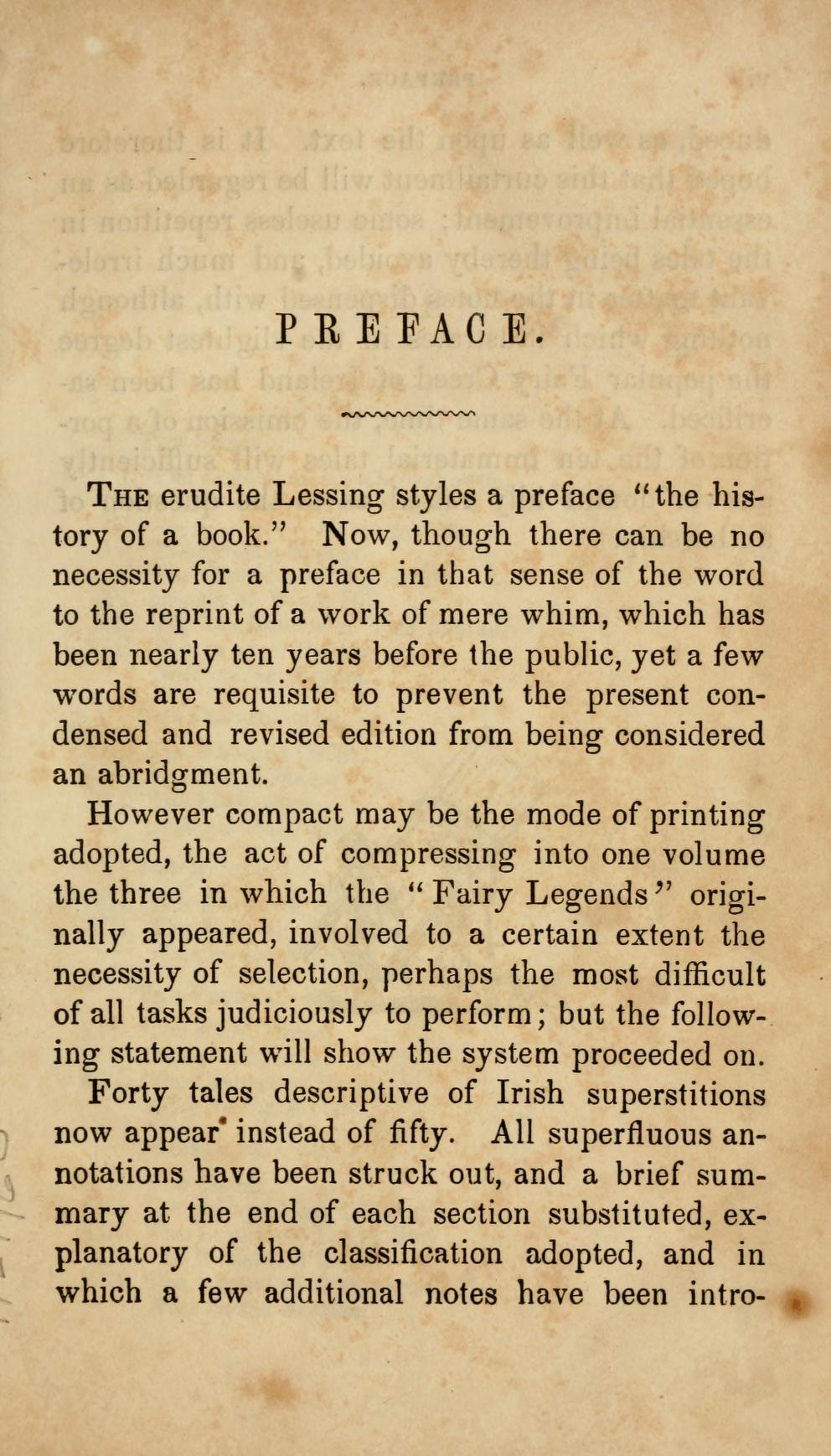
The preface of the 1844 edition of Fairy Legends and Traditions of the South of Ireland*, describing it as a condensed and revised reprint of material first published nearly a decade earlier — a reminder that a printed collection has its own publishing history. Source. Public domain.*
Does every Dullahan carry a spine whip?
A whip made from a human spine appears in many modern descriptions. So do fixed claims about gold, the calling of a person’s name and precise rules for avoiding the rider. Those details require their own sources. They should not be attributed to Croker’s headless-horseman tale simply because it is old and accessible.
The same problem arises with elaborate claims that the Dullahan descends directly from one ancient deity or a specific sacrificial practice. A plausible-sounding connection is not a demonstrated line of transmission. Without traceable evidence, it is better described as a later explanation, not the established origin.
Folklore does not become less valuable when some familiar details are recent or uncertain. It becomes easier to understand when we can see which teller, collector or later adaptation supplied them.
How is this different from Sleepy Hollow?
Washington Irving’s Headless Horseman is identified within his story as a Hessian soldier. His role depends on Ichabod Crane’s fears, a rivalry with Brom Bones and the clues left after a pursuit.
Croker’s material belongs to a different collection and setting. The common image of a headless rider permits comparison, but it does not establish that Irving’s character and every Irish Dullahan are one being. Nor does resemblance alone prove exactly what Irving borrowed.
A film or game may happily combine them. An explanation of the tradition should tell the reader when that combination is an adaptation rather than a historical conclusion.
Why the head remains such a powerful detail
A carried head lets a story make death visible without stopping speech, recognition or movement. It also gives the rider a strange relationship to his own body. He can present the evidence of his death while continuing the business of being a traveler, challenger or messenger.
Croker’s collection is especially useful because the rider is not reduced to a machine for killing witnesses. He can judge another person’s courage. A coach can foretell rather than attack. Neighbors can doubt an encounter without preventing it from becoming a story worth repeating.
Those differences are the tradition’s substance, not errors to be corrected into a single official Dullahan. The headless figure is recognizable; the meaning of meeting it is what changes from account to account.
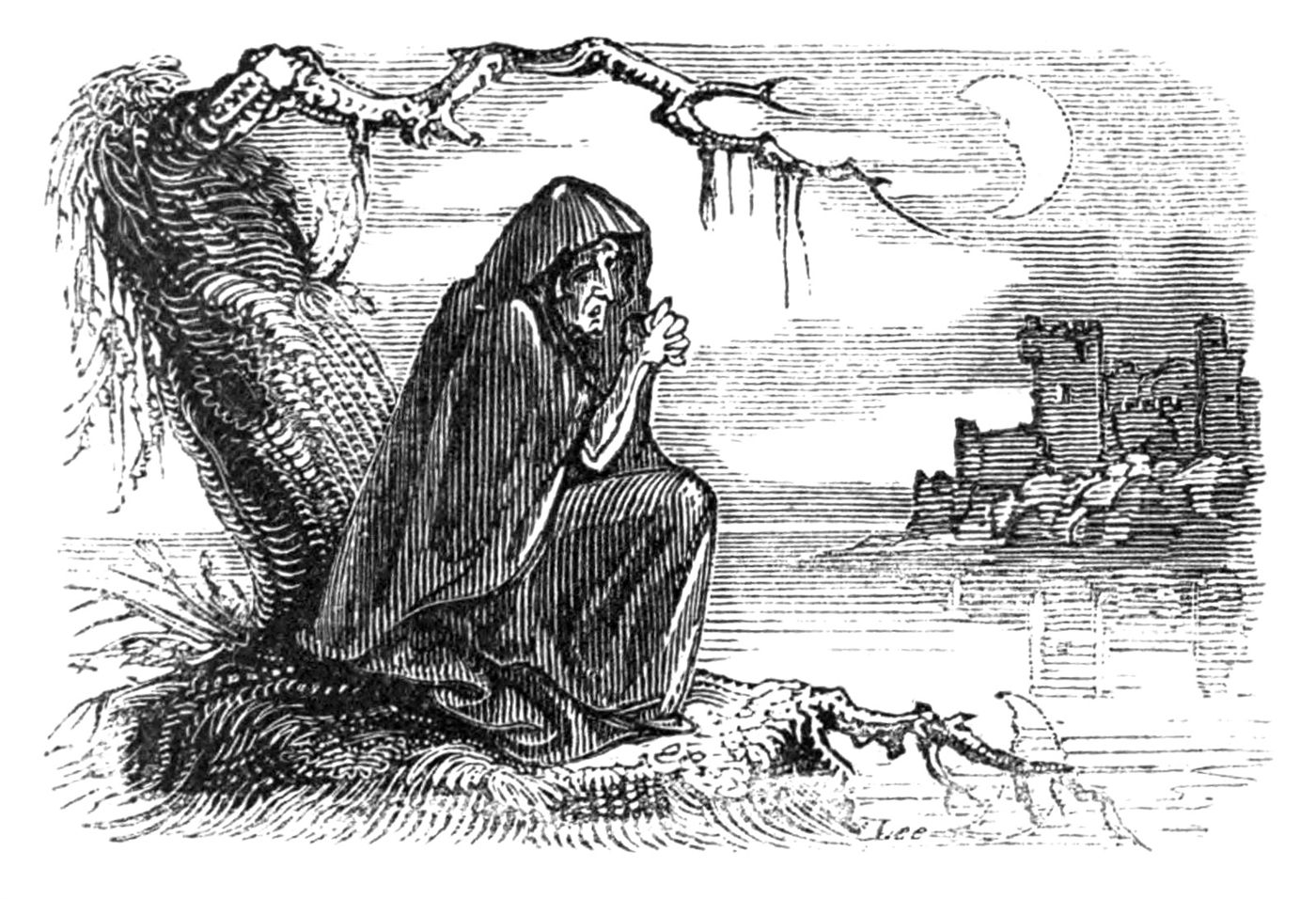

Fairy_Legends_p0239-dullahan.jpg)
.jpg)