Lore & Explained / Literature
The Dunwich Horror Explained: Wilbur, His Twin and Yog-Sothoth
Who is the Dunwich Horror? Follow Wilbur Whateley, his invisible twin, Yog-Sothoth and Armitage's final confrontation in Lovecraft's original 1929 story.
Topics: The Dunwich Horror, H. P. Lovecraft, Yog-Sothoth, Cosmic Horror
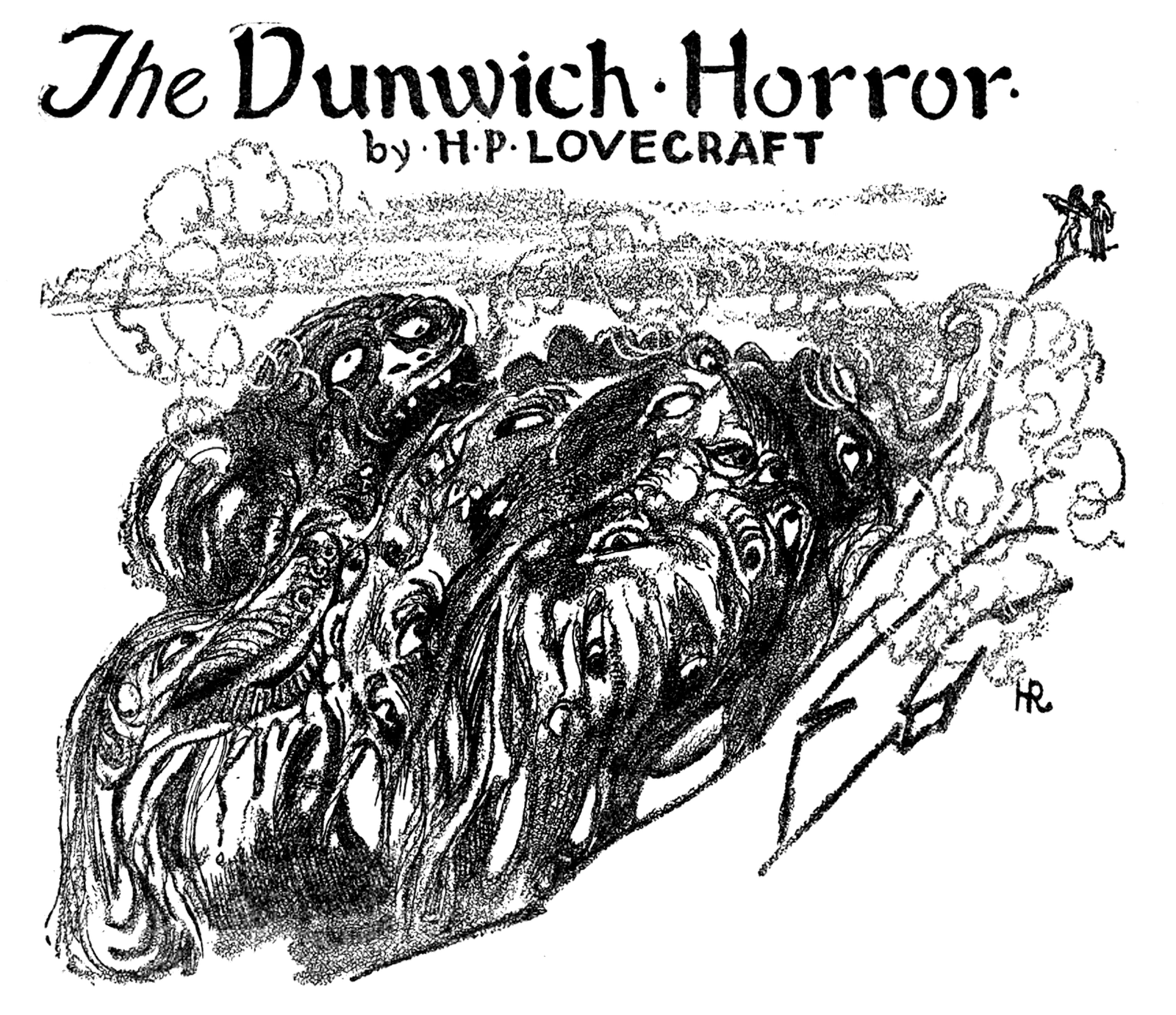
The monster called the Dunwich Horror is Wilbur Whateley’s enormous, largely invisible twin—not Wilbur himself. Both are the offspring of Lavinia Whateley and Yog-Sothoth within H. P. Lovecraft’s fiction. Wilbur dies before the final confrontation; the remaining creature becomes the threat that Armitage, Rice and Morgan confront on Sentinel Hill.
This explanation covers the original story, first published in the April 1929 issue of Weird Tales, and includes its ending.
Who is Wilbur Whateley?
Wilbur is born into the isolated Whateley household and grows at an extraordinary rate. He develops speech, learning and a disturbing physical appearance, while his grandfather prepares the family property for something hidden inside it.
Wilbur’s unusual body is only part of the mystery. His research and interest in forbidden books indicate an organized purpose. He is trying to obtain knowledge needed for the family’s project, not merely wandering as an instinctive monster.
The household’s demands for cattle and its alterations to the building become clues to another presence. What initially looks like an eccentric family’s secrecy is the concealment of a being much larger than outsiders understand.
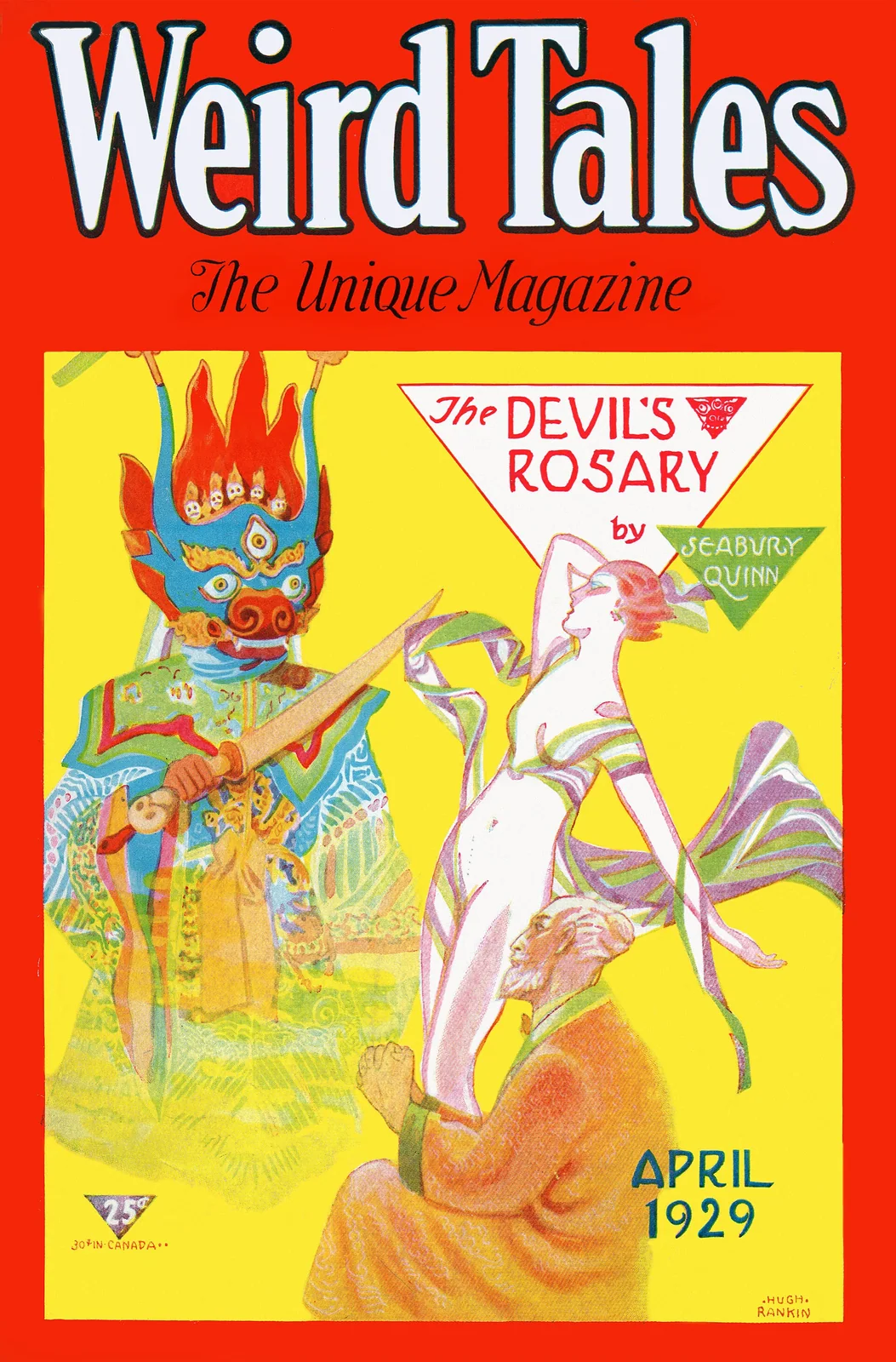
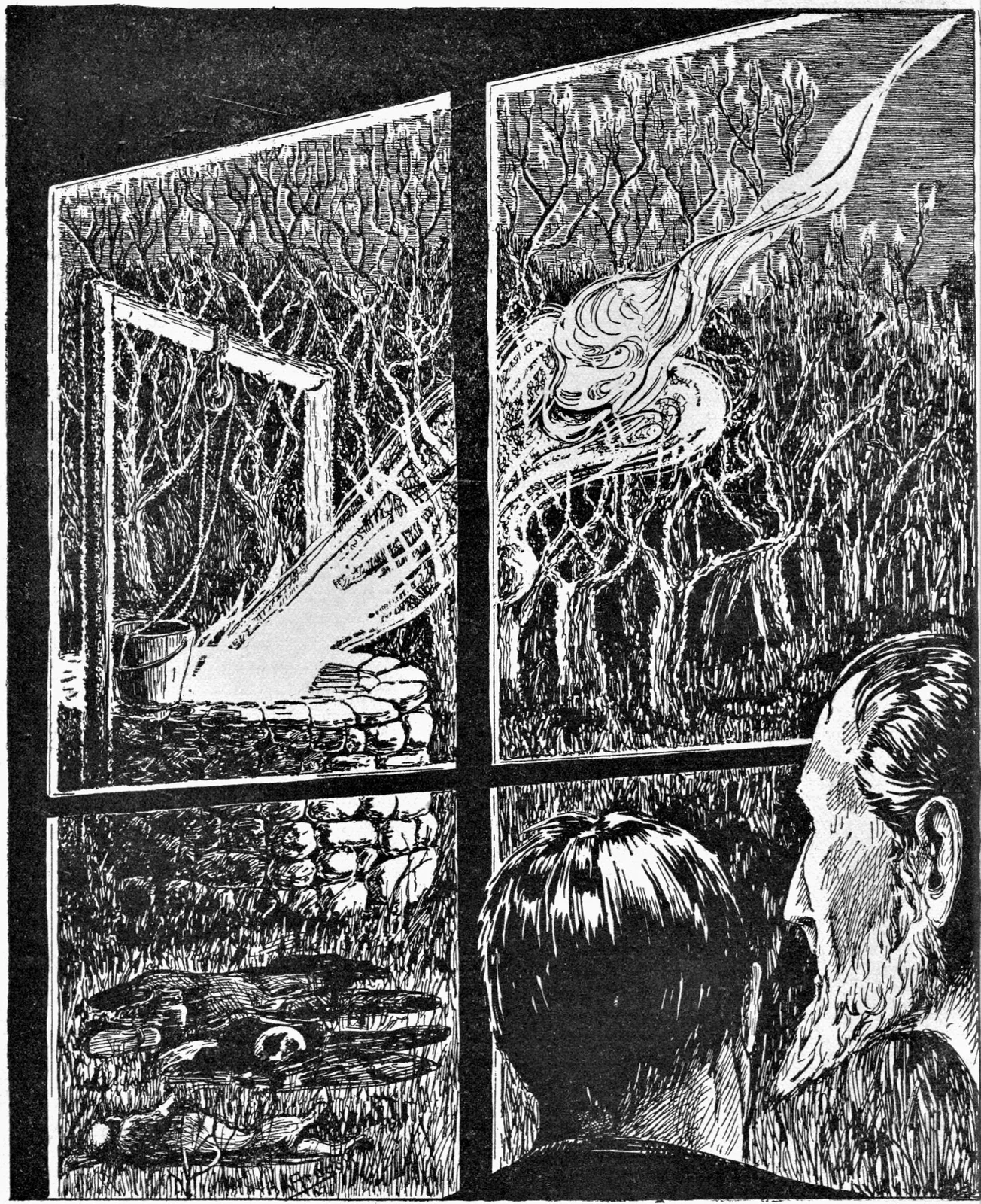
The issue that printed The Dunwich Horror; its cover illustrates Seabury Quinn’s The Devil’s Rosary, not Lovecraft’s story. Source. Hugh Doak Rankin. Public domain. Resized and converted to WebP.
Why does Wilbur need the Necronomicon?
He seeks a complete text at Miskatonic University’s library because the material available to him is insufficient. Henry Armitage recognizes the danger in the passages Wilbur consults and refuses to let him take the book away.
Wilbur later attempts to enter the library at night and is killed by a guard dog. His death reveals the inhuman features concealed by his clothes. It is a major disclosure, but it is not the story’s final monster encounter.
The Necronomicon is Lovecraft’s fictional book. Its role here is to give knowledge a material form that can be incomplete, withheld, stolen or interpreted. The university library becomes a dangerous threshold because access to a text can have consequences outside it.
What is the invisible creature?
The remaining Whateley offspring breaks out after the household’s control collapses. It is Wilbur’s twin, but far less human in appearance and vastly larger. Its movement produces destruction and traces that witnesses can observe even when they cannot see the body causing them.
The final confrontation temporarily makes its shape visible. That revelation clarifies the relationship rather than introducing an unrelated monster at the last moment. The creature also bears a disturbing resemblance to its human mother.
The original text gradually aligns three kinds of evidence: the family’s behavior, Wilbur’s writings and the physical effects of the escaped being. The revelation works because those strands finally refer to the same hidden history.
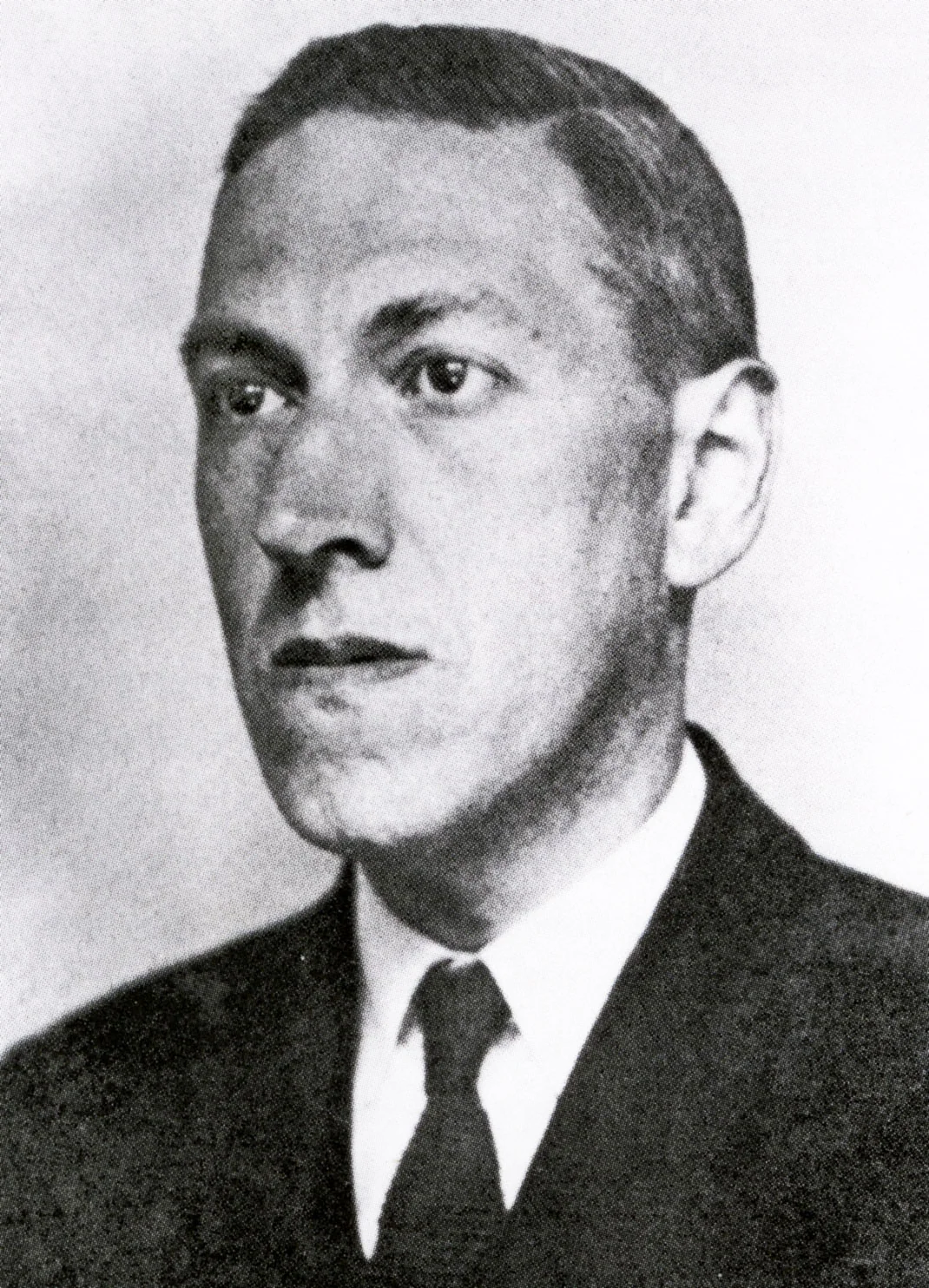
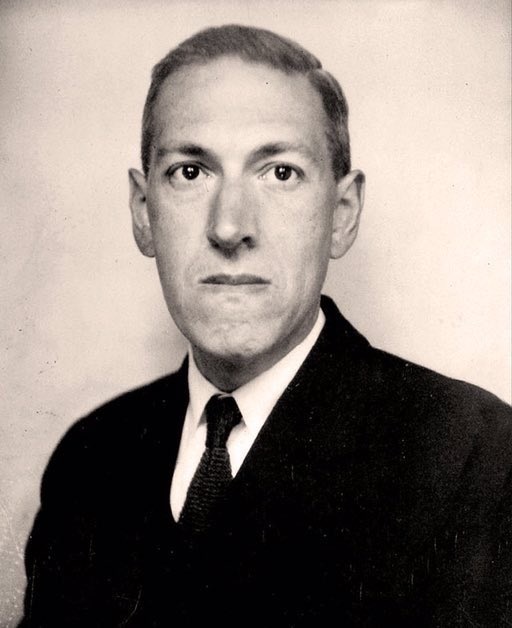
H. P. Lovecraft, photographed by Lucius B. Truesdell in June 1934. Source. Lucius B. Truesdell. Public domain. Resized and converted to WebP.
How do Armitage, Rice and Morgan stop it?
Armitage deciphers Wilbur’s diary and develops an understanding of the threat. He goes with Rice and Morgan to confront the creature using the knowledge and formulae they have assembled.
The creature’s final appeal invokes Yog-Sothoth as its father. The intervention removes the immediate threat, and the surviving explanation identifies the family relationship that the town had failed to understand.
The ending gives scholarship an unusually active role. Reading, translating and comparing sources lead to an intervention. It is still fictional occult knowledge, not a real ritual for readers to reproduce.
Is Yog-Sothoth another name for Cthulhu?
No. The story names Yog-Sothoth in relation to the Whateley births and the larger supernatural scheme. Cthulhu is a different figure in Lovecraft’s fiction.
Later games and reference books often organize these names into more systematic hierarchies than the stories themselves provide. A useful explanation begins with the role a name plays in this particular text, then identifies later additions separately.
What should readers notice about the narration?
Lovecraft repeatedly associates the fictional community with inherited decline and social degeneration. Those descriptions reveal the story’s prejudiced framing; they should not be adopted as factual judgments about real rural people or families.
The horror plot also depends on an imagined biological boundary between human and nonhuman. Reading that mechanism critically allows the story’s craft and its troubling assumptions to be examined together.
For a contrasting Lovecraft story, continue with The Colour Out of Space. There, the central threat resists a family tree or a named divine identity, and knowledge offers far less control.