Lore & Explained / Literature
Nyarlathotep Explained: Lovecraft's Crawling Chaos
Who is Nyarlathotep? Follow Lovecraft's changing portrayals, from a disturbing showman to a manipulator in the Dreamlands and a presence in darkness.
Topics: Nyarlathotep, H. P. Lovecraft, Cosmic Horror, Dreamlands
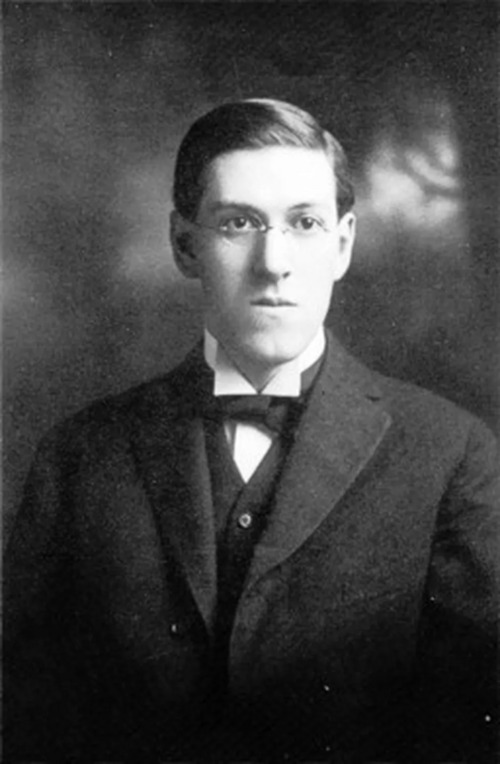
United Amateur Press Association, c. 1915-1920 (Public Domain)
Nyarlathotep is a fictional being created by H. P. Lovecraft, often identified by the name “the Crawling Chaos.” Unlike Cthulhu, whose defining story centers on a remote presence and a catastrophic encounter, Nyarlathotep repeatedly comes close to human beings. He can speak, impress, mislead and draw people toward things they should not encounter.
His name and Egyptian styling do not make him an ancient Egyptian deity. The relevant source is Lovecraft’s fiction. His different appearances are best read individually before being assembled into a modern encyclopedia of forms.
This article discusses key developments in several Lovecraft stories.
The showman in “Nyarlathotep”
The short piece “Nyarlathotep”, first published in 1920, introduces a strange figure who comes out of Egypt and attracts crowds with demonstrations involving unusual instruments, electricity and images. The narrator’s initial encounter has the structure of a public spectacle rather than a monster attack.
The performance leads into a breakdown of familiar reality. Streets, crowds and the city itself become part of an increasingly dreamlike catastrophe. Explaining every image as a literal event with a fixed place in a shared-universe timeline would make this piece less clear, not more.
The disturbing idea is that the audience comes willingly. Nyarlathotep does not need to begin by smashing a door. He offers a demonstration people are curious to see. Spectacle becomes a route into something they cannot control.
Why Egyptian imagery is not an Egyptian origin
Lovecraft uses Egypt to suggest antiquity, unfamiliar knowledge and an intimidating connection to the past. That is part of the literary construction. A name that sounds ancient, a pharaonic appearance or an association with archaeological mystery is not evidence of worship in ancient Egypt.
This distinction matters especially in illustrated articles. An Egyptian statue can provide clearly labeled visual context, but it cannot honestly be presented as an ancient statue of Nyarlathotep. There is no reason to convert a real artifact into evidence for a fictional character.
A dated portrait, manuscript page or original publication image is often more useful. It shows where the story actually comes from.
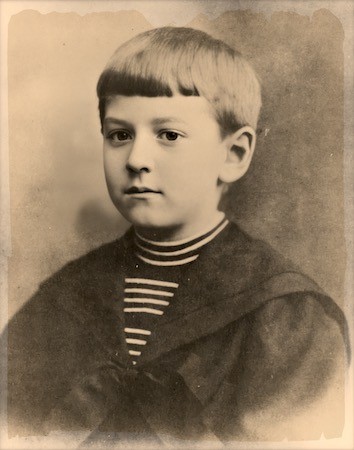
Lovecraft’s early biography shaped the imagination behind all of his fiction, including the dreams he later drew on for “Nyarlathotep” and the Dreamlands stories. Source. Public domain.
The manipulator in The Dream-Quest of Unknown Kadath
In The Dream-Quest of Unknown Kadath, Randolph Carter’s search brings him into a confrontation with Nyarlathotep. Here the menace is articulate and personal. A grand humanlike presentation and seemingly helpful directions conceal a dangerous intention.
The scene depends on the difference between receiving an explanation and being safe. Someone can provide an impressive account of your circumstances while steering you toward disaster. Carter is threatened by intelligence directed at him, not just by a universe indifferent to his existence.
That makes this appearance a useful counterpart to the early prose piece. The public showman and the commanding guide are not identical scenes, but both involve a figure who understands the appeal of an audience’s desires. Curiosity and aspiration provide openings.
The Black Man in “The Dreams in the Witch House”
“The Dreams in the Witch House” brings together witchcraft imagery, dreams and unfamiliar dimensions. Nyarlathotep is associated with the figure called the Black Man, drawing on the story’s treatment of the witches’ supernatural master.
That title belongs to the historical and literary vocabulary the story invokes. It should not be confused with a modern racial description of an ordinary person. Lovecraft’s work nevertheless contains racist assumptions elsewhere, and a modern explanation should not adopt his prejudice or treat his fictionalized occult material as a reliable description of real people.
The appearance also illustrates a larger point: Lovecraft can connect cosmic fiction with older-looking supernatural motifs without making the resulting story an account of an actual ritual tradition. The witch-house narrative is fiction, not a guide to identifying paranormal activity.
Darkness and the Shining Trapezohedron
In “The Haunter of the Dark”, Robert Blake investigates an abandoned church and an object called the Shining Trapezohedron. The story connects the entity encountered through that object with Nyarlathotep.
This is a different horror mechanism again. Sight, darkness and the failure of protective light become central to Blake’s danger. The character’s attempt to understand what he has uncovered draws him further into it.
The object and church also show how Lovecraft builds a history around a fictional entity. Records, names and relics supply depth. They should be read as parts of the invention rather than checked off as evidence of a real cult.
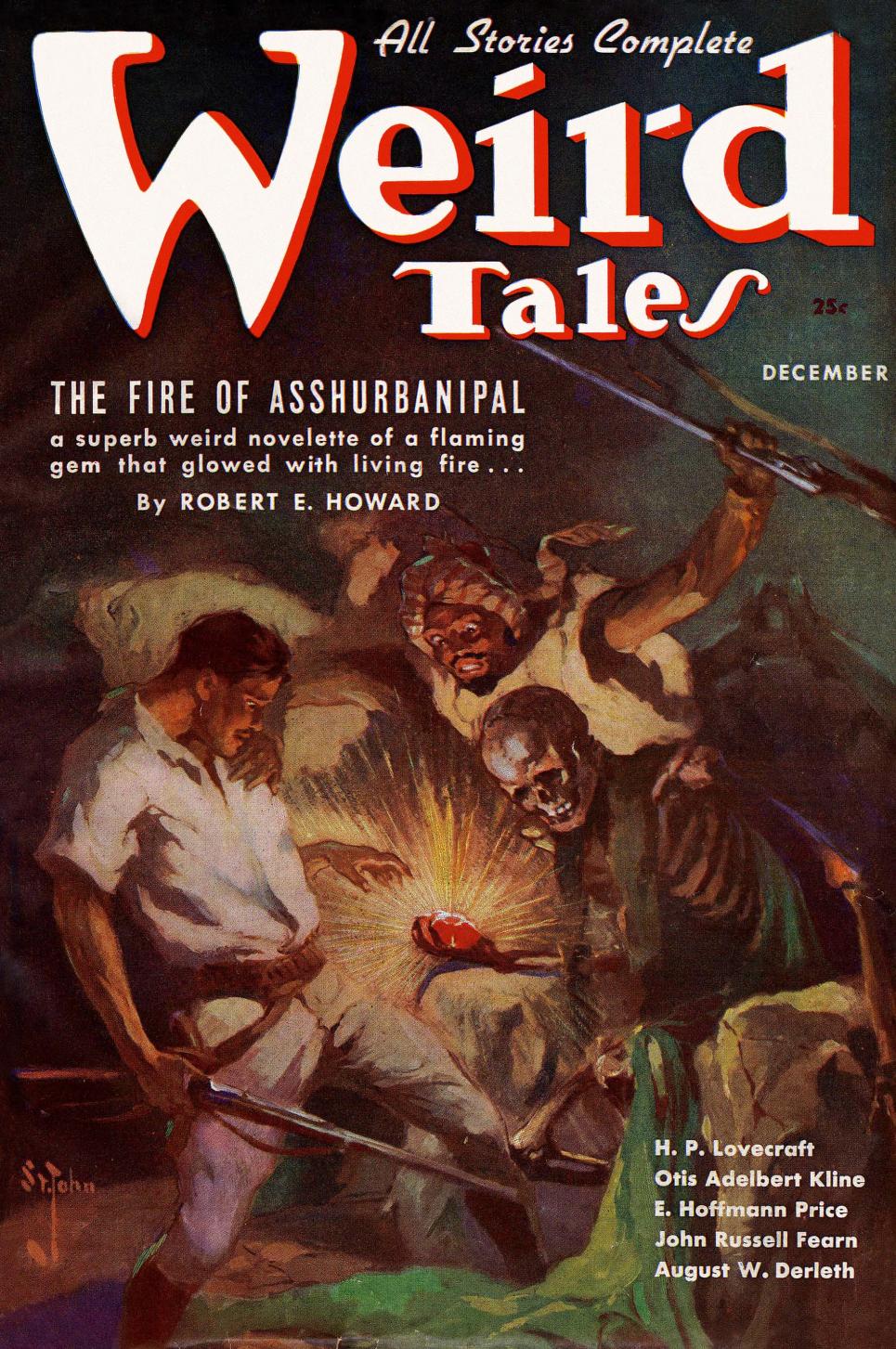
The December 1936 issue of Weird Tales*, which first published “The Haunter of the Dark” — Lovecraft’s name appears among the issue’s contributors on the cover. Source. Cover art by J. Allen St. John, illustrating a different story in the same issue; Popular Fiction Publishing Co., 1936. Public domain.*
Does Nyarlathotep have a definitive list of forms?
Not one that can simply be extracted as a stable character sheet from these stories. Later authors and games often name and organize many manifestations. Those lists can be meaningful inside the works that created them, but they are not automatically Lovecraft’s own finalized system.
A better approach is to identify the source of each form. The Egyptian showman belongs to the early short piece. The Dreamlands encounter belongs to Carter’s narrative. The witch-house figure belongs to that story’s blend of cosmic and witchcraft horror. The Haunter belongs to Blake’s encounter with the mysterious object.
Keeping the stories separate does not deny their connections. It makes the connections traceable.
Is Nyarlathotep more dangerous than Cthulhu?
A ranking would need rules that the fiction does not consistently supply. The stories are not organized as combat matches, and their effects are not measured on one scale.
The more useful comparison is how the characters experience danger. Cthulhu is discovered through scattered evidence and briefly encountered as an overwhelming presence. Nyarlathotep can offer a face, a voice and a reason to follow him. One horror is incomprehensibility; the other can be the discovery that something incomprehensible understands you rather well.
Readers looking for the background to Lovecraft’s invented documents can continue with the Necronomicon. Like Nyarlathotep, that book acquired a life beyond its original fictional appearances. The later life is worth discussing, as long as it is not mistaken for the ancient history the fiction pretends to preserve.