Lore & Explained / Folklore
The Necronomicon Explained: Lovecraft's Fictional Book and the Simon Edition
The Necronomicon was invented by H. P. Lovecraft. Later published books used the title, but real ancient names do not make their ritual systems ancient.
Topics: Necronomicon, H. P. Lovecraft, Occult
Lucius B. Truesdell / Wikimedia Commons (Public Domain)
The Necronomicon is not an ancient grimoire. It is H. P. Lovecraft’s fictional book, created for his stories and later treated playfully enough by readers and writers that some people came to believe it had a real history.
That answer is unusually clear because Lovecraft himself supplied it. He invented both the title and its alleged author, Abdul Alhazred, then scattered references through his fiction so that the book seemed to sit behind several stories. Later writers, occult publishers and catalogue jokes did not uncover a hidden original. They extended a successful fictional device.
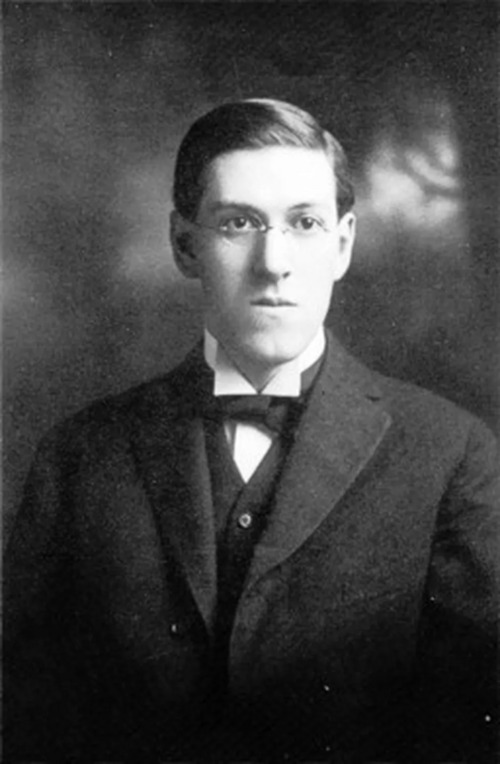
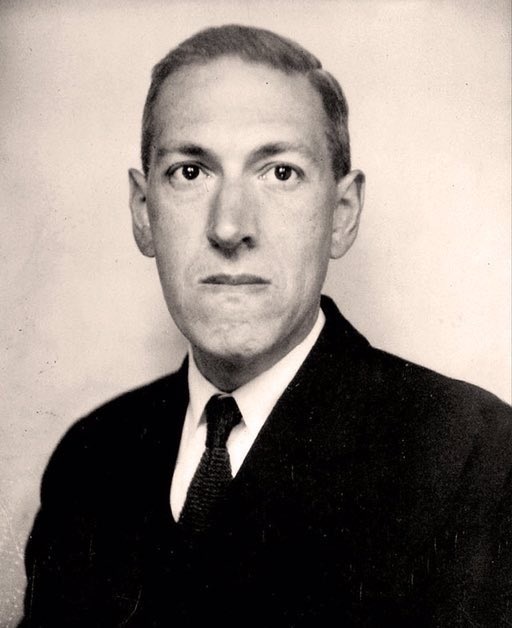
H. P. Lovecraft in 1934. Source. Lucius B. Truesdell / Wikimedia Commons, Public Domain.
Lovecraft’s invented bibliography
Lovecraft gave the book a fictional Arabic author, Abdul Alhazred, and a deliberately elaborate publication history. His short “History of the Necronomicon” is part of that literary game: it makes an invented object feel catalogued and old. Library cards, bookshop listings and later jokes extended the illusion, but no historical Abdul Alhazred or ancient Necronomicon has been verified.
The name “Abdul Alhazred” was not an attempt at careful Arabic scholarship. Lovecraft reportedly used it as a childhood pseudonym, and it belongs to the deliberately exoticized style of his early fiction. His invented history claims that Alhazred wrote an Arabic work, later rendered into Greek as Necronomicon, then into Latin, with rare copies supposedly held by particular libraries. The point was verisimilitude: a reader could imagine checking a catalogue. It was never a real bibliography.
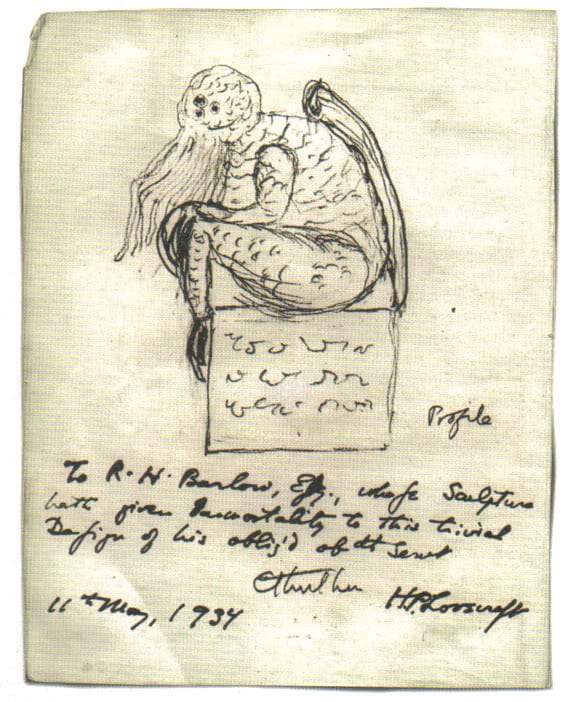
Lovecraft also made the point outside the stories. In correspondence and in the pseudo-scholarly history itself, he described the volume as an invention. The University of North Texas copy of the “History” preserves the mechanism in its most explicit form. A book that is fictional can still have a detailed date, translator and shelf location in a story; those details are part of the fiction, not evidence that a manuscript awaits discovery.
Lovecraft’s friends also used the title in related fiction. That shared practice helped make the book feel larger than any single story. It remains a work of horror fiction, not evidence of a lost occult tradition.
Writers in Lovecraft’s circle borrowed names, places and imaginary books from one another. Robert E. Howard, Clark Ashton Smith and others helped create what readers later called the Cthulhu Mythos, although it was not a single tightly managed canon. This collaborative use made the Necronomicon feel like a reference work with multiple witnesses. It is better understood as an early shared-fiction convention than as a secret text accidentally revealed through horror magazines.
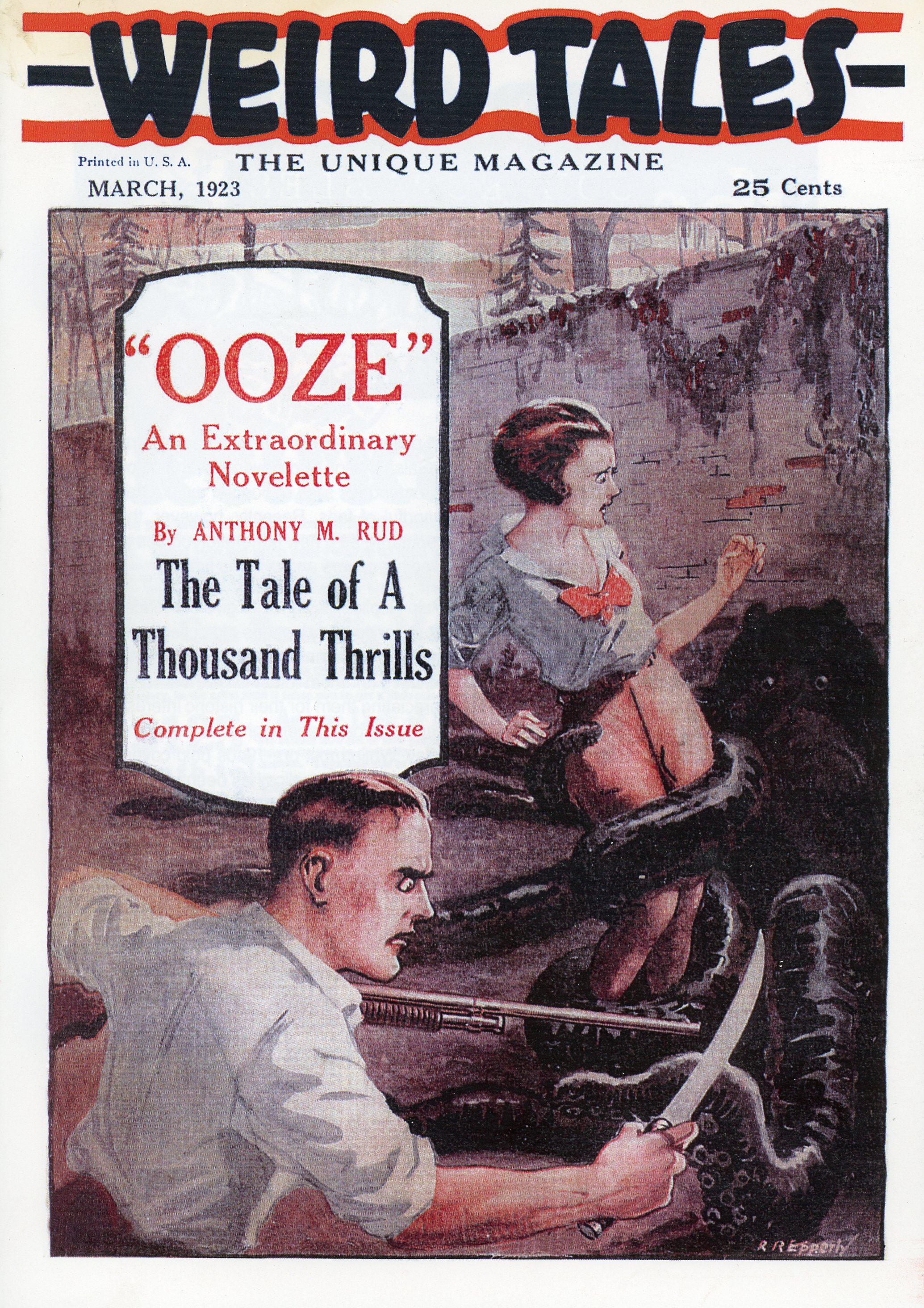
The March 1923 cover of Weird Tales, the pulp magazine that became central to Lovecraft’s publishing world. It does not depict the Necronomicon. Source. Richard Ruh Epperly / Wikimedia Commons, Public Domain.
Why published Necronomicons exist
The 1977 Simon Necronomicon and other later editions are real modern books. The Simon edition combines Lovecraftian framing with material and names drawn from Mesopotamian texts, occult publishing and later esoteric ideas. The presence of names such as Pazuzu does not turn the book’s system into an ancient source. It shows how recognizable ancient material can be repackaged for a new audience.
The Simon edition is often confused with Lovecraft’s book because its title page and packaging invite the confusion. It appeared through a New York occult-publishing milieu in 1977 under the byline “Simon.” Its claimed lineage and authorship have been debated by readers, but that uncertainty about a twentieth-century publishing project is not evidence for an ancient grimoire. George Hay’s 1978 Necronomicon and many later books used the same cultural opening: readers knew the name from fiction and were willing to entertain a book that looked like a recovered source.
Mesopotamian names are real names from real ancient traditions, but they do not authenticate the system around them. Pazuzu, for example, is a Mesopotamian wind-demon figure represented in ancient objects and texts. A modern author can borrow the name without reproducing the historical religious context. Claims that the Simon book descends from Sumerian or Babylonian ritual texts therefore need an actual textual chain of transmission; a shared name is not one.
Crowley connections belong in the same category. The idea that Aleister Crowley secretly supplied the Necronomicon, or that Lovecraft received ancient occult material indirectly from him, is a later speculation. No reliable documentary record establishes it. Crowley and Lovecraft are both useful to modern occult and horror markets, which helps explain why the link persists.
That distinction matters for readers encountering claims of cursed copies or secret rituals online. A printed book can be real while its claimed ancient lineage is not. For the actual ancient figure often recruited into this story, see Pazuzu; for another fictional archive that became participatory folklore, see the SCP Foundation.
Why the question survives
The Necronomicon is a durable hoax-shaped idea because it answers its own objection. A missing book can be called rare; a missing manuscript can be said to be suppressed; a catalogue joke can be recast as proof. Internet listings and horror marketing make the fiction feel more available, not more historical. The useful test is simple: is there a verifiable pre-Lovecraft manuscript or a credible documentary chain from antiquity to the present? There is not.
That does not make the later books uninteresting. They are evidence of modern occult publishing, fan culture and the appeal of fiction that presents itself as a document. The factual distinction is straightforward: Lovecraft created the original Necronomicon; later authors created real books using its name.
Questions readers ask
Is the Necronomicon real? Lovecraft’s original book is fictional.
Who was Abdul Alhazred? A fictional author created for Lovecraft’s stories.
What is the Simon Necronomicon? A modern published occult book using Lovecraft’s title and reworked material, not an authenticated ancient manuscript.