The Index / Cults
The Jonestown Massacre Explained: What Happened on November 18, 1978
What happened at Jonestown on November 18, 1978: Leo Ryan's visit, the airstrip shooting, the 918 deaths and why 'murder or suicide' is still argued over.
Topics: Jonestown, Peoples Temple, Jim Jones, Cults, Guyana, Leo Ryan, 1978
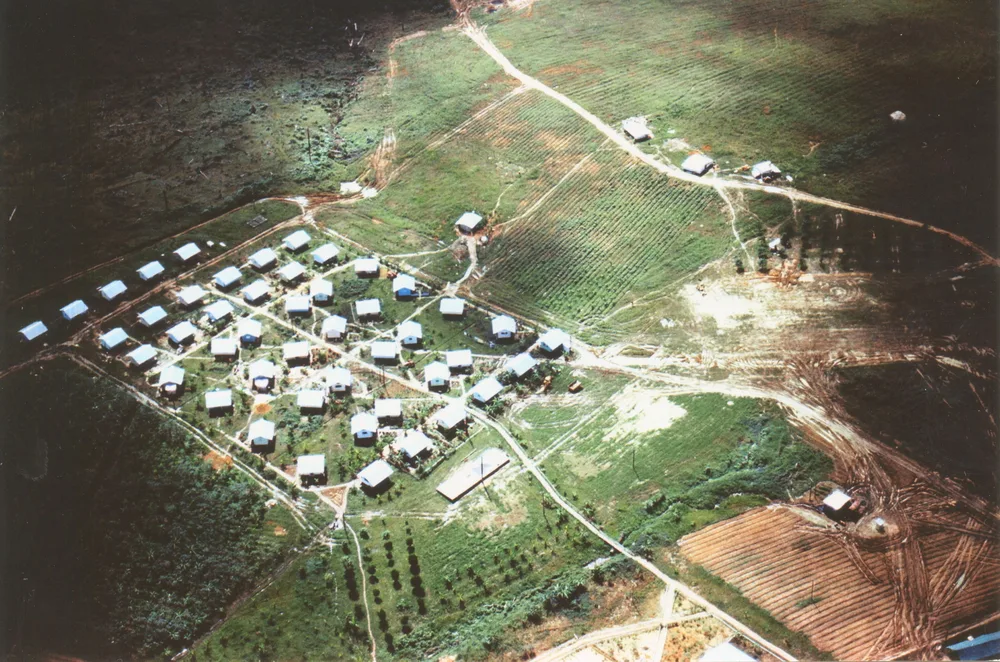
On November 18, 1978, 918 people died in Guyana in connection with Peoples Temple, the American religious movement led by Jim Jones. Five, including U.S. Congressman Leo Ryan, were shot at the Port Kaituma airstrip as they tried to leave. Four died at the Temple’s house in Georgetown. The other 909 died at Jonestown itself, the settlement Peoples Temple had built in the jungle near the Venezuelan border. All but two of them died of cyanide poisoning, from a fruit drink mixed with potassium cyanide and sedatives. Jones died of a gunshot wound to the head. The death toll included 304 children and minors under 18.
Those figures come from the Jonestown Institute at San Diego State University, which maintains the list of the dead, and they match the Guyanese inquest held a month later. Almost everything else about the day is argued over: whether it was suicide or murder, how many people were injected rather than drinking, and how a congregation that began as an integrated church in Indianapolis ended in a clearing in South America. This guide separates what the surviving record establishes from what witnesses claimed, what one pathologist said and later changed, and what remains unresolved.
The short version
| Date | Event | Status |
|---|---|---|
| Mid-1950s | Jim Jones begins his ministry in Indianapolis; the congregation becomes Peoples Temple | Documented |
| 1965 | Jones and about 70 followers move to Redwood Valley in northern California | Documented |
| 1972 | The Temple buys a church building in San Francisco and later opens a second in Los Angeles | Documented in the 1979 House report |
| 1974 | Temple “pioneers” begin clearing jungle in Guyana’s Northwest District | Documented |
| July 16, 1977 | Jones leaves the United States for Guyana as a critical magazine article is about to appear | House report; a defector’s affidavit says June |
| Mid-1977 | Most of the congregation moves to Jonestown; the population approaches 1,000 | Documented |
| June 1978 | Deborah Layton Blakey’s affidavit warns the U.S. government of mass-suicide rehearsals | Documented sworn statement |
| November 14, 1978 | Congressman Leo Ryan’s party leaves for Guyana | Documented |
| November 17, 1978 | Ryan’s party arrives in Jonestown after dark | Documented |
| November 18, 1978, about 5:20 p.m. | Shooting at the Port Kaituma airstrip; five killed, at least ten wounded | Documented |
| November 18, 1978, from about 5 p.m. | Deaths at the Jonestown pavilion and at the Temple house in Georgetown | Documented |
| December 13 to 22, 1978 | Guyanese inquest at Matthews Ridge | Documented |
| May 15, 1979 | House staff investigative report published | Documented |
| 1986 | Larry Layton convicted in the United States in connection with Ryan’s murder; paroled in 2002 | Documented |
| 2025 | A commercial memorial tour of the site begins, over survivors’ objections | Reported |
Peoples Temple before Guyana
James Warren Jones was born in Indiana in 1931. According to the Jonestown Institute, Peoples Temple began in Indianapolis in the 1950s, affiliated with the Disciples of Christ denomination, and made racial integration and help for the poor central to its work. The 1979 House report dates the start of Jones’s ministry to the mid-1950s.
In 1965 Jones, his wife Marceline, their adopted children and about 70 followers moved to Redwood Valley, in the wine country north of San Francisco. The House report says Jones chose the area partly because he believed it would be safe in a nuclear attack. From there the movement spread to San Francisco, where the Temple bought an old church building in 1972, and to Los Angeles. The congregation grew, and so did its political visibility. The report notes that Mayor George Moscone appointed Jones to the San Francisco Housing Authority.
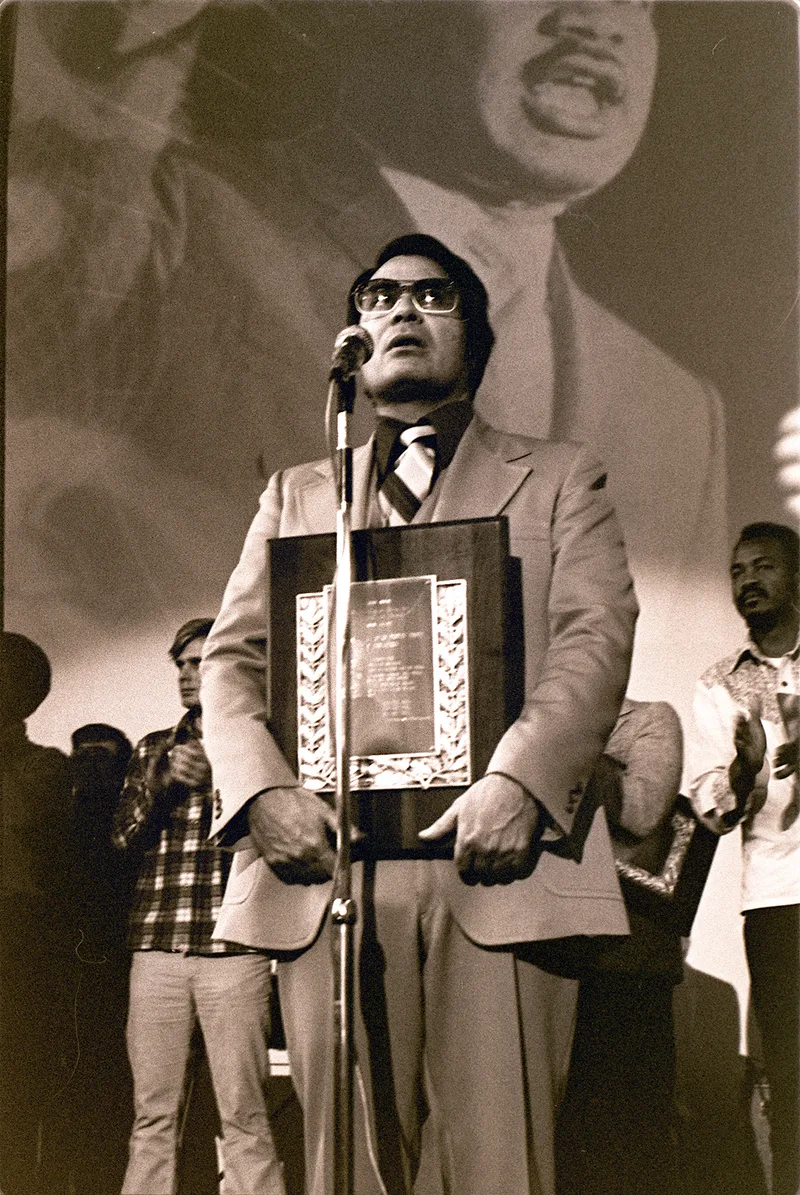
Jim Jones receiving a Martin Luther King Jr. Humanitarian Award at Glide Memorial Church, San Francisco, in January 1977, months before he left for Guyana. Photo by Nancy Wong via Wikimedia Commons, CC BY-SA 3.0; resized and converted to WebP.
Peoples Temple was not the first American religious movement to grow around a leader who promised healing and claimed special powers. The Fox sisters’ rappings had launched Spiritualism from upstate New York more than a century earlier. What set the Temple apart was the degree of control Jones came to hold over members’ money, movements and children, and the fact that he was able to relocate almost the entire congregation to another country.
Jonestown: the agricultural project
In 1974 a small group of Temple members began clearing jungle in Guyana’s Northwest District for what was formally called the Peoples Temple Agricultural Project. The settlement, Jonestown, lay about six kilometres from the mining town of Port Kaituma. The House report describes Jones beginning to build the community in 1974 and the majority of the congregation moving there in mid-1977.
The timing was not a coincidence. The magazine New West was preparing an exposé based on accounts from former members, published on August 1, 1977. The House report says the anticipated article “apparently caused Jim Jones to leave the United States for Guyana on July 16, 1977.” Deborah Layton Blakey, the Temple’s former financial secretary, put his departure in June in her later affidavit. Either way, by 1978 only a handful of members remained in California, and almost a thousand people were living at Jonestown.
Jones’s departure was also tangled with a custody case. Grace Stoen and her husband Tim Stoen, a former assistant district attorney who had been one of Jones’s closest advisers, went to court to recover their son, John Victor Stoen, whom Jones kept in Guyana. Blakey swore that in September 1977, when a lawyer for Grace Stoen arrived in Guyana, Temple staff were ordered to telephone a Guyanese official and threaten that the entire population of Jonestown would kill itself by 3:30 that afternoon unless the court action was stalled. She said the threat was called off when word came that the case had been delayed. This is her sworn account. The House report found “incomplete and inconclusive” evidence that unknown Guyanese officials may have tried to influence the custody proceedings.
The warnings before Ryan’s trip
By 1978 a group of former members and relatives, calling themselves the Concerned Relatives, were pressing the State Department and members of Congress to investigate. Their most detailed evidence was Blakey’s affidavit, sworn in June 1978 after she had escaped from Guyana the previous month.
The affidavit describes a settlement “swarming with armed guards,” field work from 7 a.m. to 6 p.m. six days a week, a diet of rice and beans, and loudspeaker broadcasts by Jones averaging six hours a day. Its central allegation concerned what Jones called “white nights.” At least once a week, Blakey said, sirens woke the whole population, about fifty armed members went from cabin to cabin, and a mass meeting followed in which residents were told mercenaries were about to attack. During one such night, she swore, everyone including the children was lined up and given a small glass of red liquid, told it was poison and that they would die within 45 minutes. When nobody died, Jones announced it had been a loyalty test and warned that the real thing would come.
These were allegations from a defector. The House report later treated the affidavit as credible and criticized the U.S. Embassy in Georgetown for not showing “adequate initiative” in response to warning signs. It also found that confusion over the Privacy Act hampered the sharing of information about Temple members, and that a Customs report about possible gun shipments never reached the embassy.
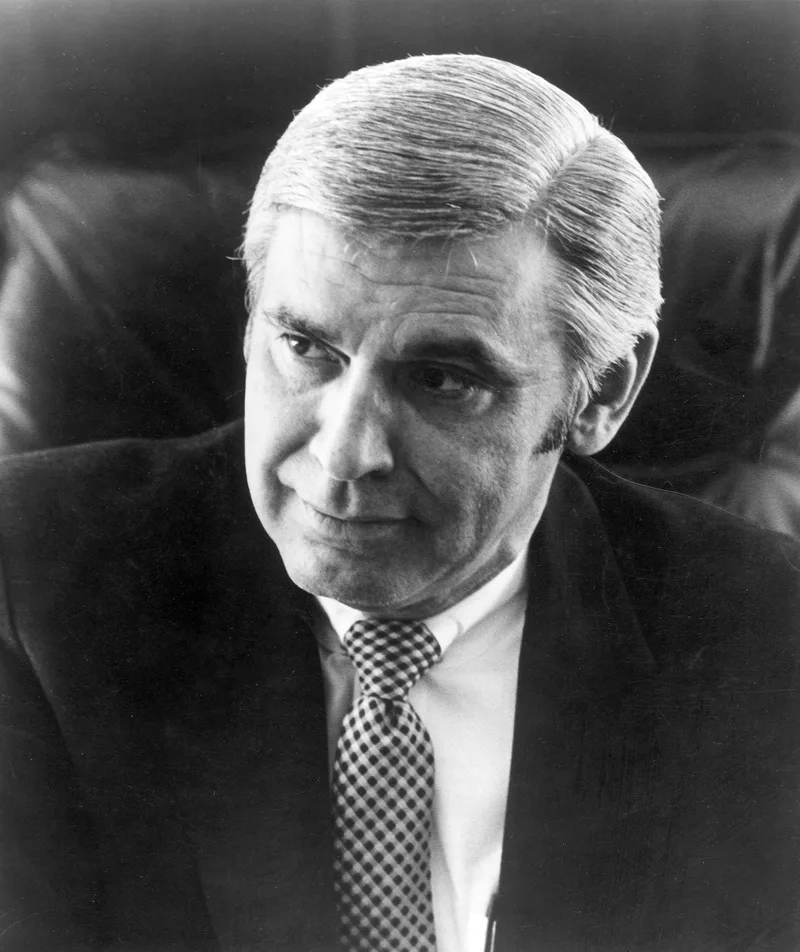
Congressman Leo J. Ryan of California, who was posthumously awarded the Congressional Gold Medal. Official portrait from the Office of the Clerk, U.S. House of Representatives, via Wikimedia Commons, public domain; resized and converted to WebP.
Leo Ryan’s visit
Leo Ryan, a Democratic congressman from the San Francisco area, met with the Concerned Relatives in August 1978. Many Temple members were his constituents. The FBI’s own summary of the case says the allegations he had heard included beatings, forced labour, imprisonment, drugs used to control behaviour, suspicious deaths and rehearsals for a mass suicide.
Ryan’s party left for Guyana on November 14, 1978, and arrived in Georgetown around midnight. According to the House report it included nine media representatives, four members of the Concerned Relatives, and several officials and lawyers. After negotiations with the Temple’s attorneys, the party flew to Port Kaituma on the afternoon of Friday, November 17, and reached Jonestown after dark. Ryan interviewed residents. The House report concluded that Jones routinely “staged a show” for outsiders, which made it hard for officials to see real conditions. Blakey had said the same thing in her affidavit months earlier.
During the visit, several families and individuals asked to leave with Ryan. The FBI summary notes that Ryan wanted the whole group to fly out together, fearing retribution against anyone left behind, which required a second aircraft and delayed the departure.
The airstrip shooting
On Saturday, November 18, the group assembled at the Port Kaituma airstrip. According to the House report, the shooting began at about 5:20 p.m. Guyana time and lasted four to five minutes. A dump truck from Jonestown arrived carrying several armed men, who opened fire on one aircraft. Aboard the other, a Temple member named Larry Layton, who had posed as a defector, drew a gun and shot and wounded two people.
Five people were killed: Congressman Ryan; NBC correspondent Don Harris; NBC cameraman Bob Brown; San Francisco Examiner photographer Greg Robinson; and Patricia Parks, a Temple member who was leaving. Ryan’s aide Jackie Speier, later a congresswoman herself, was among those seriously wounded. The House report counts her and nine others as wounded, five seriously.
The report found “no hard evidence” of a plan to kill Ryan formed before his arrival, though it did not rule out what it called a “contingency conspiracy.” It also found no conclusive evidence for the claim, popular in later conspiracy writing, that the CIA had been tracking Jones.
The deaths at the pavilion
Back at Jonestown, the House report estimates the deaths began at about 5 p.m., around the time of the airstrip shooting. Jones gathered the community in the open-sided pavilion at the centre of the settlement.
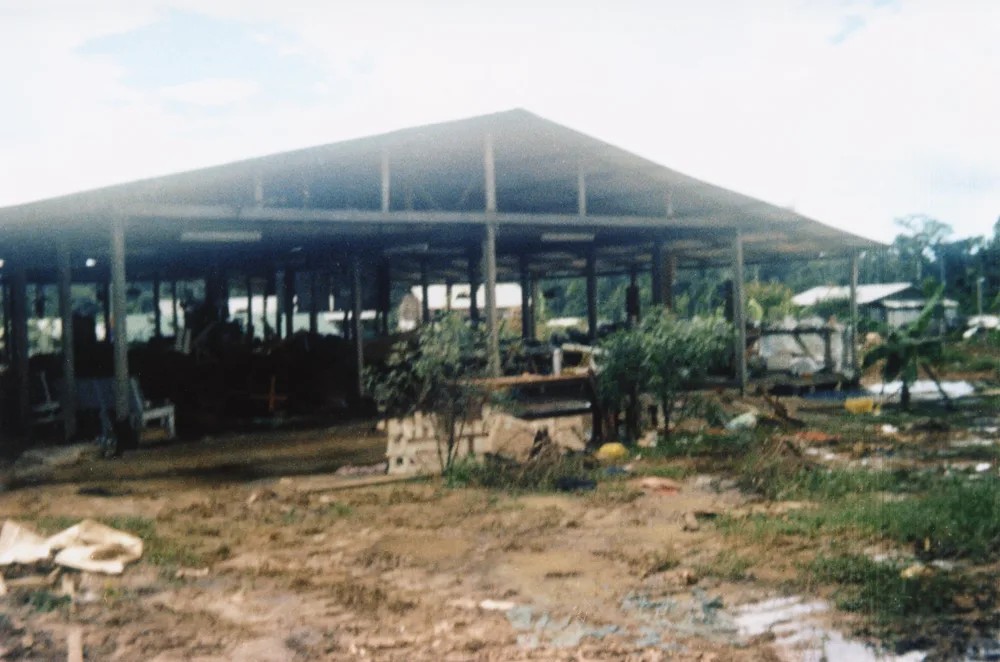
The Jonestown pavilion, photographed by FBI agents after November 18, 1978. The photograph shows the structure and debris only. FBI, released under the Freedom of Information Act, via Wikimedia Commons, public domain; resized and converted to WebP.
What was said there is known because a tape recorder was running. The recording, catalogued by the FBI as tape Q042 and widely called the “death tape,” was transcribed by the Bureau and is published by the Jonestown Institute, which notes that parts are inaudible. On it Jones tells the crowd that the congressman has been killed, predicts that the departing plane will crash, and calls what is about to happen “revolutionary suicide,” distinguishing it from what he calls self-destructive suicide. One member, Christine Miller, argues back. She asks whether it is too late to be airlifted to Russia, which the Temple had discussed as a possible refuge, and says she has the right to her own opinion. Jones replies that it is too late because people have “started to kill.” Other voices in the crowd turn on her. The transcript records children crying and reports of deaths as it goes on. It ends, in the FBI’s words, with Jones’s final remarks, music, and then silence.
The poison was mixed in a metal drum. The Jonestown Institute states that the lethal mixture was potassium cyanide and several sedatives, including Valium and chloral hydrate, in the fruit drink Flavor Aid. The brand Kool-Aid, which gave the world the phrase “drink the Kool-Aid,” was not the one used on November 18, although Kool-Aid packets did exist in the Jonestown pantry from earlier years. The Guyanese inquest transcript itself refers to the drum as containing “Cool-Aid,” so the confusion is nearly as old as the event.
Survivors who later testified included Odell Rhodes, Stanley Clayton and Tim Carter. Their accounts, as summarised by the Jonestown Institute’s co-director Rebecca Moore, are that the medical staff and some parents gave the poison to the children first, and that armed guards with shotguns and crossbows surrounded the pavilion. Carter watched his wife and child die. Clayton’s account is the fullest, because he stayed longest before he fled into the jungle. Some residents escaped on foot; the Jonestown Institute counts roughly 87 people in Guyana that day as survivors.
In Georgetown, the capital, four more people died at the Temple’s house in Lamaha Gardens: Temple member Sharon Amos and her three children, who died of knife wounds after word of the airstrip shooting reached the capital.
How many people died
| Where | Deaths | Notes |
|---|---|---|
| Jonestown | 909 | 907 cyanide poisoning; Jim Jones and Annie Moore of gunshot wounds |
| Port Kaituma airstrip | 5 | Leo Ryan, Don Harris, Bob Brown, Greg Robinson, Patricia Parks |
| Georgetown, Lamaha Gardens | 4 | Sharon Amos and her three children |
| Total | 918 | Includes 304 children and minors under 18 |
The figure 914 also appears in reputable sources, and it is not wrong. It is the number of bodies the U.S. military removed from Jonestown and Port Kaituma combined, and it is also the number of Peoples Temple members who died, since Ryan and the three journalists were not members. Other figures that circulate, such as the 913 used in some accounts, usually come from press reports and government releases in the first ten days, before the count was settled at 918. The first counts from the scene were around 400, and the toll rose over the following week as the recovery proceeded.
The Guyanese inquest verdict, delivered on December 22, 1978, gives two different totals in the same document, 914 and 910, which shows how unsettled the count still was a month later.
Murder or suicide? What the evidence can and cannot show
No question about Jonestown is argued more fiercely. The official American phrase, used in the House report and by the FBI, is “mass suicide/murder” or “mass murder/suicide.” The Guyanese inquest went further. Its verdict found that Jones died of gunshot wounds, that Annie Moore and Maria Katsaris died by suicide, that “some persons or persons unknown” were responsible for Jones’s death, and that “Jim Warren Jones and persons unknown” were criminally responsible for the deaths of everyone else. It returned an open verdict on one unidentified man.
The physical evidence behind these findings is thinner than most accounts admit, and the key witness is a problem.
Dr. Cyril Leslie Mootoo, the Guyanese government pathologist, was the first medical examiner at the scene. His inquest testimony is the best early record. He testified that death was due to acute cyanide poisoning, that most people died twenty to thirty minutes after a lethal dose, and that tests on the syringes, the half steel drum and the contents of the paper cups were all positive for potassium cyanide. On Jones, he described an entrance wound above the right ear and an exit wound above the left, from a .38-calibre weapon, in what he called “the suicide area” for a right-handed person. The police testified that a .38 revolver was found 20 to 25 yards from the body. On Annie Moore, Mootoo’s opinion was that her wound could not have been self-inflicted; the inquest disagreed and recorded suicide.
Within weeks Mootoo was telling reporters that around 700 of the dead had been murdered, and in later interviews he said his team had examined 187 bodies killed by injection. Those statements are the foundation of nearly every “it was all murder” argument. Rebecca Moore, whose sister Annie died at Jonestown and who has read the FBI and embassy files on Mootoo, has set out why they cannot carry that weight:
- Mootoo arrived in Jonestown in the late afternoon of November 20 and was back in Georgetown performing autopsies by 11 a.m. on November 22. He had roughly one full day of daylight at the scene.
- Embassy cables and his own testimony show he ran toxicology tests, without dissection, on between 56 and 70 bodies, all positive for cyanide. He partially dissected only two people, Jones and Moore. Autopsies were otherwise waived by the Guyanese government.
- In his sworn testimony he did not describe needle marks. A police inspector did report needle marks on the arms of some bodies. The “injections between the shoulder blades” claim appeared in interviews years later and is not in his testimony, his statements to U.S. officials, or his presentation to American forensic scientists in 1979.
- His account of the gun changed: first on Jones’s chest, then 20 feet away at the inquest, and in a later conspiracy book 200 feet away.
Moore’s conclusion is not that nobody was murdered. She writes that the children, 304 of them, clearly were, because they were below the age of consent and eyewitnesses saw them given the poison. She accepts that some adults were injected against their will, since syringes and hypodermic needles were photographed at the scene and witnesses described them. What she rejects is any precise figure for how many adults were forced, because the one man who claimed to know could not have examined enough bodies to say.
Jim Hougan, an investigative reporter writing on the same site, reaches the opposite conclusion, that most of the dead were victims of homicide, and rests it largely on Mootoo’s later statements plus the armed cordon described by survivors. Both authors agree on one point that undercuts everyone: only seven of the dead were autopsied in the United States, by the Armed Forces Institute of Pathology, and those bodies had been embalmed first. Hougan notes that cyanide breaks down quickly and was not detected in five of the seven. Guyana’s own records fared worse. According to Hougan, most of the documents from the Guyanese proceedings were destroyed when government buildings were burned during political unrest in 1980.
What can be said with confidence is narrower than either side’s headline. More than 900 people died of cyanide. The children could not consent. Armed guards were present, according to survivors. Some adults were injected. Some adults drank willingly, including people who had pledged to do so at earlier “white nights.” The proportions are unknowable, and no later investigation has found a way to recover them. On the question of Jones’s own death, the AFIP autopsy, as reported in The New York Times in December 1978, found the findings consistent with either murder or suicide.
Investigations and the one conviction
Three official inquiries followed. The Guyanese inquest sat for six days in December 1978. The FBI opened its RYMUR investigation (for “Ryan murder”) under a federal law on the assassination of members of Congress, interviewed survivors with Guyanese police, and used its Disaster Squad to identify the dead by fingerprint. Its files, released under the Freedom of Information Act, run to well over 100 parts in the Bureau’s online Vault. And a staff group of the House Committee on Foreign Affairs conducted 165 hours of interviews with 62 people and reviewed 902 State Department documents before publishing its report on May 15, 1979.
The House report’s findings were blunt about Jones, calling him “first and foremost a master of mind control,” and measured about everyone else. It found that Peoples Temple had been a bona fide church early on but had “progressively lost that characterization.” It found that Ryan had received warnings of possible violence and discounted them, and that nobody interviewed had anticipated “the degree of violence actually encountered.” It found that Customs inspections of Temple shipments were so cursory that it was “likely” large sums of money and guns had reached Guyana in suitcases and false-bottomed crates.
Almost no one could be prosecuted, because almost everyone responsible was dead. The Jonestown Institute records two exceptions. Charles Beikman, who was present at the Georgetown house when Sharon Amos and her children died, served five years in a Guyanese prison on charges arising from those deaths. Larry Layton, the man who fired inside the aircraft at the airstrip, was acquitted of murder in Guyana, extradited to the United States and tried on charges of conspiring in the murder of a member of Congress. His first trial ended in a hung jury. A second jury convicted him in 1986, and the FBI records that he was sentenced to life. He was paroled in 2002 after 18 years in prison, and federal supervision ended in 2011. No one was ever charged in connection with the deaths at Jonestown itself. The contrast with the Lindbergh kidnapping, where a single conviction has been argued over for ninety years, is instructive: at Jonestown there was no one left to try.
The dead, the burial and the site today
Identifying the dead took months. The House report notes that 173 Social Security beneficiaries had been positively identified among the dead by the time it was written, with others presumed among the unidentified. Many families did not or could not claim remains, and many of the children were never identified. Unclaimed remains were buried together at Evergreen Cemetery in Oakland, California, where a memorial now lists the names of all the dead.
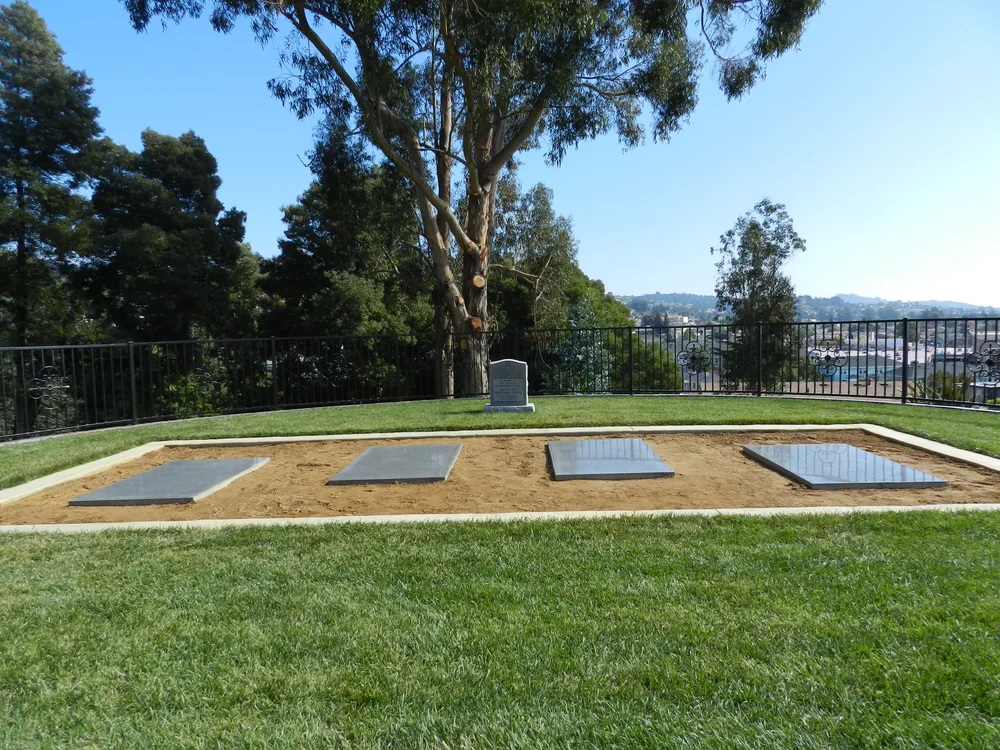
The Jonestown memorial at Evergreen Cemetery, Oakland, where unclaimed remains were buried. The granite panels list the names of the dead. Photo by Mercurywoodrose via Wikimedia Commons, October 2011, CC BY-SA 3.0; resized and converted to WebP.
Jonestown itself has largely returned to jungle. The New York Times reported in 2025 that the wooden and zinc buildings have long since been scavenged or overgrown, and that a single plaque, installed in 2009, marks the site. In 2025 a Guyanese company, Wanderlust Adventures GY, began offering a “Jonestown Memorial Tour” costing about 750 dollars, including a flight from Georgetown and a night in Port Kaituma. Guyana’s tourism authorities supported it. Survivors and relatives did not all agree. John Cobb, who lost eleven relatives including his mother and five siblings, called it “a money grab to capitalize on a tragedy.” Jackie Speier, who was shot five times at the airstrip, told ABC7 in December 2024 that she did not think it appropriate “to aggrandize that kind of cult activity.” The tour’s owner said the aim was education about manipulation and unchecked authority. Writers on the Jonestown Institute’s site have argued that anything other than a memorial dishonours the dead.
What is documented, claimed and disputed
| Claim | Status |
|---|---|
| 918 people died on November 18, 1978, in three locations | Documented; list of names maintained by the Jonestown Institute |
| 304 of the dead were under 18 | Documented |
| Cause of death at Jonestown was cyanide poisoning, from a drink mixed with sedatives | Documented by the inquest; mixture detailed by the Jonestown Institute from FBI evidence |
| The drink was Flavor Aid, not Kool-Aid | Documented by the Jonestown Institute; the inquest transcript says “Cool-Aid” |
| Jim Jones died of a .38 gunshot wound to the head | Documented |
| Jones shot himself | Consistent with the wound and position, per the pathologist; AFIP found it consistent with either; the inquest blamed “persons unknown” |
| Jones ordered the deaths and called them “revolutionary suicide” | Documented on tape Q042 |
| Children were given the poison first by adults | Witness testimony from survivors, accepted by investigators |
| Armed guards surrounded the pavilion | Witness testimony |
| Some adults were injected against their will | Supported by syringes at the scene and witness accounts; numbers unknown |
| About 700 people were murdered | Mootoo’s later claim; not supported by his own sworn testimony or by the number of bodies he examined |
| “White night” suicide rehearsals took place before November 1978 | Sworn allegation by Blakey in June 1978, consistent with the tape and later testimony |
| The CIA was tracking Jones | No conclusive evidence, per the House report |
| A plan to kill Ryan existed before his arrival | No hard evidence, per the House report; a “contingency conspiracy” not ruled out |
| Mass suicide was planned long in advance | Disputed; the rehearsals and the stockpiled cyanide show preparation, but no dated written plan has been published |
Jonestown is sometimes filed under cults as if that explained it. The documented record shows something more specific: a congregation that began with integration and social work, a leader whose control grew with distance from scrutiny, a state apparatus that did not act on a sworn warning, and a single afternoon in which the people best placed to stop it were being shot at an airstrip. For a case where religious conviction, isolation and a death ended in a courtroom rather than a jungle, see Anneliese Michel. For how a community’s beliefs about hidden enemies can override its own judgement, the Salem witch trials remain the older American example.
Frequently asked questions
How many people died at Jonestown?
909 people died at Jonestown itself. With the five killed at the Port Kaituma airstrip and the four who died in Georgetown, the total for November 18, 1978, is 918. The figure 914 counts the Peoples Temple members only, or the bodies removed from Jonestown and the airstrip.
Was Jonestown a mass suicide or a mass murder?
Both, in proportions nobody can state. The 304 children could not consent and were given poison by adults. Some adults were injected against their will, and armed guards were present. Others drank willingly. The Guyanese inquest found Jim Jones and persons unknown criminally responsible for all the deaths except two it recorded as suicides. The claim that about 700 people were murdered rests on later statements by a pathologist who examined far fewer bodies than that.
Did they drink Kool-Aid?
No. According to the Jonestown Institute, the cyanide and sedatives were mixed with Flavor Aid, a cheaper brand that the Institute says was more available in Guyana. Kool-Aid packets had been in the Jonestown pantry in earlier years, which is one reason the two are confused.
How did Jim Jones die?
Of a single gunshot wound to the head from a .38-calibre weapon, with the entrance wound above the right ear. The Guyanese pathologist described the position as consistent with suicide by a right-handed person. The inquest nevertheless attributed his death to persons unknown, and the American autopsy found the evidence consistent with either suicide or murder.
Who was Leo Ryan?
Leo J. Ryan was a Democratic congressman from California who travelled to Jonestown in November 1978 to investigate complaints from constituents’ families. He was shot dead at the Port Kaituma airstrip on November 18 with three journalists and a Temple member who was leaving with him. He was posthumously awarded the Congressional Gold Medal.
Was anyone punished?
Larry Layton was convicted in the United States in 1986 of conspiring in Ryan’s murder and was paroled in 2002. Charles Beikman served five years in Guyana over the Georgetown deaths. Nobody was charged for the deaths at Jonestown, because those responsible died there.
Can you visit Jonestown?
Since 2025 a Guyanese tour company has offered guided trips to the site, which is a clearing with a 2009 memorial plaque about six kilometres from Port Kaituma. Survivors and relatives are divided about whether it should be visited at all.
Sources & further reading
- Federal Bureau of Investigation, 'Jonestown: RYMUR (The Leo Ryan Murder/Jonestown Investigation)', FBI Records: The Vault (accessed November 5, 2026)
- FBI, 'A Byte Out of History: Jonestown, Murder in the Jungle' (November 16, 2007; archived; accessed November 5, 2026)
- U.S. House Committee on Foreign Affairs, 'The Assassination of Representative Leo J. Ryan and the Jonestown, Guyana Tragedy', Report of a Staff Investigative Group, House Document 96-223 (May 15, 1979), text via the Jonestown Institute (accessed November 5, 2026)
- Guyana Inquest into the Jonestown deaths, Matthews Ridge, December 13 to 22, 1978, transcript via the Jonestown Institute (accessed November 5, 2026)
- FBI transcription of tape Q042, Jonestown, November 18, 1978, via the Jonestown Institute (accessed November 5, 2026)
- Affidavit of Deborah Layton Blakey, 'Re the Threat and Possibility of Mass Suicide by Members of the People's Temple', June 1978, via the Jonestown Institute (accessed November 5, 2026)
- Jonestown Institute, San Diego State University, FAQ: 'How many people died on November 18?' (updated August 25, 2024; accessed November 5, 2026)
- Jonestown Institute, FAQ: 'Why are there differences in the final death toll?' (updated November 22, 2023; accessed November 5, 2026)
- Jonestown Institute, FAQ: 'What were the years of Peoples Temple's existence?' (updated November 11, 2023; accessed November 5, 2026)
- Jonestown Institute, FAQ: 'Were any people prosecuted for their roles in what happened on November 18, 1978?' (updated November 22, 2023; accessed November 5, 2026)
- Jonestown Institute, FAQ: 'Was It Kool-Aid?' (updated November 22, 2023; accessed November 5, 2026)
- Rebecca Moore, 'The Forensic Investigation of Jonestown Conducted by Dr. Leslie Mootoo: A Critical Analysis', the jonestown report (August 10, 2018; updated October 24, 2024; accessed November 5, 2026)
- Jim Hougan, 'To Be or Not to Be Was Not the Question', the jonestown report (July 25, 2013; accessed November 5, 2026)
- Genevieve Glatsky, 'The site of the Jonestown massacre opens to tourists. Some ask why', The New York Times, republished by The San Juan Daily Star (July 4, 2025; accessed November 5, 2026)
- Monica Madden, 'Guyana proposes site of 1978 Jonestown Massacre to tourism; draws concern from Jackie Speier', KGO-TV/ABC7 (December 10, 2024; accessed November 5, 2026)
- Marc Shuman, 'Why Jonestown should not be turned into a "tourist attraction"', the jonestown report (January 20, 2025; accessed November 5, 2026)