Lore & Explained
Kappa Explained: Japan's River Creature, Head Bowl and Cucumber Lore
Discover the kappa's water-filled head bowl, bowing trick and cucumber lore, with historical Japanese illustrations and explanations of local variants.
Topics: Kappa, Japanese Folklore, Yokai, Water Spirits
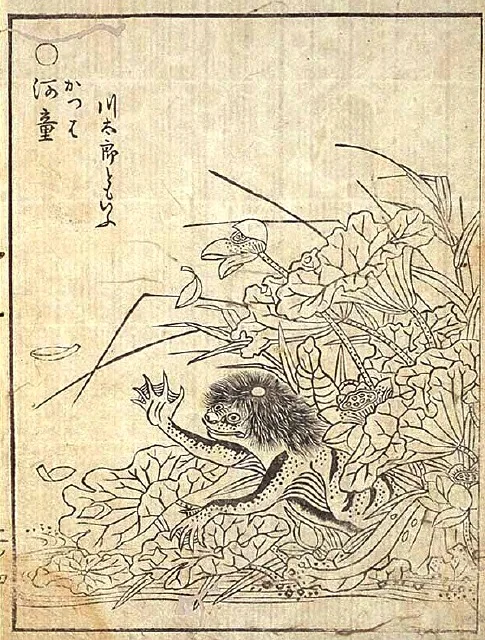
A kappa is a water creature in Japanese folklore, usually shown with webbed limbs and a water-filled hollow on its head. Its familiar turtle-like appearance belongs to a varied tradition: some stories make it a dangerous river attacker, others a wrestler, trickster or grateful neighbor. The cute mascot and the frightening waterside creature are different uses of the same folklore.
The head bowl, the bowing trick and the cucumber association are good starting points. They are not a universal rulebook followed by every local account.
What does a kappa look like?
The American Museum of Natural History’s introduction describes a child-sized creature combining human and animal features: a shell, webbed hands and feet, and a beak-like mouth. The hollow at the top of its head holds water associated with its strength.
Historical pictures are less standardized than a modern character sheet suggests. Toriyama Sekien’s eighteenth-century illustration and Hokusai’s nineteenth-century treatment give the creature different proportions and expressions. Looking at both makes the variation visible without assuming that one artist discovered its correct anatomy.
The label yōkai is useful here: it places kappa among Japan’s strange beings and phenomena. Translating every yōkai as a Christian-style demon erases distinctions between local spirits, monsters and ghosts. Our guide to oni and their changing identities explores a related translation problem.
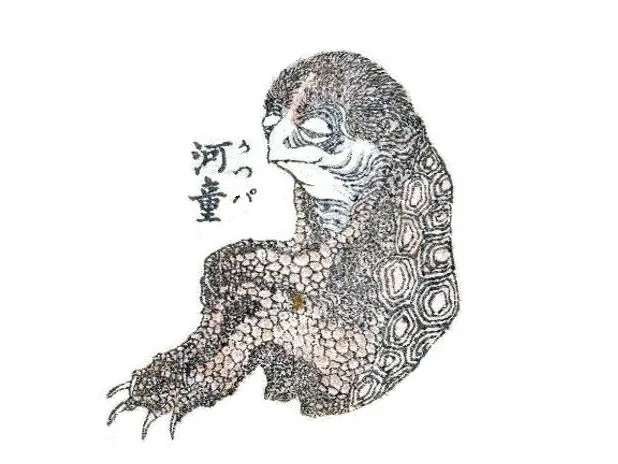
Hokusai’s kappa offers a different artistic treatment of the water creature. Source. Katsushika Hokusai. Public domain. Resized and converted to WebP.
Why does bowing defeat a kappa?
In a widely repeated tale, a person bows to the creature. The kappa returns the greeting, spills the water from its head and loses its power. A social obligation becomes a way out of a physically unequal encounter.
The trick works as storytelling because the monster participates in recognizable human behavior. It may be dangerous, yet it can be caught by its own manners. The Swedish Institute for Language and Folklore’s survey also describes wrestling traditions and accounts in which a captured or injured kappa negotiates with humans.
Those episodes should be read as variants. A tale about returning a limb in exchange for medical knowledge does not establish a documented cure. Nor does the bowing story offer practical advice for approaching real water hazards.
What is the connection with cucumbers?
Cucumbers appear as favored food or offerings in kappa lore. The institute’s survey also records contradictory swimming beliefs: in some accounts cucumbers are associated with protection, while in others eating them before swimming attracts danger.
That disagreement is useful evidence about folklore itself. Stories circulate through households, places and retellings; they do not need to agree before they count as traditional. A list promising one definitive set of kappa weaknesses can hide the most interesting part of the material.
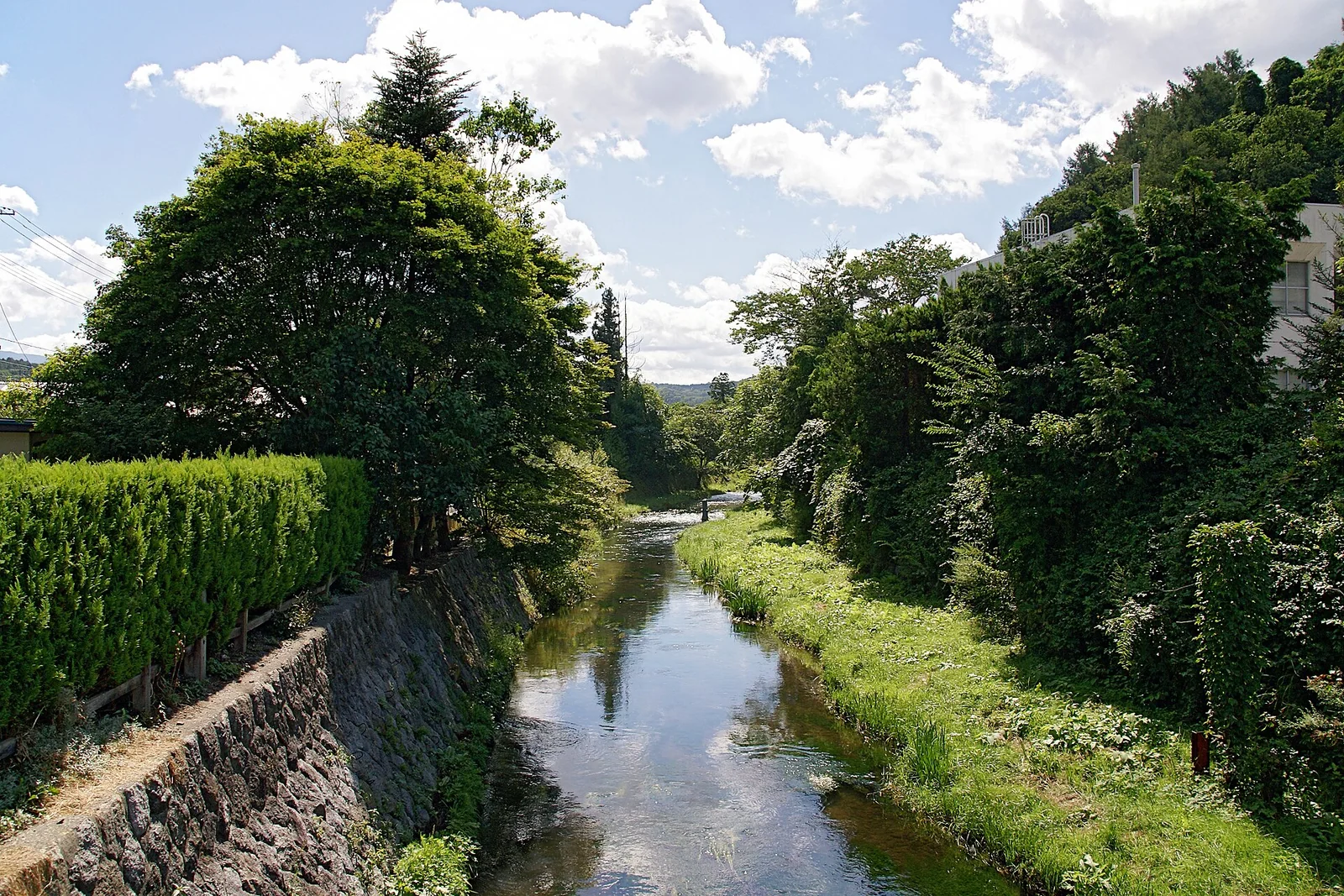
The Rainai River at Tōno provides geographical context for waterside folklore, not evidence of a creature. Source. 663highland. CC BY 2.5. Resized and converted to WebP.
Is the kappa evil?
Some versions are explicitly threatening, especially around rivers and children. Others turn the creature into a comic opponent or someone who honors a bargain. The museum’s overview contrasts older fear with the approachable figure familiar in contemporary illustration.
Neither image cancels the other. A friendly drawing does not make every older story friendly, and a frightening story does not mean every use of the name invokes violence. The scene and source matter more than a fixed moral alignment.
Water also gives these tales a concrete setting. A river can be ordinary and useful on one visit, then dangerous on the next. Reading kappa stories beside the landscape helps explain their atmosphere without claiming that a single practical lesson caused the whole tradition.
For another Japanese creature whose appearance changes across pictures and stories, continue with tengu and their bird and long-nosed forms. For a different kind of supernatural transformation, see kitsune, Inari and fox lore.