Lore & Explained
Kitsune Explained: Fox Spirits, Inari and the Nine-Tailed Fox
Separate Inari's fox messengers from shapeshifting fox tales, Tamamo-no-Mae and nine-tailed imagery, using shrine explanations and historical art.
Topics: Kitsune, Japanese Folklore, Inari, Yokai
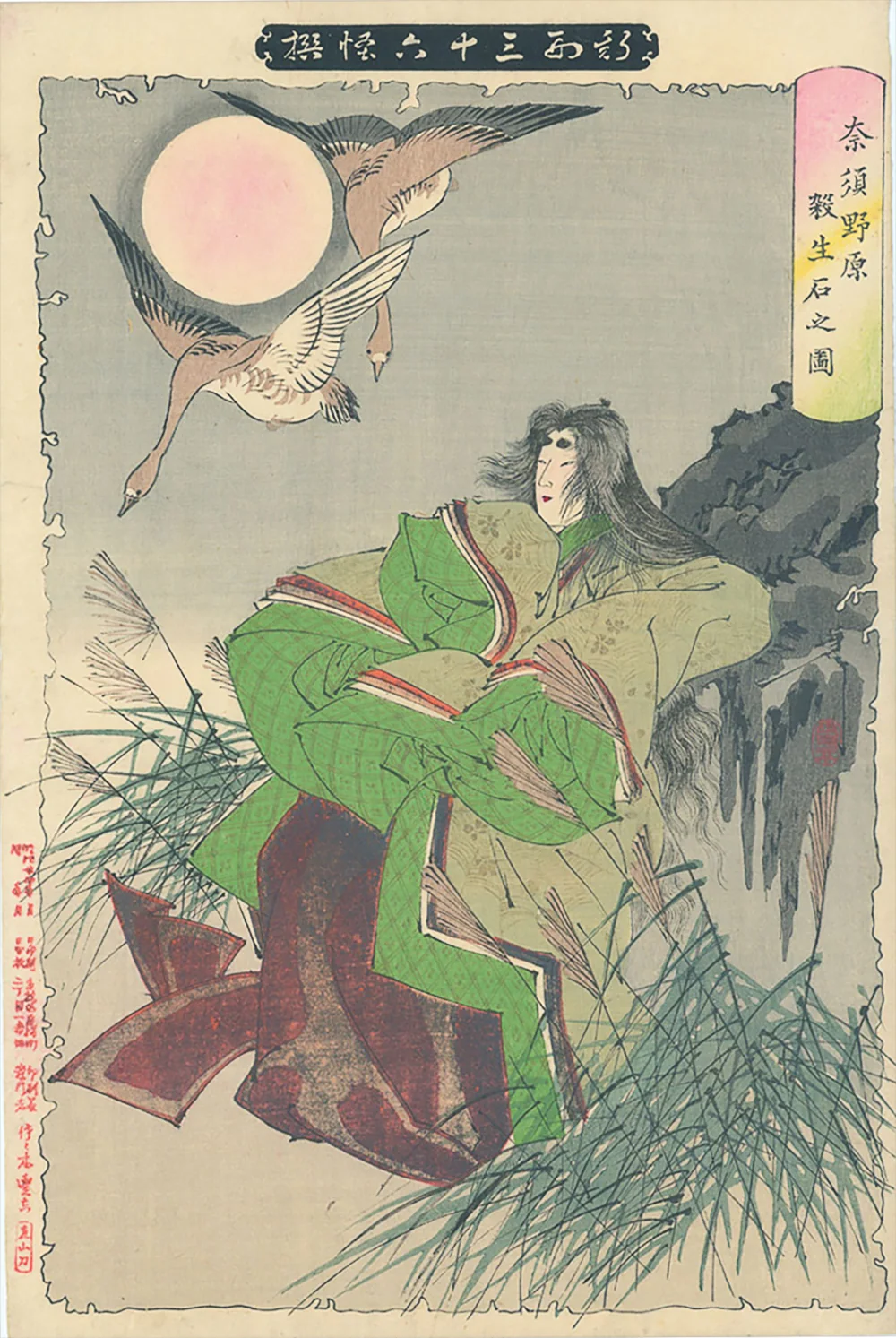
Kitsune means fox, and Japanese fox traditions include shapeshifters, tricksters, helpful beings and the messengers associated with Inari. These roles overlap in popular imagery, but they should not be collapsed into one creature with a single origin, temperament or number of tails.
The most important correction is also the simplest: Inari is not a fox. Fushimi Inari Taisha explicitly distinguishes the deity from the fox messengers depicted at its shrines.
Why are there foxes at Inari shrines?
In its official explanation of the faith, Fushimi Inari Taisha describes the foxes as messengers or kindred of Inari Ōkami. These are invisible, sacred white foxes, rather than ordinary wild animals worshipped as the deity.
That distinction changes how a shrine photograph should be captioned. A fox statue represents a religious association; it is not automatically a depiction of a malevolent shapeshifter. Respecting the shrine’s own explanation also avoids treating a living religious practice solely as material for horror.
Outside that setting, fox stories can follow quite different rules. A character in a folktale does not speak for every shrine, and a shrine explanation does not summarize every fox narrative.
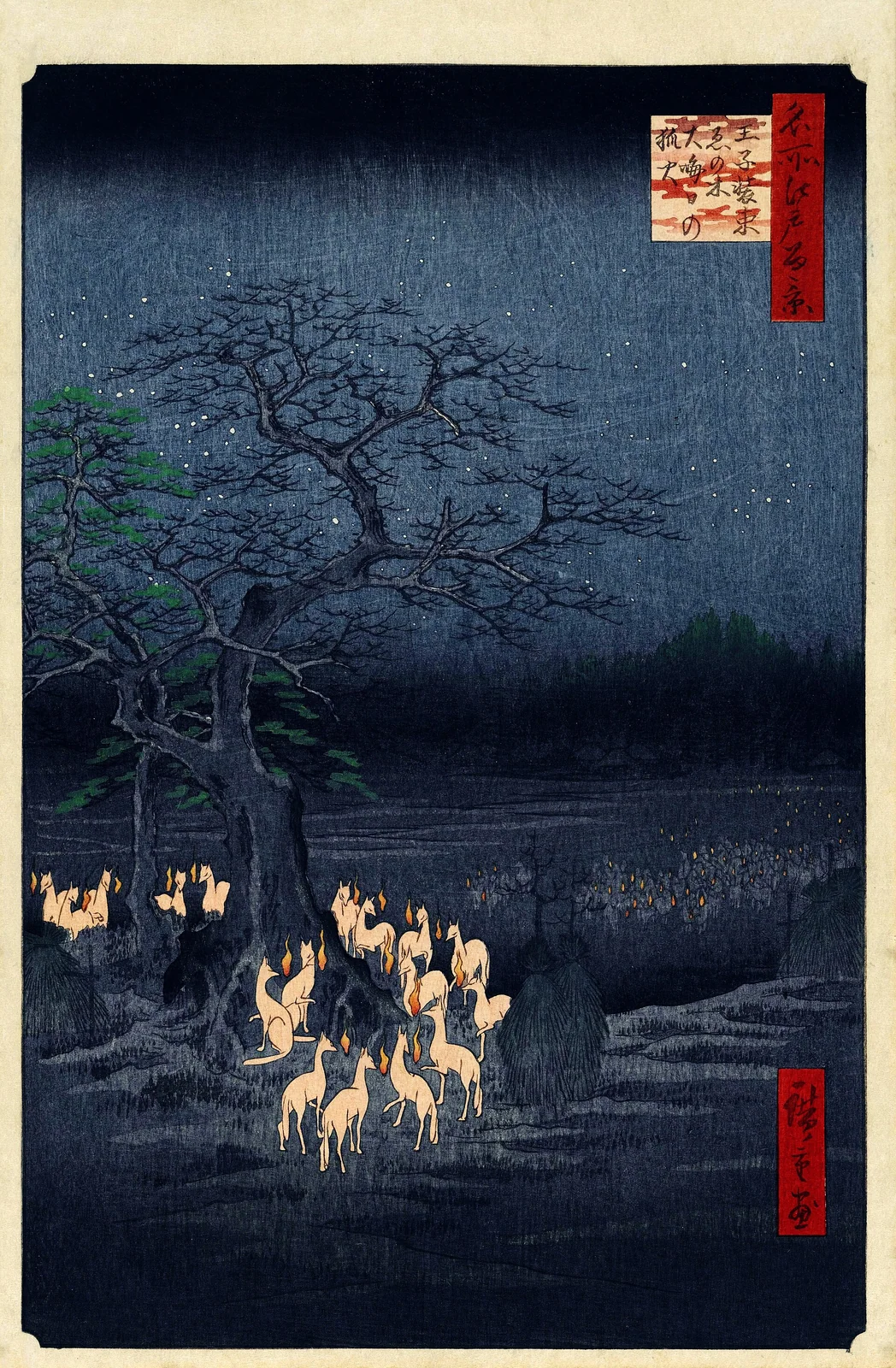
Hiroshige’s 1857 foxfire gathering at Ōji, from One Hundred Famous Views of Edo. Source. Utagawa Hiroshige. Public domain. Resized and converted to WebP.
Are kitsune always dangerous?
No. A useful historical comparison is A. B. Mitford’s Tales of Old Japan, first published in 1871. Its fox stories include both trickery and gratitude. The collection is an English-language mediation of Japanese material, so its descriptions also reflect a Victorian translator’s framing.
In “The Foxes’ Wedding”, the foxes have families, property, a negotiated marriage and a ceremonial procession. The tale gives them an elaborate social life rather than using them merely as predators. Its wedding takes place while rain falls in sunshine.
Other titles in the same collection promise a man deceived by foxes and foxes who repay kindness. Even before comparing later books, the collection warns against a blanket answer to “Are kitsune good or evil?” The relevant answer is in the particular story’s conduct and consequences.
What about the nine-tailed fox?
The nine-tailed form is a specific and influential motif, not a requirement for every fox in Japanese tradition. The Yoshitoshi print reproduced above depicts Tamamo-no-Mae’s fox identity. It gives a visual example of the extraordinary fox associated with that legend.
Count the tails in a particular artwork or read the particular narrative before assuming an age, rank or power level. Modern fiction often turns a suggestive image into a precise advancement system. Such a system can work perfectly well in its fictional world without being a universal historical rule.
Likewise, a single shrine fox with one visible tail does not fail to be a fox messenger because a fantasy character elsewhere has nine. The images serve different stories and settings.
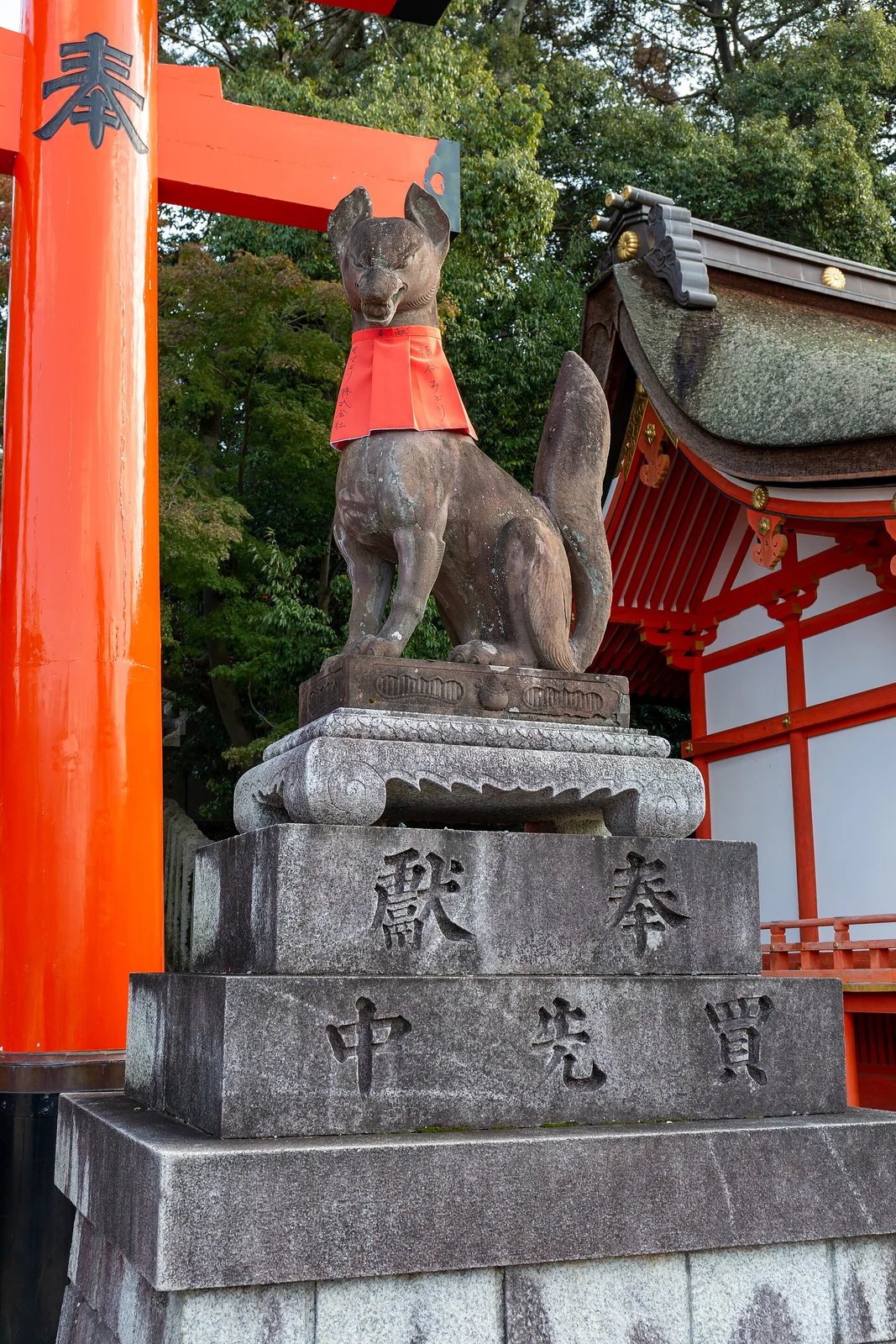
A fox statue at Fushimi Inari Taisha represents the shrine’s messenger tradition. Source. Balon Greyjoy. CC0. Resized and converted to WebP.
What are the lights in Hiroshige’s fox print?
Hiroshige’s 1857 print of foxfires at Ōji shows foxes gathered under a tree, with small lights punctuating the dark landscape. It is a representation of supernatural foxfire imagery, not a photograph or a scientific explanation of lights seen outdoors.
Compare it with the shrine statue and the Tamamo-no-Mae print. All three use fox imagery, but one centers a nocturnal gathering, another a religious messenger, and another a legendary identity. Keeping their captions specific prevents a broad “kitsune” label from hiding what each actually shows.
How is a kitsune different from a tengu or kappa?
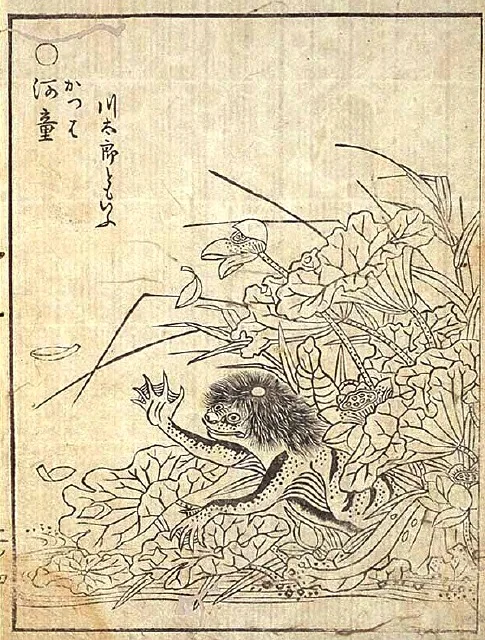
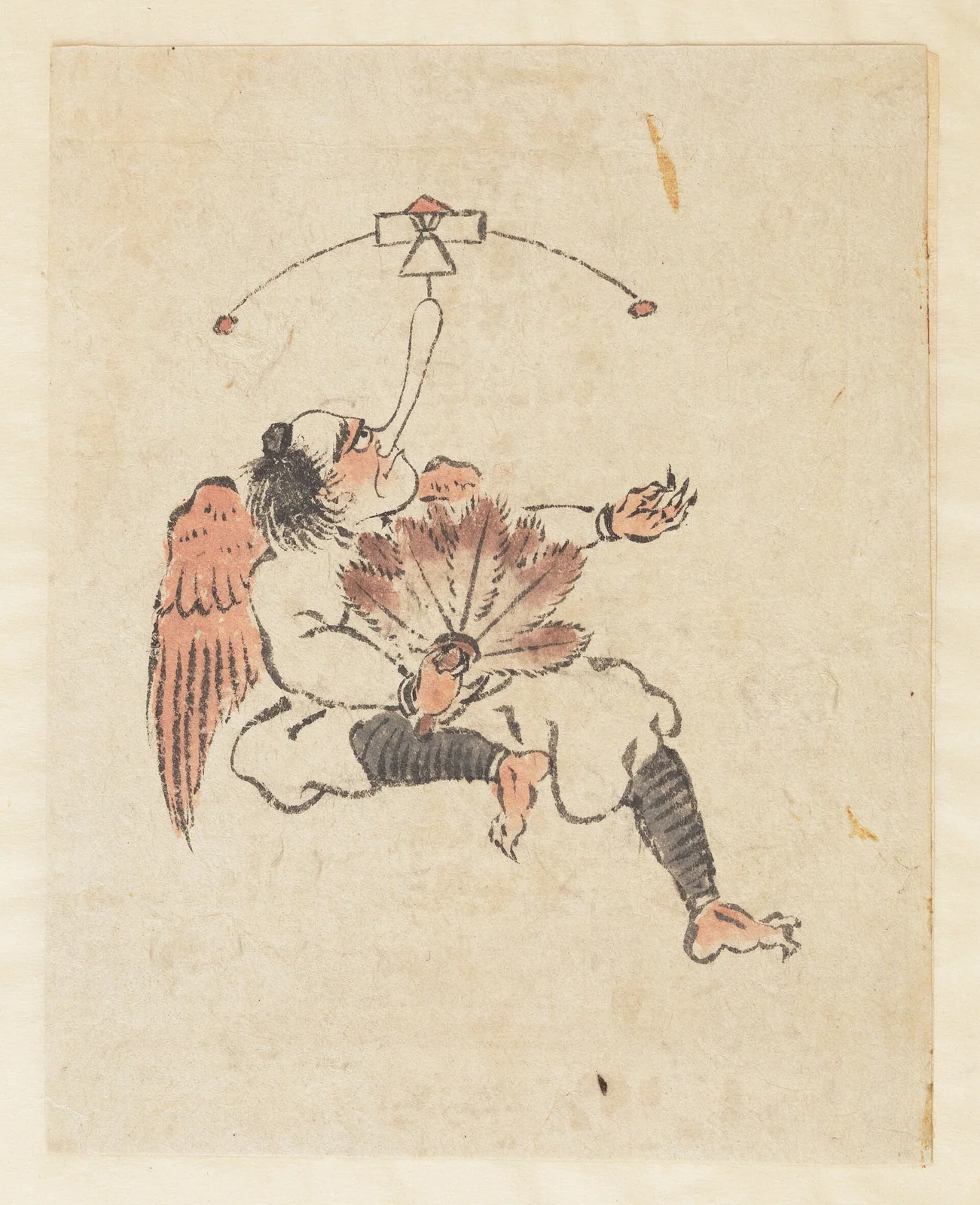
The fox is the defining animal connection here. Tengu have bird and long-nosed mountain forms, while kappa belong to waterside traditions. Their stories can share transformation, bargaining or trickery without making them interchangeable.
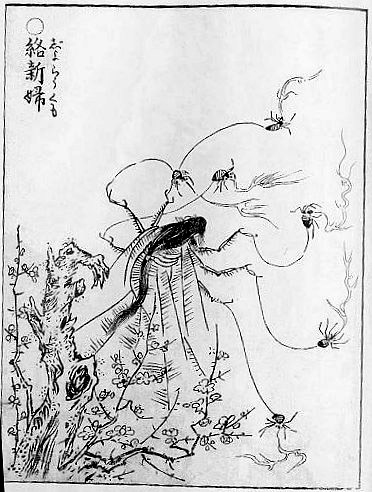
For a darker example of an attractive human appearance concealing another identity, read our jorōgumo guide. In each case, identifying the source is more reliable than stitching every supernatural detail into one supposedly original creature.