Lore & Explained
Lamashtu Explained: The Demon Ancient Amulets Tried to Stop
Who was Lamashtu? Ancient amulets reveal a feared Mesopotamian demon, her connection to childbirth, and why Pazuzu could be used against her.
Topics: Lamashtu, Pazuzu, Mesopotamian Mythology, Demons
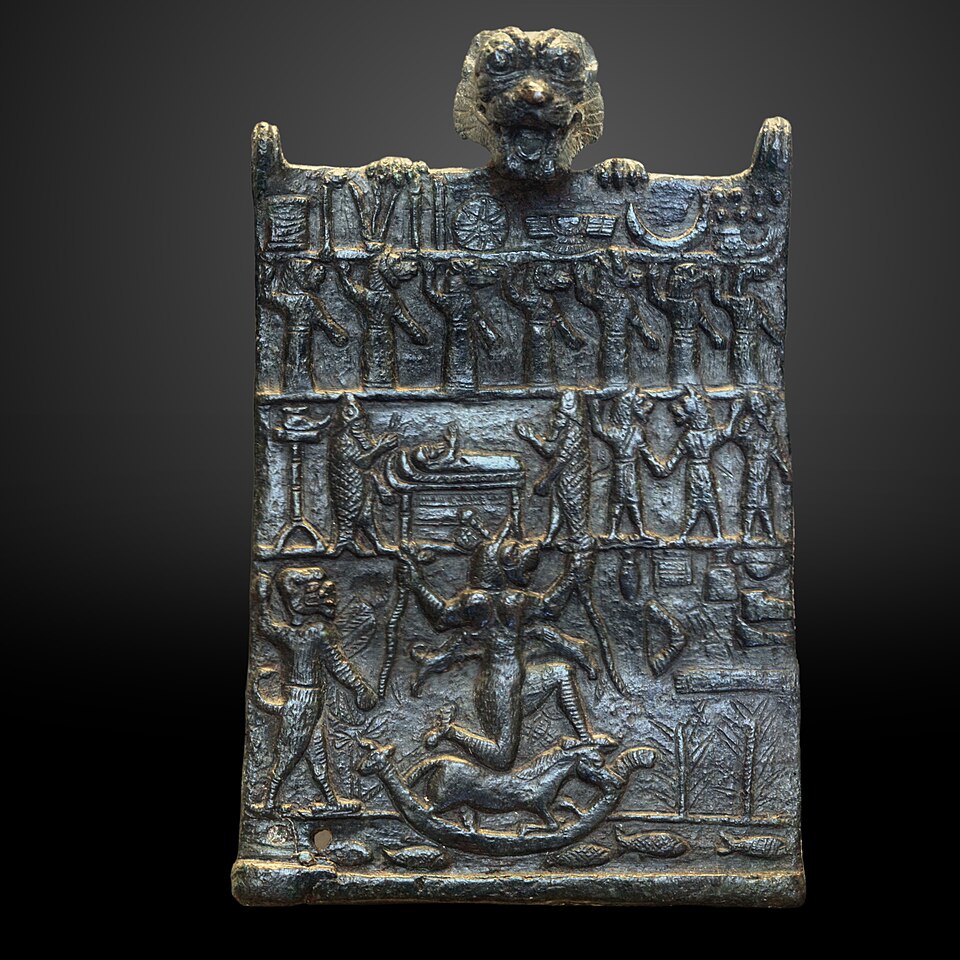
Musée du Louvre, AO 22205 (CC BY-SA 3.0)
Lamashtu was a dangerous female supernatural being in ancient Mesopotamian belief, especially feared as a threat to pregnant women and infants. People tried to keep her away through incantations, protective objects and the intervention of other supernatural powers. One of those powers was Pazuzu, the figure horror audiences now associate with The Exorcist.
The objects survive. The supernatural threat they were meant to counter is a matter of ancient belief, not something archaeology has established as real. That distinction makes Lamashtu more interesting, not less: her amulets preserve a very personal kind of fear, expressed in things small enough to hold.
Who was Lamashtu?
In Mesopotamian tradition, Lamashtu was associated with illness and danger around birth and early life. An explanation accompanying a Lamashtu amulet at the Metropolitan Museum of Art identifies her as a daughter of the sky god Anu. This was not a Christian story about a fallen angel. Its gods, demons and protective practices belonged to a different religious setting.
Calling her a demon is useful English shorthand, but it needs that context. The word can encourage readers to imagine a familiar hierarchy of Hell, with Satan at its head. That is not the system described by these Mesopotamian objects. Nor is a surviving depiction necessarily an object of worship: an image of a threatening being can be part of an attempt to expel it.
How to recognize her in ancient art
A small obsidian amulet in the Met offers an unusually clear example, showing Lamashtu with a lion-like head, donkey’s teeth and bird talons, flanked by animals and cuneiform text. The museum dates that object to the early first millennium BCE and identifies it as protective.
The frightening body is not there simply to decorate a dark story. It identifies the being against whom the object is directed. Animals and other items belong to the ritual scene, although individual details can be difficult to interpret. The Met, for example, treats the meaning of one arrow-shaped object cautiously. An honest description should preserve that uncertainty rather than convert every shape into a confidently named magical tool.
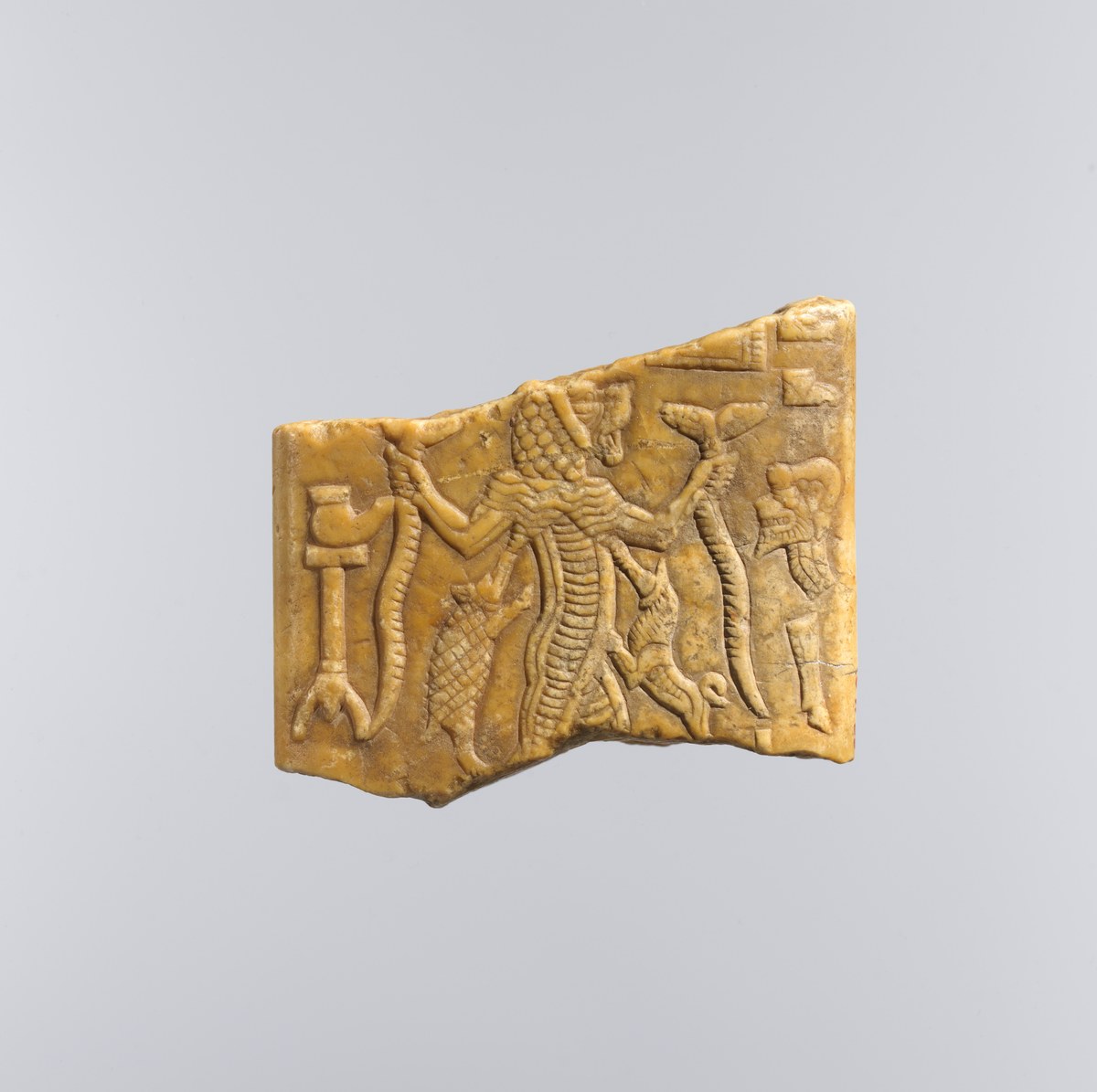
A terracotta plaque fragment depicting Lamashtu, dated to the 7th-6th century BCE. The Metropolitan Museum of Art identifies this as a separate, distinct object from the obsidian amulet above. Source. Public Domain.
When looking at any proposed Lamashtu image, start with its museum identification and date. A modern fantasy portrait might borrow a lion-like head or claws without accurately representing a particular ancient object. Conversely, a damaged amulet may preserve only enough features for a qualified identification. Neither should be presented as a photographic record of the being herself.
Why Pazuzu appears in the same story
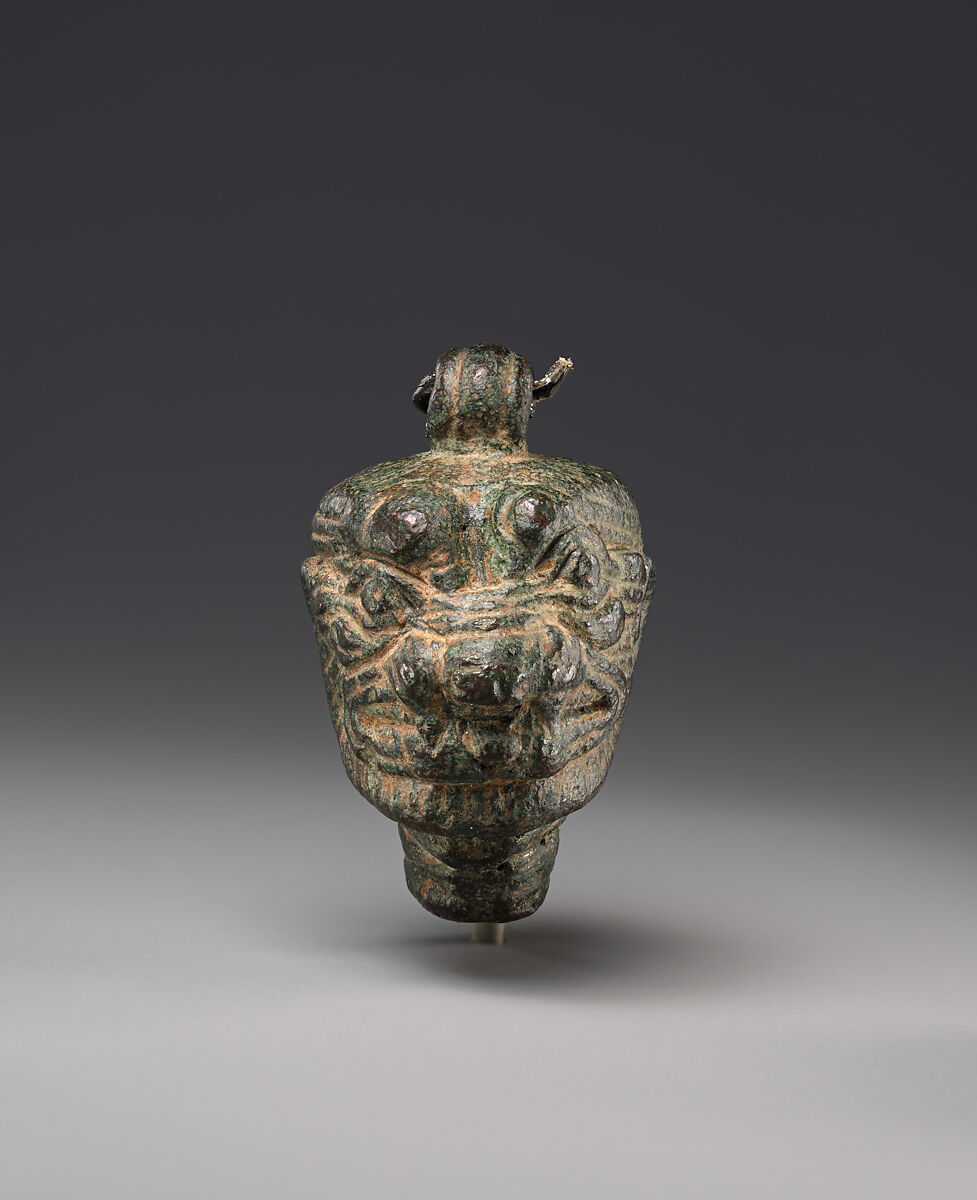
Pazuzu and Lamashtu are not interchangeable names. The Met’s discussion of Pazuzu explains the protective use of his image, including protection against Lamashtu. That produces a reversal for readers arriving from modern horror: the frightening face could be recruited against a greater immediate danger.
This does not make Pazuzu a benevolent guardian in every context. Protection and danger could coexist in the same figure. A power understood as harmful might also be called upon to repel another harmful power.
Imagine the difference between the image on an object and the reason someone kept it. A snarling face can look threatening to an outsider while communicating resistance to the person who wears it. The historical question is not just “What does this monster look like?” It is “What was this image supposed to do?”
The two questions should remain separate in an illustrated article. A photograph of a Pazuzu object is useful for explaining the protective relationship, but its caption must say Pazuzu. It should never be labeled Lamashtu merely because both beings appear in the same discussion.
What the amulets can actually tell us
An inscription can preserve the name of a feared being, the language used to address it and the gods invoked for help. The material and size can show how an object was made and handled. Wear, holes and archaeological context may help establish how it was used, depending on the particular find.
Those are different kinds of evidence from a claim that a ritual worked. An ancient author could sincerely describe a supernatural danger without supplying a medical explanation we would accept today. We also cannot retrospectively diagnose every illness behind a protective text. The surviving object does not contain the full history of the household that used it.
This is why the most revealing photographs show more than a dramatic face. The scale, inscription and surrounding figures help explain an amulet as an object with a purpose. A giant monster illustration loses precisely those details.
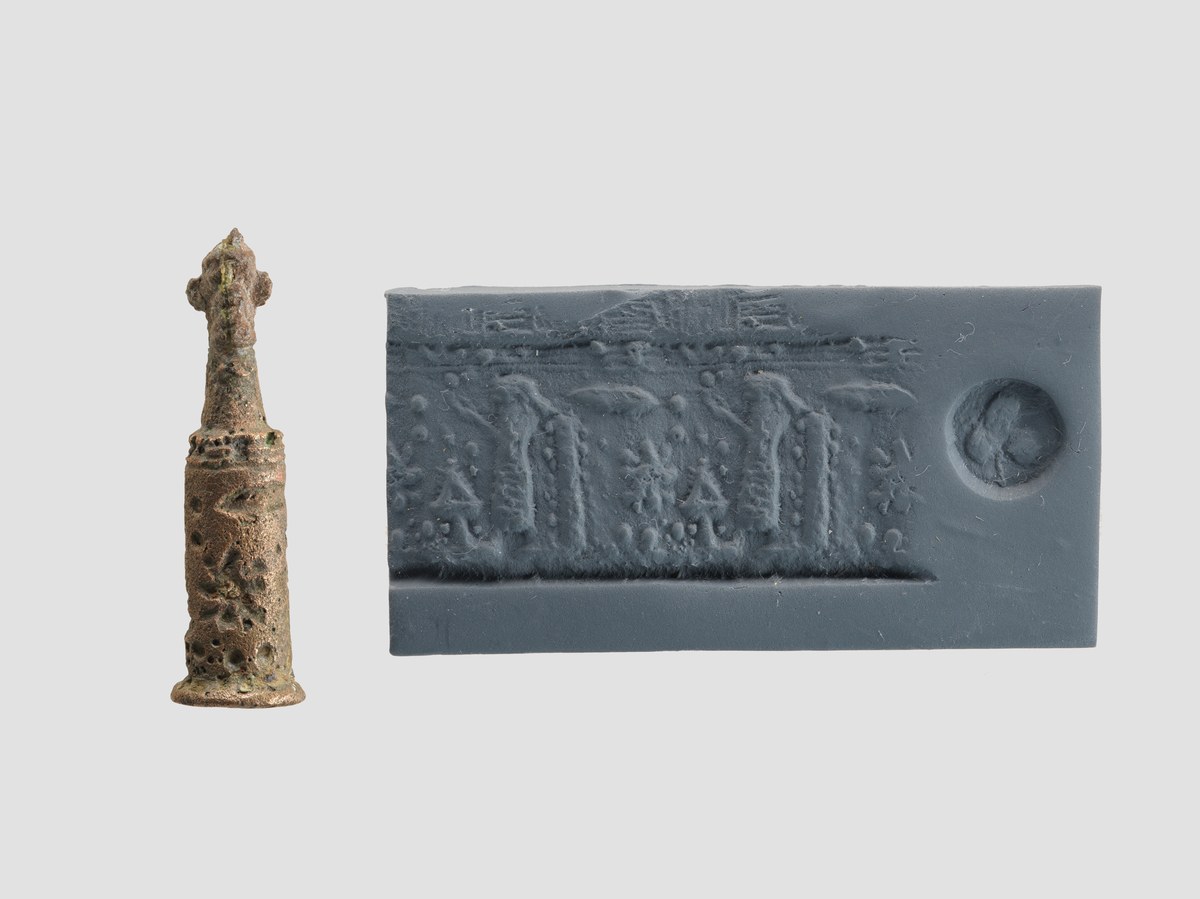
A bronze stamp-cylinder seal surmounted by a Pazuzu head, shown with a modern impression of its engraved cultic scene, 8th-7th century BCE. Source. Public Domain.
Is Lamashtu the same as Lilith?
No. A reader may notice overlapping themes of dangerous female beings and fears surrounding infants, but overlapping motifs do not establish that two names describe a single continuous character.
Lilith’s history involves its own textual and interpretive questions. Lamashtu should first be understood through objects and texts that actually name or identify her. Combining their attributes into one biography creates a tidier monster at the cost of the history.
The same caution applies to modern adaptations. A novel or game is free to give Lamashtu a fixed appearance, family tree or set of powers. Those details need to be attributed to that work, not silently carried back into ancient Mesopotamia.
The fear behind the small objects
What makes Lamashtu’s surviving imagery unsettling is its domestic scale. These were not necessarily monuments announcing a grand cosmic battle. The Met’s obsidian amulet is only a few centimeters across. An image that looks theatrical on a screen could once have been close to a vulnerable person’s body or household.
For a modern reader, that changes the focus. Lamashtu is not simply another name to add to a list of horror demons. She is a way into understanding how people gave a face to danger, sought protection and used carefully made objects to confront circumstances they could not fully control.
The most secure starting point is therefore also the most concrete: look at the amulet, identify the inscription and scene, and keep the belief distinct from the evidence that people held it.