Lore & Explained / Demons & Occult
Pazuzu Explained: The Ancient Demon Behind The Exorcist
Who was Pazuzu before The Exorcist? The ancient Mesopotamian wind demon was feared, but his image was also used as protection against Lamashtu.
Topics: Pazuzu, Mesopotamian Mythology, Demons, Lamashtu, The Exorcist
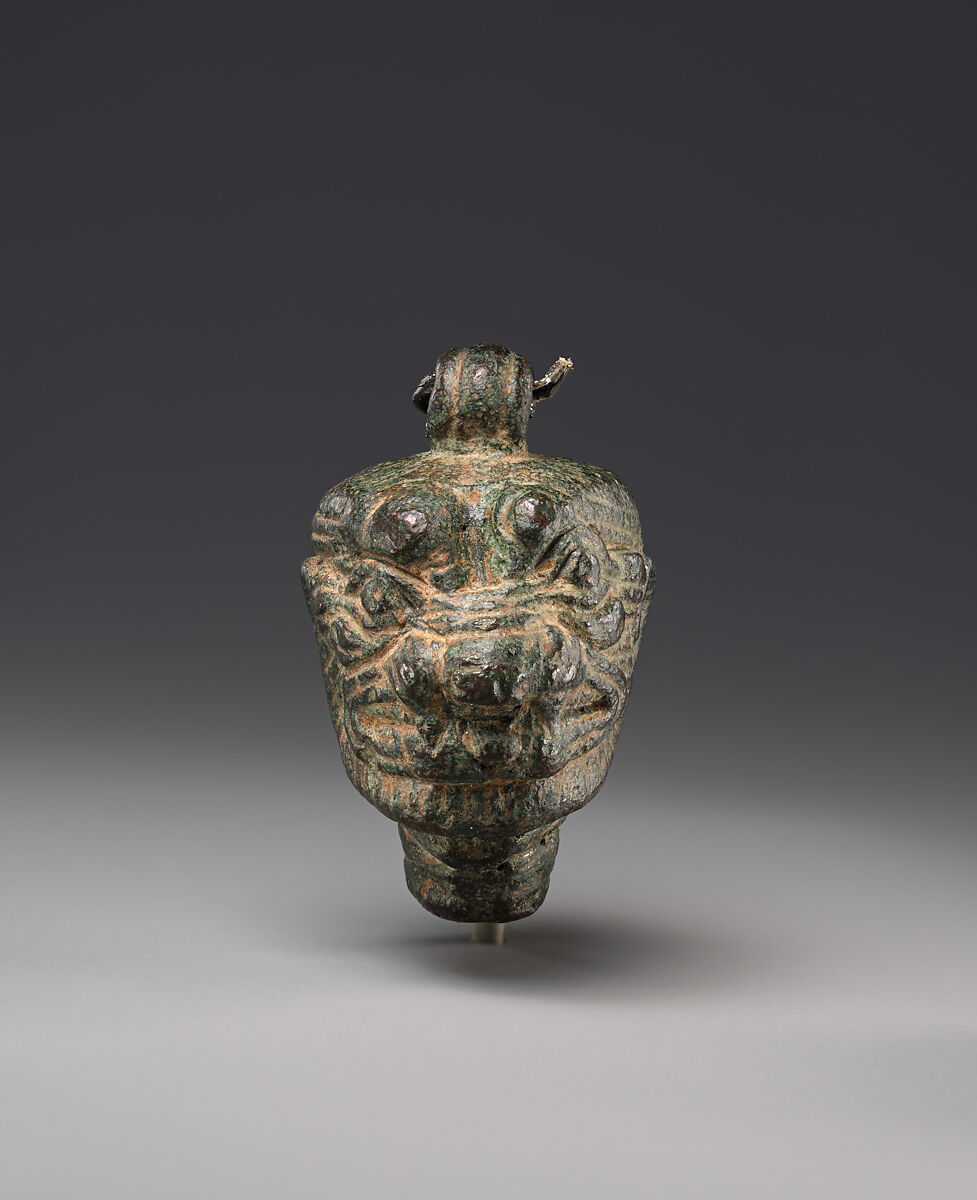
The Metropolitan Museum of Art, Open Access / Public Domain
The Pazuzu most people know is enormous: a stone figure standing against the Iraqi sky in The Exorcist, waiting for Father Merrin like something that has been there for thousands of years.
The archaeological Pazuzu was very different.
Surviving images are small. Some were worn as pendants or beads. Others appeared on protective plaques. One of the best-known bronze statuettes, now in the Louvre, is only about 15 centimeters tall. And although Pazuzu was certainly a frightening demon in ancient Mesopotamian belief, his image could also be used for protection, especially against the demoness Lamashtu.
That difference matters. The Exorcist did not invent Pazuzu, but it transformed him. The historical figure was not a Mesopotamian version of Satan, and ancient evidence does not present him as the ruler of a Hell-like kingdom. To understand why people deliberately kept his snarling face close to the body, you have to look at what he represented before horror cinema gave him a new identity.
Where Pazuzu Comes From
Pazuzu belongs mainly to the first millennium BCE, especially the Neo-Assyrian and Neo-Babylonian worlds.
The Metropolitan Museum of Art dates the earliest known image of Pazuzu to the late eighth century BCE. That makes him relatively late compared with many older Mesopotamian gods and supernatural beings. Images of him became especially common from roughly the late eighth through sixth centuries BCE.
Ancient inscriptions identify him as the son of an obscure figure whose name is rendered in modern scholarship in forms such as Hanbu, Hanbi or Hampa. The famous Louvre statuette identifies Pazuzu in its own inscription and calls him king of the evil spirits of the air.
That title is one of the reasons modern retellings go wrong.
“King of the evil spirits” sounds, to a modern Western reader, like a title for the Devil. But the Mesopotamian context is different. Pazuzu belongs to a world of dangerous winds, demons, illness, protective magic and ritual specialists, not a Christian cosmic war between God and Satan.
A Demon of Dangerous Winds
Pazuzu was associated with destructive winds.
Museum descriptions commonly identify him as king of the wind demons, while later summaries often connect him specifically with the southwest wind. The Met also associates him with cold winds entering Mesopotamia from the direction of the Zagros Mountains, winds that were thought capable of bringing illness.
The safest way to understand him is not as a weather god with one neat modern job description, but as a demonic power connected to hostile atmospheric forces.
That still made him dangerous. It did not make him useless.
Ancient Mesopotamian supernatural beings do not always fit cleanly into modern categories of “good” and “evil.” A dangerous power could be redirected against another danger. Pazuzu became one of the clearest examples of that logic.
Why People Used Pazuzu for Protection
The most important figure for understanding Pazuzu’s protective role is Lamashtu.
Lamashtu was a feared female demon associated with attacks on pregnant women, mothers and infants. Mesopotamian protective objects and incantations were designed to keep her away or force her to leave.
Pazuzu was one of the supernatural powers brought into that struggle.
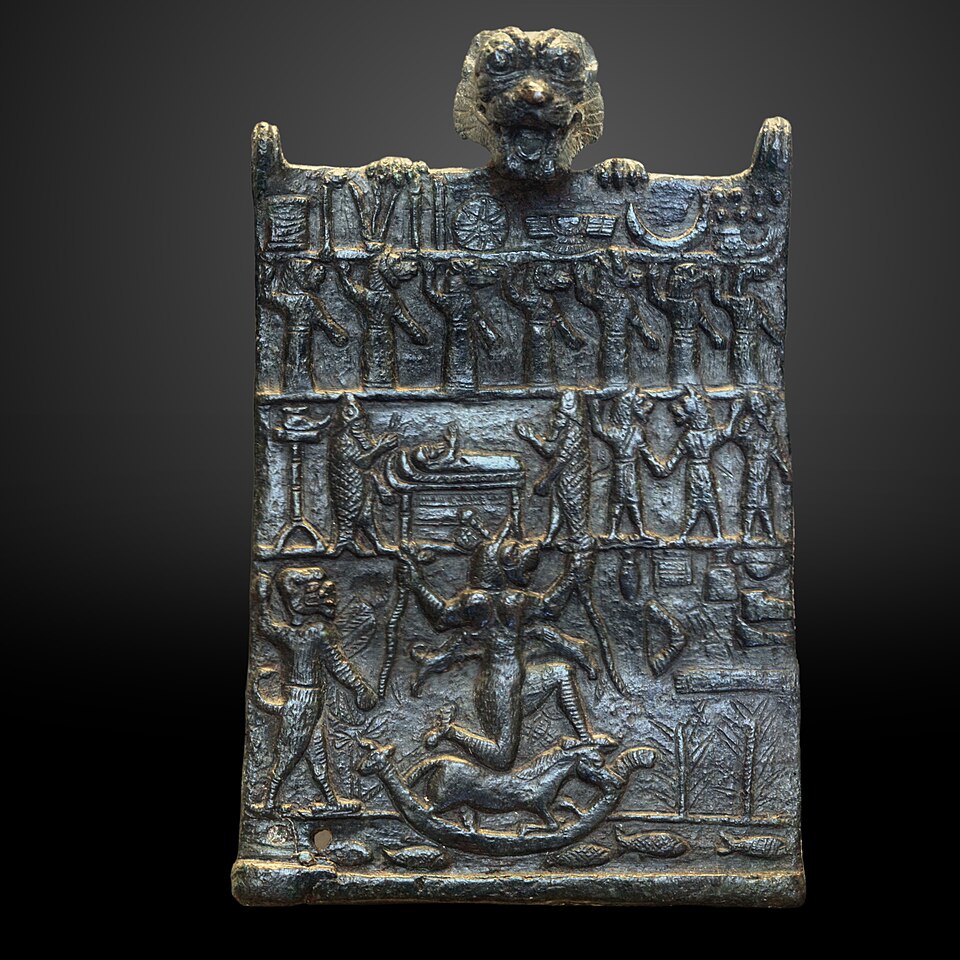
The Met notes that more than sixty Lamashtu amulets survive, mostly from the early first millennium BCE. Many include Pazuzu, and museum scholarship describes him as driving Lamashtu back toward the netherworld. Pazuzu heads were also used independently as amulets.
A British Museum example makes the protective function unusually concrete: its curators describe a bronze Pazuzu head that was probably suspended near a woman in labor as protection against Lamashtu.
That is a very different image from the demon of The Exorcist. The terrifying face was not necessarily an invitation to evil. It could function as a threat directed outward.
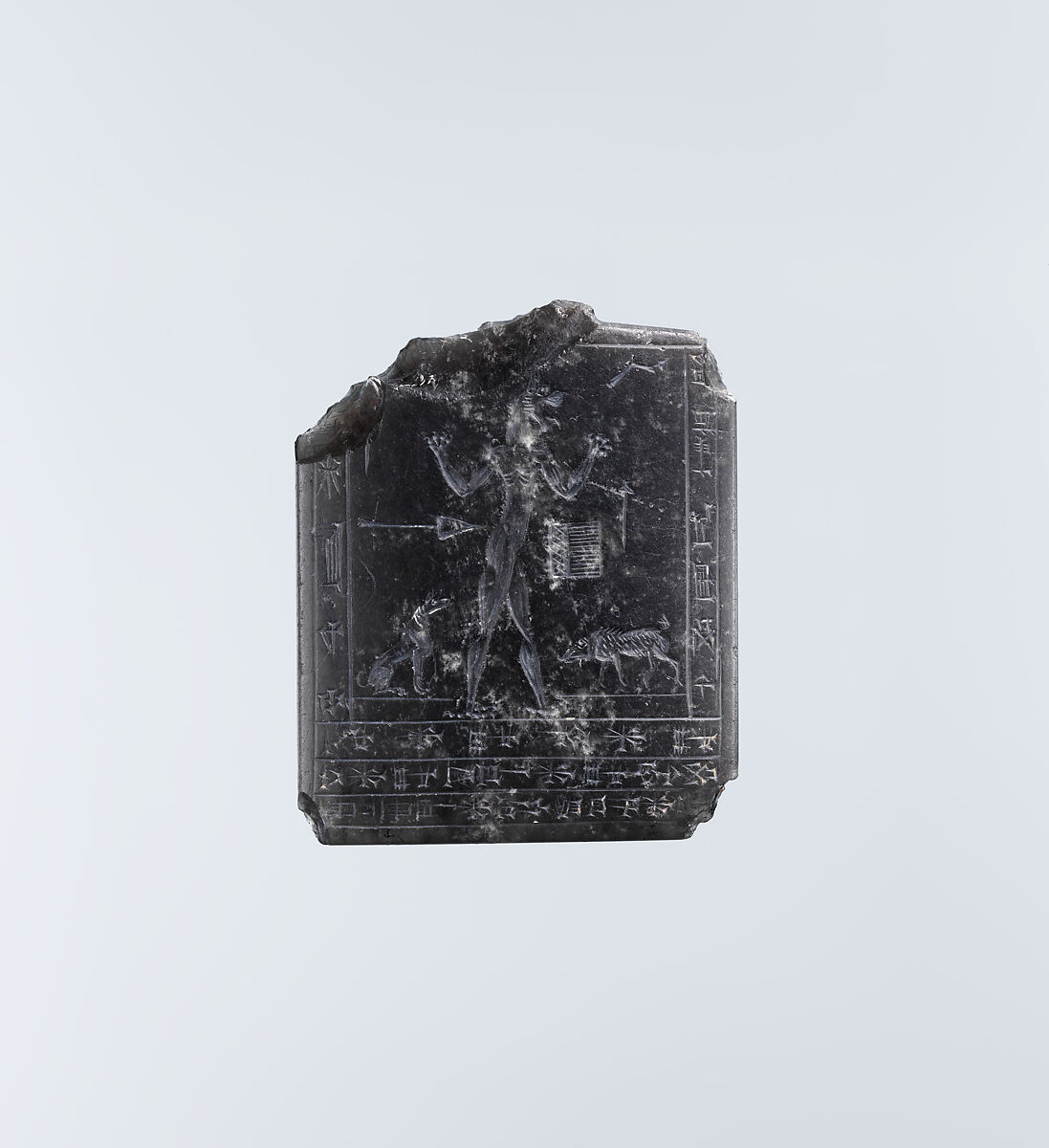
An early first-millennium BCE obsidian Lamashtu amulet. The Metropolitan Museum of Art identifies the object as protective and notes that many comparable amulets include Pazuzu. Source. Public Domain.
What Pazuzu Actually Looked Like
Pazuzu is one of the more visually distinctive supernatural figures from ancient Mesopotamia.
The Met describes the full figure with:
- a horned, bearded head
- bulging eyes
- a snarling canine mouth
- human arms ending in claws
- two pairs of wings
- a scorpion tail
- bird-like or taloned feet
- a snake-headed erect penis
Not every surviving object shows the complete body. In fact, abbreviated heads were especially useful because they could be turned into beads, pendants, garment fittings and other small protective objects.
The famous Louvre statuette, inventory number MNB 467, stands about 15 centimeters high. Its right arm is raised, and a cuneiform inscription runs across the back. The inscription identifies the figure as Pazuzu, son of Hampa, and describes him as ruler of the hostile spirits of the air that emerge violently from the mountains.
That inscription is much more useful than later occult titles. It tells us how an ancient object actually presented Pazuzu.
This Pazuzu-head bead is only about 1.7 centimeters high. It comes from the first millennium BCE and is now in The Metropolitan Museum of Art. Source. Public Domain.
The Real Pazuzu Was Small, Not Monumental
The scale of the surviving objects is one of the biggest differences between archaeology and horror cinema.
The Met emphasizes that ancient Pazuzu images and amulets are small. The well-known Louvre statuette is 15 centimeters high. The Met’s own bronze pendant is only 4.3 centimeters high, and its serpentine bead is smaller still.
These were objects designed to be handled, worn or kept close.
That does not mean Pazuzu was insignificant. It means his power did not require a monumental public statue. A small amulet could be understood as an active protective object.
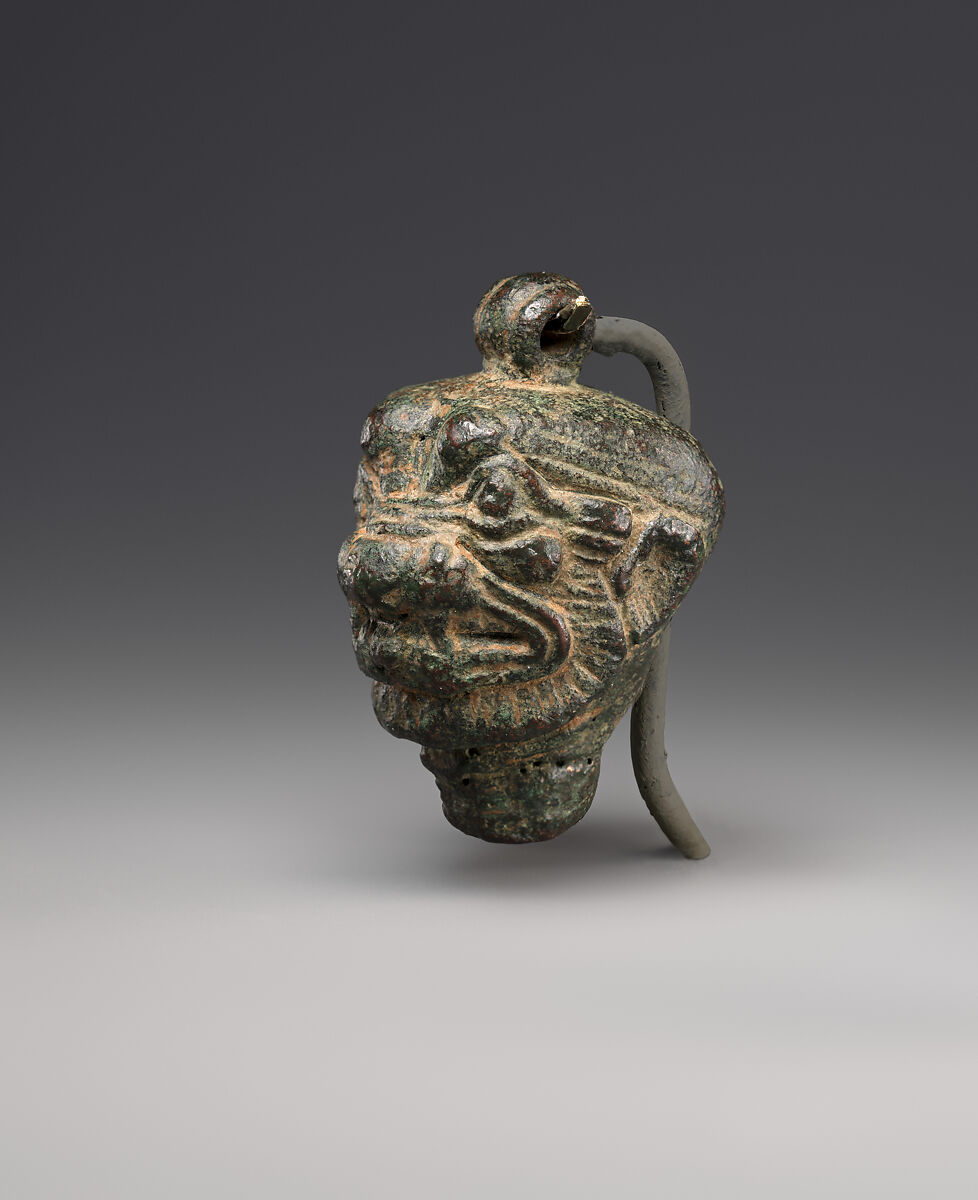
Side view of the Neo-Assyrian bronze Pazuzu pendant, ca. eighth–seventh century BCE. The Metropolitan Museum of Art. Source. Public Domain.
Was Pazuzu Worshipped?
Claims about “Pazuzu worship” usually go much further than the evidence allows.
The surviving archaeological and textual record centers on amulets, protective images and incantations. There is no well-attested Pazuzu temple cult comparable to the major Mesopotamian gods, and no securely documented dedicated priesthood serving Pazuzu in the way temples employed personnel for deities such as Marduk, Ishtar or Shamash.
That does not mean Pazuzu was unimportant. It means the evidence points toward magical and apotropaic use rather than conventional temple worship.
Ritual specialists in Mesopotamia worked with a wide range of prayers, incantations, medical practices and protective objects. Pazuzu belonged to that broader system. Calling every use of his image “worship” imposes a modern category that does not fit the surviving evidence very well.
The same caution applies to modern claims about sacrifice. There is no solid archaeological basis for the popular idea of a Pazuzu cult built around human sacrifice.
Pazuzu Was Not the Mesopotamian Satan
Calling Pazuzu “the Devil” creates more confusion than it solves.
Ancient Mesopotamia did have gods, demons, dangerous ghosts and an underworld, but it did not organize them according to the later Christian model of one supreme evil being opposed to God.
Pazuzu was not a fallen angel. He was not a rebel ruler of Hell. He was not the source of all evil.
Even his protective use against Lamashtu makes that clear. A being imagined as dangerous could still be used against another dangerous being. The supernatural categories were not identical to later Christian demonology.
The specific possession-and-exorcism framework of The Exorcist belongs primarily to a much later religious and literary tradition. The film borrows an ancient name and image, then places them inside a Christian horror story.
How Pazuzu Entered The Exorcist
William Peter Blatty’s 1971 novel The Exorcist drew loosely on reports of a 1949 exorcism case in the United States, but the ancient visual language came from somewhere else.
The story opens in northern Iraq with Father Merrin working at an archaeological site and encountering an image associated with the demon. Blatty ties Pazuzu to the coming confrontation with Regan.
William Friedkin’s 1973 film keeps the association more visual. The demon is not named “Pazuzu” in the film’s dialogue. Instead, the Iraq prologue, the amulet, the monumental statue and the fleeting demonic face connect Merrin’s past encounter with the force later confronting him in Georgetown.
That ambiguity helped make the film’s version more frightening. The viewer does not receive a lecture on Assyrian demonology. Pazuzu becomes an ancient-looking sign of something malevolent.
Later entries made the identity far more explicit. Exorcist II: The Heretic names Pazuzu directly and builds much of its mythology around him, including the famous locust imagery. Later prequels and the television adaptation continued to develop a franchise mythology that is separate from ancient Mesopotamian religion.
Hatra: A Real Place, but the Wrong Era for the Movie’s Giant Statue
The Iraq scenes in The Exorcist were filmed at Hatra, the ancient city in northern Iraq.
Hatra is real. The monumental Pazuzu statue shown there is not.
The Met points out that Hatra flourished in the Parthian period, centuries after Pazuzu’s image had been most popular in the Neo-Assyrian and Neo-Babylonian periods. By the Parthian era, the demon’s imagery was already largely falling out of use.
The movie therefore combines a genuine ancient location with a fictional monumental object.
That is one reason the scene works so well visually. Hatra’s surviving architecture creates a sense of immense age, while the oversized demon gives the audience something immediately threatening to focus on. Historically, however, ancient Pazuzu objects look nothing like a human-sized outdoor cult statue.
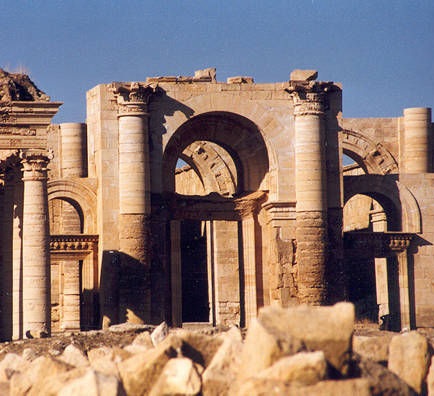
Hatra, Iraq. The site was used for the northern-Iraq sequences in The Exorcist. Photograph by Victrav, released into the public domain. Source.
Where Modern Occult Pazuzu Comes From
Pazuzu did not disappear from modern culture after The Exorcist. He was also absorbed into modern occult literature.
One influential example is the Simon Necronomicon, first published in the late 1970s under the name “Simon.” The identity behind that name has been debated, although Peter Levenda has often been proposed.
The Institute for the Study of the Ancient World at New York University describes the book as a modern construction that mixes recontextualized Mesopotamian material with H. P. Lovecraft, Aleister Crowley and other later occult traditions. It also notes that the book reused translations by early Assyriologists such as R. C. Thompson while changing the way those ancient texts were framed.
That distinction is critical.
Ancient incantations against demons are not automatically instructions for summoning them. A modern occult book can use real Mesopotamian names and real translated phrases while still creating a ritual system that did not exist in ancient Assyria or Babylonia.
So when modern websites describe a “Pazuzu sigil,” a summoning method or a personal pact with the demon, those claims need to be sourced to modern occult traditions, not presented as ancient Mesopotamian practice. King Paimon went through a similar process centuries earlier, when a genuine medieval grimoire entry was folded into later occult systems and, eventually, horror cinema.
The Biggest Pazuzu Myths
Pazuzu was Satan. No. Pazuzu came from a different religious system and predates Christian demonology.
Pazuzu ruled Hell. No surviving ancient evidence gives him that role. His title concerns wind or air demons, not a Christian-style kingdom of Hell.
Pazuzu was purely evil. Too simple. He was dangerous, but his image was also deliberately used as protection against Lamashtu.
Ancient people built huge statues of him. The surviving ancient evidence is dominated by small figurines, amulets, pendants, beads and plaques. The giant Exorcist statue is a cinematic invention.
The Exorcist accurately reproduces Mesopotamian possession beliefs. No. It uses Pazuzu inside a modern Christian possession narrative.
Modern Pazuzu summoning rituals come from ancient tablets. Claims like that require extreme caution. Modern occult systems often remix genuine ancient material into much later ritual frameworks.
What Pazuzu Actually Represents
Pazuzu is more interesting when he is allowed to remain strange.
He was a feared wind demon whose image could be turned against another feared demon. His face appeared on objects small enough to wear. His role crossed the modern boundary between monster and protector. He belonged to a supernatural system in which danger could be manipulated rather than divided neatly into absolute good and absolute evil.
Then modern horror reversed the emphasis.
The Exorcist took a figure once used to guard vulnerable people and made him the hidden identity behind one of cinema’s most famous possessions. The film’s image was powerful enough that, for millions of people, the adaptation replaced the archaeology.
The archaeological Pazuzu never needed to be a towering statue.
He was frightening enough at four centimeters tall.