Lore & Explained
Nuckelavee Explained: Orkney's Sea Monster and the Freshwater Escape
Read the recorded Orkney tale of the nuckelavee, its horse-and-human body and Tammas's freshwater escape, with the legend clearly separated from fact.
Topics: Nuckelavee, Scottish Folklore, Orkney, Sea Monsters
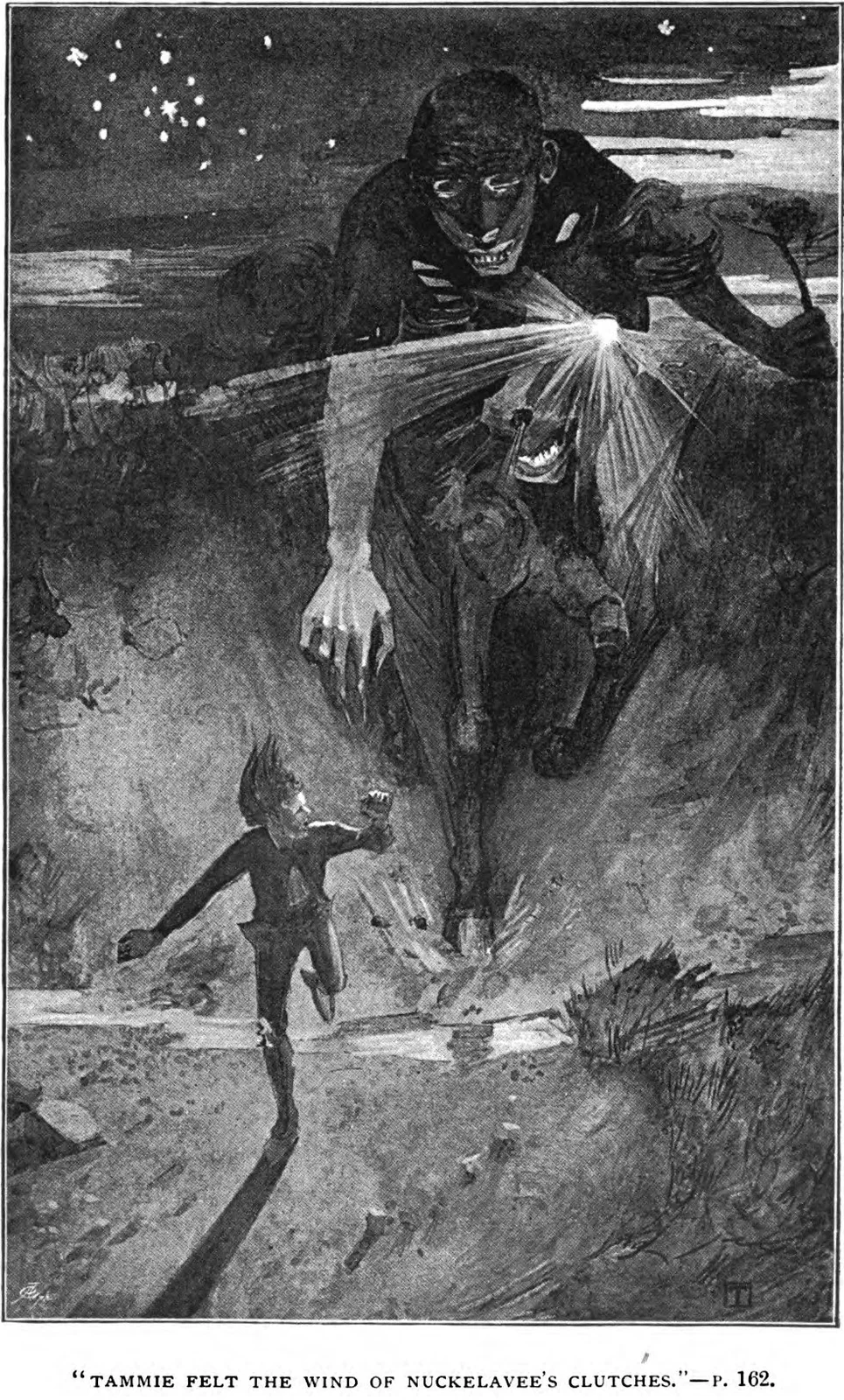
The nuckelavee is a sea monster from Orkney folklore, imagined in a horrifying combination of horse and human forms. In the account collected by W. Traill Dennison, it spreads sickness and blight, fears fresh water and nearly catches a man called Tammas, or Tammie, on a narrow coastal road.
This is a recorded folk narrative. Its existence tells us about stories told in Orkney; it does not establish that a skinless creature lived offshore.
What does the nuckelavee look like?
Dennison’s account begins with a useful uncertainty: some people understood the monster as a rider on a dreadful horse, while others thought horse and rider were one being. Modern pictures that merge them have support in the text, but the text itself preserves variation.
In Tammas’s encounter, the lower form resembles a huge horse with fin-like appendages and a single glaring eye. A human-like upper body appears to grow from its back. Its arms hang extraordinarily low, and its oversized head rolls from side to side. The absence of skin is the defining grotesque detail.
The description does not offer a naturalistic animal identification. It assembles an impossible body whose exposed vulnerability somehow makes it more dangerous. That reversal is a major part of the story’s horror.
The Dennison narrative reproduced by Folklore Scotland is the main source for the account below. The early twentieth-century illustration shown here is a later artist’s interpretation of the tradition.
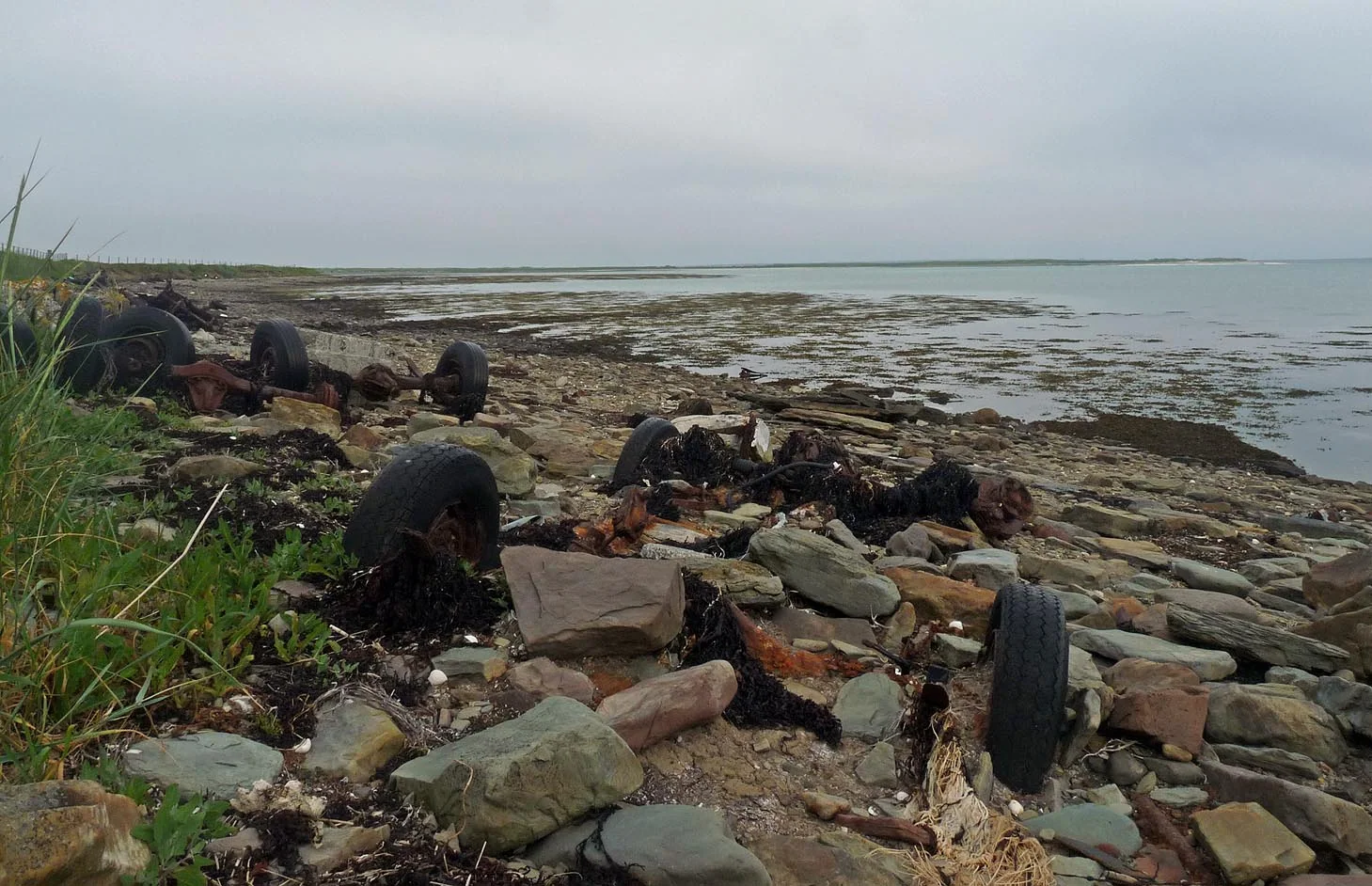
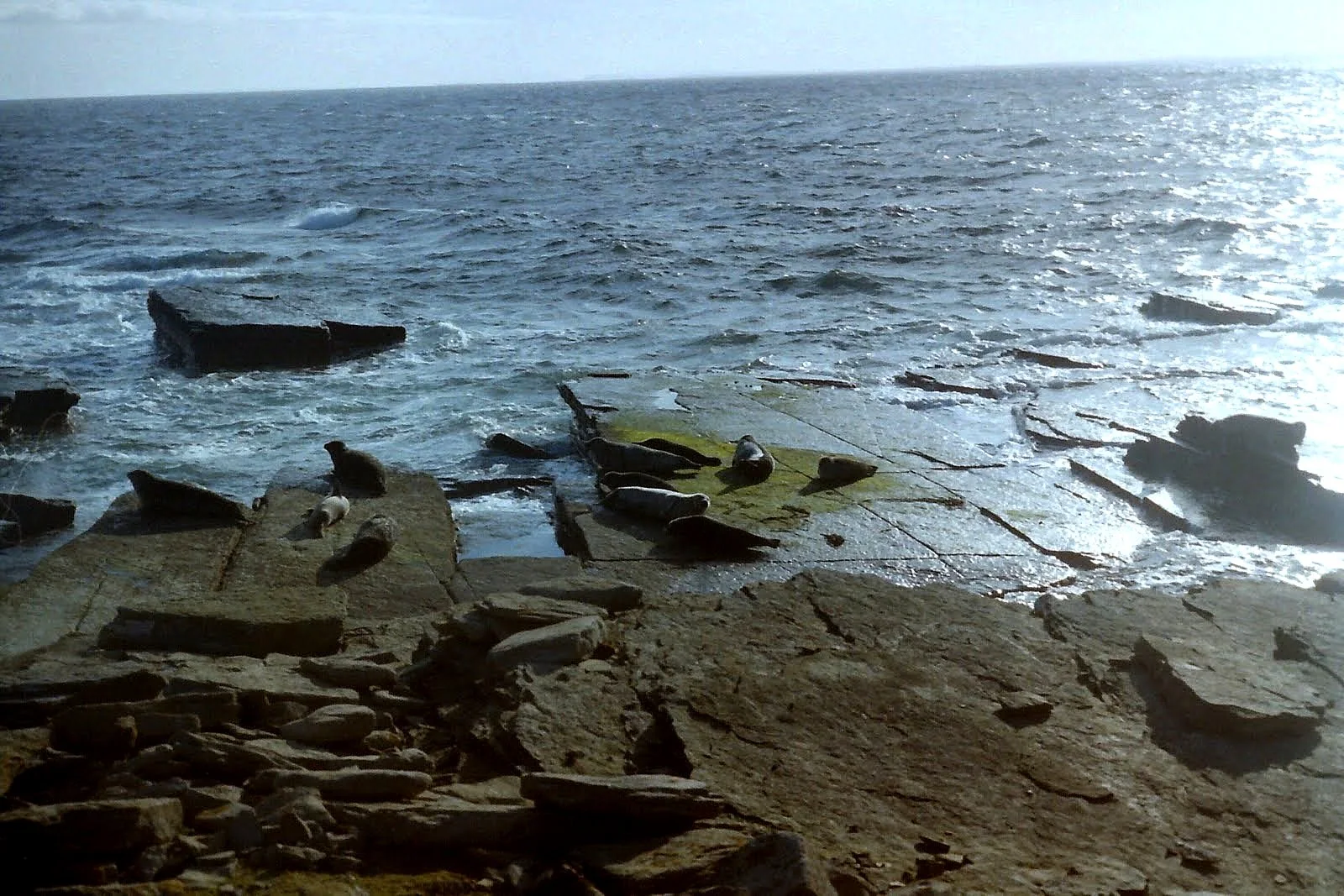
The coast at Burness, Sanday. The photograph supplies an Orkney setting, not a claimed encounter location. Source. Claire Pegrum. CC BY-SA 2.0. Resized and converted to WebP.
Why was the monster blamed for disease?
The story attributes damaged crops, sick people and livestock, and prolonged drought to the nuckelavee. Its breath is imagined as destructive to both plants and animals. These are statements within the belief tradition, not historical diagnoses of any particular outbreak.
Notice how the threats connect. The same being can spoil food, threaten animals and harm people. For a community living beside the sea, the monster brings danger across a boundary that also supports everyday life.
That is a reading of the narrative’s structure, rather than a claim that scholars have proved one original explanation for the creature. Folklore often gathers more than one fear around a memorable name.
How does Tammas escape?
Tammas is walking between the sea and a freshwater loch when he sees the approaching monster. With little space to turn aside, he decides to face it. As he moves close to the loch, his foot accidentally splashes water toward the creature.
The nuckelavee recoils. Tammas recognizes an opening and runs for a nearby stream. He reaches the fresh water and crosses, escaping the pursuing monster. The episode makes the creature’s weakness part of the action rather than a detached entry in a bestiary.
The fresh water matters specifically. It would be misleading to summarize the story as “water defeats it,” because its home is the sea. The distinction between salt water and fresh water gives the escape its logic.
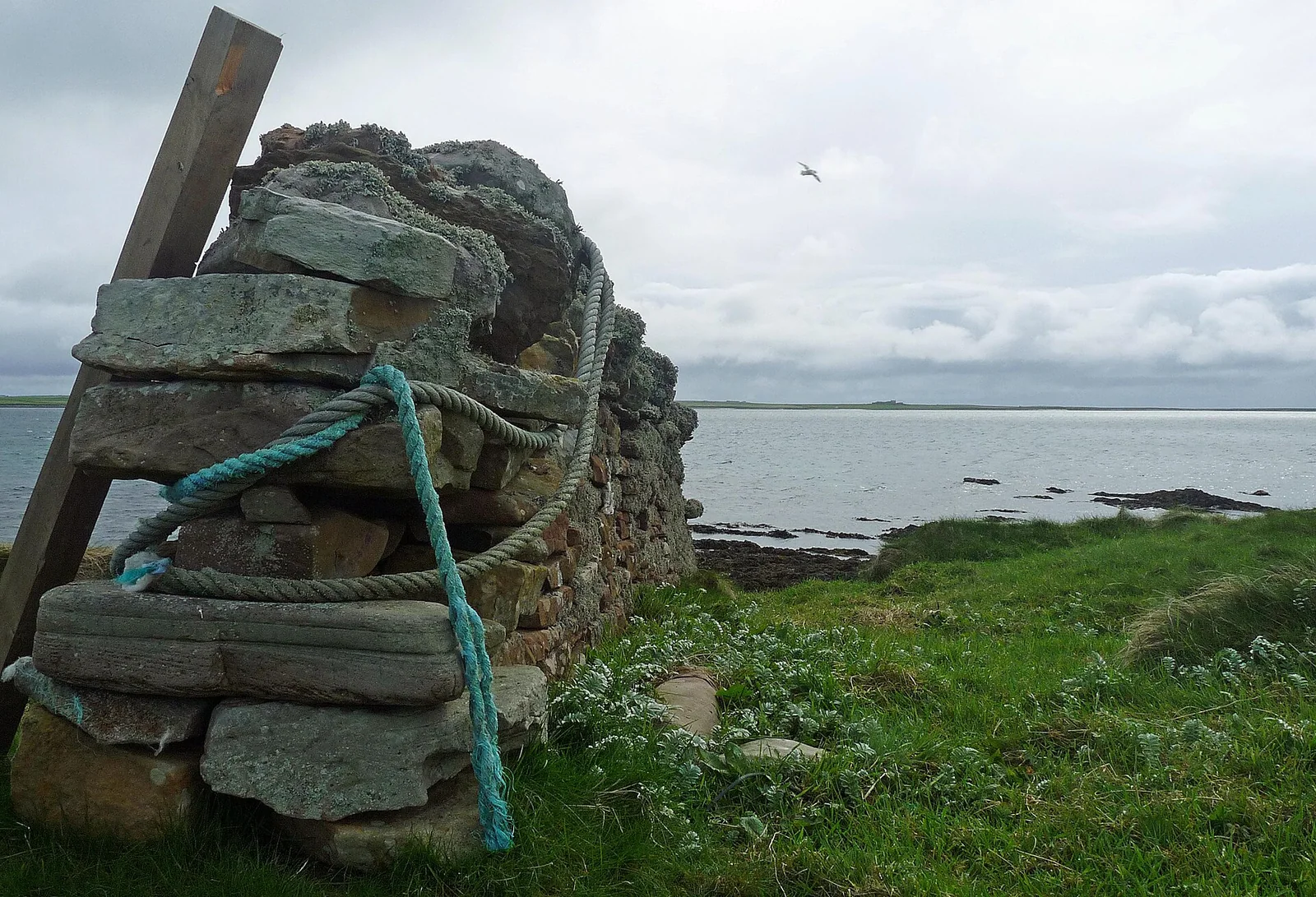
The Bay of Holland, Stronsay: another view of Orkney’s coastal landscape. Source. Claire Pegrum. CC BY-SA 2.0. Resized and converted to WebP.
Is the nuckelavee a kelpie?
They share a horse association and a Scottish setting, but the names do not designate the same story. The kelpie tradition centers on a dangerous water horse and its encounters with people. Dennison’s nuckelavee combines a marine home, a grotesque rider-horse body, destructive breath and a particular freshwater escape.
Nor is it a selkie. Selkie tales imagine seals taking human form and often revolve around family separation or captivity. Comparing these figures reveals how varied coastal folklore can be; proximity to the sea does not produce one interchangeable sea monster.
How old is the story?
The account used here was collected in the nineteenth century, while the illustrated collection dates to 1901. Those are dates for surviving documentation, not a demonstrated birthday for the tradition.
Claims that a specific detail comes directly from an ancient religion need their own evidence. The written account is already striking enough without supplying an unsupported prehistoric origin or presenting Tammas’s narrated encounter as a verified sighting.