Lore & Explained
The Golem of Prague Explained: Rabbi Loew, Clay and the Later Legend
Was the Prague golem a real creation of Rabbi Loew? Trace the older Jewish motif, later Prague stories and the 1909 version behind its protector role.
Topics: Golem, Jewish Folklore, Prague, Rabbi Loew
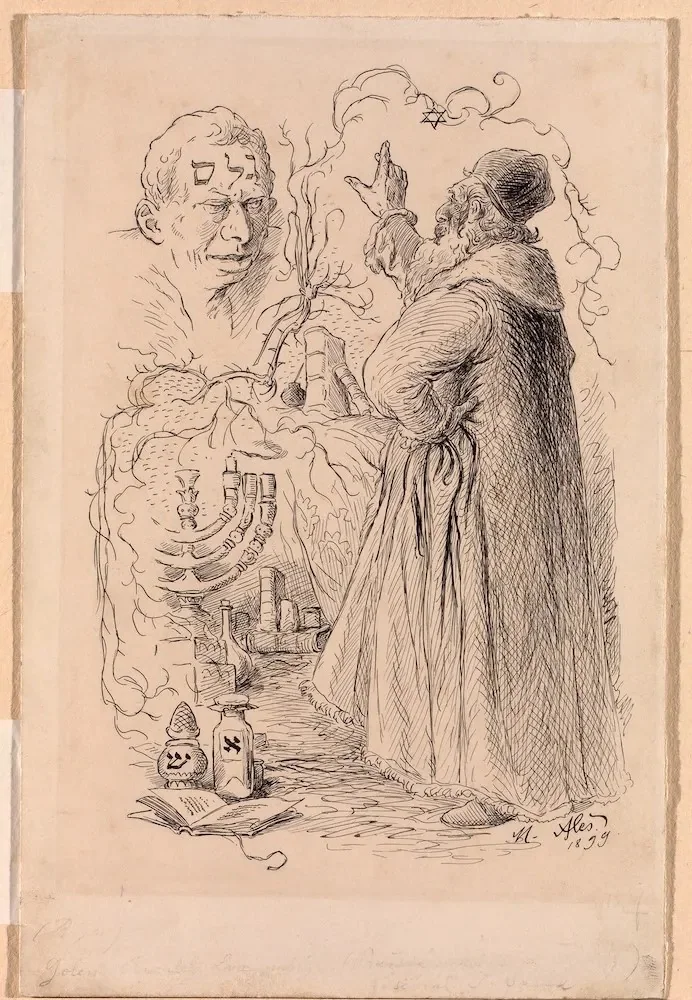
The Golem of Prague is a Jewish legend about an artificial being associated with Rabbi Judah Loew ben Bezalel, the Maharal. The rabbi was a historical person; the familiar story of his clay creation is a later tradition, not a documented episode from his life. The wider idea of creating a golem is older than the best-known Prague version.
That difference between an old motif and a later local story is the key to reading the legend accurately.
What is a golem?
The word is associated with something unformed or unfinished. The historical Jewish Encyclopedia entry connects it with early discussions of bodily formation, then describes medieval and later beliefs about animating a human-shaped figure through sacred letters and names.
These are religious, mystical and narrative traditions, rather than a single engineering recipe. In different accounts the being serves, grows, follows commands mechanically or becomes dangerous. The power of creation is also a problem of responsibility: making a servant does not guarantee control of what follows.
The older encyclopedia is useful as a record of traditions known around its publication. Its speculative theories about origins should not all be adopted as settled modern scholarship.
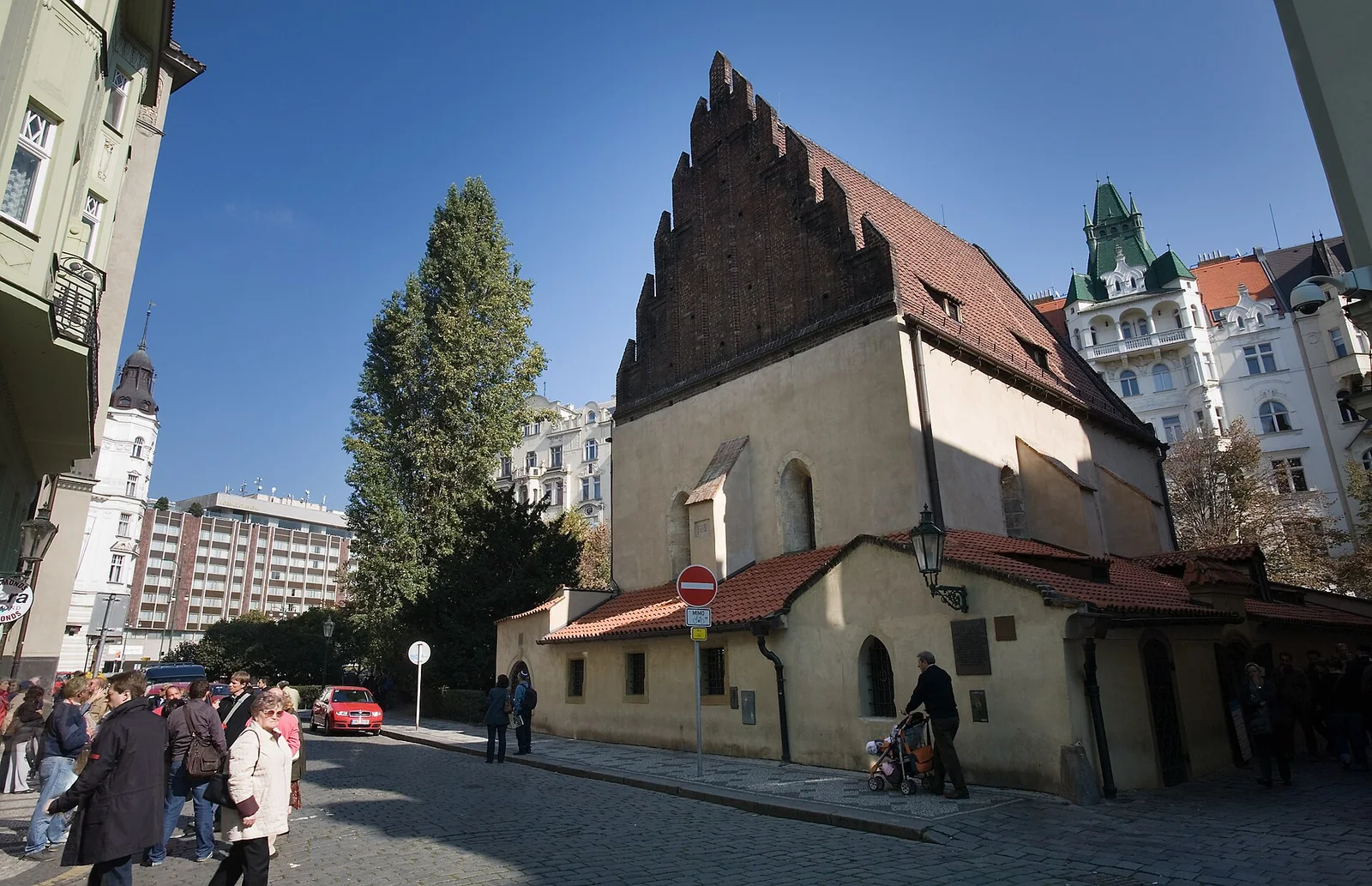
Prague’s Old-New Synagogue is a real building associated with the golem tradition. Source. Jorge Royan. CC BY-SA 3.0. Resized and converted to WebP.
Did Rabbi Loew really create the Prague golem?
Historian Hillel J. Kieval’s YIVO account finds no evidence that the Maharal created a golem. It traces the familiar literary association through nineteenth-century publications, including Berthold Auerbach in 1837, Franz Klutschak in 1841 and Leopold Weisel in 1847.
An important later development was Yudl Rosenberg’s 1909 book. It presented itself as based on an old manuscript but was Rosenberg’s own fabrication. Its protector story centered on defending Jews against false accusations of ritual murder. That plot should not be passed off as a sixteenth-century eyewitness account.
Kieval also distinguishes older Polish golem stories associated with Elijah of Chełm from the Prague tradition. The shared motif does not make their creators or settings interchangeable.
This chronology does not make the Prague legend culturally insignificant. It tells us where to look for its meaning: in retelling, collective memory and changing concerns, as well as in the period where the story claims to take place.
Why does the golem stop working?
There is no single ending across all versions. The early twentieth-century encyclopedia recounts a Prague story in which Rabbi Loew removes a written sacred name before the Sabbath to suspend his servant’s activity. When he forgets, he must intervene before the Sabbath begins; the creature falls apart.
Other golem stories use the Hebrew word emet, meaning truth, and the removal of a letter to form met, meaning dead. Kieval discusses this device in a Polish narrative. It is misleading to assume every Prague telling uses that exact mechanism.
The variation matters because words and obligations drive the plot. The animated body depends on something its maker must understand and maintain. A lapse in care can transform useful power into a threat.
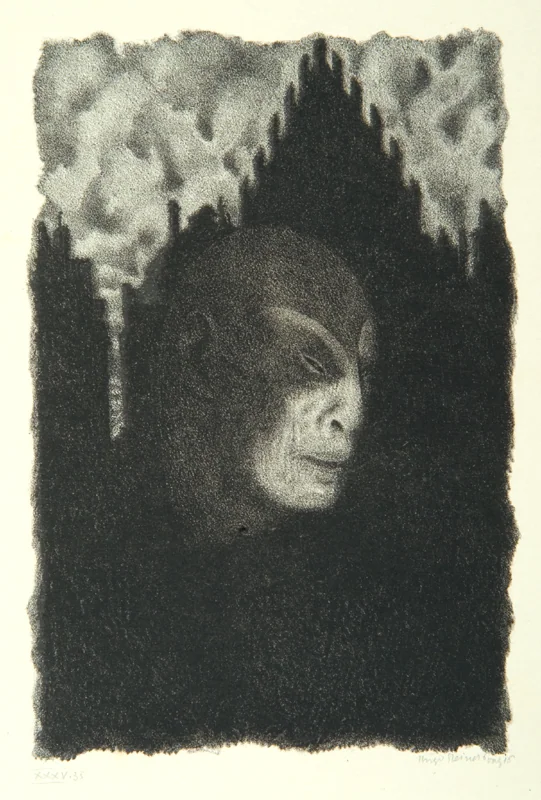
Hugo Steiner-Prag’s illustration for the literary afterlife of the golem, not a portrait of an actual being. Source. Hugo Steiner-Prag. Public domain. Resized and converted to WebP.
Is the golem still in the synagogue attic?
The remains in the attic of Prague’s Old-New Synagogue belong to the legend. A photograph of the real building documents the location associated with the story; it does not authenticate a clay being hidden above it.
That is a common trap in haunted-place and legendary-object coverage. A genuine place can anchor a story without proving everything told about it. The building deserves an accurate caption, and the tradition deserves a clear attribution.
Is the golem the same as Frankenstein’s creature?
Both invite questions about making life and a creator’s responsibility, but they come from different traditions. Mary Shelley’s creature speaks, learns, argues and demands recognition within a specific novel. Golem stories vary in the capacities and purposes they give their artificial being.
A comparison can illuminate those differences without asserting a direct influence that has not been established. The golem’s importance does not depend on being the first robot, the first Frankenstein or a generic demon. Its own religious vocabulary and history of retelling make it distinctive. For another object whose sensational name can obscure its real history, read what the Codex Gigas actually contains.