Lore & Explained / Demons & Occult
Azazel Explained: The Scapegoat, Fallen Angel, and Demon Across Jewish and Occult Tradition
Azazel is a wilderness term in Leviticus, a fallen angel in the Book of Enoch, and a name later writers equated with Satan — genuinely different traditions.
Topics: Azazel, Demons & Occult, Book of Enoch, Religious History, Fallen Angels
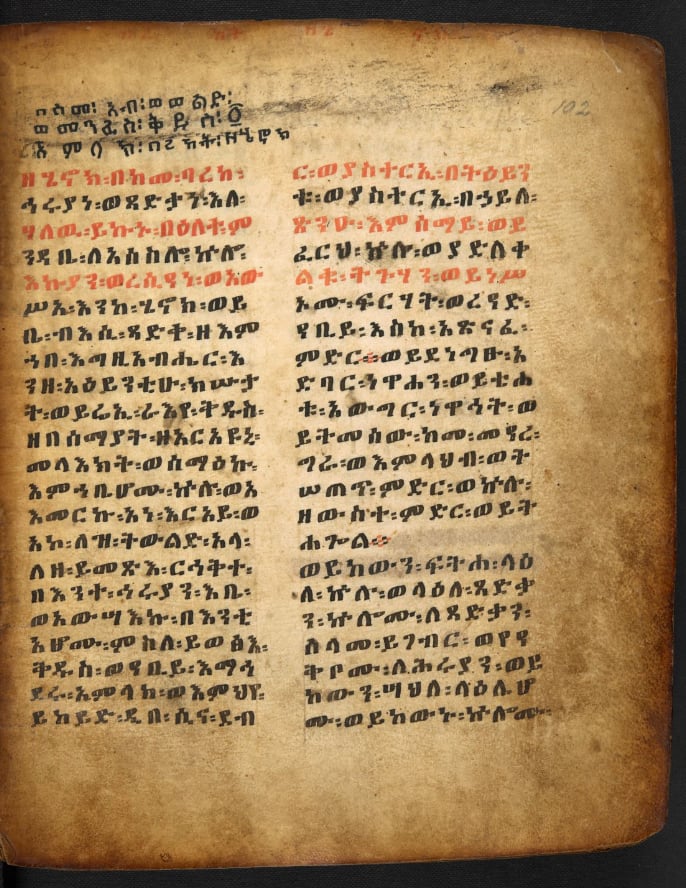
British Library (Public Domain, via Wikimedia Commons)
Ask what Azazel actually is and the honest answer depends entirely on which text you’re reading. In Leviticus, it’s a term connected to a wilderness ritual whose exact meaning scholars still debate. In the Book of Enoch, it’s the name of a specific fallen angel blamed for teaching humanity dangerous knowledge. In later Christian writing, it gets treated as another name for Satan outright. These aren’t three facets of one consistent figure — they’re genuinely separate textual traditions, written centuries apart, that later readers have flattened into a single mythological character.
The Leviticus Ritual
The earliest appearance of the term comes from Leviticus 16, describing the ancient Yom Kippur, or Day of Atonement, ritual. Two male goats were presented; one was sacrificed, and the other was sent out into the wilderness “for Azazel,” symbolically carrying away the community’s sins. Later rabbinic sources, including the Mishnah, describe an elaborate version of this practice: a priest would tie a scarlet thread to the designated goat and lead it to a cliff roughly twelve miles from Jerusalem, where it was pushed over the edge.
What “La-Azazel” Actually Means Is Disputed
Scholars have never settled on a single meaning for the Hebrew phrase translated as “for Azazel.” One long-standing interpretation treats it as a place name or geographic description, referring to a rugged, rocky wilderness area rather than any entity — an ancient etymology combining Hebrew roots suggesting “rugged” and a divine name. A separate, competing interpretation treats Azazel as the name of a specific being, possibly a wilderness demon or deity to whom the goat was symbolically sent. Linguist Wilhelm Gesenius proposed a third reading, “the averter,” though this specific etymology isn’t otherwise attested in surviving texts. Modern scholar Judit M. Blair has pointed out directly that the popular assumption Azazel refers to a demon in this specific Levitical context isn’t actually backed by contemporary textual evidence from the period — it’s a widely repeated interpretation, not a documented certainty.
Where “Scapegoat” Actually Comes From
The now-common English word “scapegoat” has a specific, traceable origin: William Tyndale’s 1530 English translation of the Bible rendered the term as “the escapegoat,” describing the goat that escaped into the wilderness rather than being sacrificed. Over time, common usage dropped the initial letter, producing the modern word “scapegoat” — a word whose everyday meaning, someone blamed and cast out for others’ wrongdoing, traces directly back to this specific ritual, whatever “Azazel” itself originally meant.
Azazel the Fallen Angel
A very different Azazel appears centuries later in 1 Enoch, specifically in the section known as the Book of the Watchers — a Jewish apocryphal text not included in most biblical canons but historically influential and preserved in full in the Ethiopian Orthodox biblical tradition. Here, Azazel is one of the Watchers, angels who descended to earth and corrupted humanity by teaching forbidden knowledge. His specific contributions, according to the text, included teaching men how to forge metal weapons and armor and teaching women cosmetic practices, including hair dyes and face paint — knowledge the text frames as corrupting rather than merely mundane. As punishment, the archangel Raphael binds Azazel to jagged rocks in a place called Dudael, where he’s kept until a final day of judgment, at which point he’s cast into fire.
A page from an Ethiopian Ge’ez manuscript of the Book of Enoch, the text that gives Azazel his role as a fallen Watcher. Source. British Library, Public Domain.
This is a meaningfully different Azazel than the term used in Leviticus, written in a different genre, for a different purpose, centuries after the Levitical ritual was already established practice. Manuscript traditions even preserve inconsistent spellings of the name across surviving fragments, including variants like Azael, which further complicates treating this as one clean, continuous figure across all sources.
Later Jewish Interpretation
Medieval Jewish commentators engaged directly with the ambiguity in the Levitical text rather than resolving it into a single fixed meaning. Nachmanides identified Azazel with Samael, another figure associated with evil in later Jewish tradition, but was explicit that the scapegoat ritual wasn’t meant to honor Azazel as an actual deity — he read it as a symbolic act, returning the community’s sins to a kind of personified spirit of desolation and ruin, rather than literal worship or appeasement of a real being. Maimonides took a more strictly symbolic view of the entire ritual, treating its purpose as psychological and instructive for the people performing it, meant to impress upon them the seriousness of repentance, rather than requiring any belief in a specific wilderness entity at all.
Christian Demonology and the Move Toward Satan
Christian interpretation moved in a different direction, increasingly folding Azazel into the broader figure of Satan rather than preserving him as a distinct being. The early Christian writer Origen explicitly identified Azazel with Satan directly. This reflects a common pattern in the development of Christian demonology: multiple named figures from earlier Jewish apocalyptic and ritual literature, each with their own specific and different origin, gradually absorbed into a single, unified adversarial figure as Christian theology consolidated its own framework.
Not the Same Everywhere
It’s worth being precise here rather than collapsing every tradition into the same conclusion: the identification of Azazel with Satan is inconsistent across sources, not universal. Jewish tradition more often preserved Azazel as a distinct figure connected specifically to ritual impurity and the wilderness rather than treating him as an equivalent to a supreme evil adversary. The Book of Enoch itself presents him as one fallen Watcher among several named figures, not as the singular chief antagonist of the text. Any claimed connection between Azazel and Iblis in Islamic tradition specifically should be treated with real caution as well — Islamic demonology developed its own distinct terminology and figures, and merging traditions casually, without a clearly documented historical link, risks inventing a connection the actual sources don’t support.
Azazel’s split identity across ritual law, apocalyptic literature, and later demonology is a useful case study for how names move between traditions and pick up new meanings along the way — the same phenomenon covered in more general terms in our Demons Explained field guide, and comparable to how Lilith absorbed meaning from Mesopotamian folklore into later Jewish tradition, and how Baphomet picked up an entirely invented visual identity centuries after its original, unrelated medieval context.
Frequently Asked Questions
Is Azazel in the Bible? The term appears in Leviticus 16, connected to the Yom Kippur scapegoat ritual. The more developed fallen-angel figure most people associate with the name comes from 1 Enoch, a text outside most biblical canons, though preserved as scripture in the Ethiopian Orthodox tradition.
Is Azazel Satan? Not consistently. Some early Christian writers, including Origen, directly identified the two, but Jewish tradition more often kept Azazel as a distinct figure, and the Book of Enoch presents him as one fallen angel among several, not a singular supreme adversary.
Was Azazel a fallen angel? In the Book of Enoch specifically, yes — he’s one of the Watchers, punished for teaching forbidden knowledge to humanity. That’s a separate tradition from the wilderness-ritual term used in Leviticus.
What does the scapegoat have to do with Azazel? The English word “scapegoat” traces directly to William Tyndale’s 1530 translation of the Levitical ritual, in which a goat was sent “for Azazel” into the wilderness rather than sacrificed, symbolically carrying away the community’s sins.
Is Azazel one of the Watchers? Yes, according to 1 Enoch, where he’s specifically blamed for teaching weapon-making and cosmetics to humans and is bound in punishment until a final judgment.
What does the name mean? This is genuinely disputed. Interpretations range from a geographic wilderness description to the name of a demon or deity, and scholars have not reached consensus on which reading the original Levitical text intended.