Lore & Explained / Folklore
Why You Shouldn’t Pick Blackberries After Michaelmas: The Devil’s Spit Folklore Explained
British and Irish folklore warns against picking blackberries after Michaelmas. Here is where the Devil’s spit story comes from, what Old Michaelmas Day means, and what the historical sources actually say.
Topics: Michaelmas, Blackberries, Devil's Spit Day, British Folklore, Irish Folklore, Old Michaelmas Day
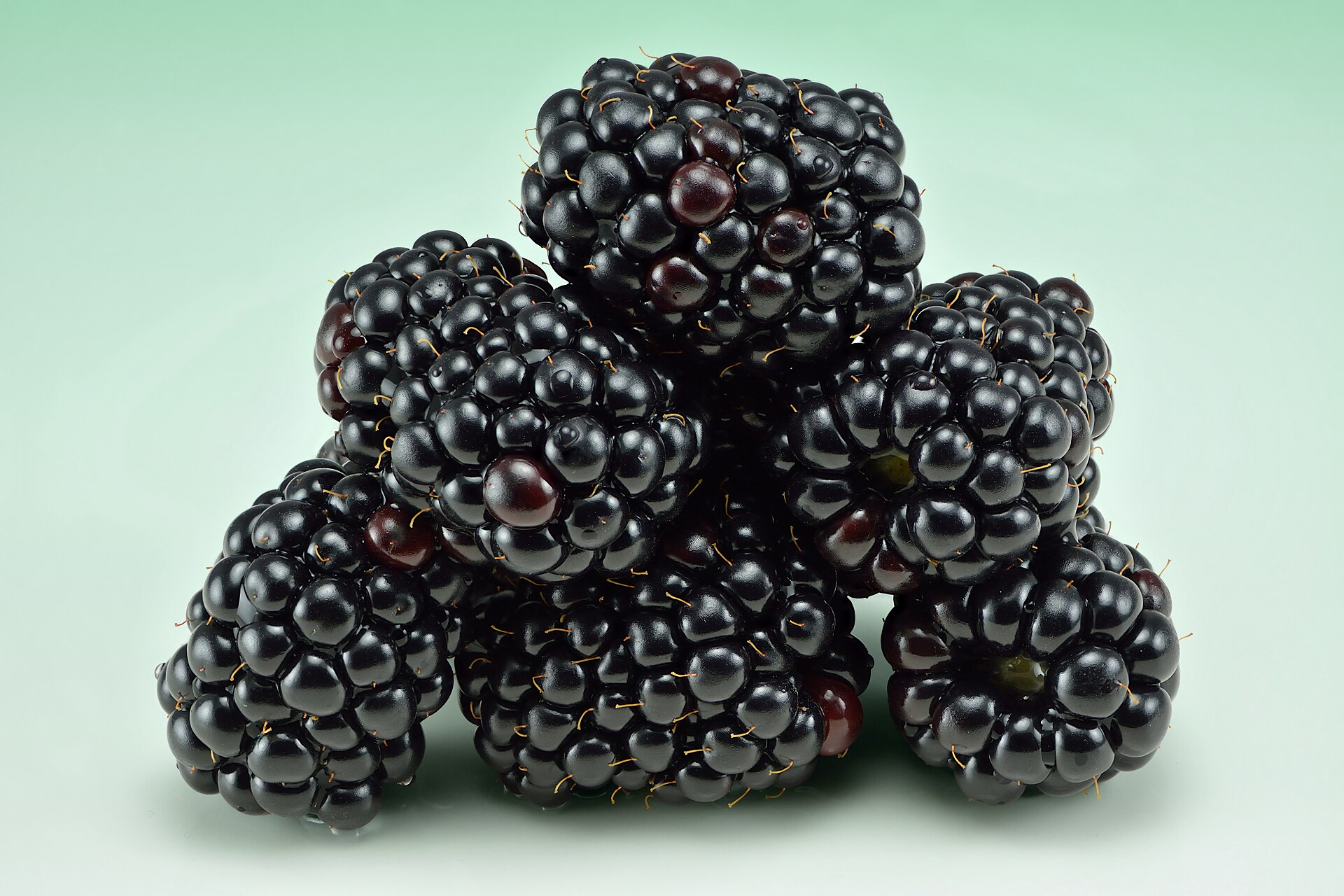
Iifar / Wikimedia Commons (CC BY-SA 4.0, resized)
In British and Irish folklore, there is a point in autumn when the blackberry stops belonging to you and starts belonging to the Devil.
The warning usually appears in one of two forms:
Do not pick blackberries after Michaelmas.
Or:
Do not pick blackberries after Old Michaelmas Day.
The supernatural explanation is wonderfully vindictive. After the Archangel Michael defeated the Devil and cast him from heaven, the fallen spirit supposedly landed in a thorny blackberry bush. Furious at being scratched, he spoiled the berries — by stamping on them, throwing his club over them, spitting on them or, in some regional versions, doing something even less appetizing.
That is folklore, not botany.
But the belief is old enough to appear in eighteenth- and nineteenth-century writing, and the disagreement over the date tells us something important about how seasonal customs survive calendar changes.
What Is Michaelmas?
Michaelmas is the Feast of Saint Michael and All Angels, traditionally observed on September 29 in Western Christianity.
Michael is the archangel associated with the heavenly battle against the dragon or Satan in the Book of Revelation.
The feast also became a major seasonal marker in Britain and Ireland.
Michaelmas was one of the traditional quarter days, dates used for rents, contracts, hiring and other legal or economic arrangements. It fell close to the end of the harvest season, which helped make it a natural boundary between one part of the rural year and another.
That seasonal boundary is where the blackberry rule fits.
The religious feast does not teach that Satan literally spits on berries.
That is a folk tradition attached to the date.
Why Does the Devil Spoil the Blackberries?
The best-known version begins with the war in heaven.
Revelation describes Michael and his angels fighting a dragon identified with the Devil and Satan. British and Irish folklore adds a detail that is not in the biblical text:
the Devil falls into a bramble bush.
The thorns hurt him, so he takes revenge on the fruit.
Different regions gave him different methods.
Some said he put his foot on the berries.
Others said he threw his club over them.
In Sussex, a nineteenth-century folklorist recorded the belief that the Devil went around spitting on the bramble bushes.
Other versions made the contamination even more graphic.
The point remained the same: after the forbidden date, the blackberries were no longer fit to eat.
How Old Is the Blackberry-and-Devil Tradition?
It is older than many modern seasonal-folklore websites suggest.
One early printed witness appears in the work of Caleb Threlkeld, a physician, cleric and botanist who compiled the first flora devoted to Irish plants.
His Synopsis Stirpium Hibernicarum was published in Dublin in 1726. Bibliographic research by E. Charles Nelson corrected the publication date, which older references had often given as 1727.
While discussing the bramble, Threlkeld referred dismissively to a popular belief that after Michaelmas the Devil cast his club over the berries.
The important part is not whether Threlkeld believed it — he clearly treated it as a fable.
The important part is that the belief was familiar enough in early eighteenth-century Ireland for a botanist to mention it while writing about the plant.
That gives the tradition a documented history considerably older than modern internet retellings.
What Did Victorian Folklorists Record?
A particularly useful record comes from William Henderson, whose nineteenth-century work collected beliefs from northern England and the border counties.
Henderson wrote that in Ireland people said:
“At Michaelmas the devil puts his foot on the blackberries.”
He also described a Tweed-side belief that late in autumn the Devil threw his club over the berries, making them poisonous or unwholesome.
Then he moved south.
In Sussex, Henderson recorded October 10 as the limit for blackberry picking. On that day, people said, the Devil went around and spat on the bramble bushes.
Henderson explicitly identified October 10 as Old Michaelmas Day.
The record shows that there was never just one perfectly uniform story.
The central warning stayed recognizable while the Devil’s exact behavior, the location and even the date shifted.
That is normal for folklore.
Why Are There Two Michaelmas Dates?
This is where the calendar matters.
Britain and its dominions changed from the Julian calendar to the Gregorian calendar in 1752.
Under the Calendar (New Style) Act 1750, September 2, 1752 was followed by September 14. Eleven calendar dates disappeared from that year’s civil calendar.
The law preserved major church and legal observances on their nominal dates, so Michaelmas remained September 29.
But some seasonal fairs, hiring customs and rural traditions remained attached to the older point in the agricultural year.
As a result, Old Michaelmas Day came to be observed around October 10, with some later traditions and reference works using October 11.
That explains why blackberry folklore can say both:
- stop picking after September 29; and
- stop picking after October 10 or 11.
They are related traditions shaped by the calendar change, not proof that one storyteller necessarily got the legend wrong.
So Is September 29 or October 10 the “Real” Devil’s Spit Day?
There is no single universal date across every region.
Historical folklore records are messy in exactly the way living traditions tend to be.
Some versions attach the warning directly to Michaelmas on September 29.
Others attach it to Old Michaelmas Day in October.
William Henderson’s collection is especially useful because it preserves several variants instead of pretending Britain and Ireland shared one standardized rule.
That makes a modern claim like “the ancient rule has always been October 11” too neat.
The safer conclusion is:
The blackberry taboo clustered around Michaelmas and the old seasonal date that survived the 1752 calendar reform, with regional variation in both date and story.
Did People Really Think the Berries Became Poisonous?
Some folklore accounts say the berries became poisonous, while others say merely unwholesome, cursed or unlucky.
That does not mean late blackberries suddenly develop a supernatural toxin on a fixed calendar date.
Fruit left on brambles late in the season can genuinely deteriorate.
Cooler and wetter weather can leave berries overripe, mouldy, damaged or full of insects. A seasonal warning therefore had a practical effect even when its explanation involved the Devil.
It is tempting to conclude that someone deliberately invented the legend as an early food-safety lesson.
That is harder to prove.
Folklore often becomes practical without having one identifiable inventor or purpose.
The blackberry rule may have reinforced sensible seasonal behavior, but that does not establish why the supernatural story first developed.
Did the Devil Spit, Stamp, Urinate or Throw a Club?
All of the above appear in retellings.
The differences are useful because they show the legend evolving geographically.
The club appears in early Irish material associated with Threlkeld and in later border-country tradition.
The foot appears in the Irish saying Henderson recorded.
The spitting version is documented in Sussex.
Other regional retellings say the Devil cursed, scorched or fouled the fruit in more vulgar ways.
Trying to identify one version as the original misses the point.
The stable core is smaller:
- Michaelmas marks a boundary.
- The Devil becomes associated with the bramble.
- The remaining blackberries are declared spoiled or dangerous after that boundary.
Everything else can change.
Where Did Saint Michael Enter the Story?
The visual logic is easy to understand.
Saint Michael is traditionally depicted defeating a dragon or Satan.
One of the most famous images of the battle is Albrecht Dürer’s 1498 woodcut Saint Michael Fighting the Dragon from his Apocalypse series.
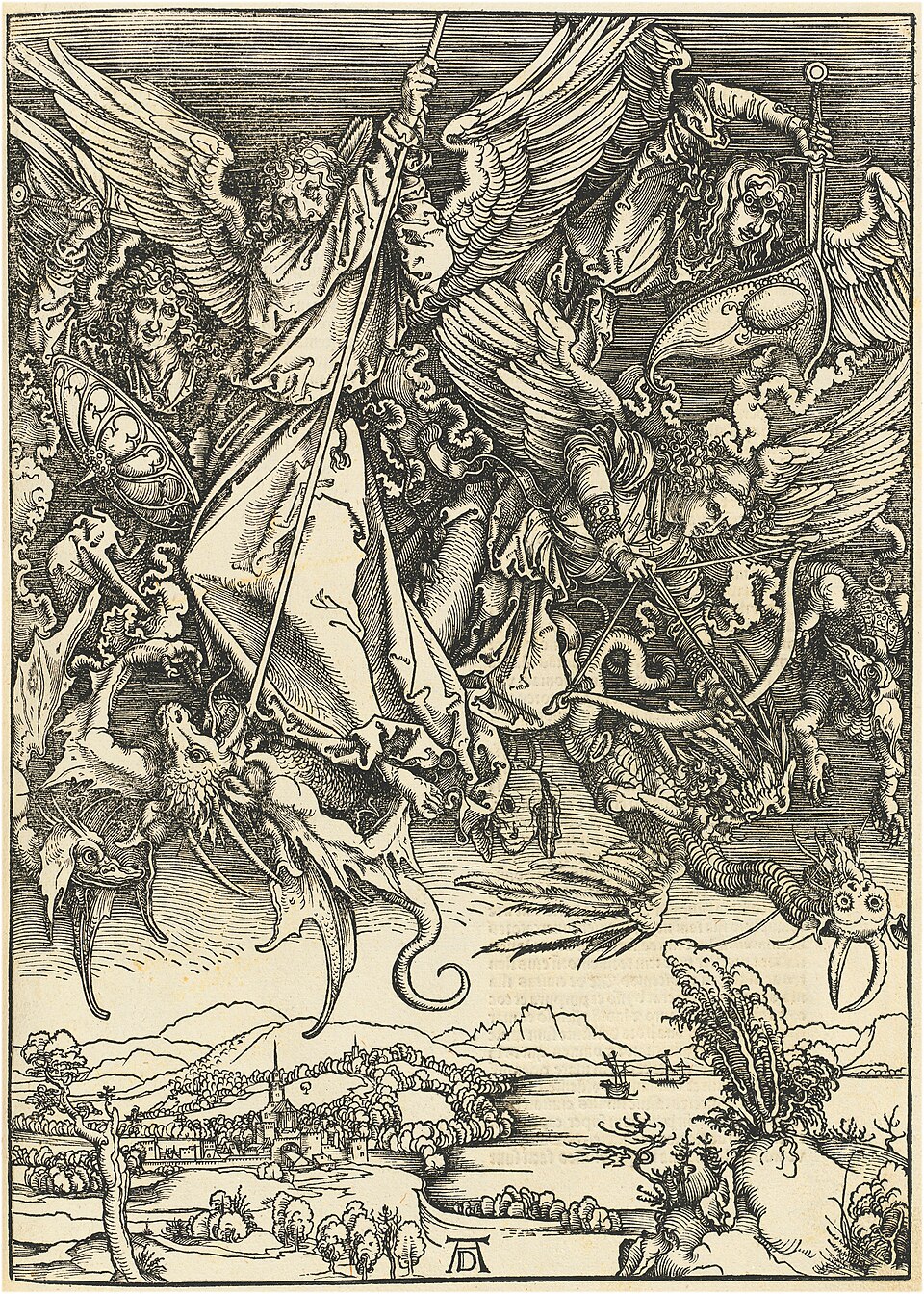
Dürer’s image does not contain the blackberry legend.
It does, however, show the religious story that later folk tradition transformed into a comic autumn scene: the Devil is cast down, lands painfully in a bramble, and takes revenge on the fruit.
That distinction matters.
Religious text and folk story are not the same source.
The biblical and artistic tradition provides Michael’s victory over Satan. The blackberry bush belongs to later folklore.
Is the Irish Púca Part of the Same Tradition?
Irish blackberry folklore sometimes shifts responsibility away from the Christian Devil.
Later retellings may blame the púca, a supernatural figure in Irish tradition, for spoiling late blackberries.
That does not mean “púca” and “Devil” are simply two names for the same being.
Irish folklore contains layers of local supernatural tradition, Christian interpretation and later collecting. Similar seasonal prohibitions can therefore attach themselves to different supernatural actors.
A careful article should preserve that difference rather than flattening every Irish story into a Satan legend.
Why the Story Survived
The Devil’s blackberries have several qualities that make folklore durable.
The story is easy to remember.
The date is seasonal.
The object is ordinary and available almost everywhere.
The punishment is visible: berries really do become soft, mouldy or unappealing as the season turns.
And the supernatural explanation is funny enough to repeat.
A child may forget a lecture about fruit deterioration.
They are less likely to forget being told that Satan has already spat on the berries.
Is “Devil’s Spit Day” an Ancient Name?
It is safer to treat Devil’s Spit Day as a modern popular label for the tradition rather than assume that exact phrase was used everywhere historically.
Nineteenth-century collections document the belief that the Devil spat on brambles.
They do not establish that every community formally called Michaelmas or Old Michaelmas “Devil’s Spit Day.”
That distinction is small but useful.
Folklore websites often turn a regional custom into a named holiday because named holidays are easier to package and share.
The underlying blackberry taboo is better documented than the idea of one universally recognized festival with that exact title.
What the Historical Record Actually Supports
The strongest evidence allows a careful set of conclusions.
- Michaelmas is traditionally observed on September 29.
- Blackberry taboos connected with Michaelmas are documented in Britain and Ireland.
- Caleb Threlkeld referred to an Irish Devil-and-blackberry belief in a work published in 1726.
- William Henderson documented multiple nineteenth-century versions, including the Devil’s foot, club and spit.
- Britain dropped eleven calendar dates in September 1752 when adopting the Gregorian calendar.
- Some seasonal customs continued around the old date, creating Old Michaelmas Day traditions in October.
- The Devil’s contamination of blackberries is folklore, not a supernatural fact.
- Late-season fruit can genuinely deteriorate, but that does not prove the legend was consciously invented as a scientific warning.
What the evidence does not support is one perfect ancient version with one fixed date and one exact action performed by the Devil in every region.
That polished version is what folklore becomes after centuries of retelling.
Frequently Asked Questions
Why shouldn’t you pick blackberries after Michaelmas?
According to British and Irish folklore, the Devil spoils the berries after Michaelmas by stepping on, spitting on, cursing or otherwise fouling them. In reality, there is no supernatural change on a fixed date, although late-season fruit can deteriorate.
When is Michaelmas?
Michaelmas is observed on September 29.
When is Old Michaelmas Day?
After Britain changed calendars in 1752, some seasonal customs continued around the older point in the year. October 10 appears in historical folklore records, while some later traditions use October 11.
What is Devil’s Spit Day?
It is a modern popular name for the folklore warning that blackberries should not be picked after Michaelmas or Old Michaelmas because the Devil has spat on them.
Is the blackberry legend in the Bible?
No. Revelation describes Michael fighting the dragon identified with Satan, but it does not say the Devil landed in a blackberry bush or spoiled the fruit.
How old is the legend?
An Irish version was already recorded by Caleb Threlkeld in a book published in 1726, and nineteenth-century folklorists documented several regional variants.
Are blackberries poisonous after Michaelmas?
No fixed calendar date suddenly makes blackberries poisonous. Wild fruit should be judged by its actual condition. Mouldy, damaged or spoiled berries should not be eaten regardless of the date.
Sources & further reading
- UK Legislation: Calendar (New Style) Act 1750
- William Henderson, Notes on the Folk-Lore of the Northern Counties of England and the Borders, Chapter 2
- National Library of Ireland: Caleb Threlkeld, Synopsis Stirpium Hibernicarum
- E. Charles Nelson: The Publication Date of the First Irish Flora
- Historic UK: Michaelmas
- National Geographic: Michaelmas and the Blackberry Legend
- National Gallery of Art via Wikimedia Commons: Albrecht Dürer, Saint Michael Fighting the Dragon (CC0)
- Wikimedia Commons: Blackberries (Rubus fruticosus), CC BY-SA 4.0


.jpg)
