News / Movies
The Exorcist: Martyrs Turns Possession Into a Serial-Killer Procedural — and Echoes The Exorcist III
The Exorcist: Martyrs follows detective Julie Miller after Father Sunday’s execution. Explore Mike Flanagan’s Legion influence and the Exorcist III parallels.
Topics: The Exorcist: Martyrs, Mike Flanagan, Scarlett Johansson, Father Sunday, Julie Miller, The Exorcist III, Legion, William Peter Blatty, Gemini Killer, Blumhouse, Universal Pictures
Hosted by Universal Pictures. Loading the player connects your browser to YouTube. If playback is unavailable here, use the direct link.
Video uploaded · Watch on YouTube ↗
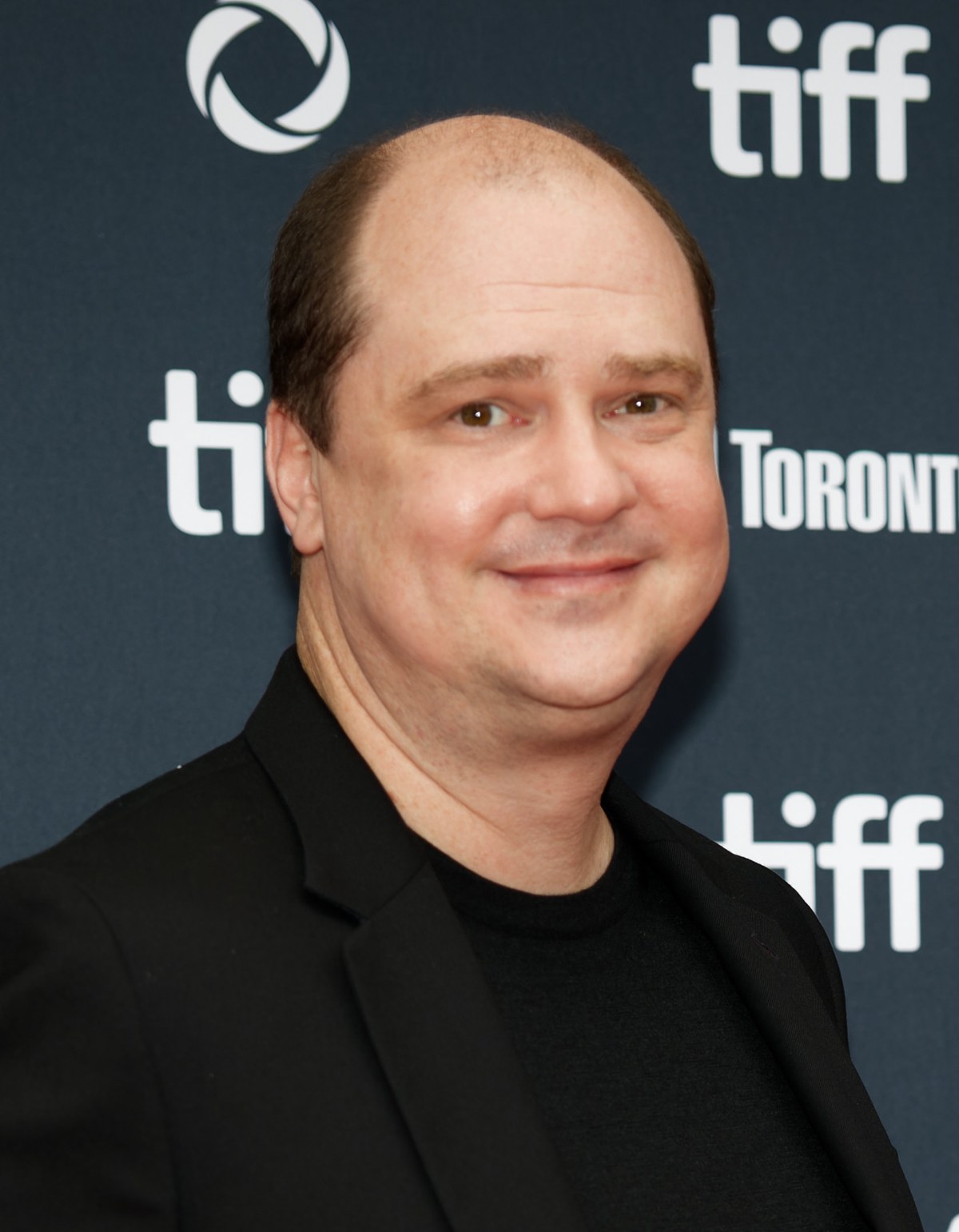
Kevin Payravi / WikiPortraits via Wikimedia Commons (CC BY-SA 4.0); resized and recompressed
Mike Flanagan’s The Exorcist: Martyrs brings demonic possession into a homicide investigation, with new plot details revealing how the story draws on William Peter Blatty’s Legion.
The Exorcist: Martyrs is not being presented as a remake of William Friedkin’s 1973 film. It is not a continuation of The Exorcist: Believer. And it is not built around another family simply discovering that a child is possessed in a bedroom.
Instead, Flanagan is turning The Exorcist into a serial-killer procedural.
Scarlett Johansson plays NYPD homicide detective Julie Miller, a single mother who apprehends a murderer known as Father Sunday. John Leguizamo plays the killer. Julie witnesses his execution.
Then the killings continue.
That setup immediately recalls William Peter Blatty’s 1990 sequel, The Exorcist III.
The resemblance is real.
It is also not the same as saying Martyrs is a remake.
Flanagan has said he wants a brand-new story with new characters, while openly identifying Blatty’s Legion — the novel behind The Exorcist III — as an inspiration.
What has been officially revealed about The Exorcist: Martyrs?
On October 6, Universal publicly unveiled the title The Exorcist: Martyrs.
The film is written and directed by Mike Flanagan, who also produces alongside Jason Blum and longtime Exorcist producer David Robinson.
The principal cast includes:
- Scarlett Johansson;
- Jacobi Jupe;
- Diane Lane;
- Chiwetel Ejiofor;
- Laurence Fishburne;
- Sasha Calle;
- John Leguizamo;
- Rahul Kohli;
- Hamish Linklater;
- Carla Gugino;
- Kate Siegel;
- Samantha Sloyan;
- John Gallagher Jr.;
- Carl Lumbly;
- Gil Bellows;
- Robert Longstreet;
- Matt Biedel;
- Benjamin Pajak.
The first-look material gives the central characters much more definition than earlier announcements did.
Johansson is Julie Miller, an NYPD homicide detective.
Her 12-year-old son is Max, played by Jacobi Jupe.
Diane Lane plays Julie’s mother Mary, who helps care for Max when Julie’s job pulls her away.
Sasha Calle plays fellow homicide detective Gina Restrepo.
Chiwetel Ejiofor plays Father William, a former career prison chaplain.
John Leguizamo plays the serial killer known as Father Sunday.
What the October 9 trailer adds to The Exorcist: Martyrs
Universal Pictures and Blumhouse-Atomic Monster unveiled the first full trailer for The Exorcist: Martyrs on October 9, 2026, during New York Comic Con. It followed a much shorter preview released earlier that week. The important change is not a surprise reveal of the demon or a confirmed connection to an older character. It is that the film’s unusual combination of a homicide procedural and supernatural horror is now visible in its marketing, not merely described in advance interviews. Entertainment Weekly’s October 9 interview with Mike Flanagan and Dread Central’s coverage of the full trailer provide context for the footage.
The footage moves between Scarlett Johansson’s Julie Miller investigating ritualistic killings, John Leguizamo’s Father Sunday awaiting execution, and the religious imagery that frames the investigation. Julie’s partner Gina Restrepo, played by Sasha Calle, is part of the police side of the story; Chiwetel Ejiofor’s Father William connects the case to the clergy. The montage does not, by itself, establish who or what is responsible for the new killings. A cut from a murder scene to a religious image is an editorial suggestion, not a complete account of the film’s supernatural rules.
Flanagan told Entertainment Weekly that a sequence in which Julie descends into a crypt was filmed at a real location discovered in Manhattan. His account identifies a physical filming location for that sequence, not evidence of an actual haunting. His described reference points go beyond The Exorcist III: he also mentions the crime-thriller traditions of Seven, The Silence of the Lambs, Zodiac and Fallen. These influences help explain the trailer’s emphasis on investigation and moral dread. They do not establish a crossover or a shared fictional continuity with any of those movies.
A more significant detail appears in the dialogue. Julie invokes real serial killers while discussing claims about demonic influence. That is a statement made inside the film’s fictional investigation. It must not be read as an independently verified historical finding that those killers were possessed or that each person named made an identical, documented confession. Flanagan himself discusses the ambiguity of killers invoking an outside “entity” in his interview with Entertainment Weekly: a claim might function as a belief, excuse or manipulation. None of those possibilities proves supernatural causation.
The same restraint applies to the film’s use of Catholic martyrdom. Father Sunday’s crime scenes are described as imitating the suffering of saints, but the trailer’s staged images are part of a fictional murder mystery. They should not be presented as accurate historical reconstructions of particular saints’ deaths without separate evidence.
The trailer strengthens the structural comparison with William Peter Blatty’s Legion and The Exorcist III. Both put a detective in front of crimes that appear to outlast an executed killer. It does not confirm that Father Sunday is the Gemini Killer, that Julie is a renamed William Kinderman, or that the new film will repeat the older story’s explanation. Those are different claims, and the marketing has not established them.
Universal hosts the original trailer on its official movie site, linking to the verified Universal Pictures YouTube channel. The upload is titled The Exorcist: Martyrs | Official Trailer. The player above loads that original video only when selected.
Father Sunday stages murders around Catholic martyrdom
Father Sunday is not described as a conventional slasher.
Flanagan says the killer arranges his murders around the suffering of Roman Catholic saints.
That explains the title Martyrs at the story level.
The killings are built around religious iconography, punishment and the spectacle of faith under extreme suffering.
Julie catches Father Sunday early in the story.
She is then present at his execution.
According to Flanagan, that execution does not unfold as expected.
The important point is what follows:
Father Sunday’s death does not end the murders.
That moves the film away from an ordinary homicide thriller and into Exorcist territory.
The detective has already captured the human suspect.
The larger question becomes whether the evil attached to his crimes can survive the person who committed them.
Why The Exorcist III is the obvious comparison
The comparison is not based on fan pattern-matching alone.
Flanagan has explicitly praised William Peter Blatty’s Legion and said it helped inspire his new film.
Blatty adapted that novel into The Exorcist III in 1990.
The older film follows police lieutenant William Kinderman as he investigates a new series of ritualized killings.
The murders resemble the work of James Venamun, the Gemini Killer.
There is one obvious problem:
the Gemini Killer was executed years earlier.
That is the engine of the mystery.
A detective confronts a pattern associated with a dead serial killer, and the investigation gradually enters the supernatural world of The Exorcist.
Martyrs starts from a closely related dramatic problem.
Julie Miller catches Father Sunday.
Father Sunday is executed.
The killing does not stop.
The similarity is structural.
It does not mean the characters, killer, possession rules or final explanation are the same.
The Exorcist III made the detective the center of the story
That is another important connection.
The original Exorcist is fundamentally organized around a possessed child, her mother and the priests who eventually confront the entity.
The Exorcist III changes the center of gravity.
Kinderman is a homicide detective.
He follows evidence.
He studies patterns.
He tries to understand why murders are repeating the private signature of an executed killer.
The supernatural enters through an investigation that initially behaves like a crime story.
Flanagan is deliberately working in similar territory.
Julie is also a homicide detective.
The audience is introduced to Father Sunday through a criminal case.
The story can therefore ask the same kind of unsettling question:
What happens when police procedure reaches a fact it has no category for?
The Gemini Killer and Father Sunday are not the same character
The parallels should not be flattened.
In The Exorcist III, the executed killer is James Venamun, known as the Gemini Killer.
AFI’s catalog summarizes the film’s central mystery: Kinderman notices that new murders match the Gemini Killer’s methods even though Venamun was executed fifteen years earlier.
The supernatural explanation eventually involves possession and Father Damien Karras.
Nothing currently released about Martyrs establishes that Father Sunday is a renamed Gemini Killer, a reincarnation of him or an alternate version of him.
Father Sunday is a new character in a new story.
The resemblance lies in the dramatic design:
executed murderer + continuing murders + detective investigation + supernatural possession.
That is a lineage, not an identity.
Julie Miller is not simply a new William Kinderman
The same warning applies to the detective.
Julie Miller and William Kinderman occupy similar narrative positions, but they are not interchangeable.
Kinderman is a Georgetown police lieutenant tied directly to characters from the original Exorcist.
Julie is an NYPD homicide detective with a 12-year-old son and a mother who helps support the family.
Her personal stakes appear to become central when the supernatural threat reaches Max and Mary.
Flanagan is borrowing the investigative shape that made The Exorcist III distinctive.
He is not simply changing Kinderman’s name.
Father William gives the execution a spiritual witness
Chiwetel Ejiofor’s character adds another layer.
Flanagan identifies Father William as a career prison chaplain who presides over Father Sunday’s execution.
Years after that night, William is suffering a crisis of vocation and faith because of what happened.
That connects the religious side of the story to the criminal case from the beginning.
The priest is not brought in only after a detective has exhausted every rational lead.
He was already present at the event that appears to transform the case.
Laurence Fishburne plays another priest who is familiar with ancient rituals and enters when the supernatural danger begins closing in on Julie’s family.
The story therefore has two different clerical perspectives before the final confrontation is even explained.
Martyrs still has to deliver possession
Flanagan has been direct about one franchise obligation.
There is possession in the movie.
But he does not want the film to reduce itself to a repeat of the familiar structure in which evil is confined to one room and one family.
His serial-killer design expands the question outward.
If Father Sunday’s crimes continue after his death, possession can become part of a larger criminal pattern rather than a private domestic catastrophe.
That is where the title The Exorcist and the crime procedural finally meet.
A detective investigates human atrocities.
The investigation leads toward the possibility that the human perpetrators are not always acting alone.
Flanagan says this is not a remake of the 1973 film
This is the clearest continuity statement currently available.
Flanagan says he does not want viewers to expect a retread, remake or attempt to step into Friedkin’s film.
He describes Martyrs as a new story inside the Exorcist universe.
That phrasing leaves room for connections.
It does not promise that the movie is continuity-free.
The first-look material specifically says there may be connective threads to classic Exorcist elements that the filmmakers are keeping secret.
So the current boundary is:
new plot and new characters, with possible franchise connections not yet revealed.
The 1949 case that inspired the original Exorcist is a separate subject from this new fictional murder investigation.
It is also not a sequel to The Exorcist: Believer
Universal’s October 6 announcement keeps another distinction clear.
Martyrs is not a continuation of the 2023 Exorcist: Believer storyline.
That earlier film was intended to begin a larger continuation plan.
The new project takes a different route.
That does not erase Believer from existence.
It means viewers should not enter Martyrs expecting the new story to resolve that movie’s unfinished franchise plans.
The Exorcist III connection runs deeper than one executed killer
The criminal structure is the most visible parallel, but the thematic connection may be more important.
The Exorcist III asks what human evil looks like when supernatural evil can inhabit, extend or manipulate it.
That is exactly the territory Flanagan is now describing.
His first-look comments focus on acts people call “inhuman.”
The horror question is what that word means if something genuinely nonhuman can influence human beings.
This gives the serial-killer material a purpose beyond genre novelty.
A murder investigation asks:
Who did this?
An Exorcist story can ask a second question:
What does responsibility mean when a person is under supernatural control?
The film’s final answer is still unknown.
The premise is clearly designed to make those questions collide.
The Georgetown steps are part of the older visual mythology
Martyrs is a New York story.
The classic Exorcist mythology is inseparable from Georgetown.
The steep staircase associated with Father Karras’s death in the 1973 film is one of the franchise’s most recognizable real-world locations.
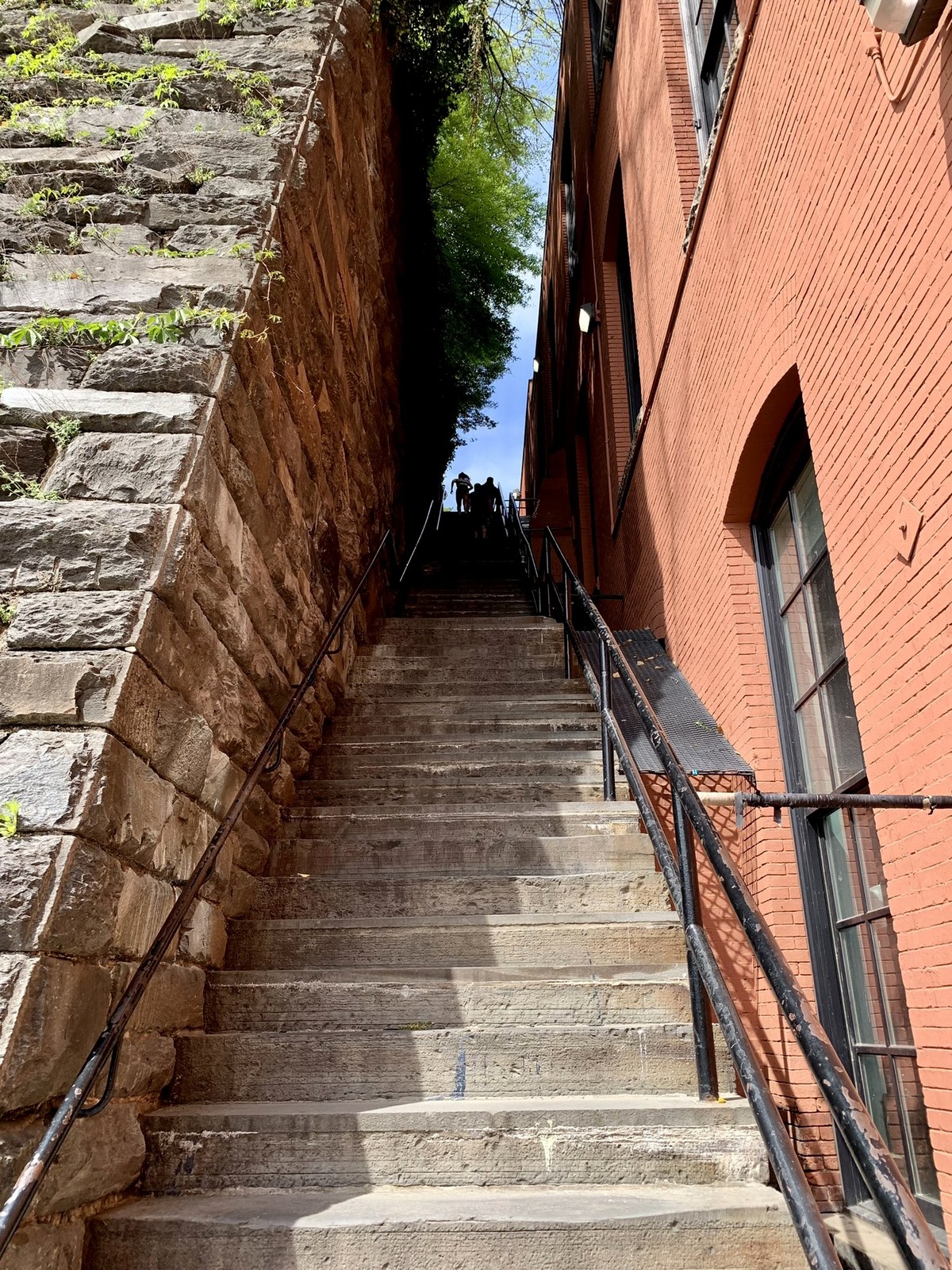
AFI notes that The Exorcist III also returned to Georgetown locations, including the famous steps.
The new film does not need to repeat that geography to inherit the older movie’s narrative ideas.
That is another useful distinction:
a sequel can rhyme with a previous film structurally without recreating its physical landmarks.
The U.S. theatrical date is March 12, 2027
Universal Pictures’ official movie page now lists Friday, March 12, 2027, for the theatrical release of The Exorcist: Martyrs. That is the date to give readers for the announced U.S. opening: Universal’s film page. The October 9 full-trailer coverage is consistent with the same date, including Entertainment Weekly.
An earlier version of this article noted that Red Room Pictures’ production page displayed March 10. That date should not override the distributing studio’s directly stated U.S. theatrical schedule. There is no verified explanation here for the difference, so it would be misleading to claim that March 10 is a confirmed preview date, a release in another territory or a previously postponed opening. Release plans may still change. International dates should be checked with the relevant distributors rather than inferred from the U.S. listing.
What the trailer confirms — and what it doesn’t
The full trailer and Flanagan’s new interview reinforce the already announced central setup: Julie Miller works as a New York homicide detective; Father Sunday is arrested and executed; the murders do not end with his death; and Julie’s son Max is drawn into the supernatural threat. Universal’s official synopsis places the renewed investigation 13 years after Julie ended Father Sunday’s reign of terror and identifies Gina Restrepo as a rookie detective helping her. That timing is part of the announced story premise, not a claim to have seen the finished film.
The new footage does not settle the demon’s identity, exactly how possession works, whether the executed killer returns in a literal form, or which — if any — familiar Exorcist characters might appear. It also does not resolve Julie’s final choice, Max’s fate, or whether the murderer’s supernatural explanation will be endorsed by the finished story. A trailer may be edited to mislead or preserve a twist. Treating its suggestive cuts as confirmed plot would go beyond the available evidence.
The meaningful creative connection to The Exorcist III remains Flanagan’s openly stated interest in Legion and in detective-led horror. Readers looking for the documented historical background to the original 1973 film can separately consult Morbid Index’s 1949 case explainer; it is not evidence about the new movie’s fictional murders.
Frequently Asked Questions
What is The Exorcist: Martyrs?
It is Mike Flanagan’s new film set in The Exorcist universe, built as a supernatural serial-killer procedural rather than a remake of the 1973 movie.
Who does Scarlett Johansson play?
She plays Julie Miller, an NYPD homicide detective and single mother.
Who is Father Sunday?
Father Sunday is the criminal pseudonym of a serial killer played by John Leguizamo. He stages murders around imagery associated with Catholic martyrdom.
Does Father Sunday die?
The first-look material says Julie apprehends him and witnesses his execution. The execution does not end the killings.
Is The Exorcist: Martyrs a remake?
Flanagan says no. He describes it as a new story with new characters inside The Exorcist universe.
Is it a sequel to The Exorcist: Believer?
No. Universal’s current description separates the new film from the 2023 Believer storyline.
How is it connected to The Exorcist III?
Both stories use a homicide investigation involving murders associated with an executed serial killer and then move into supernatural possession. Flanagan has also named William Peter Blatty’s Legion, the source novel for The Exorcist III, as an inspiration.
Is Father Sunday the Gemini Killer?
Nothing currently released establishes that. Father Sunday is a new character; the similarity is structural, not an announced identity.
Does the movie contain a possession?
Yes. Flanagan says the film does include demonic possession.
When does The Exorcist: Martyrs release?
Universal Pictures lists a March 12, 2027 theatrical release on its official film page. The earlier unexplained March 10 date on a production-company listing should not be described as an independently confirmed theatrical opening. Separate international schedules have not been verified here.
Is this a review?
No. This article analyzes the officially revealed premise and its relationship to earlier Exorcist stories. No Morbid Index author is claiming to have seen the finished film.
Sources & further reading
- Bloody Disgusting: Full trailer (October 9, 2026)
- Universal Pictures: Official U.S. release date and current synopsis
- Universal Pictures: Official trailer and original YouTube embed
- Universal Pictures: Original Official Trailer upload (October 9, 2026, 22:31:45 UTC)
- Entertainment Weekly: Mike Flanagan interview and trailer breakdown (October 9, 2026)
- Dread Central: The Exorcist: Martyrs full trailer breakdown (October 9, 2026)
- Esquire: Exclusive first look at The Exorcist: Martyrs
- TheWrap: Universal unveils The Exorcist: Martyrs title
- Red Room Pictures: The Exorcist: Martyrs
- Mike Flanagan: The Exorcist: Martyrs project page
- Box Office Mojo: March 12, 2027 domestic release schedule
- AFI Catalog: The Exorcist III
- Bloody Disgusting: The Exorcist: Martyrs first look
- Wikimedia Commons: Mike Flanagan at TIFF 2024
- Wikimedia Commons: Exorcist steps


.jpg)
