The Index / Paranormal
The Exorcist True Story: The 1949 Case Behind the Novel and Film
William Peter Blatty based The Exorcist on a real 1949 case involving a boy known for decades only as Roland Doe. Here's what's documented, and what the film invented.
Topics: The Exorcist, Roland Doe, Exorcism, William Peter Blatty, Paranormal
Warren LeMay / Wikimedia Commons (CC BY-SA 2.0)
William Peter Blatty didn’t invent a demon out of nothing. In 1949, a fourteen-year-old boy from a Maryland suburb underwent a monthslong series of Catholic exorcism rites in St. Louis, and a wire story about it, stripped of the boy’s name, ran in newspapers around the country. Blatty read one of those stories as a Georgetown undergraduate and spent the next two decades circling back to it. The 1971 novel and 1973 film that resulted share a real starting point with that case and very little else.
For most of the story’s public life, the boy at the center of it was known only by a pseudonym — Roland Doe, sometimes Robbie Mannheim. His actual identity wasn’t publicly confirmed until 2021.
The Boy Behind “Roland Doe”
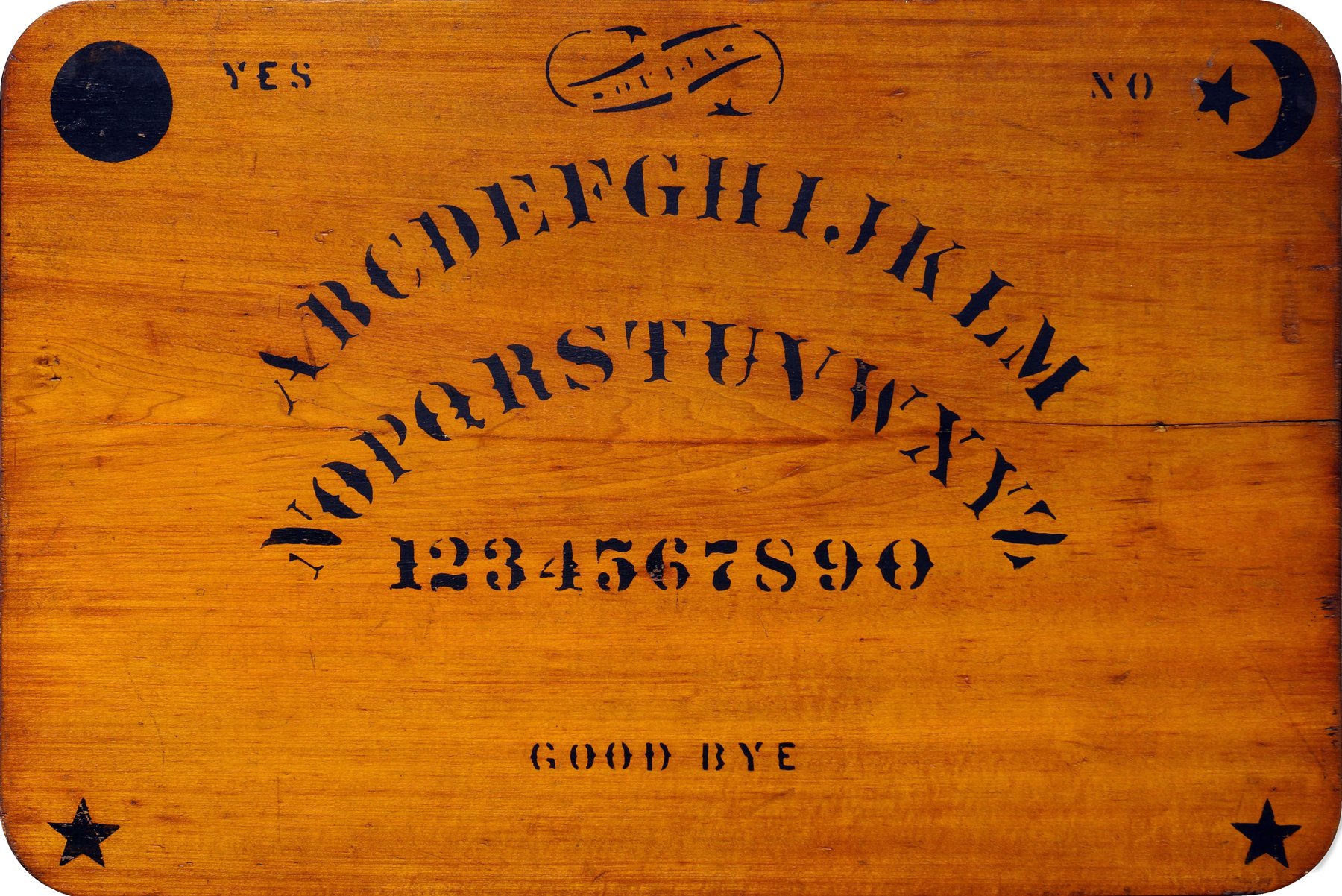
The case involved a fourteen-year-old only child from a German Lutheran family in Cottage City, Maryland, a small suburb just outside Washington, D.C. According to the family’s account, disturbances began in early 1949 not long after the death of an aunt who had introduced the boy to a Ouija board. Scratching sounds, moving furniture, and other disturbances were reported in the home, and the family eventually brought the situation to Luther Miles Schulze, their Lutheran pastor, who had a personal interest in parapsychology and arranged to observe the boy overnight at his own house.
When word of Schulze’s account reached J. B. Rhine, the parapsychologist known for his early ESP research at Duke, Rhine reportedly wondered whether Schulze had unconsciously exaggerated what he’d witnessed. That’s a useful early marker for how this case works throughout: even sympathetic contemporary observers were already questioning how reliable individual accounts were, well before the story became a novel.
The family, Catholic on one side, eventually sought help from a local priest, and the case moved from Maryland toward St. Louis, where relatives lived and where two Jesuit priests, Father William S. Bowdern and Father Walter Halloran, became the case’s central clerical figures with the Archbishop’s permission to proceed with a formal rite. The most extensively documented sessions took place at Alexian Brothers Hospital in St. Louis over several weeks in March 1949.
Who Was Ronald Hunkeler?
The boy’s real identity remained a closely guarded pseudonym for more than seventy years, protected by the family, the Jesuits involved, and most journalists who covered the story afterward. In November 2021, journalist J.D. Sword, writing for Skeptical Inquirer, published research identifying him as Ronald Edwin Hunkeler, born June 1, 1935, and revealed that Hunkeler had died the previous year, on May 10, 2020, without ever having spoken publicly about the case himself.
By several accounts, Hunkeler went on to a long, unremarkable career as an engineer, reportedly including work connected to NASA’s Apollo program, and deliberately kept distance from the story that had made his childhood famous under someone else’s name. That’s worth sitting with. Whatever actually happened to him as a fourteen-year-old, he spent the rest of his adult life as a private citizen who had no say in becoming the inspiration for one of the most famous horror stories of the twentieth century.
What the Case Actually Documented
Separating firsthand testimony from later retelling is the hardest part of this story, and it’s where independent research has done the most useful work. Journalist and skeptical investigator Mark Opsasnick spent years tracking down the case’s actual geography and witnesses in the 1990s and found that several widely repeated details didn’t hold up. The exorcism is commonly said to have taken place at a house on Bunker Hill Road in Mount Rainier, Maryland — Opsasnick found the boy never lived there. A frequently repeated claim that Father Edward Hughes performed an early exorcism attempt at Georgetown University Hospital, during which the boy allegedly broke free of restraints and slashed the priest with a loose bedspring, also lacks the kind of documentation Opsasnick was able to verify independently; he found no solid evidence Hughes ever formally attempted the rite at that location in the way later retellings describe.
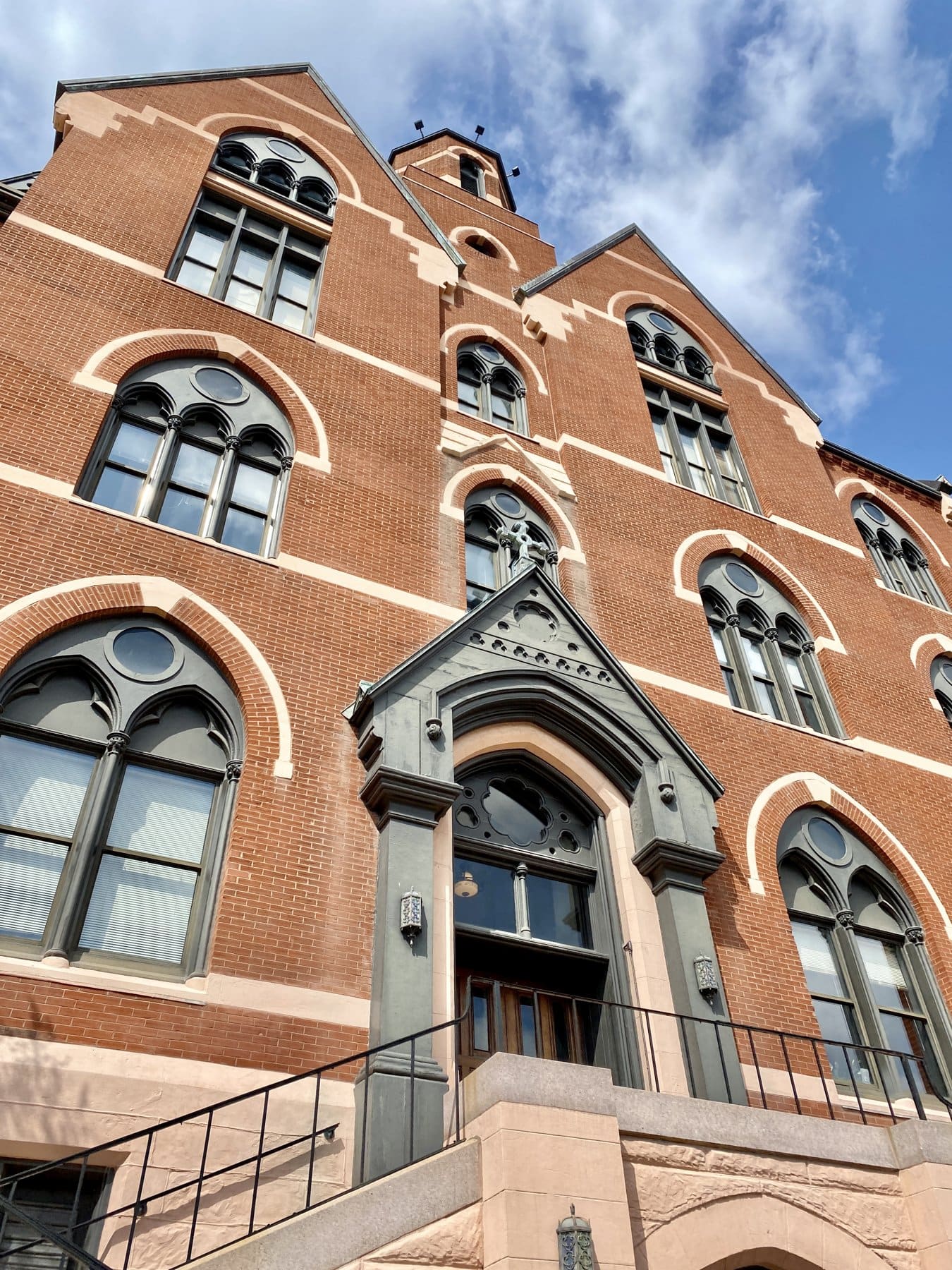
DuBourg Hall at Saint Louis University, the Jesuit institution Fathers Bowdern and Halloran were affiliated with during the 1949 case. The rites themselves took place at Alexian Brothers Hospital, not on this campus. Source. Warren LeMay / Wikimedia Commons, CC BY-SA 2.0.
What does hold up reasonably well: Father Raymond Bishop, one of the priests involved, kept a diary during the case describing the sessions in detail, and it has since been cited by multiple researchers as a genuine, contemporaneous record, even though its full contents haven’t been made broadly public. Halloran, interviewed decades later as an elderly man, gave notably careful, hedged answers rather than confirming a supernatural interpretation outright. Asked directly whether he believed the boy had been truly possessed, he said plainly that he couldn’t go on record either way, adding that he didn’t feel qualified to make that determination. That’s a strikingly cautious statement from one of the two priests who were actually in the room, and it undercuts the version of the story where every participant walked away certain they’d witnessed something supernatural.
Reported phenomena during the sessions included violent movement, scratching, growled or altered vocalizations, and marks or scratches said to have appeared on the boy’s skin, including words like “hell” and, notably, “Louis” — which the family reportedly took as a message pointing them toward relatives in St. Louis. Skeptical writer Joe Nickell has argued that scratches in the described locations and patterns were well within the physical capability of a determined adolescent to inflict on himself, with or without a mirror, over the course of an extended, isolated ordeal.
Skeptical Explanations
None of the mainstream skeptical interpretations require anyone in the story to have been lying maliciously. A grieving, isolated only child, recently exposed to a Ouija board and immersed in an environment of adults who took spiritual explanations seriously, is a plausible setup for genuine psychological distress expressing itself physically — self-harm, disordered behavior, and extreme reactions to isolation and restraint among them. Family and religious dynamics of the period gave that distress a specific vocabulary to be interpreted through: not mental illness, but possession, examined and treated within the framework the family and clergy already believed in.
That’s a materially different claim than “the boy faked everything for attention,” and it’s worth keeping the two apart. The skeptical case here is about explainable human behavior under real psychological strain, filtered through a belief system that had a specific ritual response ready for it — not necessarily calculated deception.
Was Pazuzu Part of the Real Case?
No. There’s no documentation from 1949 connecting the case to Pazuzu, the ancient Mesopotamian entity, by name or description. That association is entirely Blatty’s invention for the novel and film — Pazuzu is a documented figure from Assyrian and Babylonian religious tradition with his own extensive, unrelated history, and Blatty borrowed the name because he found it evocative, not because it appeared anywhere in the real Maryland or St. Louis case files.
From Newspaper Story to Novel to Film
The version of the case that reached the public in 1949 arrived through wire reports built on the family’s account and secondhand clergy testimony, stripped of names, and picked up by papers across the country including the Washington Post. William Peter Blatty, then an undergraduate at Georgetown, read one of those stories and held onto it for years, eventually tracking down what additional information he could and using it as the seed for his 1971 novel.
Blatty changed nearly everything specific about the case for the book and the 1973 film that followed: the possessed child became a girl, Regan MacNeil, rather than a boy; the setting shifted to Georgetown itself rather than Maryland and St. Louis; and the story added an invented backstory involving an archaeological dig, a named ancient demon, a movie-star mother, and a second priest, Father Karras, wrestling with his own crisis of faith — none of which has any basis in the 1949 case. The film also escalated the physical spectacle enormously: levitation, projectile vomiting, and head rotation are dramatic inventions rather than documented elements of the real sessions.
Is There Evidence the Boy Was Actually Possessed?
No independently verifiable evidence supports a supernatural explanation. What exists is a mix of family testimony, a priest’s private diary, decades-later interviews from participants who were notably careful not to claim certainty, and a body of skeptical investigative work that has directly contradicted several of the story’s most dramatic, widely repeated details. That the Catholic Church proceeded with a formal rite reflects the family’s and clergy’s sincere religious framework for interpreting the boy’s condition. It isn’t independent confirmation that the condition itself was supernatural in origin.
Frequently Asked Questions
Is The Exorcist based on a true story? Loosely. William Peter Blatty based the novel on a real 1949 case involving a Maryland boy who underwent Catholic exorcism rites in St. Louis, but he changed nearly every specific detail — the child’s gender, location, backstory, and the demon’s identity are all invented.
Who was Roland Doe? A pseudonym for the boy at the center of the 1949 case, used for over seventy years to protect his identity.
Was Roland Doe really Ronald Hunkeler? Yes, according to research published by journalist J.D. Sword in Skeptical Inquirer in November 2021, which identified him as Ronald Edwin Hunkeler (1935–2020).
Did the boy use a Ouija board? According to the family’s account, yes — his aunt, who had an interest in spiritualism, introduced him to one shortly before the disturbances began.
Did priests really perform an exorcism? Yes. Jesuit priests William Bowdern and Walter Halloran conducted a formal rite over several weeks in March 1949 at Alexian Brothers Hospital in St. Louis, with the Archbishop’s permission.
Did the real case involve Pazuzu? No. Pazuzu is Blatty’s invention for the novel, borrowed from unrelated ancient Mesopotamian religious tradition, and has no connection to the documented 1949 case.
What did the movie change? Nearly everything specific: the child became a girl, the setting moved to Georgetown, and the film added an archaeological prologue, a named demon, and dramatic supernatural effects like levitation that aren’t part of the documented case.
Is there evidence the boy was actually possessed? No independently verifiable evidence supports that conclusion. Even Father Halloran, one of the two priests present, declined in later interviews to state definitively that he’d witnessed genuine possession.