The Index / Paranormal
The 1952 UFO Wave Explained: Why America Was Already Watching the Sky
1952 produced more UFO reports than any other year of Project Blue Book, including radar and visual sightings over Washington, D.C. Here's the documented history.
Topics: UFO History, Project Blue Book, 1952, Washington DC UFO, Cold War
U.S. Air Force / National Archives, via Wikimedia Commons (Public Domain)
More UFOs were reported to the U.S. Air Force in 1952 than in any other year of its two-decade investigation program. The wave included thousands of civilian sightings, a newly created government office struggling to keep pace with its own workload, unidentified radar returns over the nation’s capital that pulled fighter jets into the air, and the largest Pentagon press conference held since the Second World War.
None of that means every report from that year was inexplicable, and treating 1952 as one giant unsolved mystery misrepresents what actually happened. It was, instead, the year flying-saucer reports stopped being a fringe curiosity and became something the U.S. government had to publicly address, on the record, in front of the national press.
Flying Saucers Before 1952
The modern flying-saucer era effectively began five years earlier. In June 1947, private pilot Kenneth Arnold reported seeing nine unusual objects near Mount Rainier, Washington, moving at a speed and manner he struggled to describe. His comparison of their motion to “a saucer skipping on water” got garbled by the press into “flying saucer,” and the phrase stuck, giving the entire phenomenon its name before anyone had a clear picture of what people were actually reporting.
The Air Force’s institutional response was uneven at first. Project Sign, established in 1948, gave way to the far more dismissive Project Grudge in 1949, which was widely criticized, including by some of its own former staff, for approaching reports with a predetermined skeptical conclusion rather than genuine investigation. By early 1952, the volume and visibility of reports had outgrown what either predecessor program had been built to handle.
Project Blue Book Begins
The Air Force established Project Blue Book in March 1952, based at Wright-Patterson Air Force Base in Ohio under its first director, Captain Edward J. Ruppelt. The timing turned out to be almost prescient: within months, the program would be absorbing reports at a rate neither Sign nor Grudge had ever approached.
According to National Archives figures, Blue Book would go on to log 12,618 total sighting reports before its 1969 closure. Of the years it operated, 1952 stands apart, with 303 cases the program ultimately categorized as unexplained and, more strikingly, over 717 new reports received during the summer flap alone — a volume that overwhelmed the small staff assigned to evaluate them.
The Summer UFO Wave
Reports climbed steadily through the spring and early summer of 1952, driven partly by a genuine increase in sightings and partly by a self-reinforcing cycle: heavy newspaper coverage of early reports encouraged more people to watch the sky, and more watching produced more reports, which generated more coverage. By July, the pattern that had started as scattered regional stories had become a genuine national news phenomenon.
That escalation reached its peak, and its most famous chapter, over the nation’s capital.
What Happened Over Washington, D.C.?
On the nights of July 19–20 and again July 26–27, 1952, air traffic controllers at Washington National Airport picked up unidentified returns on radar. During the first incident, controller Edward Nugent detected seven objects roughly fifteen miles southwest of the city, and senior controller Harry Barnes later described their movement as “completely radical compared to those of ordinary aircraft.” Fellow controllers Howard Cocklin and Joe Zacko tracked additional unidentified returns the same night, including one that appeared to depart the area at extremely high speed. A Capital Airlines pilot, S. C. Pierman, independently reported six fast-moving white lights during roughly the same window, in rough coordination with what controllers were seeing on their scopes.
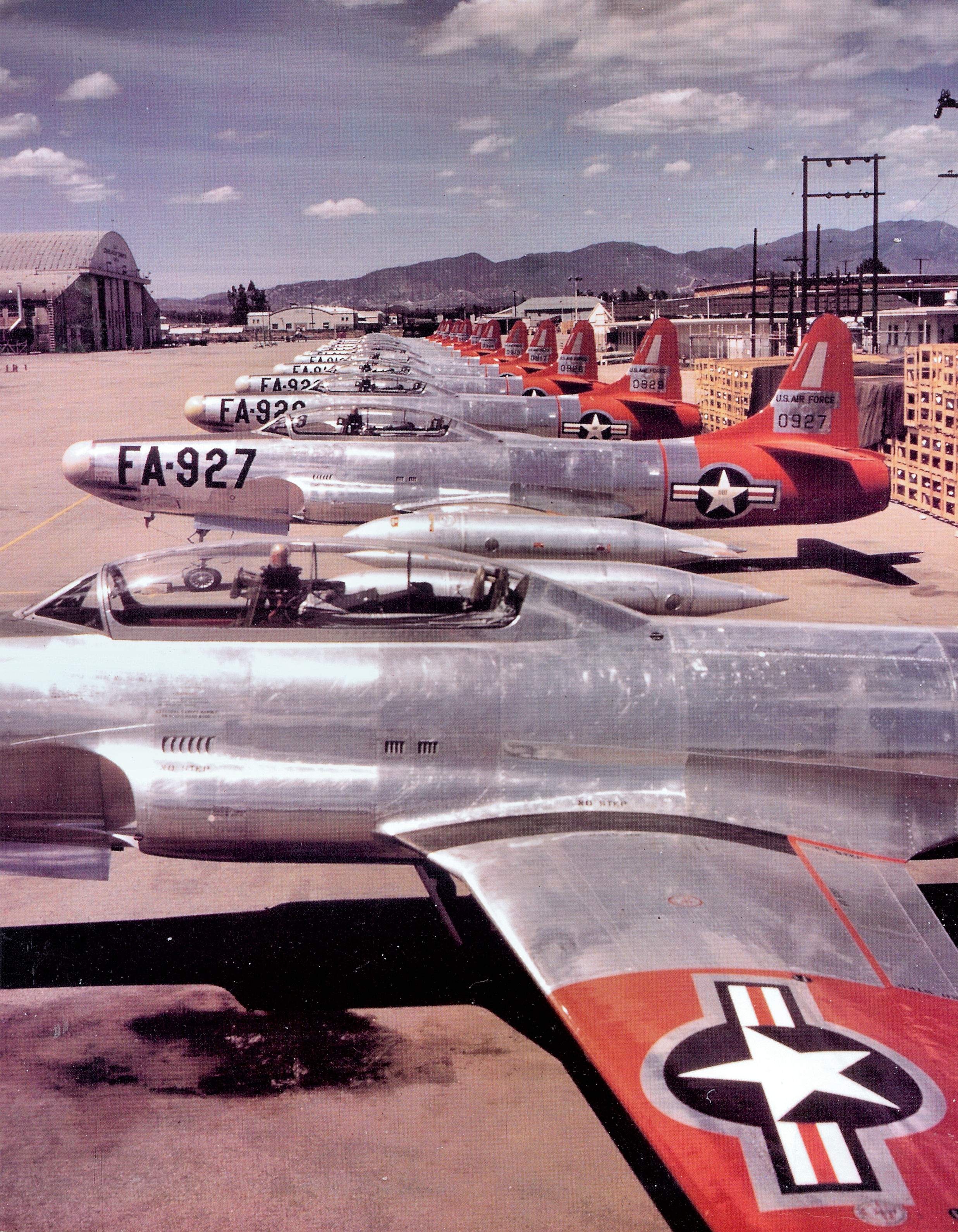
F-94 Starfire interceptors, the same type scrambled to chase the unidentified lights over Washington. U.S. Air Force, Public Domain via Wikimedia Commons.
The following weekend produced an even more dramatic episode. Radar operators calculated apparent speeds up to 7,000 miles per hour for some returns, and Air Force F-94 interceptors were scrambled in response. Lieutenant William Patterson, piloting one of the jets, pursued four white lights and later said he had reached his aircraft’s maximum speed without closing the distance before ending the chase.
That combination — independent radar detections, visual sightings from commercial pilots, and armed interceptors unable to catch what they were chasing — is what made the Washington incidents historically significant. Radar alone is easy to dismiss as equipment error. A trained air traffic controller, an airline pilot, and a fighter pilot separately describing consistent, unusual behavior is a harder set of reports to wave away, whatever their ultimate cause turned out to be.
Why the Air Force Held a Major Press Conference
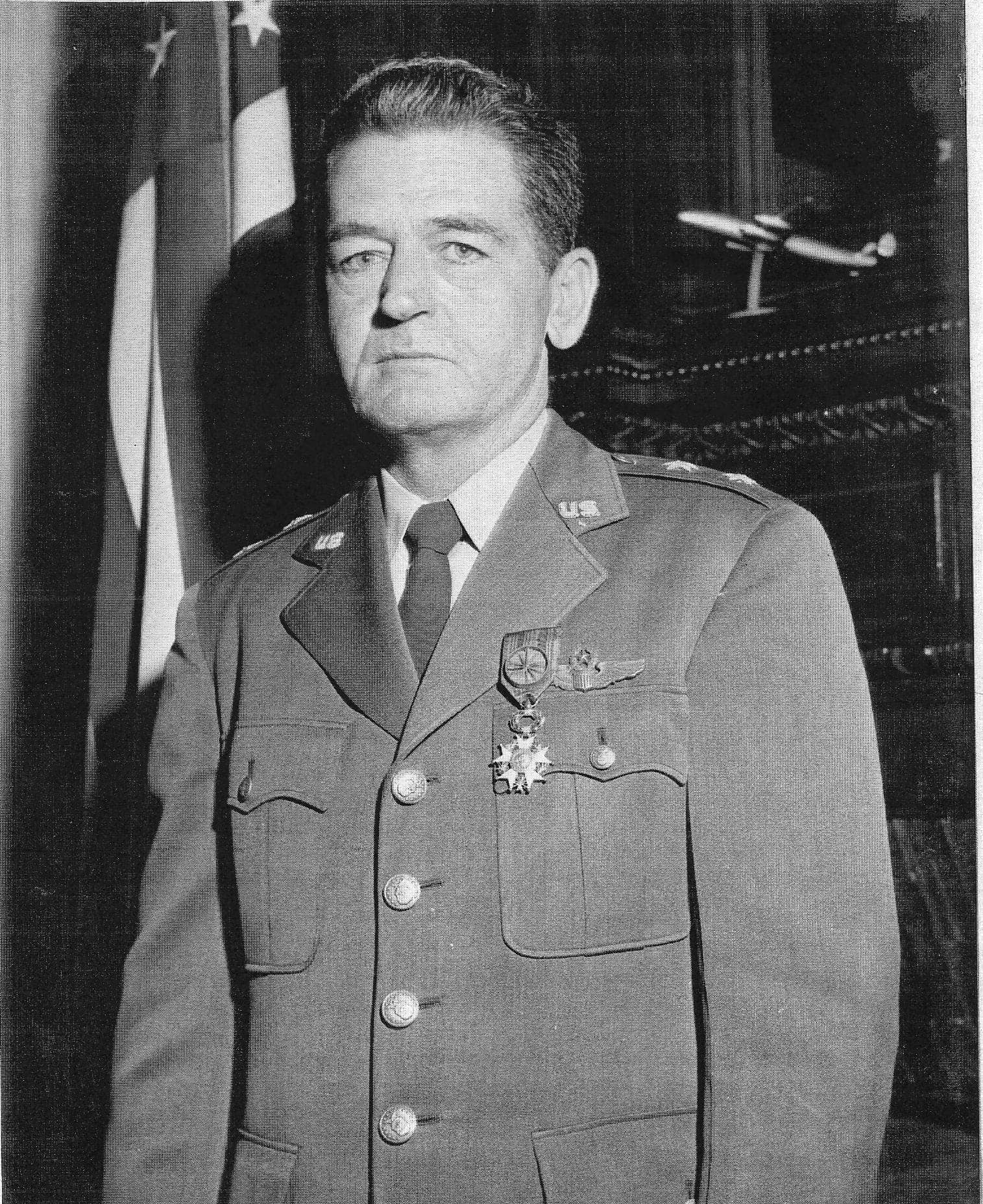
The Washington sightings generated enough public pressure that the Air Force responded with a press conference on July 29, 1952 — described at the time as the largest Pentagon media event since World War II. Major General John A. Samford, the Air Force’s Director of Intelligence, led the briefing alongside Major General Roger M. Ramey.
Samford’s explanation attributed the radar returns to a temperature inversion: a layer of warm air sitting atop cooler air near the ground, a known atmospheric condition capable of bending radar signals and producing false returns that can appear to move or behave erratically. Visual sightings, in the Air Force’s account, were attributed largely to misidentified stars and meteors. Samford also acknowledged, notably, that a meaningful share of UFO reports — he cited roughly twenty percent — came from what he considered credible witnesses describing relatively incredible things, a rare admission of genuine uncertainty inside an otherwise reassuring public statement.
The temperature inversion explanation didn’t end the debate. Project Blue Book’s own former director, Edward Ruppelt, later wrote that some radar personnel and Air Force officers disagreed with the official account, and a 1966 government-commissioned review, the Condon Report, found that radar witnesses still disputed the inversion explanation years afterward. Decades later, in 2002, former controller Howard Cocklin told the Washington Post plainly: “I saw it on the [radar] screen and out the window.” On the other side of the debate, skeptical researchers including Philip Klass have pointed out that 1952-era radar lacked the filtering technology introduced in later decades and could register birds, weather phenomena, or ground clutter as apparent aircraft, while UFO historian Jacques Vallée later described the case’s actual evidentiary strength as comparatively weak despite its outsized publicity.
The honest summary is that a temperature inversion is a real, physically plausible explanation for at least some of what appeared on radar that summer, and it remains disputed by some of the people who were directly involved in observing the events, more than seventy years later.
Flatwoods Arrives in September
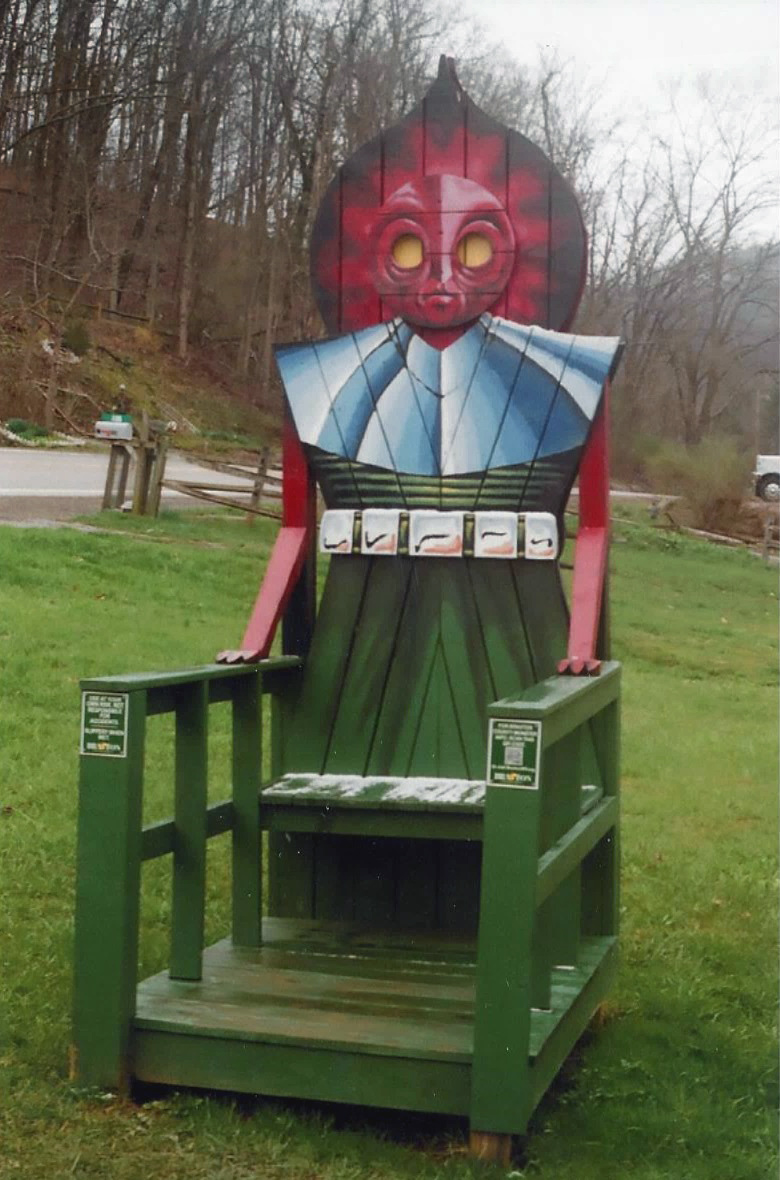
Roughly six weeks after Washington’s radar controversy died down, a very different kind of case emerged from rural West Virginia. On September 12, 1952, near the small town of Flatwoods, a group of local residents reported watching an object descend toward a hillside, then encountering a large, unidentified figure after climbing up to investigate.
Flatwoods stands out from the Washington incidents in almost every respect — no radar, no military aircraft, no press conference, just a frightened search party and a small-town newspaper story that eventually went national. It also became one of the first cases the newly formed Project Blue Book handled involving a reported creature rather than only an aerial light. The full story of that night, and what can and can’t actually be established about it, is covered in our Flatwoods Monster pillar article, including the archival record of what Blue Book’s file on the case actually contains, detailed further in our Project Blue Book investigation piece.
Were All the 1952 UFOs Unexplained?
No, and it’s worth resisting the framing that treats the entire wave as one undifferentiated mystery. Project Blue Book’s own case-by-case work attributed the large majority of 1952’s reports to conventional causes: aircraft, balloons, astronomical objects, meteors, and, as with Washington, atmospheric conditions affecting radar and visual perception. The 303 cases the program ultimately left categorized as unidentified represent a genuine remainder worth taking seriously, but they were always a minority of the year’s total reports, not a representative sample of what people were seeing.
That distinction matters because both extremes — “everything in 1952 was secretly explained” and “the government never explained anything” — misstate a messier, more interesting reality: most reports got mundane explanations, a smaller number resisted easy explanation even to the investigators looking into them, and the public conversation about the difference between those two categories was often much louder than the underlying data warranted.
Cold War Anxiety and the Flying-Saucer Boom
It would be too simple to say Cold War tension caused the 1952 wave, but it’s also wrong to ignore the atmosphere entirely. The early 1950s were a period of real anxiety about Soviet aircraft capability, rapidly evolving radar and jet technology that even experienced military personnel were still learning to interpret correctly, and a cultural moment saturated with science fiction, atomic-age imagery, and genuine uncertainty about what might appear in American skies next.
That environment shaped how ambiguous observations got interpreted, by both the public and, at times, by trained personnel operating unfamiliar equipment. It doesn’t independently explain any specific radar return or witness account. Context influences interpretation; it doesn’t manufacture evidence on its own.
Media, Science Fiction and Public Appetite
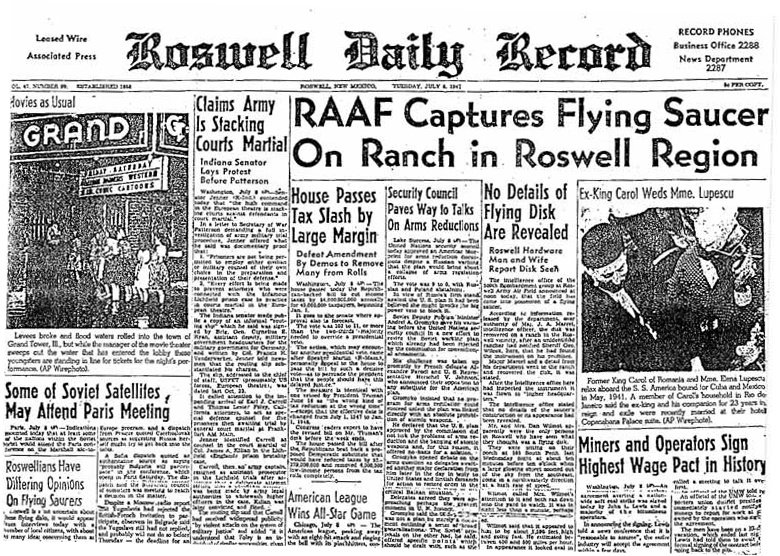
Newspapers covered the 1952 wave aggressively, and the coverage fed itself: prominent stories about Washington’s radar returns encouraged more people nationwide to watch the sky and report what they saw, which produced more stories. The era’s science fiction boom, already well underway in film and pulp magazines, gave the public a ready vocabulary and set of expectations for interpreting strange lights as spacecraft rather than defaulting to more mundane explanations.
Again, none of this proves any individual report was fabricated or imagined. Cultural context shapes which explanation feels intuitive to a witness in the moment; it doesn’t retroactively invalidate what someone saw.
What Project Blue Book Ultimately Concluded
When the Air Force closed Project Blue Book in December 1969, its stated conclusions, per National Archives documentation, held that no UFO report the program investigated had ever indicated a threat to national security, that no sighting categorized as unidentified showed evidence of technology beyond the era’s scientific understanding, and that no unidentified sighting showed evidence of being an extraterrestrial vehicle.
Those are broad findings covering seventeen years and over twelve thousand cases, not a specific verdict on any single 1952 incident, Washington or Flatwoods included. They represent the government’s final institutional position, not an independent scientific resolution of every individual report filed during the program’s busiest year.
Why 1952 Changed UFO Culture
1952 is the year American UFO reporting stopped being a story about scattered witnesses and started being a story that involved trained controllers, military pilots, and cabinet-level press briefings. It established Project Blue Book as a permanent institution rather than a temporary stopgap, gave the public its first extended, high-profile exposure to the tension between official reassurance and unresolved witness testimony, and produced a template — credible witnesses, ambiguous evidence, an official explanation that didn’t fully satisfy everyone involved — that would repeat itself in American UFO cases for decades afterward.
Flatwoods is one thread in that larger year, not its centerpiece, but it’s a useful illustration of how differently these cases could unfold: no radar, no jets, no cabinet officials, just a rural community and a story that outlived the more heavily documented incidents that happened the same summer.
Frequently Asked Questions
Why was 1952 such a big year for UFO reports? A combination of a genuine rise in sightings, heavy press coverage that encouraged more reporting, and the recent creation of Project Blue Book, which gave the Air Force a dedicated program to track and publicize the volume of cases arriving.
What happened over Washington, D.C. in 1952? On two consecutive weekends in July, air traffic controllers, a commercial pilot, and military interceptor pilots separately reported unidentified radar returns and visual sightings near the capital, prompting a major Air Force press conference.
What was the Air Force’s official explanation for the Washington sightings? A temperature inversion affecting radar, combined with misidentified stars and meteors for the visual reports. Some radar personnel disputed that explanation at the time and afterward.
How many UFO reports did Project Blue Book receive in 1952? Over 717 new reports arrived during the summer wave alone, with 303 cases that year ultimately left categorized as unidentified.
Was Flatwoods part of the 1952 UFO wave? Yes. The September 12, 1952 Flatwoods case occurred within the same year’s broader surge in reports and was one of Project Blue Book’s early cases involving a reported figure rather than only an aerial object.
Did Project Blue Book conclude that UFOs were extraterrestrial? No. Its final stated conclusions, upon the program’s 1969 closure, found no evidence that any investigated sighting represented an extraterrestrial vehicle, a security threat, or technology beyond contemporary science.
Were all 1952 UFO sightings explained? Most were attributed to conventional causes. A minority, including some of the Washington radar returns, remained officially unidentified and are still debated by researchers today.